

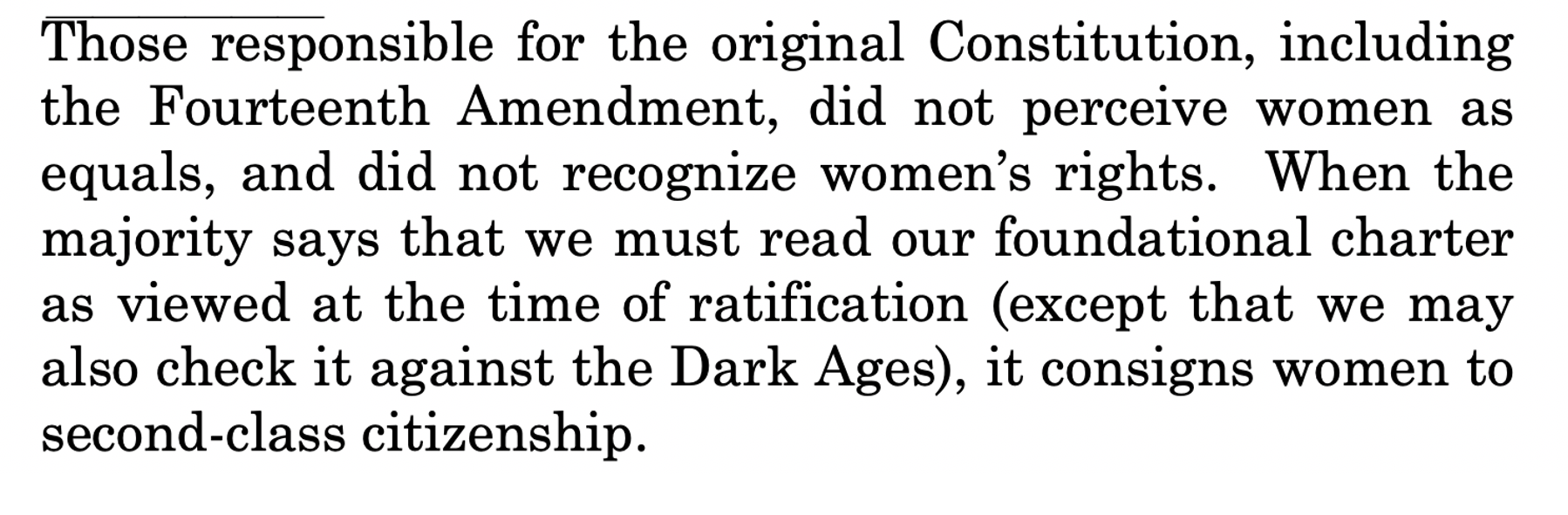
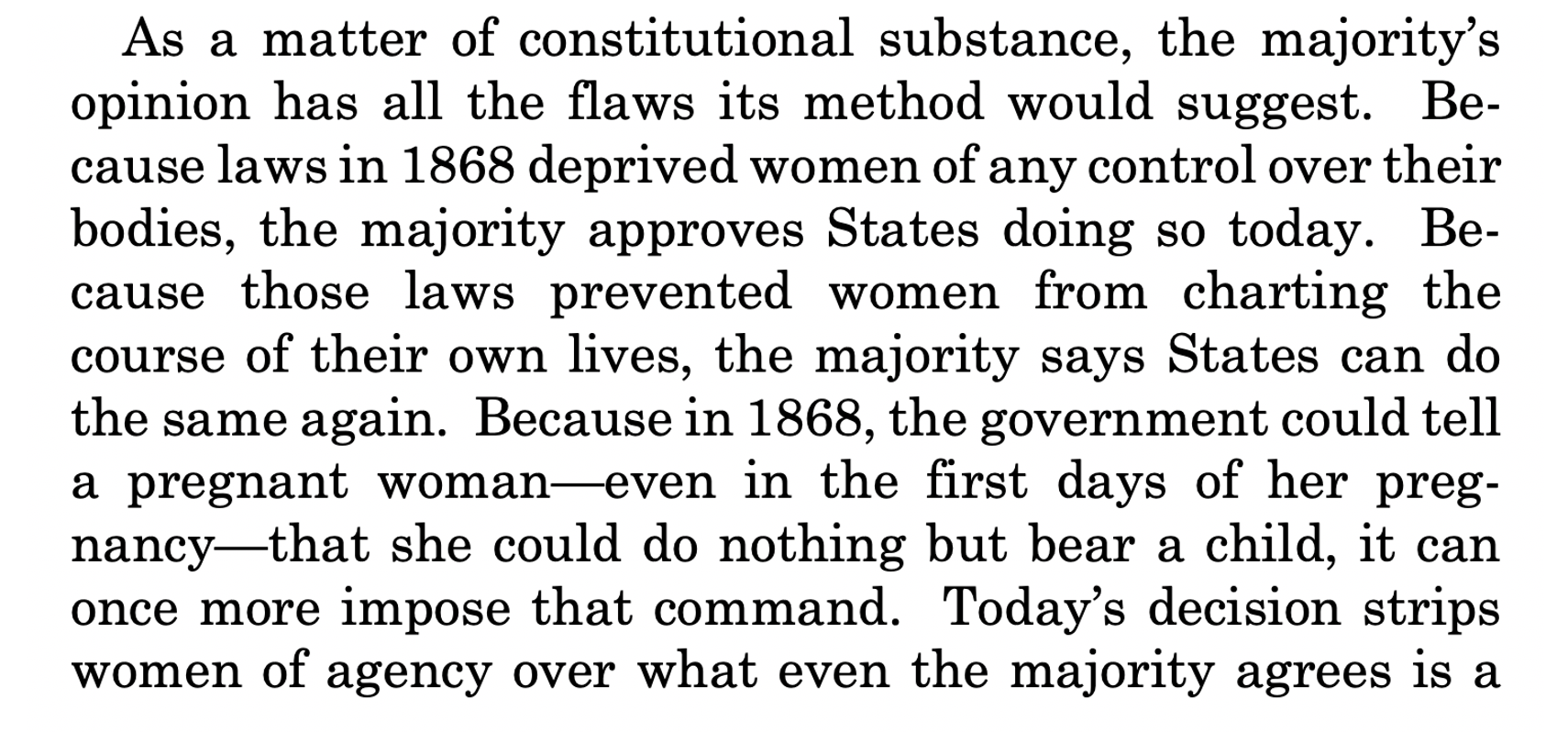
 The full, searchable SCOTUS dissent:
The full, searchable SCOTUS dissent:


Experts convene to explore new philosophy of statistics field
Excerpts and links may be used, provided that full and clear credit is given to Deborah G. Mayo and Error Statistics Philosophy with appropriate and specific direction to the original content.


 Error Statistics Philosophy
Freedom of conscience, freedom of faith, freedom of religion took the biggest hits this week I have ever known in my lifetime. The U.S. has become a country where the phrase “Bully Pulpit” gets a Strange New Warp. We now live under the thrall of people who recognize no religion but what they affect to believe, whose minds are so closed they cannot imagine more than one way of being religious, indeed, more than one way of being Christian. Freedom to them is freedom to oppress.
Above all, the wall between religion and government must be restored. The Supreme Court is now broken — Trump and his Cult have broken it along with the other pillars of democracy they tore down — it cannot remain a Supreme Church, the missionary arm of one small sect of one religion.
Quod Erat Demonstrandum. Seems to me this flies alongside what some are claiming of Republican desire for power vs. Democrat impetus toward doing right. It is fairly straightforward and reflects an unabashed mindset. Does it rise to the level of authoritarianism? I think so
Error philosophy indeed! Between the Bruen and Dobbs decisions, we see history tortured and some extreme casuistic reasoning. In the Dobbs case, Alito, speaking for the majority, criticizes the identification of motives for the anti-abortion laws that cropped in the 19th century (almost a century after ratification in 1786). Two paragraphs later, Alito identifies motives for the very same laws. So much for textualism or intellectual honesty. Alito invokes “common law” prohibitions against abortions post-quickening, but he fails to note that the ratification, with its Due Process clause, was seen as abandoning the common law of crimes. (If you watch British police procedurals, you have heard people charged with the crime of common law murder. No such thing existed in this country after Ratification.) The selectivity of history and analysis is mind boggling. As C.J. Roberts concurrence makes clear, Alito’s opinion was an act of judicial activism and radicalism. Courts decide cases; they do not legislate. Alito criticizes the Roe decision for having a legislative take on the problem, but then he, speaking for the Court, overturns Roe when the case before him involved a ban at week 15 of gestation. Mississippi conceded that overturning Roe was not necessary to its winning affirmance in the Supreme Court. Judgments of courts do not go beyond what is necessary to determine the disputes before them.
In the Bruen case, the Court similarly ignored the doctrine of judicial restraint in deciding a case that had not been litigated, and which fairly required exhaustion of state court appellate remedies. I commented briefly on Bruen here: https://schachtmanlaw.com/2022/06/24/only-judges-can-change-history/
It was a bad week for the Supreme Court, and for the country.
It is pointless to argue with religious beliefs. They don’t have to be scientific or even rational. All we can do is recognize they are religious beliefs. We can recognize them as such on account of their wide variety — a few beliefs are nearly universal, but the gods and the devils are in the details and the details vary a lot. Maybe some people lack experience with other forms of religious belief, but these days I see mostly a stubborn lack of respect.
And that is precisely what the Establishment Clause is all about. A government of, by, and for All the People simply cannot muck about in religion without making a mess of itself and its People. Our Framers knew that, our present Supreme Court has forgotten it. There will be hell to pay.