.
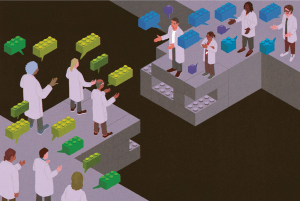
In the 2025 November/December issue of American Scientist, a group of authors (Ceci, Clark, Jussim and Williams 2025) argue in “Teams of rivals” that “adversarial collaborations offer a rigorous way to resolve opposing scientific findings, inform key sociopolitical issues, and help repair trust in science”. With adversarial collaborations, a term coined by Daniel Kahneman (2003), teams of divergent scholars, interested in uncovering what is the case (rather than endlessly making their case) design appropriately stringent tests to understand–and perhaps even resolve–their disagreements. I am pleased to see that in describing such tests the authors allude to my notion of severe testing (Mayo 2018)*:
Severe testing is the related idea that the scientific community ought to accept a claim only after it surmounts rigorous tests designed to find its flaws, rather than tests optimally designed for confirmation. The strong motivation each side’s members will feel to severely test the other side’s predictions should inspire greater confidence in the collaboration’s eventual conclusions. (Ceci et al., 2025)
1. Why open science isn’t enough Continue reading


 Error Statistics Philosophy