5-year memory lane

An exchange between A. Gelman and D. Mayo on abandoning statistical significance: 5 years ago

.

Below is an email exchange that Andrew Gelman posted on this day 5 years ago on his blog, Statistical Modeling, Causal Inference, and Social Science.  (You can find the original exchange, with its 130 comments, here.) Note: “Me” refers to Gelman. I will share my current reflections in the comments.

Exchange with Deborah Mayo on abandoning statistical significance

Continue reading

Categories: 5-year memory lane, abandon statistical significance, Gelman blogs an exchange with Mayo | 4 Comments

Guest Post: Christian Hennig: “Statistical tests in five random research papers of 2024, and related thoughts on the ‘don’t say significant’ initiative”

.

Professor Christian Hennig
Department of Statistical Sciences “Paolo Fortunati”
University of Bologna

[An earlier post by C. Hennig on this topic:  Jan 9, 2022: The ASA controversy on P-values as an illustration of the difficulty of statistics]

Statistical tests in five random research papers of 2024, and related thoughts on the “don’t say significant” initiative

This text follows an invitation to write on “abandon statistical significance 5 years on”, so I decided to do a tiny bit of empirical research. I had a look at five new papers listed on May 17 on the “Research Articles” site of Scientific Reports. I chose the most recent five papers when I looked without being selective. As I “sampled” papers for a general impression, I don’t want this to be a criticism of particular papers or authors, however in the interest of transparency, the doi addresses of the papers are: Continue reading

Categories: 5-year memory lane, abandon statistical significance, Christian Hennig | 7 Comments

5-year review: “Les stats, c’est moi”: We take that step here! (Adopt our fav word or phil stat!)(iii)


les stats, c’est moi

This is the last of the selected posts I will reblog from 5 years ago on the 2019 statistical significance controversy. The original post, published on this blog on December 13, 2019, had 85 comments, so you might find them of interest.  I invite readers to share their thoughts as to where the field is now, in relation to that episode, and to alternatives being used as replacements for statistical significance tests. Use the comments and send me guest posts.  Continue reading

Categories: 5-year memory lane, Error Statistics, statistical significance tests | Leave a comment

5-year Review: The ASA’s P-value Project: Why it’s Doing More Harm than Good (cont from 11/4/19)

.

I continue my selective 5-year review of some of the posts revolving around the statistical significance test controversy from 2019. This post was first published on the blog on November 14, 2019. I feared then that many of the howlers of statistical significance tests would be further etched in granite after the ASA’s P-value project, and in many quarters this is, unfortunately, true. One that I’ve noticed quite a lot is the (false) supposition that negative results are uninformative. Some fields, notably psychology, keep to a version of simple Fisherian tests, ignoring Neyman-Pearson (N-P) tests (never minding that Jacob Cohen was a psychologist who gave us “power analysis”).  (See note [1]) For N-P, “it is immaterial which of the two alternatives…is labelled the hypothesis tested” (Neyman 1950, 259). Failing to find evidence of a genuine effect, coupled with a test’s having high capability to detect meaningful effects, warrants inferring the absence of meaningful effects. Even with the simple Fisherian test, failing to reject H0 is informative. Null results figure importantly throughout science, such as when the ether was falsified by Michelson-Morley, and in directing attention away from unproductive theory development.

Please share your comments on this blogpost. Continue reading

Categories: 5-year memory lane, statistical significance tests, straw person fallacy | 1 Comment

5-year Review: P-Value Statements and Their Unintended(?) Consequences: The June 2019 ASA President’s Corner (b)

I continue my 5-year review of some highlights from the “abandon significance” movement from 2019. This post was first published on this blog on November 30, 2019,  It was based on a call by then American Statistical Association President, Karen Kafadar, which sparked a counter-movement. I will soon begin sharing a few invited guest posts reflecting on current thinking either on the episode or on statistical methodology more generally. I may continue to post such reflections over the summer, as they come in, so let me know if you’d like to contribute something. Share your thoughts in the comments.

2208388671_0d8bc38714

Mayo writing to Kafadar

I never met Karen Kafadar, the 2019 President of the American Statistical Association (ASA), but the other day I wrote to her in response to a call in her extremely interesting June 2019 President’s Corner: “Statistics and Unintended Consequences“:

  • “I welcome your suggestions for how we can communicate the importance of statistical inference and the proper interpretation of p-values to our scientific partners and science journal editors in a way they will understand and appreciate and can use with confidence and comfort—before they change their policies and abandon statistics altogether.”

I only recently came across her call, and I will share my letter below. First, here are some excerpts from her June President’s Corner (her December report is due any day). Continue reading

Categories: 5-year memory lane, stat wars and their casualties, statistical significance tests | Leave a comment

5-year review: Hardwicke and Ioannidis, Gelman, and Mayo: P-values: Petitions, Practice, and Perils


.

Soon after the Wasserstein et al (2019) “don’t say significance” editorial, John Ioannidis invited Andrew Gelman and I to write editorials from our different perspectives on an associated editorial that Nature invited. It was written by Amrhein, Greenland and McShane (AGM, 2019). Prior to the publication of AGM 2019, people were given the opportunity to add their names to the Nature article.

A campaign followed that aimed at the collection of signatures in what was called a ‘petition’ on the widely popular blogsite of Andrew Gelman. Ultimately, 854 scientists signed the petition and the list of their names was published along with commentary. (Hardwicke and Ioannidis, 2019, p. 2)

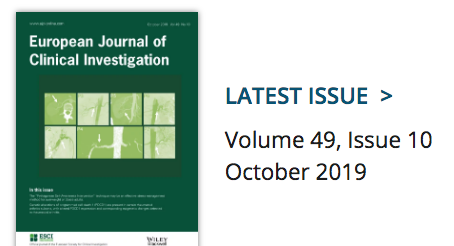
Tom Hardwicke and John Ioannidis (2019) took advantage of the opportunity “to perform a survey of the signatories to understand how and why they signed the endorsement” (ibid.). This post, reblogged from September 25 2019, includes all 3 articles: the survey by Hardwicke and Ioannidis, and the editorials by Gelman and I. They appeared in the European Journal of Clinical Investigations (2019). I’m still interested in reader responses (in the comments) to the question I pose. Continue reading

Categories: 5-year memory lane, abandon statistical significance | Leave a comment

5-year Review: B. Haig: [TAS] 2019 update on P-values and significance (ASA II)(Guest Post)

This is the guest post by Bran Haig on July 12, 2019 in response to the “abandon statistical significance” editorial in The American Statistician (TAS) by Wasserstein, Schirm, and Lazar (WSL 2019). In the post it is referred to as ASAII with a note added once we learned that it is actually not a continuation of the 2016 ASA policy statement. (I decided to leave it that way, as otherwise the context seems lost. But in the title to this post, I refer to the journal TAS.) Brian lists some of the benefits that were to result from abandoning statistical significance. I welcome your constructive thoughts in the comments.

Brian Haig, Professor Emeritus
Department of Psychology
University of Canterbury
Christchurch, New Zealand Continue reading

Categories: 5-year memory lane, abandon statistical significance, ASA Guide to P-values, Brian Haig | Tags: | Leave a comment

5-year review: The NEJM Issues New Guidelines on Statistical Reporting: Is the ASA P-Value Project Backfiring? (i)

In a July 19, 2019 post I discussed The New England Journal of Medicine’s response to Wasserstein’s (2019) call for journals to change their guidelines in reaction to the “abandon significance” drive. The NEJM said “no thanks” [A]. However confidence intervals CIs got hurt in the mix. In this reblog, I kept the reference to “ASA II” with a note, because that best conveys the context of the discussion at the time. Switching it to WSL (2019) just didn’t read right. I invite your comments. Continue reading

Categories: 5-year memory lane, abandon statistical significance, ASA Guide to P-values | 6 Comments

5-year review: Don’t let the tail wag the dog by being overly influenced by flawed statistical inferences

.

On June 1, 2019, I posted portions of an article [i],“There is Still a Place for Significance Testing in Clinical Trials,” in Clinical Trials responding to the 2019 call to abandon significance. I reblog it here. While very short, it effectively responds to the 2019 movement (by some) to abandon the concept of statistical significance [ii]. I have recently been involved in researching drug trials for a condition of a family member, and I can say that I’m extremely grateful that they are still reporting error statistical assessments of new treatments, and using carefully designed statistical significance tests with thresholds. Without them, I think we’d be lost in a sea of potential treatments and clinical trials. Please share any of your own experiences in the comments. The emphasis in this excerpt is mine: 

Much hand-wringing has been stimulated by the reflection that reports of clinical studies often misinterpret and misrepresent the findings of the statistical analyses. Recent proposals to address these concerns have included abandoning p-values and much of the traditional classical approach to statistical inference, or dropping the concept of statistical significance while still allowing some place for p-values. How should we in the clinical trials community respond to these concerns? Responses may vary from bemusement, pity for our colleagues working in the wilderness outside the relatively protected environment of clinical trials, to unease about the implications for those of us engaged in clinical trials…. Continue reading

Categories: 5-year memory lane, abandon statistical significance, statistical tests | 9 Comments

Blog at WordPress.com.