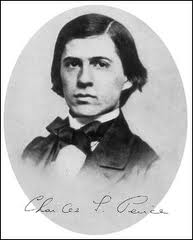
C. S. Peirce: 10 Sept, 1839-19 April, 1914
I just noticed that ‘today’* was C.S. Peirce’s birthday, *well I’m posting this slightly after midnight. He’s one of my heroes. He’s a treasure chest on essentially any topic, and originated such ideas as fallibilism, predesignation, and randomization.[1] Unfortunately, he ended up penniless and had to be kept alive through the support of fellow philosophers. I’m reblogging the main sections of a (2005) paper of mine. If you’re writing something connecting to Peirce’s philosophy of science, you might be interested in this call for papers.
Happy Birthday C. S. Peirce. 
Peircean Induction and the Error-Correcting Thesis
Peirce’s philosophy of inductive inference in science is based on the idea that what permits us to make progress in science, what allows our knowledge to grow, is the fact that science uses methods that are self-correcting or error-correcting:
Induction is the experimental testing of a theory. The justification of it is that, although the conclusion at any stage of the investigation may be more or less erroneous, yet the further application of the same method must correct the error. (5.145)
Inductive methods—understood as methods of experimental testing—are justified to the extent that they are error-correcting methods. We may call this Peirce’s error-correcting or self-correcting thesis (SCT):
Self-Correcting Thesis SCT: methods for inductive inference in science are error correcting; the justification for inductive methods of experimental testing in science is that they are self-correcting.
Peirce’s SCT has been a source of fascination and frustration. By and large, critics and followers alike have denied that Peirce can sustain his SCT as a way to justify scientific induction: “No part of Peirce’s philosophy of science has been more severely criticized, even by his most sympathetic commentators, than this attempted validation of inductive methodology on the basis of its purported self-correctiveness” (Rescher 1978, p. 20).
In this paper I shall revisit the Peircean SCT: properly interpreted, I will argue, Peirce’s SCT not only serves its intended purpose, it also provides the basis for justifying (frequentist) statistical methods in science. While on the one hand, contemporary statistical methods increase the mathematical rigor and generality of Peirce’s SCT, on the other, Peirce provides something current statistical methodology lacks: an account of inductive inference and a philosophy of experiment that links the justification for statistical tests to a more general rationale for scientific induction. Combining the mathematical contributions of modern statistics with the inductive philosophy of Peirce, sets the stage for developing an adequate justification for contemporary inductive statistical methodology.
2. Probabilities are assigned to procedures not hypotheses
Peirce’s philosophy of experimental testing shares a number of key features with the contemporary (Neyman and Pearson) Statistical Theory: statistical methods provide, not means for assigning degrees of probability, evidential support, or confirmation to hypotheses, but procedures for testing (and estimation), whose rationale is their predesignated high frequencies of leading to correct results in some hypothetical long-run. A Neyman and Pearson (NP) statistical test, for example, instructs us “To decide whether a hypothesis, H, of a given type be rejected or not, calculate a specified character, x0, of the observed facts; if x> x0 reject H; if x< x0 accept H.” Although the outputs of N-P tests do not assign hypotheses degrees of probability, “it may often be proved that if we behave according to such a rule … we shall reject H when it is true not more, say, than once in a hundred times, and in addition we may have evidence that we shall reject H sufficiently often when it is false” (Neyman and Pearson, 1933, p.142).[i]
The relative frequencies of erroneous rejections and erroneous acceptances in an actual or hypothetical long run sequence of applications of tests are error probabilities; we may call the statistical tools based on error probabilities, error statistical tools. In describing his theory of inference, Peirce could be describing that of the error-statistician:
The theory here proposed does not assign any probability to the inductive or hypothetic conclusion, in the sense of undertaking to say how frequently that conclusion would be found true. It does not propose to look through all the possible universes, and say in what proportion of them a certain uniformity occurs; such a proceeding, were it possible, would be quite idle. The theory here presented only says how frequently, in this universe, the special form of induction or hypothesis would lead us right. The probability given by this theory is in every way different—in meaning, numerical value, and form—from that of those who would apply to ampliative inference the doctrine of inverse chances. (2.748)
The doctrine of “inverse chances” alludes to assigning (posterior) probabilities in hypotheses by applying the definition of conditional probability (Bayes’s theorem)—a computation requires starting out with a (prior or “antecedent”) probability assignment to an exhaustive set of hypotheses:
If these antecedent probabilities were solid statistical facts, like those upon which the insurance business rests, the ordinary precepts and practice [of inverse probability] would be sound. But they are not and cannot be statistical facts. What is the antecedent probability that matter should be composed of atoms? Can we take statistics of a multitude of different universes? (2.777)
For Peircean induction, as in the N-P testing model, the conclusion or inference concerns a hypothesis that either is or is not true in this one universe; thus, assigning a frequentist probability to a particular conclusion, other than the trivial ones of 1 or 0, for Peirce, makes sense only “if universes were as plentiful as blackberries” (2.684). Thus the Bayesian inverse probability calculation seems forced to rely on subjective probabilities for computing inverse inferences, but “subjective probabilities” Peirce charges “express nothing but the conformity of a new suggestion to our prepossessions, and these are the source of most of the errors into which man falls, and of all the worse of them” (2.777).
Hearing Pierce contrast his view of induction with the more popular Bayesian account of his day (the Conceptualists), one could be listening to an error statistician arguing against the contemporary Bayesian (subjective or other)—with one important difference. Today’s error statistician seems to grant too readily that the only justification for N-P test rules is their ability to ensure we will rarely take erroneous actions with respect to hypotheses in the long run of applications. This so called inductive behavior rationale seems to supply no adequate answer to the question of what is learned in any particular application about the process underlying the data. Peirce, by contrast, was very clear that what is really wanted in inductive inference in science is the ability to control error probabilities of test procedures, i.e., “the trustworthiness of the proceeding”. Moreover it is only by a faulty analogy with deductive inference, Peirce explains, that many suppose that inductive (synthetic) inference should supply a probability to the conclusion: “… in the case of analytic inference we know the probability of our conclusion (if the premises are true), but in the case of synthetic inferences we only know the degree of trustworthiness of our proceeding (“The Probability of Induction” 2.693).
Knowing the “trustworthiness of our inductive proceeding”, I will argue, enables determining the test’s probative capacity, how reliably it detects errors, and the severity of the test a hypothesis withstands. Deliberately making use of known flaws and fallacies in reasoning with limited and uncertain data, tests may be constructed that are highly trustworthy probes in detecting and discriminating errors in particular cases. This, in turn, enables inferring which inferences about the process giving rise to the data are and are not warranted: an inductive inference to hypothesis H is warranted to the extent that with high probability the test would have detected a specific flaw or departure from what H asserts, and yet it did not.
I’m skipping section 3; you can read Section 3 here. (it’s not necessary for understanding the rest).
4. Peircean induction as severe testing
… [I]nduction, for Peirce, is a matter of subjecting hypotheses to “the test of experiment” (7.182).
The process of testing it will consist, not in examining the facts, in order to see how well they accord with the hypothesis, but on the contrary in examining such of the probable consequences of the hypothesis … which would be very unlikely or surprising in case the hypothesis were not true. (7.231)
When, however, we find that prediction after prediction, notwithstanding a preference for putting the most unlikely ones to the test, is verified by experiment,…we begin to accord to the hypothesis a standing among scientific results.
This sort of inference it is, from experiments testing predictions based on a hypothesis, that is alone properly entitled to be called induction. (7.206)
While these and other passages are redolent of Popper, Peirce differs from Popper in crucial ways. Peirce, unlike Popper, is primarily interested not in falsifying claims but in the positive pieces of information provided by tests, with “the corrections called for by the experiment” and with the hypotheses, modified or not, that manage to pass severe tests. For Popper, even if a hypothesis is highly corroborated (by his lights), he regards this as at most a report of the hypothesis’ past performance and denies it affords positive evidence for its correctness or reliability. Further, Popper denies that he could vouch for the reliability of the method he recommends as “most rational”—conjecture and refutation. Indeed, Popper’s requirements for a highly corroborated hypothesis are not sufficient for ensuring severity in Peirce’s sense (Mayo 1996, 2003, 2005). Where Popper recoils from even speaking of warranted inductions, Peirce conceives of a proper inductive inference as what had passed a severe test—one which would, with high probability, have detected an error if present.
In Peirce’s inductive philosophy, we have evidence for inductively inferring a claim or hypothesis H when not only does H “accord with” the data x; but also, so good an accordance would very probably not have resulted, were H not true. In other words, we may inductively infer H when it has withstood a test of experiment that it would not have withstood, or withstood so well, were H not true (or were a specific flaw present). This can be encapsulated in the following severity requirement for an experimental test procedure, ET, and data set x.
Hypothesis H passes a severe test with x iff (firstly) x accords with H and (secondly) the experimental test procedure ET would, with very high probability, have signaled the presence of an error were there a discordancy between what H asserts and what is correct (i.e., were H false).
The test would “have signaled an error” by having produced results less accordant with H than what the test yielded. Thus, we may inductively infer H when (and only when) H has withstood a test with high error detecting capacity, the higher this probative capacity, the more severely H has passed. What is assessed (quantitatively or qualitatively) is not the amount of support for H but the probative capacity of the test of experiment ET (with regard to those errors that an inference to H is declaring to be absent)……….
You can read the rest of Section 4 here.
5. The path from qualitative to quantitative induction
In my understanding of Peircean induction, the difference between qualitative and quantitative induction is really a matter of degree, according to whether their trustworthiness or severity is quantitatively or only qualitatively ascertainable. This reading not only neatly organizes Peirce’s typologies of the various types of induction, it underwrites the manner in which, within a given classification, Peirce further subdivides inductions by their “strength”.
(I) First-Order, Rudimentary or Crude Induction
Consider Peirce’s First Order of induction: the lowest, most rudimentary form that he dubs, the “pooh-pooh argument”. It is essentially an argument from ignorance: Lacking evidence for the falsity of some hypothesis or claim H, provisionally adopt H. In this very weakest sort of induction, crude induction, the most that can be said is that a hypothesis would eventually be falsified if false. (It may correct itself—but with a bang!) It “is as weak an inference as any that I would not positively condemn” (8.237). While uneliminable in ordinary life, Peirce denies that rudimentary induction is to be included as scientific induction. Without some reason to think evidence of H‘s falsity would probably have been detected, were H false, finding no evidence against H is poor inductive evidence for H. H has passed only a highly unreliable error probe.
(II) Second Order (Qualitative) Induction
It is only with what Peirce calls “the Second Order” of induction that we arrive at a genuine test, and thereby scientific induction. Within second order inductions, a stronger and a weaker type exist, corresponding neatly to viewing strength as the severity of a testing procedure.
The weaker of these is where the predictions that are fulfilled are merely of the continuance in future experience of the same phenomena which originally suggested and recommended the hypothesis… (7.116)
The other variety of the argument … is where [results] lead to new predictions being based upon the hypothesis of an entirely different kind from those originally contemplated and these new predictions are equally found to be verified. (7.117)
The weaker type occurs where the predictions, though fulfilled, lack novelty; whereas, the stronger type reflects a more stringent hurdle having been satisfied: the hypothesis has had “novel” predictive success, and thereby higher severity. (For a discussion of the relationship between types of novelty and severity see Mayo 1991, 1996). Note that within a second order induction the assessment of strength is qualitative, e.g., very strong, weak, very weak.
The strength of any argument of the Second Order depends upon how much the confirmation of the prediction runs counter to what our expectation would have been without the hypothesis. It is entirely a question of how much; and yet there is no measurable quantity. For when such measure is possible the argument … becomes an induction of the Third Order [statistical induction]. (7.115)
It is upon these and like passages that I base my reading of Peirce. A qualitative induction, i.e., a test whose severity is qualitatively determined, becomes a quantitative induction when the severity is quantitatively determined; when an objective error probability can be given.
(III) Third Order, Statistical (Quantitative) Induction
We enter the Third Order of statistical or quantitative induction when it is possible to quantify “how much” the prediction runs counter to what our expectation would have been without the hypothesis. In his discussions of such quantifications, Peirce anticipates to a striking degree later developments of statistical testing and confidence interval estimation (Hacking 1980, Mayo 1993, 1996). Since this is not the place to describe his statistical contributions, I move to more modern methods to make the qualitative-quantitative contrast.
6. Quantitative and qualitative induction: significance test reasoning
Quantitative Severity
A statistical significance test illustrates an inductive inference justified by a quantitative severity assessment. The significance test procedure has the following components: (1) a null hypothesis H0, which is an assertion about the distribution of the sample X = (X1, …, Xn), a set of random variables, and (2) a function of the sample, d(x), the test statistic, which reflects the difference between the data x = (x1, …, xn), and null hypothesis H0. The observed value of d(X) is written d(x). The larger the value of d(x) the further the outcome is from what is expected under H0, with respect to the particular question being asked. We can imagine that null hypothesis H0 is
H0: there are no increased cancer risks associated with hormone replacement therapy (HRT) in women who have taken them for 10 years.
Let d(x) measure the increased risk of cancer in n women, half of which were randomly assigned to HRT. H0 asserts, in effect, that it is an error to take as genuine any positive value of d(x)—any observed difference is claimed to be “due to chance”. The test computes (3) the p-value, which is the probability of a difference larger than d(x), under the assumption that H0 is true:
p-value = Prob(d(X) > d(x)); H0).
If this probability is very small, the data are taken as evidence that
H*: cancer risks are higher in women treated with HRT
The reasoning is a statistical version of modes tollens.
If the hypothesis H0 is correct then, with high probability, 1- p, the data would not be statistically significant at level p.
x is statistically significant at level p.
Therefore, x is evidence of a discrepancy from H0, in the direction of an alternative hypothesis H.
(i.e., H* severely passes, where the severity is 1 minus the p-value)[iii]
…
If a particular conclusion is wrong, subsequent severe (or highly powerful) tests will with high probability detect it. In particular, if we are wrong to reject H0 (and H0 is actually true), we would find we were rarely able to get so statistically significant a result to recur, and in this way we would discover our original error.
It is true that the observed conformity of the facts to the requirements of the hypothesis may have been fortuitous. But if so, we have only to persist in this same method of research and we shall gradually be brought around to the truth. (7.115)
The correction is not a matter of getting higher and higher probabilities, it is a matter of finding out whether the agreement is fortuitous; whether it is generated about as often as would be expected were the agreement of the chance variety.
There are two other points of importance in critical discussions of the SCT, that we may note here:
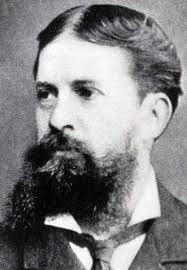
C. S. Peirce
9/10/1839 – 4/19/1914
I. The SCT and the Requirements of Randomization and Predesignation
The concern with “the trustworthiness of the proceeding” for Peirce like the concern with error probabilities (e.g., significance levels) for error statisticians generally, is directly tied to their view that inductive method should closely link inferences to the methods of data collection as well as to how the hypothesis came to be formulated or chosen for testing.
This account of the rationale of induction is distinguished from others in that it has as its consequences two rules of inductive inference which are very frequently violated (1.95) namely, that the sample be (approximately) random and that the property being tested not be determined by the particular sample x— i.e., predesignation.
The picture of Peircean induction that one finds in critics of the SCT disregards these crucial requirements for induction: Neither enumerative induction nor H-D testing, as ordinarily conceived, requires such rules. Statistical significance testing, however, clearly does.
Suppose, for example that researchers wishing to demonstrate the benefits of HRT search the data for factors on which treated women fare much better than untreated, and finding one such factor they proceed to test the null hypothesis:
H0: there is no improvement in factor F (e.g. memory) among women treated with HRT.
Having selected this factor for testing solely because it is a factor on which treated women show impressive improvement, it is not surprising that this null hypothesis is rejected and the results taken to show a genuine improvement in the population. However, when the null hypothesis is tested on the same data that led it to be chosen for testing, it is well known, a spurious impression of a genuine effect easily results. Suppose, for example, that 20 factors are examined for impressive-looking improvements among HRT-treated women, and the one difference that appears large enough to test turns out to be significant at the 0.05 level. The actual significance level—the actual probability of reporting a statistically significant effect when in fact the null hypothesis is true—is not 5% but approximately 64% (Mayo 1996, Mayo and Kruse 2001, Mayo and Cox 2006, Mayo and Spanos 2006). To infer the denial of H0, and infer there is evidence that HRT improves memory, is to make an inference with low severity (approximately 0.36).
II Understanding the “long-run error correcting” metaphor
Discussions of Peircean ‘self-correction’ often confuse two interpretations of the ‘long-run’ error correcting metaphor, even in the case of quantitative induction: (a) Asymptotic self-correction (as n approaches ∞): In this construal, it is imagined that one has a sample, say of size n=10, and it is supposed that the SCT assures us that as the sample size increases toward infinity, one gets better and better estimates of some feature of the population, say the mean. Although this may be true, provided assumptions of a statistical model (e.g., the Binomial) are met, it is not the sense intended in significance-test reasoning nor, I maintain, in Peirce’s SCT. Peirce’s idea, instead, gives needed insight for understanding the relevance of ‘long-run’ error probabilities of significance tests to assess the reliability of an inductive inference from a specific set of data, (b) Error probabilities of a test: In this construal, one has a sample of size n, say 10, and imagines hypothetical replications of the experiment—each with samples of 10. Each sample of 10 gives a single value of the test statistic d(X), but one can consider the distribution of values that would occur in hypothetical repetitions (of the given type of sampling). The probability distribution of d(X) is called the sampling distribution, and the correct calculation of the significance level is an example of how tests appeal to this distribution: Thanks to the relationship between the observed d(x) and the sampling distribution of d(X), the former can be used to reliably probe the correctness of statistical hypotheses (about the procedure) that generated the particular 10-fold sample. That is what the SCT is asserting.
It may help to consider a very informal example. Suppose that weight gain is measured by 10 well-calibrated and stable methods, possibly using several measuring instruments and the results show negligible change over a test period of interest. This may be regarded as grounds for inferring that the individual’s weight gain is negligible within limits set by the sensitivity of the scales. Why? While it is true that by averaging more and more weight measurements, i.e., an eleventh, twelfth, etc., one would get asymptotically close to the true weight, that is not the rationale for the particular inference. The rationale is rather that the error probabilistic properties of the weighing procedure (the probability of ten-fold weighings erroneously failing to show weight change) inform one of the correct weight in the case at hand, e.g., that a 0 observed weight increase passes the “no-weight gain” hypothesis with high severity.
7. Induction corrects its premises
Justifying the severity, and accordingly, the error-correcting capacity, of tests depends upon being able to justify sufficiently test assumptions, whether in the quantitative or qualitative realms. In the former, a typical assumption would be that the data set constitutes a random sample from the appropriate population; in the latter, assumptions would include such things as “my instrument (e.g., scale) is working”. The problem of justifying methods is often taken to stymie attempts to justify inductive methods. Self-correcting, or error-correcting, enters here too, and precisely in the way that Peirce recognized. This leads me to consider something apparently overlooked by his critics; namely, Peirce’s insistence that induction “not only corrects its conclusions, it even corrects its premises” (3.575).
Induction corrects its premises by checking, correcting, or validating its own assumptions. One way that induction corrects its premises is by correcting and improving upon the accuracy of its data. This idea is at the heart of what allows induction—understood as severe testing—to be genuinely ampliative: to come out with more than is put in. Peirce comes to his philosophical stances from his experiences with astronomical observations.
Every astronomer, however, is familiar with the fact that the catalogue place of a fundamental star, which is the result of elaborate reasoning, is far more accurate than any of the observations from which it was deduced. (5.575)
His day-to-day use of the method of least squares made it apparent to him how knowledge of errors of observation can be used to infer an accurate observation from highly shaky data.
It is commonly assumed that empirical claims are only as reliable as the data involved in their inference, thus it is assumed, with Popper, that “should we try to establish anything with our tests, we should be involved in an infinite regress” (Popper 1962, p. 388). Peirce explicitly rejects this kind of “tower image” and argues that we can often arrive at rather accurate claims from far less accurate ones. For instance, with a little data massaging, e.g., averaging, we can obtain a value of a quantity of interest that is far more accurate than individual measurements.
Qualitative Error Correction
Peirce applies the same strategy from astronomy to a qualitative example:
That Induction tends to correct itself, is obvious enough. When a man undertakes to construct a table of mortality upon the basis of the Census, he is engaged in an inductive inquiry. And lo, the very first thing that he will discover from the figures … is that those figures are very seriously vitiated by their falsity. (5.576)
How is it discovered that there are systematic errors in the age reports? By noticing that the number of men reporting their age as 21 far exceeds those who are 20 (while in all other cases ages are much more likely to be expressed in round numbers). Induction, as Pierce understands it, helps to uncover this subject bias, that those under 21 tend to put down that they are 21. It does so by means of formal models of age distributions along with informal, background knowledge of the root causes of such bias. “The young find it to their advantage to be thought older than they are, and the old to be thought younger than they are” (5.576). Moreover, statistical considerations often allow correcting for bias, i.e., by estimating the number of “21” reports that are likely to be attributable to 20 year olds. As with the star catalogue, the data thus corrected is more accurate than the original data report.
By means of an informal tool kit of key errors and their causes, coupled with formal or systematic tools to model them, experimental inquiry checks and corrects its own assumptions for the purpose of carrying out some other inquiry. As I have been urging for Peircean self-correction generally, satisfying the SCT is not a matter of saying with enough data we will get better and better estimates of the star positions or the distribution of ages in a population; it is a matter of being able to employ methods in a given inquiry to detect and correct mistakes in that inquiry, or that data set. To get such methods off the ground there is no need to build a careful tower where inferences are piled up, each depending on what went on before: Properly exploited, inaccurate observations can give way to far more accurate data. By building up a “repertoire” of errors and means to check, avoid, or correct them, scientific induction is self-correcting.
Induction Fares Better Than Deduction at Correcting its Errors
Consider how this reading of Peirce makes sense of his holding inductive science as better at self-correcting than deductive science.
Deductive inquiry … has its errors; and it corrects them, too. But it is by no means so sure, or at least so swift to do this as is Inductive science. (5.577)
An example he gives is that the error in Euclid’s elements was undiscovered until non-Euclidean geometry was developed. Or again, “It is evident that when we run a column of figures down as well as up, as a check” or look out for possible flaws in a demonstration, “we are acting precisely as when in an induction we enlarge our sample for the sake of the self-correcting effect of induction” (5.580). In both cases we are appealing to various methods we have devised because we find they increase our ability to correct our mistakes, and thus increase the error probing power of our reasoning. What is distinctive about the methodology of inductive testing is that it deliberately directs itself to devising tools for reliable error probes. This is not so for mathematics. Granted, “once an error is suspected, the whole world is speedily in accord about it” (5.577) in deductive reasoning. But, for the most part mathematics does not itself supply tools for uncovering flaws.
So it appears that this marvelous self-correcting property of Reason … belongs to every sort of science, although it appears as essential, intrinsic and inevitable only in the highest type of reasoning, which is induction. (5.579)
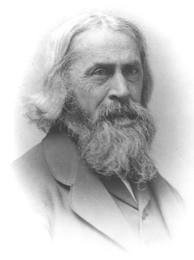
C. S. Peirce: 10 Sept, 1839-19 April, 1914
[You can find a pdf version of this paper here.]
NOTES (Section 1 – 1st half of section 6):
[1] Stigler discusses some of the experiments Peirce performed. In one, with Joseph Jastrow, the goal was to test whether there’s a threshold below which you can’t discern the difference in weights between two objects. Psychologists had hypothesized that there was a minimal threshold “ such that if the difference was below the threshold, termed the just noticeable difference (jnd), the two stimuli were indistinguishable….[Peirce and Jastrow] showed this speculation was false’ Stigler (2016, 160). No matter how close in weight the objects were the probability of a correct discernment of difference differed from ½. A good example of evidence for a “no-effect” null by falsifying the alternative statistically.
NOTES (2nd half of section 6-end):
[i] Others who relate Peircean induction and Neyman-Pearson tests are Isaac Levi (1980) and Ian Hacking (1980). See also Mayo 1993 and 1996.
[ii] This statement of (b) is regarded by Laudan as the strong thesis of self-correcting. A weaker thesis would replace (b) with (b’): science has techniques for determining unambiguously whether an alternative T’ is closer to the truth than a refuted T.
[iii] If the p-value were not very small, then the difference would be considered statistically insignificant (generally small values are 0.1 or less). We would then regard H0 as consistent with data x, but we may wish to go further and determine the size of an increased risk r that has thereby been ruled out with severity. We do so by finding a risk increase, such that, Prob(d(x) > d(x); risk increase r) is high, say. Then the assertion: the risk increase < r passes with high severity, we would argue.
If there were a discrepancy from hypothesis H0 of r (or more), then, with high probability,1-p, the data would be statistically significant at level p.
x is not statistically significant at level p.
Therefore, x is evidence than any discrepancy from H0 is less than r.
For a general treatment of severity, see Mayo and Spanos (2006).
[Ed. Note: A not bad biographical sketch can be found on wikipedia.]
REFERENCES
Hacking, I. 1980 “The Theory of Probable Inference: Neyman, Peirce and Braithwaite”, pp. 141-160 in D. H. Mellor (ed.), Science, Belief and Behavior: Essays in Honour of R.B. Braithwaite. Cambridge: Cambridge University Press.
Laudan, L. 1981 Science and Hypothesis: Historical Essays on Scientific Methodology. Dordrecht: D. Reidel.
Levi, I. 1980 “Induction as Self Correcting According to Peirce”, pp. 127-140 in D. H. Mellor (ed.), Science, Belief and Behavior: Essays in Honor of R.B. Braithwaite. Cambridge: Cambridge University Press.
Mayo, D. 1991 “Novel Evidence and Severe Tests”, Philosophy of Science, 58: 523-552.
———- 1993 “The Test of Experiment: C. S. Peirce and E. S. Pearson”, pp. 161-174 in E. C. Moore (ed.), Charles S. Peirce and the Philosophy of Science. Tuscaloosa: University of Alabama Press.
——— 1996 Error and the Growth of Experimental Knowledge, The University of Chicago Press, Chicago.
———–2003 “Severe Testing as a Guide for Inductive Learning”, in H. Kyburg (ed.), Probability Is the Very Guide in Life. Chicago: Open Court Press, pp. 89-117.
———- 2005 “Evidence as Passing Severe Tests: Highly Probed vs. Highly Proved” in P. Achinstein (ed.), Scientific Evidence, Johns Hopkins University Press.
Mayo, D. and Kruse, M. 2001 “Principles of Inference and Their Consequences,” pp. 381-403 in Foundations of Bayesianism, D. Cornfield and J. Williamson (eds.), Dordrecht: Kluwer Academic Publishers.
Mayo, D. and Spanos, A. 2004 “Methodology in Practice: Statistical Misspecification Testing” Philosophy of Science, Vol. II, PSA 2002, pp. 1007-1025.
———- (2006). “Severe Testing as a Basic Concept in a Neyman-Pearson Theory of Induction”, The British Journal of Philosophy of Science 57: 323-357.
Mayo, D. and Cox, D.R. 2006 “The Theory of Statistics as the ‘Frequentist’s’ Theory of Inductive Inference”, Institute of Mathematical Statistics (IMS) Lecture Notes-Monograph Series, Contributions to the Second Lehmann Symposium, 2005.
Neyman, J. and Pearson, E.S. 1933 “On the Problem of the Most Efficient Tests of Statistical Hypotheses”, in Philosophical Transactions of the Royal Society, A: 231, 289-337, as reprinted in J. Neyman and E.S. Pearson (1967), pp. 140-185.
———- 1967 Joint Statistical Papers, Berkeley: University of California Press.
Niiniluoto, I. 1984 Is Science Progressive? Dordrecht: D. Reidel.
Peirce, C. S. Collected Papers: Vols. I-VI, C. Hartshorne and P. Weiss (eds.) (1931-1935). Vols. VII-VIII, A. Burks (ed.) (1958), Cambridge: Harvard University Press.
Popper, K. 1962 Conjectures and Refutations: the Growth of Scientific Knowledge, Basic Books, New York.
Rescher, N. 1978 Peirce’s Philosophy of Science: Critical Studies in His Theory of Induction and Scientific Method, Notre Dame: University of Notre Dame Press.
Stigler, S. 2016 The Seven Pillars of Statistical Wisdom, Harvard.


 Error Statistics Philosophy