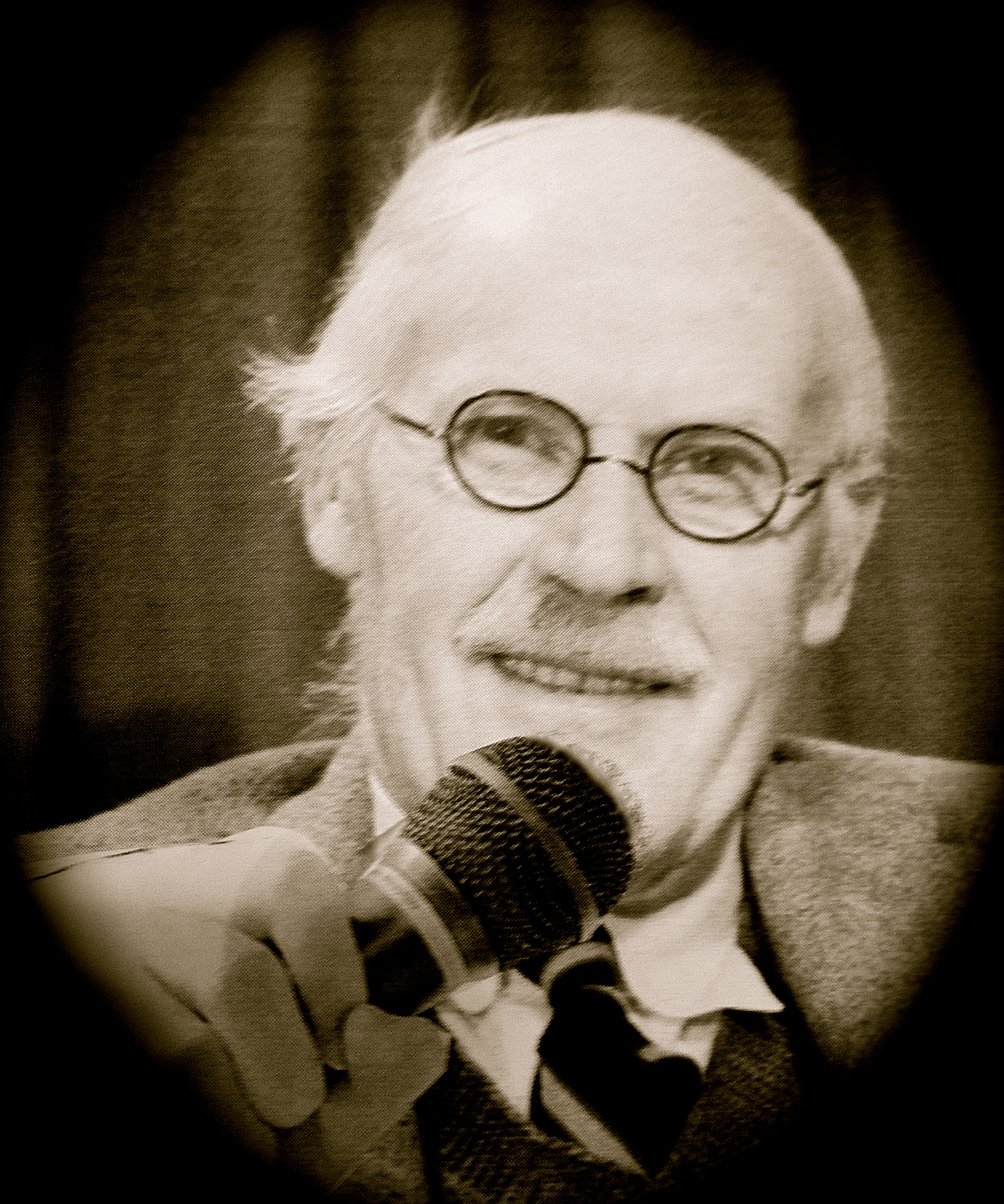

Fisher

R.A. Fisher: ‘Two New Properties of Mathematical Likelihood’: Just before breaking up (with N-P)

17 February 1890–29 July 1962

In recognition of R.A. Fisher’s birthday tomorrow, I will post several entries on him. I find this (1934) paper to be intriguing –immediately before the conflicts with Neyman and Pearson erupted. It represents essentially the last time he could take their work at face value, without the professional animosities that almost entirely caused, rather than being caused by, the apparent philosophical disagreements and name-calling everyone focuses on. Fisher links his tests and sufficiency, to the Neyman and Pearson lemma in terms of power.  It’s as if we may see them as ending up in a very similar place (no pun intended) while starting from different origins. I quote just the most relevant portions…the full article is linked below. I’d blogged it earlier here.  You may find some gems in it.

‘Two new Properties of Mathematical Likelihood’

by R.A. Fisher, F.R.S.

Proceedings of the Royal Society, Series A, 144: 285-307(1934)

  The property that where a sufficient statistic exists, the likelihood, apart from a factor independent of the parameter to be estimated, is a function only of the parameter and the sufficient statistic, explains the principle result obtained by Neyman and Pearson in discussing the efficacy of tests of significance.  Neyman and Pearson introduce the notion that any chosen test of a hypothesis H0 is more powerful than any other equivalent test, with regard to an alternative hypothesis H1, when it rejects H0 in a set of samples having an assigned aggregate frequency ε when H0 is true, and the greatest possible aggregate frequency when H1 is true.

If any group of samples can be found within the region of rejection whose probability of occurrence on the hypothesis H1 is less than that of any other group of samples outside the region, but is not less on the hypothesis H0, then the test can evidently be made more powerful by substituting the one group for the other. Continue reading


Categories: Fisher, phil/history of stat, Statistics | Tags: , , , | 3 Comments

A. Spanos: “Recurring controversies about P values and confidence intervals revisited”

A SPANOS

Aris Spanos
Wilson E. Schmidt Professor of Economics
Department of Economics, Virginia Tech

Recurring controversies about P values and confidence intervals revisited*
Ecological Society of America (ESA) ECOLOGY
Forum—P Values and Model Selection (pp. 609-654)
Volume 95, Issue 3 (March 2014): pp. 645-651

INTRODUCTION

The use, abuse, interpretations and reinterpretations of the notion of a P value has been a hot topic of controversy since the 1950s in statistics and several applied fields, including psychology, sociology, ecology, medicine, and economics.

The initial controversy between Fisher’s significance testing and the Neyman and Pearson (N-P; 1933) hypothesis testing concerned the extent to which the pre-data Type  I  error  probability  α can  address the arbitrariness and potential abuse of Fisher’s post-data  threshold for the value. Continue reading

Categories: CIs and tests, Error Statistics, Fisher, P-values, power, Statistics | 32 Comments

Who ya gonna call for statistical Fraudbusting? R.A. Fisher, P-values, and error statistics (again)

images-9If there’s somethin’ strange in your neighborhood. Who ya gonna call?(Fisherian Fraudbusters!)*

*[adapted from R. Parker’s “Ghostbusters”]

When you need to warrant serious accusations of bad statistics, if not fraud, where do scientists turn? Answer: To the frequentist error statistical reasoning and to p-value scrutiny, first articulated by R.A. Fisher[i].The latest accusations of big time fraud in social psychology concern the case of Jens Förster. As Richard Gill notes:

The methodology here is not new. It goes back to Fisher (founder of modern statistics) in the 30’s. Many statistics textbooks give as an illustration Fisher’s re-analysis (one could even say: meta-analysis) of Mendel’s data on peas. The tests of goodness of fit were, again and again, too good. There are two ingredients here: (1) the use of the left-tail probability as p-value instead of the right-tail probability. (2) combination of results from a number of independent experiments using a trick invented by Fisher for the purpose, and well known to all statisticians. (Richard D. Gill)

Continue reading

Categories: Error Statistics, Fisher, significance tests, Statistical fraudbusting, Statistics | 42 Comments

Sir Harold Jeffreys’ (tail area) one-liner: Sat night comedy [draft ii]

Comedy hour icon

This headliner appeared last month, but to a sparse audience (likely because it was during winter break), so Management’s giving him another chance… 

You might not have thought there could be new material for 2014, but there is, and if you look a bit more closely, you’ll see that it’s actually not Jay Leno who is standing up there at the mike ….

IMG_1547It’s Sir Harold Jeffreys himself! And his (very famous) joke, I admit, is funny. So, since it’s Saturday night, let’s listen in on Sir Harold’s howler* in criticizing the use of p-values.

“Did you hear the one about significance testers rejecting H0 because of outcomes H0 didn’t predict?

‘What’s unusual about that?’ you ask?

What’s unusual, is that they do it when these unpredicted outcomes haven’t even occurred!”

Much laughter.

[The actual quote from Jeffreys: Using p-values implies that “An hypothesis that may be true is rejected because it has failed to predict observable results that have not occurred. This seems a remarkable procedure.” (Jeffreys 1939, 316)]

I say it’s funny, so to see why I’ll strive to give it a generous interpretation. Continue reading

Categories: Comedy, Fisher, Jeffreys, P-values, Stephen Senn | Leave a comment

STEPHEN SENN: Fisher’s alternative to the alternative

Reblogging 2 years ago:

By: Stephen Senn

This year [2012] marks the 50th anniversary of RA Fisher’s death. It is a good excuse, I think, to draw attention to an aspect of his philosophy of significance testing. In his extremely interesting essay on Fisher, Jimmie Savage drew attention to a problem in Fisher’s approach to testing. In describing Fisher’s aversion to power functions Savage writes, ‘Fisher says that some tests are more sensitive than others, and I cannot help suspecting that that comes to very much the same thing as thinking about the power function.’ (Savage 1976) (P473).

The modern statistician, however, has an advantage here denied to Savage. Savage’s essay was published posthumously in 1976 and the lecture on which it was based was given in Detroit on 29 December 1971 (P441). At that time Fisher’s scientific correspondence did not form part of his available oeuvre but in1990 Henry Bennett’s magnificent edition of Fisher’s statistical correspondence (Bennett 1990) was published and this throws light on many aspects of Fisher’s thought including on significance tests.

The key letter here is Fisher’s reply of 6 October 1938 to Chester Bliss’s letter of 13 September. Bliss himself had reported an issue that had been raised with him by Snedecor on 6 September. Snedecor had pointed out that an analysis using inverse sine transformations of some data that Bliss had worked on gave a different result to an analysis of the original values. Bliss had defended his (transformed) analysis on the grounds that a) if a transformation always gave the same result as an analysis of the original data there would be no point and b) an analysis on inverse sines was a sort of weighted analysis of percentages with the transformation more appropriately reflecting the weight of information in each sample. Bliss wanted to know what Fisher thought of his reply.

Fisher replies with a ‘shorter catechism’ on transformations which ends as follows: Continue reading

Categories: Fisher, Statistics, Stephen Senn | Tags: , , , | 31 Comments

R.A. Fisher: ‘Two New Properties of Mathematical Likelihood’

17 February 1890–29 July 1962

Exactly 1 year ago: I find this to be an intriguing discussion–before some of the conflicts with N and P erupted.  Fisher links his tests and sufficiency, to the Neyman and Pearson lemma in terms of power.  It’s as if we may see them as ending up in a similar place while starting from different origins. I quote just the most relevant portions…the full article is linked below.

by R.A. Fisher, F.R.S.

Proceedings of the Royal Society, Series A, 144: 285-307 (1934)

  The property that where a sufficient statistic exists, the likelihood, apart from a factor independent of the parameter to be estimated, is a function only of the parameter and the sufficient statistic, explains the principle result obtained by Neyman and Pearson in discussing the efficacy of tests of significance.  Neyman and Pearson introduce the notion that any chosen test of a hypothesis H0 is more powerful than any other equivalent test, with regard to an alternative hypothesis H1, when it rejects H0 in a set of samples having an assigned aggregate frequency ε when H0 is true, and the greatest possible aggregate frequency when H1 is true.

If any group of samples can be found within the region of rejection whose probability of occurrence on the hypothesis H1 is less than that of any other group of samples outside the region, but is not less on the hypothesis H0, then the test can evidently be made more powerful by substituting the one group for the other. Continue reading

Categories: Fisher, phil/history of stat, Statistics | Tags: , , , | 1 Comment

Aris Spanos: The Enduring Legacy of R. A. Fisher

spanos 2014

More Fisher insights from A. Spanos, this from 2 years ago:

One of R. A. Fisher’s (17 February 1890 — 29 July 1962) most re­markable, but least recognized, achievement was to initiate the recast­ing of statistical induction. Fisher (1922) pioneered modern frequentist statistics as a model-based approach to statistical induction anchored on the notion of a statistical model, formalized by:

Mθ(x)={f(x;θ); θ∈Θ}; x∈Rn ;Θ⊂Rm; m < n; (1)

where the distribution of the sample f(x;θ) ‘encapsulates’ the proba­bilistic information in the statistical model.

Before Fisher, the notion of a statistical model was vague and often implicit, and its role was primarily confined to the description of the distributional features of the data in hand using the histogram and the first few sample moments; implicitly imposing random (IID) samples. The problem was that statisticians at the time would use descriptive summaries of the data to claim generality beyond the data in hand x0:=(x1,x2,…,xn). As late as the 1920s, the problem of statistical induction was understood by Karl Pearson in terms of invoking (i) the ‘stability’ of empirical results for subsequent samples and (ii) a prior distribution for θ.

Fisher was able to recast statistical inference by turning Karl Pear­son’s approach, proceeding from data x0 in search of a frequency curve f(x;ϑ) to describe its histogram, on its head. He proposed to begin with a prespecified Mθ(x) (a ‘hypothetical infinite population’), and view x0 as a ‘typical’ realization thereof; see Spanos (1999).

In my mind, Fisher’s most enduring contribution is his devising a general way to ‘operationalize’ errors by embedding the material ex­periment into Mθ(x), and taming errors via probabilification, i.e. to define frequentist error probabilities in the context of a statistical model. These error probabilities are (a) deductively derived from the statistical model, and (b) provide a measure of the ‘effectiviness’ of the inference procedure: how often a certain method will give rise to correct in­ferences concerning the underlying ‘true’ Data Generating Mechanism (DGM). This cast aside the need for a prior. Both of these key elements, the statistical model and the error probabilities, have been refined and extended by Mayo’s error statistical approach (EGEK 1996). Learning from data is achieved when an inference is reached by an inductive procedure which, with high probability, will yield true conclusions from valid inductive premises (a statistical model); Mayo and Spanos (2011). Continue reading

Categories: Fisher, phil/history of stat, Statistics | Tags: , , , , , , | 2 Comments

R. A. Fisher: how an outsider revolutionized statistics

A SPANOSToday is R.A. Fisher’s birthday and I’m reblogging the post by Aris Spanos which, as it happens, received the highest number of views of 2013.

by Aris Spanos

Few statisticians will dispute that R. A. Fisher (February 17, 1890 – July 29, 1962) is the father of modern statistics; see Savage (1976), Rao (1992). Inspired by William Gosset’s (1908) paper on the Student’s t finite sampling distribution, he recast statistics into the modern model-based induction in a series of papers in the early 1920s. He put forward a theory of optimal estimation based on the method of maximum likelihood that has changed only marginally over the last century. His significance testing, spearheaded by the p-value, provided the basis for the Neyman-Pearson theory of optimal testing in the early 1930s. According to Hald (1998)

“Fisher was a genius who almost single-handedly created the foundations for modern statistical science, without detailed study of his predecessors. When young he was ignorant not only of the Continental contributions but even of contemporary publications in English.” (p. 738)

What is not so well known is that Fisher was the ultimate outsider when he brought about this change of paradigms in statistical science. As an undergraduate, he studied mathematics at Cambridge, and then did graduate work in statistical mechanics and quantum theory. His meager knowledge of statistics came from his study of astronomy; see Box (1978). That, however did not stop him from publishing his first paper in statistics in 1912 (still an undergraduate) on “curve fitting”, questioning Karl Pearson’s method of moments and proposing a new method that was eventually to become the likelihood method in his 1921 paper. Continue reading

Categories: Fisher, phil/history of stat, Spanos, Statistics | 6 Comments

Sir Harold Jeffreys’ (tail area) one-liner: Sat night comedy [draft ii]

Comedy hour iconYou might not have thought there could be new material for 2014, but there is, and if you look a bit more closely, you’ll see that it’s actually not Jay Leno who is standing up there at the mike ….

IMG_1547It’s Sir Harold Jeffreys himself! And his (very famous) joke, I admit, is funny. So, since it’s Saturday night, let’s listen in on Sir Harold’s howler* in criticizing the use of p-values.

“Did you hear the one about significance testers rejecting H0 because of outcomes H0 didn’t predict?

‘What’s unusual about that?’ you ask?

Well, what’s unusual, is that they do it when these unpredicted outcomes haven’t even occurred!”

Much laughter.

[The actual quote from Jeffreys: Using p-values implies that “An hypothesis that may be true is rejected because it has failed to predict observable results that have not occurred. This seems a remarkable procedure.” (Jeffreys 1939, 316)]

I say it’s funny, so to see why I’ll strive to give it a generous interpretation.

We can view p-values in terms of rejecting H0, as in the joke: There’s a test statistic D such that H0 is rejected if its observed value d0 reaches or exceeds a cut-off d* where Pr(D > d*; H0) is small, say .025.
           Reject H0 if Pr(D > d0H0) < .025.
The report might be “reject Hat level .025″.
Example:  H0: The mean light deflection effect is 0. So if we observe a 1.96 standard deviation difference (in one-sided Normal testing) we’d reject H0 .

Now it’s true that if the observation were further into the rejection region, say 2, 3 or 4 standard deviations, it too would result in rejecting the null, and with an even smaller p-value. It’s also true that H0 “has not predicted” a 2, 3, 4, 5 etc. standard deviation difference in the sense that differences so large are “far from” or improbable under the null. But wait a minute. What if we’ve only observed a 1 standard deviation difference (p-value = .16)? It is unfair to count it against the null that 1.96, 2, 3, 4 etc. standard deviation differences would have diverged seriously from the null, when we’ve only observed the 1 standard deviation difference. Yet the p-value tells you to compute Pr(D > 1; H0), which includes these more extreme outcomes! This is “a remarkable procedure” indeed! [i]

So much for making out the howler. The only problem is that significance tests do not do this, that is, they do not reject with, say, D = 1 because larger D values might have occurred (but did not). D = 1 does not reach the cut-off, and does not lead to rejecting H0. Moreover, looking at the tail area makes it harder, not easier, to reject the null (although this isn’t the only function of the tail area): since it requires not merely that Pr(D = d0 ; H0 ) be small, but that Pr(D > d0 ; H0 ) be small. And this is well justified because when this probability is not small, you should not regard it as evidence of discrepancy from the null. Before getting to this …. Continue reading

Categories: Comedy, Fisher, Jeffreys, P-values, Statistics, Stephen Senn | 12 Comments

Gelman sides w/ Neyman over Fisher in relation to a famous blow-up

3-d red yellow puzzle people (E&I)

blog-o-log

Andrew Gelman had said he would go back to explain why he sided with Neyman over Fisher in relation to a big, famous argument discussed on my Feb. 16, 2013 post: “Fisher and Neyman after anger management?”, and I just received an e-mail from Andrew saying that he has done so: “In which I side with Neyman over Fisher”. (I’m not sure what Senn’s reply might be.) Here it is:

“In which I side with Neyman over Fisher” Posted by  on 24 May 2013, 9:28 am

As a data analyst and a scientist, Fisher > Neyman, no question. But as a theorist, Fisher came up with ideas that worked just fine in his applications but can fall apart when people try to apply them too generally.gelman5

Here’s an example that recently came up.

Deborah Mayo pointed me to a comment by Stephen Senn on the so-called Fisher and Neyman null hypotheses. In an experiment with n participants (or, as we used to say, subjects or experimental units), the Fisher null hypothesis is that the treatment effect is exactly 0 for every one of the n units, while the Neyman null hypothesis is that the individual treatment effects can be negative or positive but have an average of zero.

Senn explains why Neyman’s hypothesis in general makes no sense—the short story is that Fisher’s hypothesis seems relevant in some problems (sometimes we really are studying effects that are zero or close enough for all practical purposes), whereas Neyman’s hypothesis just seems weird (it’s implausible that a bunch of nonzero effects would exactly cancel). And I remember a similar discussion as a student, many years ago, when Rubin talked about that silly Neyman null hypothesis. Continue reading

Categories: Fisher, Statistics, Stephen Senn | Tags: , | 10 Comments

Blog at WordPress.com.