
Since the comments to my previous post are getting too long, I’m reblogging it here to make more room. I say that the issue raised by J. Berger and Sellke (1987) and Casella and R. Berger (1987) concerns evaluating the evidence in relation to a given hypothesis (using error probabilities). Given the information that this hypothesis H* was randomly selected from an urn with 99% true hypothesis, we wouldn’t say this gives a great deal of evidence for the truth of H*, nor suppose that H* had thereby been well-tested. (H* might concern the existence of a standard model-like Higgs.) I think the issues about “science-wise error rates” and long-run performance in dichotomous, diagnostic screening should be taken up separately, but commentators can continue on this, if they wish (perhaps see this related post). Continue reading
highly probable vs highly probed
“P-values overstate the evidence against the null”: legit or fallacious? (revised)
0. July 20, 2014: Some of the comments to this post reveal that using the word “fallacy” in my original title might have encouraged running together the current issue with the fallacy of transposing the conditional. Please see a newly added Section 7.
1. What you should ask…
Discussions of P-values in the Higgs discovery invariably recapitulate many of the familiar criticisms of P-values (some “howlers”, some not). When you hear the familiar refrain, “We all know that P-values overstate the evidence against the null hypothesis”, denying the P-value aptly measures evidence, what you should ask is:
“What do you mean by overstating the evidence against a hypothesis?”
Higgs discovery two years on (2: Higgs analysis and statistical flukes)
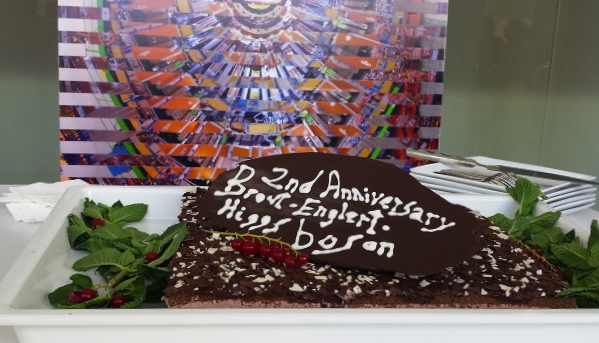
I’m reblogging a few of the Higgs posts, with some updated remarks, on this two-year anniversary of the discovery. (The first was in my last post.) The following, was originally “Higgs Analysis and Statistical Flukes: part 2″ (from March, 2013).[1]
Some people say to me: “This kind of reasoning is fine for a ‘sexy science’ like high energy physics (HEP)”–as if their statistical inferences are radically different. But I maintain that this is the mode by which data are used in “uncertain” reasoning across the entire landscape of science and day-to-day learning (at least, when we’re trying to find things out)[2] Even with high level theories, the particular problems of learning from data are tackled piecemeal, in local inferences that afford error control. Granted, this statistical philosophy differs importantly from those that view the task as assigning comparative (or absolute) degrees-of-support/belief/plausibility to propositions, models, or theories. Continue reading
Phil 6334: Duhem’s Problem, highly probable vs highly probed; Day #9 Slides
April 3, 2014: We interspersed discussion with slides; these cover the main readings of the day (check syllabus): the Duhem’s Problem and the Bayesian Way, and “Highly probable vs Highly Probed”. syllabus four. Slides are below (followers of this blog will be familiar with most of this, e.g., here). We also did further work on misspecification testing.
Monday, April 7, is an optional outing, “a seminar class trip”
you might say, here at Thebes at which time we will analyze the statistical curves of the mountains, pie charts of pizza, and (seriously) study some experiments on the problem of replication in “the Hamlet Effect in social psychology”. If you’re around please bop in!
Mayo’s slides on Duhem’s Problem and more from April 3 (Day#9):