Bayesian/frequentist

My BJPS paper: Severe Testing: Error Statistics versus Bayes Factor Tests

.

In my new paper, “Severe Testing: Error Statistics versus Bayes Factor Tests”, now out online at the The British Journal for the Philosophy of Science, I “propose that commonly used Bayes factor tests be supplemented with a post-data severity concept in the frequentist error statistical sense”. But how? I invite your thoughts on this and any aspect of the paper.* (You can read it here.)

I’m pasting down the abstract and the introduction. Continue reading

Categories: Bayesian/frequentist, Likelihood Principle, multiple testing | 4 Comments

Excursion 1 Tour II (4th stop): The Law of Likelihood and Error Statistics (1.4)

Ship Statinfasst

We are starting on Tour II of Excursion 1 (4th stop).  The 3rd stop is in an earlier blog post. As I promised, this cruise of SIST is leisurely. I have not yet shared new reflections in the comments–but I will! 

Where YOU are in the journey: Continue reading

Categories: Bayesian/frequentist, Likelihood Principle, LSE PH 500 | Leave a comment

Abandon Statistical Significance and Bayesian Epistemology: some troubles in philosophy v3

.

Has the “abandon significance” movement in statistics trickled down into philosophy of science? A little bit. Nowadays (since the late 1990’s [i]), probabilistic inference and confirmation enter in philosophy by way of fields dubbed formal epistemology and Bayesian epistemology. These fields, as I see them, are essentially ways to do analytic epistemology using probability. Given its goals, I do not criticize the best known current text in Bayesian Epistemology with that title, Titelbaum 2022, for not engaging in foundational problems of Bayesian practice, be it subjective, non-subjective (conventional), empirical or what some call “pragmatic” Bayesianism. The text focuses on probability as subjective degree of belief. I have employed chapters from it in my own seminars in spring 2023 to explain some Bayesian puzzles such as the tacking paradox. But I am troubled with some of the examples Titelbaum uses in criticizing statistical significance tests. I only came across them while flipping through some later chapters of the text while observing a session of my colleague Rohan Sud’s course on Bayesian Epistemology this spring. It was not a topic of his seminar. Continue reading

Categories: Bayesian epistemology, Bayesian priors, Bayesian/frequentist, Diagnostic Screening | 15 Comments

Preregistration, promises and pitfalls, continued v2

..

In my last post, I sketched some first remarks I would have made had I been able to travel to London to fulfill my invitation to speak at a Royal Society conference, March 4 and 5, 2024, on “the promises and pitfalls of preregistration.” This is a continuation. It’s a welcome consequence of today’s statistical crisis of replication that some social sciences are taking a page from medical trials and calling for preregistration of sampling protocols and full reporting. In 2018, Brian Nosek and others wrote of the “Preregistration Revolution”, as part of open science initiatives. Continue reading

Categories: Bayesian/frequentist, Likelihood Principle, preregistration, Severity | 3 Comments

Happy Birthday Neyman: What was Neyman opposing when he opposed the ‘Inferential’ Probabilists? Your weekend Phil Stat reading

.

Today is Jerzy Neyman’s birthday (April 16, 1894 – August 5, 1981). I’m reposting a link to a quirky, but fascinating, paper of his that explains one of the most misunderstood of his positions–what he was opposed to in opposing the “inferential theory”. The paper, fro 60 years ago,Neyman, J. (1962), ‘Two Breakthroughs in the Theory of Statistical Decision Making‘ [i] It’s chock full of ideas and arguments. “In the present paper” he tells us, “the term ‘inferential theory’…will be used to describe the attempts to solve the Bayes’ problem with a reference to confidence, beliefs, etc., through some supplementation …either a substitute a priori distribution [exemplified by the so called principle of insufficient reason] or a new measure of uncertainty” such as Fisher’s fiducial probability. It arises on p. 391 of Excursion 5 Tour III of Statistical Inference as Severe Testing: How to Get Beyond the Statistics Wars (2018, CUP). Here’s a link to the proofs of that entire tour. If you hear Neyman rejecting “inferential accounts,” you have to understand it in this very specific way: he’s rejecting “new measures of confidence or diffidence”. Here he alludes to them as “easy ways out”. He is not rejecting statistical inference in favor of behavioral performance as is typically thought. It’s amazing how an idiosyncratic use of a word 60 years ago can cause major rumblings decades later. Neyman always distinguished his error statistical performance conception from Bayesian and Fiducial probabilisms [ii]. The surprising twist here is semantical and the culprit is none other than…Allan Birnbaum. Yet Birnbaum gets short shrift, and no mention is made of our favorite “breakthrough” (or did I miss it?). You can find quite a lot on this blog searching Birnbaum. Continue reading

Categories: Bayesian/frequentist, Neyman | Leave a comment

Bickel’s defense of significance testing on the basis of Bayesian model checking

.

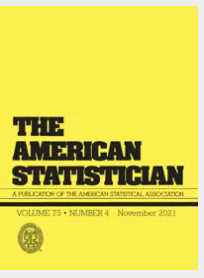
In my last post, I said I’d come back to a (2021) article by David Bickel, “Null Hypothesis Significance Testing Defended and Calibrated by Bayesian Model Checking” in The American Statistician. His abstract begins as follows:


Significance testing is often criticized because p-values can be low even though posterior probabilities of the null hypothesis are not low according to some Bayesian models. Those models, however, would assign low prior probabilities to the observation that the p-value is sufficiently low. That conflict between the models and the data may indicate that the models needs revision. Indeed, if the p-value is sufficiently small while the posterior probability according to a model is insufficiently small, then the model will fail a model check….(from Bickel 2021)

Continue reading

Categories: Bayesian/frequentist, D. Bickel, Fisher, P-values | 3 Comments

P-values disagree with posteriors? Problem is your priors, says R.A. Fisher

What goes around…

How often do you hear P-values criticized for “exaggerating” the evidence against a null hypothesis? If your experience is like mine, the answer is ‘all the time’, and in fact, the charge is often taken as one of the strongest cards in the anti-statistical significance playbook. The argument boils down to the fact that the P-value accorded to a point null H0 can be small while its Bayesian posterior probability high–provided a high enough prior is accorded to H0. But why suppose P-values should match Bayesian posteriors? And what justifies the high (or “spike”) prior to a point null? While I discuss this criticism at considerable length in Statistical Inference as Severe Testing: How to get beyond the statistics wars (CUP, 2018), I did not quote an intriguing response by R.A. Fisher to disagreements between P-values and posteriors’s (in Statistical Methods and Scientific Inference, Fisher 1956); namely, that such a prior probability assignment would itself be rejected by the observed small P-value–if the prior were itself regarded as a hypothesis to test. Or so he says. I did mention this response by Fisher in an encyclopedia article from way back in 2006 on “philosophy of statistics”: Continue reading

Categories: Bayesian/frequentist, Fisher, P-values | 7 Comments

Memory Lane (4 years ago): Why significance testers should reject the argument to “redefine statistical significance”, even if they want to lower the p-value*

.

An argument that assumes the very thing that was to have been argued for is guilty of begging the question; signing on to an argument whose conclusion you favor even though you cannot defend its premises is to argue unsoundly, and in bad faith. When a whirlpool of “reforms” subliminally alter  the nature and goals of a method, falling into these sins can be quite inadvertent. Start with a simple point on defining the power of a statistical test. Continue reading

Categories: Bayesian/frequentist, fallacy of rejection, P-values, reforming the reformers, spurious p values | 3 Comments

Happy Birthday Neyman: What was Neyman opposing when he opposed the ‘Inferential’ Probabilists?

.

Today is Jerzy Neyman’s birthday (April 16, 1894 – August 5, 1981). I’m posting a link to a quirky paper of his that explains one of the most misunderstood of his positions–what he was opposed to in opposing the “inferential theory”. The paper is Neyman, J. (1962), ‘Two Breakthroughs in the Theory of Statistical Decision Making‘ [i] It’s chock full of ideas and arguments. “In the present paper” he tells us, “the term ‘inferential theory’…will be used to describe the attempts to solve the Bayes’ problem with a reference to confidence, beliefs, etc., through some supplementation …either a substitute a priori distribution [exemplified by the so called principle of insufficient reason] or a new measure of uncertainty” such as Fisher’s fiducial probability. It arises on p. 391 of Excursion 5 Tour III of Statistical Inference as Severe Testing: How to Get Beyond the Statistics Wars (2018, CUP). Here’s a link to the proofs of that entire tour. If you hear Neyman rejecting “inferential accounts” you have to understand it in this very specific way: he’s rejecting “new measures of confidence or diffidence”. Here he alludes to them as “easy ways out”. He is not rejecting statistical inference in favor of behavioral performance as typically thought. Neyman always distinguished his error statistical performance conception from Bayesian and Fiducial probabilisms [ii]. The surprising twist here is semantical and the culprit is none other than…Allan Birnbaum. Yet Birnbaum gets short shrift, and no mention is made of our favorite “breakthrough” (or did I miss it?). You can find quite a lot on this blog searching Birnbaum. Continue reading

Categories: Bayesian/frequentist, Error Statistics, Neyman | 3 Comments

My Responses (at the P-value debate)

.

How did I respond to those 7 burning questions at last week’s (“P-Value”) Statistics Debate? Here’s a fairly close transcript of my (a) general answer, and (b) final remark, for each question–without the in-between responses to Jim and David. The exception is question 5 on Bayes factors, which naturally included Jim in my general answer. 

The questions with the most important consequences, I think, are questions 3 and 5. I’ll explain why I say this in the comments. Please share your thoughts. Continue reading

Categories: bayes factors, P-values, Statistics, statistics debate NISS | 1 Comment

P-Value Statements and Their Unintended(?) Consequences: The June 2019 ASA President’s Corner (b)

2208388671_0d8bc38714

Mayo writing to Kafadar

I never met Karen Kafadar, the 2019 President of the American Statistical Association (ASA), but the other day I wrote to her in response to a call in her extremely interesting June 2019 President’s Corner: “Statistics and Unintended Consequences“:

  • “I welcome your suggestions for how we can communicate the importance of statistical inference and the proper interpretation of p-values to our scientific partners and science journal editors in a way they will understand and appreciate and can use with confidence and comfort—before they change their policies and abandon statistics altogether.”

I only recently came across her call, and I will share my letter below. First, here are some excerpts from her June President’s Corner (her December report is due any day). Continue reading

Categories: ASA Guide to P-values, Bayesian/frequentist, P-values | 3 Comments

Neyman vs the ‘Inferential’ Probabilists

.

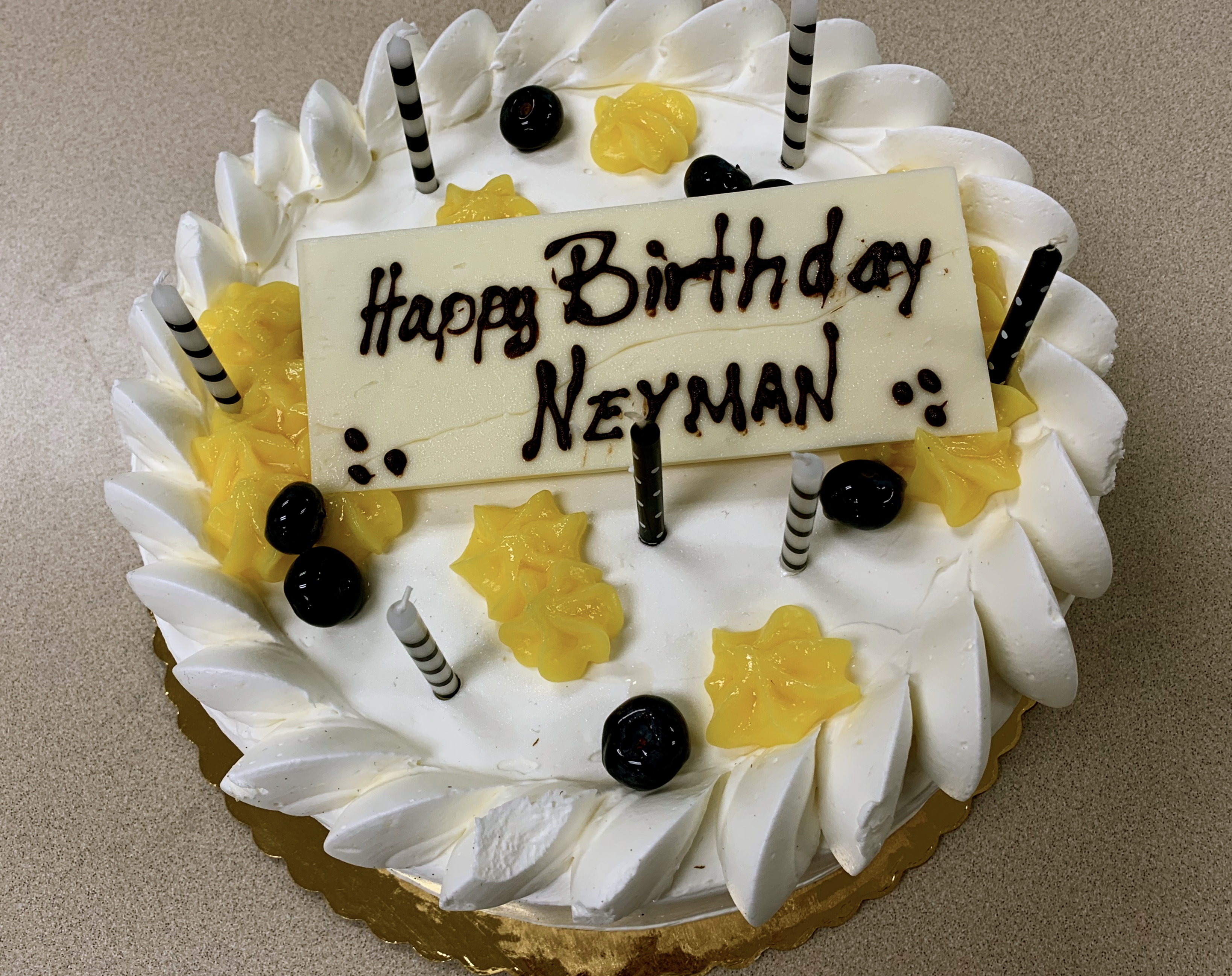
We celebrated Jerzy Neyman’s Birthday (April 16, 1894) last night in our seminar: here’s a pic of the cake.  My entry today is a brief excerpt and a link to a paper of his that we haven’t discussed much on this blog: Neyman, J. (1962), ‘Two Breakthroughs in the Theory of Statistical Decision Making‘ [i] It’s chock full of ideas and arguments, but the one that interests me at the moment is Neyman’s conception of “his breakthrough”, in relation to a certain concept of “inference”.  “In the present paper” he tells us, “the term ‘inferential theory’…will be used to describe the attempts to solve the Bayes’ problem with a reference to confidence, beliefs, etc., through some supplementation …either a substitute a priori distribution [exemplified by the so called principle of insufficient reason] or a new measure of uncertainty” such as Fisher’s fiducial probability. So if you hear Neyman rejecting “inferential accounts” you have to understand it in this very specific way: he’s rejecting “new measures of confidence or diffidence”. Here he alludes to them as “easy ways out”. Now Neyman always distinguishes his error statistical performance conception from Bayesian and Fiducial probabilisms [ii]. The surprising twist here is semantical and the culprit is none other than…Allan Birnbaum. Yet Birnbaum gets short shrift, and no mention is made of our favorite “breakthrough” (or did I miss it?).

drawn by his wife,Olga

Note: In this article,”attacks” on various statistical “fronts” refers to ways of attacking problems in one or another statistical research program.
HAPPY BIRTHDAY WEEK FOR NEYMAN! Continue reading

Categories: Bayesian/frequentist, Error Statistics, Neyman | Leave a comment

there’s a man at the wheel in your brain & he’s telling you what you’re allowed to say (not probability, not likelihood)

It seems like every week something of excitement in statistics comes down the pike. Last week I was contacted by Richard Harris (and 2 others) about the recommendation to stop saying the data reach “significance level p” but rather simply say

“the p-value is p”.

(For links, see my previous post.) Friday, he wrote to ask if I would comment on a proposed restriction (?) on saying a test had high power! I agreed that we shouldn’t say a test has high power, but only that it has a high power to detect a specific alternative, but I wasn’t aware of any rulings from those in power on power. He explained it was an upshot of a reexamination by a joint group of the boards of statistical associations in the U.S. and UK. of the full panoply of statistical terms. Something like that. I agreed to speak with him yesterday. He emailed me the proposed ruling on power: Continue reading

Categories: Bayesian/frequentist | 5 Comments

Neyman vs the ‘Inferential’ Probabilists continued (a)

.

Today is Jerzy Neyman’s Birthday (April 16, 1894 – August 5, 1981).  I am posting a brief excerpt and a link to a paper of his that I hadn’t posted before: Neyman, J. (1962), ‘Two Breakthroughs in the Theory of Statistical Decision Making‘ [i] It’s chock full of ideas and arguments, but the one that interests me at the moment is Neyman’s conception of “his breakthrough”, in relation to a certain concept of “inference”.  “In the present paper” he tells us, “the term ‘inferential theory’…will be used to describe the attempts to solve the Bayes’ problem with a reference to confidence, beliefs, etc., through some supplementation …either a substitute a priori distribution [exemplified by the so called principle of insufficient reason] or a new measure of uncertainty” such as Fisher’s fiducial probability. Now Neyman always distinguishes his error statistical performance conception from Bayesian and Fiducial probabilisms [ii]. The surprising twist here is semantical and the culprit is none other than…Allan Birnbaum. Yet Birnbaum gets short shrift, and no mention is made of our favorite “breakthrough” (or did I miss it?). [iii] I’ll explain in later stages of this post & in comments…(so please check back); I don’t want to miss the start of the birthday party in honor of Neyman, and it’s already 8:30 p.m in Berkeley!

Note: In this article,”attacks” on various statistical “fronts” refers to ways of attacking problems in one or another statistical research program. HAPPY BIRTHDAY NEYMAN! Continue reading

Categories: Bayesian/frequentist, Error Statistics, Neyman, Statistics | Leave a comment

Why significance testers should reject the argument to “redefine statistical significance”, even if they want to lower the p-value*

.

An argument that assumes the very thing that was to have been argued for is guilty of begging the question; signing on to an argument whose conclusion you favor even though you cannot defend its premises is to argue unsoundly, and in bad faith. When a whirlpool of “reforms” subliminally alter  the nature and goals of a method, falling into these sins can be quite inadvertent. Start with a simple point on defining the power of a statistical test.

I. Redefine Power?

Given that power is one of the most confused concepts from Neyman-Pearson (N-P) frequentist testing, it’s troubling that in “Redefine Statistical Significance”, power gets redefined too. “Power,” we’re told, is a Bayes Factor BF “obtained by defining H1 as putting ½ probability on μ = ± m for the value of m that gives 75% power for the test of size α = 0.05. This H1 represents an effect size typical of that which is implicitly assumed by researchers during experimental design.” (material under Figure 1). Continue reading

Categories: Bayesian/frequentist, fallacy of rejection, P-values, reforming the reformers, spurious p values | 15 Comments

New venues for the statistics wars

I was part of something called “a brains blog roundtable” on the business of p-values earlier this week–I’m glad to see philosophers getting involved.

Next week I’ll be in a session that I think is intended to explain what’s right about P-values at an ASA Symposium on Statistical Inference : “A World Beyond p < .05”. Continue reading

Categories: Announcement, Bayesian/frequentist, P-values | 3 Comments

Peircean Induction and the Error-Correcting Thesis

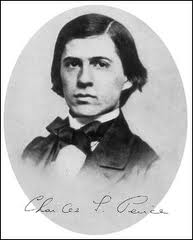
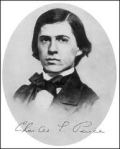
C. S. Peirce: 10 Sept, 1839-19 April, 1914

C. S. Peirce: 10 Sept, 1839-19 April, 1914

Sunday, September 10, was C.S. Peirce’s birthday. He’s one of my heroes. He’s a treasure chest on essentially any topic, and anticipated quite a lot in statistics and logic. (As Stephen Stigler (2016) notes, he’s to be credited with articulating and appling randomization [1].) I always find something that feels astoundingly new, even rereading him. He’s been a great resource as I complete my book, Statistical Inference as Severe Testing: How to Get Beyond the Statistics Wars (CUP, 2018) [2]. I’m reblogging the main sections of a (2005) paper of mine. It’s written for a very general philosophical audience; the statistical parts are very informal. I first posted it in 2013Happy (belated) Birthday Peirce.

Peircean Induction and the Error-Correcting Thesis
Deborah G. Mayo
Transactions of the Charles S. Peirce Society: A Quarterly Journal in American Philosophy, Volume 41, Number 2, 2005, pp. 299-319

Peirce’s philosophy of inductive inference in science is based on the idea that what permits us to make progress in science, what allows our knowledge to grow, is the fact that science uses methods that are self-correcting or error-correcting:

Induction is the experimental testing of a theory. The justification of it is that, although the conclusion at any stage of the investigation may be more or less erroneous, yet the further application of the same method must correct the error. (5.145)

Inductive methods—understood as methods of experimental testing—are justified to the extent that they are error-correcting methods. We may call this Peirce’s error-correcting or self-correcting thesis (SCT): Continue reading

Categories: Bayesian/frequentist, C.S. Peirce | 2 Comments

Can You Change Your Bayesian Prior? The one post whose comments (some of them) will appear in my new book

.

I blogged this exactly 2 years ago here, seeking insight for my new book (Mayo 2017). Over 100 (rather varied) interesting comments ensued. This is the first time I’m incorporating blog comments into published work. You might be interested to follow the nooks and crannies from back then, or add a new comment to this.

This is one of the questions high on the “To Do” list I’ve been keeping for this blog.  The question grew out of discussions of “updating and downdating” in relation to papers by Stephen Senn (2011) and Andrew Gelman (2011) in Rationality, Markets, and Morals.[i]

“As an exercise in mathematics [computing a posterior based on the client’s prior probabilities] is not superior to showing the client the data, eliciting a posterior distribution and then calculating the prior distribution; as an exercise in inference Bayesian updating does not appear to have greater claims than ‘downdating’.” (Senn, 2011, p. 59)

“If you could really express your uncertainty as a prior distribution, then you could just as well observe data and directly write your subjective posterior distribution, and there would be no need for statistical analysis at all.” (Gelman, 2011, p. 77)

But if uncertainty is not expressible as a prior, then a major lynchpin for Bayesian updating seems questionable. If you can go from the posterior to the prior, on the other hand, perhaps it can also lead you to come back and change it.

Is it legitimate to change one’s prior based on the data? Continue reading

Categories: Bayesian priors, Bayesian/frequentist | 16 Comments

Frequentstein’s Bride: What’s wrong with using (1 – β)/α as a measure of evidence against the null?

Slide1

.

ONE YEAR AGO: …and growing more relevant all the time. Rather than leak any of my new book*, I reblog some earlier posts, even if they’re a bit scruffy. This was first blogged here (with a slightly different title). It’s married to posts on “the P-values overstate the evidence against the null fallacy”, such as this, and is wedded to this one on “How to Tell What’s True About Power if You’re Practicing within the Frequentist Tribe”. 

In their “Comment: A Simple Alternative to p-values,” (on the ASA P-value document), Benjamin and Berger (2016) recommend researchers report a pre-data Rejection Ratio:

It is the probability of rejection when the alternative hypothesis is true, divided by the probability of rejection when the null hypothesis is true, i.e., the ratio of the power of the experiment to the Type I error of the experiment. The rejection ratio has a straightforward interpretation as quantifying the strength of evidence about the alternative hypothesis relative to the null hypothesis conveyed by the experimental result being statistically significant. (Benjamin and Berger 2016, p. 1)

Continue reading

Categories: Bayesian/frequentist, fallacy of rejection, J. Berger, power, S. Senn | 17 Comments

“Fusion-Confusion?” My Discussion of Nancy Reid: “BFF Four- Are we Converging?”

.

Here are the slides from my discussion of Nancy Reid today at BFF4: The Fourth Bayesian, Fiducial, and Frequentist Workshop: May 1-3, 2017 (hosted by Harvard University)

Categories: Bayesian/frequentist, C.S. Peirce, confirmation theory, fiducial probability, Fisher, law of likelihood, Popper | Tags: | 1 Comment

Blog at WordPress.com.