Princeton talk: Statistical Inference as Severe Testing: Beyond Performance and Probabilism

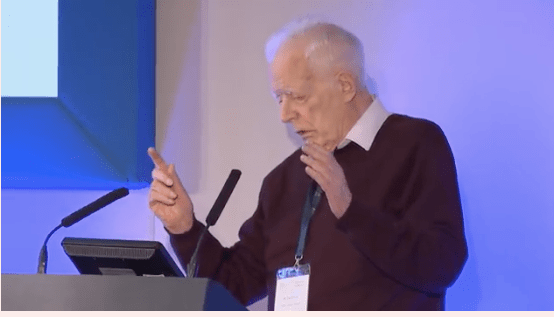
On November 14, I gave a talk at the Seminar in Advanced Research Methods for the Department of Psychology, Princeton University.

“Statistical Inference as Severe Testing: Beyond Probabilism and Performance”

The video of my talk is below along with the slides. It reminds me to return to a paper, half-written, replying to a paper on “A Bayesian Perspective on Severity” (van Dongen, Sprenger, Wagenmakers (2022). These authors claim that Bayesians can satisfy severity “regardless of whether the test has been conducted in a severe or less severe fashion”, but what they mean is that data can be much more probable on hypothesis H1 than on H0 –the Bayes factor can be high. However, “severity” can be satisfied in their comparative (subjective) Bayesian sense even for claims that are poorly probed in the error statistical sense (slides 55-6). Share your comments. Continue reading

Categories: Severity, Severity vs Posterior Probabilities | Leave a comment

1 Year Ago Today: “The Statistics Wars and Their Casualties” workshop

The Statistics Wars and Their Casualties Workshop


It’s been 1 year (December 8, 2022) since our workshop, The Statistics Wars and Their Casualties! There were four sessions, held over 4 days. Below are the videos and slides from all four sessions of the Workshop. The first two sessions were held on September 22 & 23, 2022. Session 1 speakers were: Deborah Mayo (Virginia Tech), Richard Morey (Cardiff University), Stephen Senn (Edinburgh, Scotland). Session 2 speakers were:  Daniël Lakens (Eindhoven University of Technology),  Christian Hennig (University of Bologna), Yoav Benjamini (Tel Aviv University).  The last two sessions were held on December 1 and 8. Session 3 speakers were: Daniele Fanelli (London School of Economics and Political Science), Stephan Guttinger (University of Exeter), and David Hand (Imperial College London).  Session 4 speakers were: Jon Williamson (University of Kent),  Margherita Harris  (London School of Economics and Political Science), Aris Spanos (Virginia Tech), and Uri Simonsohn (Esade Ramon Llull University).

Abstracts can be found here and the schedule here. Some participant related publications are on this page. Continue reading

Categories: Philosophy of Statistics, statistical significance, The Statistics Wars and Their Casualties | Leave a comment

New Paper: “Sir David Cox’s Statistical Philosophy and its Relevance to Today’s Statistical Controversies” (JSM Proceedings)

.

After some wrestling with the Zenodo system of uploading, my paper “Sir David Cox’s Statistical Philosophy and its Relevance to Today’s Statistical Controversies” is now published (open access) in the JSM 2023 Proceedings (link).

Continue reading

Categories: JSM 2023 proceedings | 3 Comments

Oct 26 Update: If you want to add your name to the list of Friends of Sir David Cox: Matching funds are extended to Dec 1, 2023

..

I’m not comfortable in the role of fundraiser, but I am comfortable in the role of promoting the importance of statistical foundations, and that’s how I see the David R. Cox Foundations of Statistics Award. Thus, I’m sharing the news the ASA sent out yesterday that we’re only around $300 away from our goal, and so the matching period has been extended until Dec 1. (We have $4,698.75 towards to $5,000).  Thus, I’m sharing the new news, updating what the ASA sent out yesterday: The fund is just at $6,000*, but all donations to the award until November 30, midnight (ESA) will still be matched unless $7,500. is reached before that. There is a “thermometer” on the donation page so that donors will know when we have reached that goal, however, on its first day on the job, the thermometer is malfunctioning slightly, failing to include around $500. It should be fixed tomorrow (this is outside my control). For gifts of $50 and above, you will be included in the following list of those recognized as “Friends of David R. Cox”: Continue reading

Categories: David R. Cox Foundations of Statistics Award | Leave a comment

Philosophy of Scientific Experiment: 40+ years on

.

Some time, around the 1980s, philosophers of science turned their attention to scientific experiments in a way that contrasted with the reigning approaches to philosophy of science. My colleague, Wendy Parker, and I decided to embark on an experiment of our own, aimed at elucidating some central themes of this evolving movement, sometimes referred to as the ‘new experimentalism.’ It was to begin tomorrow, but due to unexpected weather conditions, I’ll be traveling back then, and find myself with an additional afternoon in New York City. So I’ll take this opportunity to begin my reflections, with the expectation of later incorporating Wendy’s insights, and refining my own. The philosophical concepts and ideas stemming from the philosophy of experiment provide powerful tools for making progress on fundamental problems of how we find things out in the face of limitations of data, models, and methods. The time is ripe for a comprehensive examination of this field, but our “experiment on experiment” here will be the bare beginnings of themes that come to mind. Please suggest corrections and additions in the comments. Continue reading

Categories: experiment, new experimentalism | 7 Comments

JSM Slides on David R. Cox’s Foundations of Statistics

.

Categories: David R. Cox Foundations of Statistics Award | Leave a comment

The Barbie Wars: a philosophical deconstruction (i)

.

I. My first post-pandemic movie. Wearing our Barbie shirts, purchased for the occasion, my friend Billie and I* went to see the movie Barbie the other day (open caption—a great idea!).[0] It was quite funny and clever, surprisingly introspective, and self-critical—even though I think it tried a tad bit too hard to remind us it was being surprisingly introspective and self-critical. As I watched, I had the impression the movie creators couldn’t decide on its identity and message. The central goal was to acknowledge criticisms of the Barbie image, notably, perpetuating unrealistic beauty standards, while at the same time disarming critics from pooh-poohing the overall mission of the movie: to reimagine Barbie in a positive, female “empowering”, light. (That term comes up a lot in the movie.) I think Barbie largely succeeds in making Barbie “cool again”. The question that interests me is: what is the image of empowerment being championed? Continue reading

Categories: Barbie deconstruction | 8 Comments

Happy Birthday David Cox! Upcoming events August 8 & 9 at JSM 2023

Sir David Cox: 15, July 1924-18 January, 2022

Today is Sir David Cox’s birthday. He would have been 99 today. 2023 marks the first year that the David R. Cox Award in Foundations of Statistics will be given at the upcoming Joint Statistical Meetings (JSM) in Toronto. For information on the Award, see this post. I’m excited to announce the inaugural winner, Nancy Reid! She will speak on “The Importance of Foundations in Statistical Science” Wednesday August 9:  10:30-12:20. The day before, Tuesday August 8: 9:35-9:50 am., I will give a brief talk on “Sir David Cox’s Statistical Philosophy“. The abstracts and locations for the two talks are below.

HAPPY BIRTHDAY DAVID COX! Continue reading

Categories: Announcement, David R. Cox Foundations of Statistics Award, JSM 2023, Philosophy of Statistics | 4 Comments

A new generation of poster children of fraud in behavioral science: What I recommend (i)(ii)

.

A fraudster’s “first time”:

I was alone in my tastefully furnished office at the University. . . . I opened the file with the data that I had entered and changed an unexpected 2 into a 4; then, a little further along, I changed a 3 into a 5. . . . When the results are just not quite what you’d so badly hoped for; when you know that that hope is based on a thorough analysis of the literature; . . . then, surely, you’re entitled to adjust the results just a little? . . . I looked at the array of data and made a few mouse clicks to tell the computer to run the statistical analyses. When I saw the results, the world had become logical again. (Stapel 2012/2014, p. 103)

This is Diederik Stapel, the famed and shamed researcher in behavioral psychology, reflecting on his “first time” – when he was “only” tampering with, and not yet wholly fabricating, data. Amazingly, while a fresh wave of researchers in Stapel’s field of “priming theory”[1] were tut-tutting Stapel’s exposed misconduct, some of them were busy manipulating their own data! Continue reading

Categories: fraudbusting | 16 Comments

Sensitivity and Severity: Gardiner and Zaharatos (2022) (i)

.

I’ve been reading an illuminating paper by Georgi Gardiner and Brian Zaharatos (Gardiner and Zaharatos, 2022; hereafter, G & Z), “The safe, the sensitive and the severely tested,” that forges links between contemporary epistemology and my severe testing account. It’s part of a collection published in Synthese on “Recent issues in Philosophy of Statistics”.  Gardiner and Zaharatos were among the 15 faculty who attended the 2019 summer seminar in philstat that I ran (with Aris Spanos). The authors courageously jump over some high hurdles separating the two projects (whether a palisade or a ha ha–see G & Z) and manage to bring them into close connection. The traditional epistemologist is largely focused on an analytic task of defining what is meant by knowledge (generally restricted to low-level perceptual claims, or claims about single events) whereas the severe tester is keen to articulate when scientific hypotheses are well or poorly warranted by data. Still, while severity grows out of statistical testing, I intend for the account to hold for any case of error-prone inference. So it should stand up to the examples with which one meets in the jungles of epistemology. For all of the examples I’ve seen so far, it does. I will admit, the epistemologists have storehouses of thorny examples, many of which I’ll come back to. This will be part 1 of two, possible even three, posts on the topic; revisions to this part will be indicated with ii, iii, etc., and no I haven’t used the chatbot or anything in writing this. Continue reading

Categories: severity and sensitivity in epistemology | 2 Comments

David R. Cox Foundations of Statistics Award

Link to announcement on ASA website.

First Winner

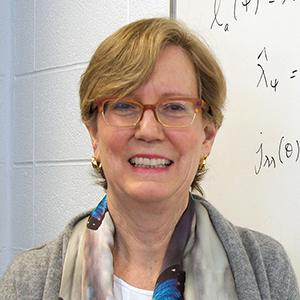
Nancy Reid

.

Nancy Reid
University of Toronto

For contributions to the foundations of statistics that significantly advanced the frontiers of statistics and for insight that transformed understanding of parametric statistical inference, Nancy Reid is the inaugural recipient of the David R. Cox Foundations of Statistics Award, presented by the American Statistical Association (ASA). Reid will formally receive the award and deliver a lecture at the Joint Statistical Meetings in Toronto in August. Continue reading

Categories: Error Statistics | Leave a comment

Zoom: Comments & Questions

This post is open for comments and questions by all zoom and class attendees on the presentations by Aris Spanos, Richard Morey or Deborah Mayo regarding the last three sessions of Mayo’s Phil 6014 PhilStat Seminar.

Slides for Session 9 on Testing Assumptions of Statistical Models and Misspecification testing  (A. Spanos’ are here).

Slides from Session 10 on Bayes Factors (R. Morey’s slides can be found here).  R. Morey also has a blog post with more details on his view at this link.)

Mayo’s slides are up on the syllabus which is here.

Please use the “Leave a comment” link below.

Categories: phil6014 | 1 Comment

Where Are Fisher, Neyman, Pearson in 1919? Excursion 3 Tour I

We had a good group zooming into the first half of my seminar on March 1. I’m grateful to them for their interest. They (and anyone else who cares to) are invited to post questions for me, or other thoughts, using the comments to this post. Any new people who want to observe the March 15 session (on statistical debates in particle physics) should write to me. March 22 and 29 will have Aris Spanos and Richard Morey as guest speakers, respectively. The syllabus is here, and the questions/exercises over spring break are here.

The reading from this session is from Statistical Inference as Severe Testing: How to Get Beyond the Statistics Wars (Mayo, CUP, 2018)

D. Mayo Continue reading

Categories: Phil 6014, SIST | Leave a comment

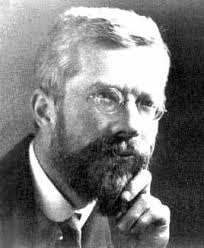
Happy Birthday R.A. Fisher: “Statistical methods and Scientific Induction” with replies by Neyman and E.S. Pearson

17 Feb 1890-29 July 1962

Today is R.A. Fisher’s birthday! I am reblogging what I call the “Triad”–an exchange between  Fisher, Neyman and Pearson (N-P) published 20 years after the Fisher-Neyman break-up. My seminar on PhilStat is studying these this week, so it’s timely. While my favorite is still the reply by E.S. Pearson, which alone should have shattered Fisher’s allegations that N-P “reinterpret” tests of significance as “some kind of acceptance procedure”, all three are chock full of gems for different reasons. They are short and worth rereading. Neyman’s article pulls back the cover on what is really behind Fisher’s over-the-top polemics, what with Russian 5-year plans and commercialism in the U.S. Not only is Fisher jealous that N-P tests came to overshadow “his” tests, he is furious at Neyman for driving home the fact that Fisher’s fiducial approach had been shown to be inconsistent (by others). The flaw is illustrated by Neyman in his portion of the triad. I discuss this briefly in my Philosophy of Science Association paper from a few months ago (slides are here*).Further details may be found in my book, SIST (2018) especially pp 388-392 linked to here. It speaks to a common fallacy seen every day in interpreting confidence intervals. As for Neyman’s “behaviorism”, Pearson’s last sentence is revealing.

HAPPY BIRTHDAY R.A. FISHER! Continue reading

Categories: E.S. Pearson, Fisher, Neyman, phil/history of stat | Leave a comment

Popper, Falsification and Pseudoscience (Notes from my philstat seminar)

My Phil Stat seminar has been meeting for 4 weeks now, and we’re soon to experiment with a small group of outside participants zooming in (write to us, if you are interested in joining us). I’ve been so busy with the seminar that I haven’t blogged. Have you been following? All the materials are on a continually updated syllabus on this blog (SYLLABUS). We’re up to Excursion 2, Tour II.

Last week, we did something unusual: we read from Popper’s Conjectures and Refutations. I wanted to do this because scientists often appeal to distorted and unsophisticated accounts of Popper, especially in discussing falsification, and what demarcates good science from poor science. While I don’t think Popper made good on his most winning slogans, he gives us many seminal launching-off points for improved accounts of falsification, induction, corroboration, and demarcation. Continue reading

Categories: highly probable vs highly probed, science vs pseudoscience, Statistical Inference as Severe Testing | 1 Comment

2023 Syllabus for Philosophy of Inductive-Statistical Inference

PHIL 6014 (crn: 20919): Spring 2023 

Philosophy of Inductive-Statistical Inference
(This is an IN-PERSON class*)
Wed 4:00-6:30 pm, McBryde 223
(Office hours: Tuesdays 3-4; Wednesdays 1:30-2:30)

Syllabus: Third Installment (PDF)
Syllabus Evaluation & Advice (enrolled members (PDF))

D. Mayo (2018) Statistical Inference as Severe Testing: How to Get Beyond the Statistics Wars (SIST) CUP, 2018: SIST (electronic and paper provided to those taking the class; proofs are at errorstatistics.com, see below).
Supplemental text: Hacking, I. (2001). An introduction to probability and inductive logic. Cambridge University Press.
Articles from the Captain’s Bibliography (links to new articles will be provided). 
Other useful information can be found on the SIST Abstracts & Keywords and this post with SIST Excerpts & Mementos)

Date Themes/readings
1. 1/18       Introduction to the Course:
How to tell what’s true about statistical inference

(1/18/23 SLIDES here)

Reading: Statistical Inference as Severe Testing: How to Get Beyond the Statistics Wars (SIST): Preface, Excursion 1 Tour I 1.1-1.3, 9-29

MISC: Souvenir A; SIST Abstracts & Keywords for all excursions and tours
2. 1/25
Q #2
 
Error Probing Tools vs Comparative Evidence: Likelihood & Probability
What counts as cheating?
Intro to Logic: arguments validity & soundness

(1/25/23 SLIDES here)

Reading: SIST: Excursion 1 Tour II 1.4-1.5, 30-55
Session #2 Questions: (PDF)

MISC: NOTES on Excursion 1, SIST: Souvenirs B, C & D, Logic Primer (PDF)
3. 2/1
   Q #3
UPDATED
Induction and Confirmation: PhilStat & Formal Epistemology
The Traditional Problem of Induction
Is Probability a Good Measure of Confirmation? Tacking Paradox

(2/1/23 SLIDES here)

Reading: SIST: Excursion 2, Tour I: 2.1-2.2, 59-74
Hacking “The Basic Rules of Probability” Hand Out (PDF)
UPDATED: Session #3 Questions: (PDF)

MISC: Excursion 2 Tour I Blurb & notes
4. 2/8 &
5. 2/15
Assign 1 2/15 
Falsification, Science vs Pseudoscience, Induction
Statistical Crises of Replication in Psychology & other sciences
Popper, severity and novelty, array of problems and models
Fallacies of rejection, Duhem’s problem; solving induction now

(/2/8/23 SLIDES here)

Reading for 2/8: Popper, Ch 1 from Conjectures and Refutations up to p. 59. (PDF),
This class overlaps with the next, so if you have time read Excursion 2, Tour II: (p. 75-82); Exhibit vi. (p. 82); and p. 108

Session #4 Questions: (PDF)
MISC (2/8): Self-quiz on Popper for Fun! (PDF); Cartoon Guide to Statistics (Link to VT Library link is here)
———————-
Reading for 2/15: SIST: Excursion 2, Tour II: read sections that interest you from those not covered last week. You can choose the example in 2.6 (or one from your field) or the discussion of solving induction in 2.7. Optional for 2/15: Gelman & Loken (2014)

(2/15/23 SLIDES here)

ASSIGNMENT 1 (due 2/15) (PDF)
MISC (2/15): SIST Souvenirs (E), (F), (G), (H); Excursion 2 Tour II Blurb & notes
  Fisher Birthday: February 17: Celebration on 2/22
6. 2/22
 Q #6
&
7. 3/1


Ingenious and Severe Tests: Fisher, Neyman-Pearson, Cox: Concepts of Tests


Reading for 2/22 from SIST: Excursion 3 Tour I: 3.1-3.3: read the sections that interest you, choosing to focus on the statistical tests, the history and philosophy of Fisher, Neiman and Pearson, the example of GTR. Choose 2 from the Triad (they’re very short): Fisher (1955), Pearson (1955), Neyman (1956)

(2/22/23 SLIDES here)

Session #6 Questions: (PDF)

Optional: The pathological Fisher (fiducial) and Neyman (performance) battle: SIST 388-391

——————————————-

Reading for 3/1: Sections from SIST skipped last week: Excursion 3 Tour I: (If time, look at the discussion of trade-offs 328-330) If interested in fiducial frequencies, see Neyman’s Performance and Fisher’s fiducial Section 5.8
Optional: Excursion 3 tour II: It’s the methods, stupid!

(3/1/23 SLIDES here)


MISC: Excursion 3 Tour I Blurb & notes; Souvenirs (I), (J), (K)
Morey app including Examples & Instructions (here);(Morey app) (SEV Apps)

SPRING BREAK Statistical Exercises While Sunning (March 4-12)

Sessions #11-14 are tentative;  please have a look at what’s in them so we can decide which to skip 
8. 3/15
Assign 2
Deeper Concepts (2 parts): Stat in the Higg’s discovery, and Confidence intervals and their duality with tests

Reading (for first part): Excursion 3 Tour III, 3.8 Higgs Discovery (See the ASA 6 principles on P-values: Note 4, P. 216, and Live Exhibit (ix) p. 200: Souv. N p. 201
Reading (for second part): Excursion 3 Tour III, 3.7: pp. 189-195

Assignment 2
(PDF) due 3/17/23

(3/15/23 (revised) SLIDES here)

Misc. Excursion 3 Tour III blurb & notes
9. 3/22

Testing Assumptions of Statistical Models (Guest Speaker: Aris Spanos on misspecification testing in statistics)

Reading: Excursion 4 Tour IV 4.8

(3/22/23 A. Spanos’ SLIDES here)

Misc. Excursion 4 Tour IV blurb & notes

10. 3/29


Who’s Exaggerating what? Bayes factors and Bayes/Fisher Disagreement, Jeffreys-Lindley Paradox (Guest Speaker: Richard Morey on Bayes Factors)

Reading. Excursion 4 Tour II  and Excursion 6, Tour I: 395-423 
(We will spend 2 weeks on these: Excursion 6 Tour I will be post zoom.)
Redefine Statistical Significance” Benjamin et al. 2017. (PDF)

Session #10 Questions (PDF
Richard Morey’s slides (Link); (R. Morey blog post, which goes into more detail.)

Misc. Excursion 4 Tour II blurb & notes

11. 4/5

Mini essay

More on: Bayes factors and Bayes/Fisher Disagreement, Jeffreys-Lindley Paradox
Reading. Excursion 4 Tour II  and Excursion 6, Tour I: 395-423 (We are spending 2 weeks on these: Excursion 6 Tour I will be post zoom.)
Peek Ahead: 6.7 Farewell Keepsake: 436-444 
 
4/05/23 SLIDES (PDF)
 
Mini-essay (PDF)
12. 4/12

Biasing Selection Effects and Randomization
4/12/23 Slides (PDF)
Reading: Excursion 4 Tour III  
ASA Statement on P-values (link)
Optional: Mayo: P-values on Trial

13. 4/19


Power: Pre-data and Post-data

Reading: Excursion 5 Tour I

4/19/23 Slides (PDF)
Slides “Farewell Keepsake” (Sessions 14 & 15): (PDF)
Misc.
Excursion 5 Tours I & II blurbs-notes

14. 4/26

Assign 3

Positive Predictive Value and Probabilistic Instantiation

Controversies about inferring probabilities from frequencies (in law and epistemology)

Reading: Tail end of Excursion 5 Tour I: Exhibit (v), Souvenir X: SIN and SIR; Excursion 5 Tour II: Section 5.6 (excursion 5 Tour II); Farewell Keepsake: (Section 6.7 in Excursion 6 Tour II)

Optional:
(1)
 C. Howson “Error Probabilities in Error” (1997);
(2) Mayo “Response to Howson and Laudan'” (1997) [only the portion responding to Howson];

4/26/23/Slides (PDF

We won’t consider the following, but I leave it here in case anyone wants to look at it:Gardiner and Zaharatos (2022), “The Safe, the Sensitive, and the Severely Tested”

ASSIGNMENT 3 (due 4/26) (PDF)

15. 5/3

Review of the main themes of the seminar
Current Reforms and Stat Activism: Practicing our skills on some recent  papers

5/3/23 Slides (PDF)
Reading: 6.6 (pp 432-6) Error Statistical Bayesians; one of the following: (they can also be your “new” reading for the final paper (Excursion 6 Tour II)

Optional: Gardiner and Zaharatos (2022), “The Safe, the Sensitive, and the Severely Tested”

5/3/23 Slides (PDF)

   FINAL PAPER: (PDF)
Categories: Announcement, new course | 5 Comments

I’m teaching a New Intro to PhilStat Course Starting Wednesday:

Ship StatInfasst (Statistical Inference as Severe Testing: SIST) will set sail on Wednesday January 18 when I begin a weekly seminar on the Philosophy of Inductive-statistical inference. I’m planning to write a new edition and/or companion to SIST (Mayo 2018, CUP), so it will be good to retrace the journey. I’m not requiring a statistics or philosophy background. All materials will be on this blog, and around halfway through there may be an opportunity to zoom, if there’s interest. Continue reading

Categories: Announcement, new course | 2 Comments

The First 2023 Act of Stat Activist Watch: Statistics ‘for the people’

One of the central roles I proposed for “stat activists” (after our recent workshop, The Statistics Wars and Their Casualties) is to critically scrutinize mistaken claims about leading statistical methods–especially when such claims are put forward as permissible viewpoints to help “the people” assess methods in an unbiased manner. The first act of 2023 under this umbrella concerns an article put forward as “statistics for the people” in a journal of radiation oncology. We are talking here about recommendations for analyzing data for treating cancer!  Put forward as a fair-minded, or at least an informative, comparison of Bayesian vs frequentist methods, I find it to be little more than an advertisement for subjective Bayesian methods in favor of a caricature of frequentist error statistical methods. The journal’s “statistics for the people” section would benefit from a full-blown article on frequentist error statistical methods–not just the letter of ours they recently published–but I’m grateful to Chowdhry and other colleagues who joined me in this effort. You will find our letter below, followed by the authors’ response. You can also find a link to their original “statistics for the people” article in the references. Let me admit right off that my criticisms are a bit stronger than my co-authors. Continue reading

Categories: stat activist watch 2023, statistical significance tests | 2 Comments

Midnight With Birnbaum: Happy New Year 2023!

.

For the last three years, unlike the previous 10 years that I’ve been blogging, it was not feasible to actually revisit that spot in the road, looking to get into a strange-looking taxi, to head to “Midnight With Birnbaum”.  But this year I will, and I’m about to leave at 10pm. (The pic on the left is the only blurry image I have of the club I’m taken to.) My book Statistical Inference as Severe Testing: How to Get Beyond the Statistics Wars (CUP, 2018)  doesn’t include the argument from my article in Statistical Science (“On the Birnbaum Argument for the Strong Likelihood Principle”), but you can read it at that link along with commentaries by A. P. David, Michael Evans, Martin and Liu, D. A. S. Fraser, Jan Hannig, and Jan Bjornstad. David Cox, who very sadly did in January 2022, is the one who encouraged me to write and publish it. (The first David R. Cox Foundations of Statistics Prize will be awarded at the JSM 2023.) The (Strong) Likelihood Principle (LP or SLP) remains at the heart of many of the criticisms of Neyman-Pearson (N-P) statistics and of error statistics in general.  Continue reading

Categories: Likelihood Principle, optional stopping, P-value | Leave a comment

THE STATISTICS WARS AND THEIR CASUALTIES VIDEOS & SLIDES FROM SESSIONS 3 & 4

Below are the videos and slides from the 7 talks from Session 3 and Session 4 of our workshop The Statistics Wars and Their Casualties held on December 1 & 8, 2022. Session 3 speakers were: Daniele Fanelli (London School of Economics and Political Science), Stephan Guttinger (University of Exeter), and David Hand (Imperial College London).  Session 4 speakers were: Jon Williamson (University of Kent),  Margherita Harris  (London School of Economics and Political Science), Aris Spanos (Virginia Tech), and Uri Simonsohn (Esade Ramon Llull University). Abstracts can be found here. In addition to the talks, you’ll find (1) a Recap of recaps at the beginning of Session 3 that provides a summary of Sessions 1 & 2, and (2) Mayo’s (5 minute) introduction to the final discussion: “Where do we go from here (Part ii)”at the end of Session 4.

The videos & slides from Sessions 1 & 2 can be found on this post.

Readers are welcome to use the comments section on the PhilStatWars.com workshop blog post here to make constructive comments or to ask questions of the speakers. If you’re asking a question, indicate to which speaker(s) it is directed. We will leave it to speakers to respond. Thank you! Continue reading

Categories: Error Statistics | Leave a comment

Blog at WordPress.com.