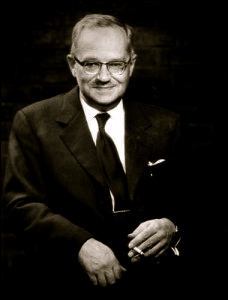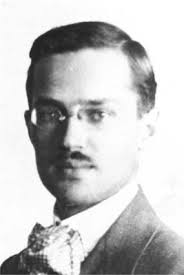
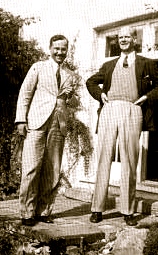
Neyman

Neyman-Pearson Tests: An Episode in Anglo-Polish Collaboration: (3.2)

Neyman & Pearson

November Cruise: 3.2

This third of November’s stops in the leisurely cruise of SIST aligns well with my recent BJPS paper Severe Testing: Error Statistics vs Bayes Factor Tests.  In tomorrow’s zoom, 11 am New York time, we’ll have an overview of the topics in SIST so far, as well as a discussion of this paper. (If you don’t have a link, and want one, write to me at error@vt.edu). 

3.2 N-P Tests: An Episode in Anglo-Polish Collaboration*

We proceed by setting up a specific hypothesis to test, Hin Neyman’s and my terminology, the null hypothesis in R. A. Fisher’s . . . in choosing the test, we take into account alternatives to Hwhich we believe possible or at any rate consider it most important to be on the look out for . . .Three steps in constructing the test may be defined: Continue reading

Categories: 2024 Leisurely Cruise, E.S. Pearson, Neyman, statistical tests | Leave a comment

Neyman-Pearson Tests: An Episode in Anglo-Polish Collaboration: (3.2)

Neyman & Pearson

November Cruise: 3.2

This second of November’s stops in the leisurely cruise of SIST aligns well with my recent Neyman Seminar at Berkeley. Egon Pearson’s description of the three steps in formulating tests is too rarely recognized today. Note especially the order of the steps. Share queries and thoughts in the comments.

3.2 N-P Tests: An Episode in Anglo-Polish Collaboration*

We proceed by setting up a specific hypothesis to test, Hin Neyman’s and my terminology, the null hypothesis in R. A. Fisher’s . . . in choosing the test, we take into account alternatives to Hwhich we believe possible or at any rate consider it most important to be on the look out for . . .Three steps in constructing the test may be defined:

Step 1. We must first specify the set of results . . .

Step 2. We then divide this set by a system of ordered boundaries . . .such that as we pass across one boundary and proceed to the next, we come to a class of results which makes us more and more inclined, on the information available, to reject the hypothesis tested in favour of alternatives which differ from it by increasing amounts.

Step 3. We then, if possible, associate with each contour level the chance that, if H0 is true, a result will occur in random sampling lying beyond that level . . .

In our first papers [in 1928] we suggested that the likelihood ratio criterion, λ, was a very useful one . . . Thus Step 2 proceeded Step 3. In later papers [1933–1938] we started with a fixed value for the chance, ε, of Step 3 . . . However, although the mathematical procedure may put Step 3 before 2, we cannot put this into operation before we have decided, under Step 2, on the guiding principle to be used in choosing the contour system. That is why I have numbered the steps in this order. (Egon Pearson 1947, p. 173)

Continue reading

Categories: 2024 Leisurely Cruise, E.S. Pearson, Neyman, statistical tests | Leave a comment

Response to Ben Recht’s post (“What is Statistics’ Purpose?”) on my Neyman seminar (ii)

.

There was a very valuable panel discussion after my October 9 Neyman Seminar in the Statistics Department at UC Berkeley.  I want to respond to many of the questions put forward by the participants (Ben Recht, Philip Stark, Bin Yu, Snow Zhang)  that we did not address during that panel. Slides from my presentation, “Severity as a basic concept of philosophy of statistics” are at the end of this post (but with none of the animations). I begin in this post by responding to Ben Recht, a professor of Artificial Intelligence and Computer Science at Berkeley, and his recent blogpost, What is Statistics’ Purpose? On severe testing, regulation, and butter passing, on my talk. I will consider: (1) A complex or leading question; (2) Why I chose to focus about Neyman’s philosophy of statistics and (3) What the “100 years of fighting and browbeating” were/are all about. Continue reading

Categories: affirming the consequent, Ben Recht, Neyman, P-values, Severity, statistical significance tests, statistics wars | 10 Comments

Happy Birthday R.A. Fisher: “Statistical methods and Scientific Induction” with replies by Neyman and E.S. Pearson

17 Feb 1890-29 July 1962

Today is R.A. Fisher’s birthday! I am reblogging what I call the “Triad”–an exchange between  Fisher, Neyman and Pearson (N-P) published 20 years after the Fisher-Neyman break-up. While my favorite is still the reply by E.S. Pearson, which alone should have shattered Fisher’s allegations that N-P “reinterpret” tests of significance as “some kind of acceptance procedure”, all three are chock full of gems for different reasons. They are short and worth rereading. Neyman’s article pulls back the cover on what is really behind Fisher’s over-the-top polemics, what with Russian 5-year plans and commercialism in the U.S. Not only is Fisher jealous that N-P tests came to overshadow “his” tests, he is furious at Neyman for driving home the fact that Fisher’s fiducial approach had been shown to be inconsistent (by others). The flaw is illustrated by Neyman in his portion of the triad. Details may be found in my book, SIST (2018) especially pp 388-392 linked to here. It speaks to a common fallacy seen every day in interpreting confidence intervals. As for Neyman’s “behaviorism”, Pearson’s last sentence is revealing.

HAPPY BIRTHDAY R.A. FISHER! Continue reading

Categories: E.S. Pearson, Fisher, Neyman, phil/history of stat | 1 Comment

Happy Birthday R.A. Fisher: “Statistical methods and Scientific Induction” with replies by Neyman and E.S. Pearson

17 Feb 1890-29 July 1962

Today is R.A. Fisher’s birthday! I am reblogging what I call the “Triad”–an exchange between  Fisher, Neyman and Pearson (N-P) published 20 years after the Fisher-Neyman break-up. My seminar on PhilStat is studying these this week, so it’s timely. While my favorite is still the reply by E.S. Pearson, which alone should have shattered Fisher’s allegations that N-P “reinterpret” tests of significance as “some kind of acceptance procedure”, all three are chock full of gems for different reasons. They are short and worth rereading. Neyman’s article pulls back the cover on what is really behind Fisher’s over-the-top polemics, what with Russian 5-year plans and commercialism in the U.S. Not only is Fisher jealous that N-P tests came to overshadow “his” tests, he is furious at Neyman for driving home the fact that Fisher’s fiducial approach had been shown to be inconsistent (by others). The flaw is illustrated by Neyman in his portion of the triad. I discuss this briefly in my Philosophy of Science Association paper from a few months ago (slides are here*).Further details may be found in my book, SIST (2018) especially pp 388-392 linked to here. It speaks to a common fallacy seen every day in interpreting confidence intervals. As for Neyman’s “behaviorism”, Pearson’s last sentence is revealing.

HAPPY BIRTHDAY R.A. FISHER! Continue reading

Categories: E.S. Pearson, Fisher, Neyman, phil/history of stat | Leave a comment

Happy Birthday Neyman: What was Neyman opposing when he opposed the ‘Inferential’ Probabilists? Your weekend Phil Stat reading

.

Today is Jerzy Neyman’s birthday (April 16, 1894 – August 5, 1981). I’m reposting a link to a quirky, but fascinating, paper of his that explains one of the most misunderstood of his positions–what he was opposed to in opposing the “inferential theory”. The paper, fro 60 years ago,Neyman, J. (1962), ‘Two Breakthroughs in the Theory of Statistical Decision Making‘ [i] It’s chock full of ideas and arguments. “In the present paper” he tells us, “the term ‘inferential theory’…will be used to describe the attempts to solve the Bayes’ problem with a reference to confidence, beliefs, etc., through some supplementation …either a substitute a priori distribution [exemplified by the so called principle of insufficient reason] or a new measure of uncertainty” such as Fisher’s fiducial probability. It arises on p. 391 of Excursion 5 Tour III of Statistical Inference as Severe Testing: How to Get Beyond the Statistics Wars (2018, CUP). Here’s a link to the proofs of that entire tour. If you hear Neyman rejecting “inferential accounts,” you have to understand it in this very specific way: he’s rejecting “new measures of confidence or diffidence”. Here he alludes to them as “easy ways out”. He is not rejecting statistical inference in favor of behavioral performance as is typically thought. It’s amazing how an idiosyncratic use of a word 60 years ago can cause major rumblings decades later. Neyman always distinguished his error statistical performance conception from Bayesian and Fiducial probabilisms [ii]. The surprising twist here is semantical and the culprit is none other than…Allan Birnbaum. Yet Birnbaum gets short shrift, and no mention is made of our favorite “breakthrough” (or did I miss it?). You can find quite a lot on this blog searching Birnbaum. Continue reading

Categories: Bayesian/frequentist, Neyman | Leave a comment

R.A. Fisher: “Statistical methods and Scientific Induction” with replies by Neyman and E.S. Pearson

17 Feb 1890-29 July 1962

In recognition of Fisher’s birthday (Feb 17), I reblog what I call the “Triad”–an exchange between  Fisher, Neyman and Pearson (N-P) a full 20 years after the Fisher-Neyman break-up–adding a few new introductory remarks here. While my favorite is still the reply by E.S. Pearson, which alone should have shattered Fisher’s allegations that N-P “reinterpret” tests of significance as “some kind of acceptance procedure”, they are all chock full of gems for different reasons. They are short and worth rereading. Neyman’s article pulls back the cover on what is really behind Fisher’s over-the-top polemics, what with Russian 5-year plans and commercialism in the U.S. Not only is Fisher jealous that N-P tests came to overshadow “his” tests, he is furious at Neyman for driving home the fact that Fisher’s fiducial approach had been shown to be inconsistent (by others). The flaw is glaring and is illustrated very simply by Neyman in his portion of the triad. Further details may be found in my book, SIST (2018) especially pp 388-392 linked to here. It speaks to a common fallacy seen every day in interpreting confidence intervals. As for Neyman’s “behaviorism”, Pearson’s last sentence is revealing. Continue reading

Categories: E.S. Pearson, Fisher, Neyman, phil/history of stat | Leave a comment

A. Spanos: Jerzy Neyman and his Enduring Legacy (guest post)

I am reblogging a guest post that Aris Spanos wrote for this blog on Neyman’s birthday some years ago.   

A. Spanos

A Statistical Model as a Chance Mechanism
Aris Spanos 

Jerzy Neyman (April 16, 1894 – August 5, 1981), was a Polish/American statistician[i] who spent most of his professional career at the University of California, Berkeley. Neyman is best known in statistics for his pioneering contributions in framing the Neyman-Pearson (N-P) optimal theory of hypothesis testing and his theory of Confidence Intervals. (This article was first posted here.) Continue reading

Categories: Neyman, Spanos | Leave a comment

Happy Birthday Neyman: What was Neyman opposing when he opposed the ‘Inferential’ Probabilists?

.

Today is Jerzy Neyman’s birthday (April 16, 1894 – August 5, 1981). I’m posting a link to a quirky paper of his that explains one of the most misunderstood of his positions–what he was opposed to in opposing the “inferential theory”. The paper is Neyman, J. (1962), ‘Two Breakthroughs in the Theory of Statistical Decision Making‘ [i] It’s chock full of ideas and arguments. “In the present paper” he tells us, “the term ‘inferential theory’…will be used to describe the attempts to solve the Bayes’ problem with a reference to confidence, beliefs, etc., through some supplementation …either a substitute a priori distribution [exemplified by the so called principle of insufficient reason] or a new measure of uncertainty” such as Fisher’s fiducial probability. It arises on p. 391 of Excursion 5 Tour III of Statistical Inference as Severe Testing: How to Get Beyond the Statistics Wars (2018, CUP). Here’s a link to the proofs of that entire tour. If you hear Neyman rejecting “inferential accounts” you have to understand it in this very specific way: he’s rejecting “new measures of confidence or diffidence”. Here he alludes to them as “easy ways out”. He is not rejecting statistical inference in favor of behavioral performance as typically thought. Neyman always distinguished his error statistical performance conception from Bayesian and Fiducial probabilisms [ii]. The surprising twist here is semantical and the culprit is none other than…Allan Birnbaum. Yet Birnbaum gets short shrift, and no mention is made of our favorite “breakthrough” (or did I miss it?). You can find quite a lot on this blog searching Birnbaum. Continue reading

Categories: Bayesian/frequentist, Error Statistics, Neyman | 3 Comments

R.A. Fisher: “Statistical methods and Scientific Induction” with replies by Neyman and E.S. Pearson

In Recognition of Fisher’s birthday (Feb 17), I reblog his contribution to the “Triad”–an exchange between  Fisher, Neyman and Pearson 20 years after the Fisher-Neyman break-up. The other two are below. My favorite is the reply by E.S. Pearson, but all are chock full of gems for different reasons. They are each very short and are worth your rereading. Continue reading

Categories: E.S. Pearson, Fisher, Neyman, phil/history of stat | Leave a comment

If you like Neyman’s confidence intervals then you like N-P tests

Neyman

Neyman, confronted with unfortunate news would always say “too bad!” At the end of Jerzy Neyman’s birthday week, I cannot help imagining him saying “too bad!” as regards some twists and turns in the statistics wars. First, too bad Neyman-Pearson (N-P) tests aren’t in the ASA Statement (2016) on P-values: “To keep the statement reasonably simple, we did not address alternative hypotheses, error types, or power”. An especially aggrieved “too bad!” would be earned by the fact that those in love with confidence interval estimators don’t appreciate that Neyman developed them (in 1930) as a method with a precise interrelationship with N-P tests. So if you love CI estimators, then you love N-P tests! Continue reading

Categories: ASA Guide to P-values, CIs and tests, Neyman | Leave a comment

Neyman: Distinguishing tests of statistical hypotheses and tests of significance might have been a lapse of someone’s pen

Neyman April 16, 1894 – August 5, 1981

I’ll continue to post Neyman-related items this week in honor of his birthday. This isn’t the only paper in which Neyman makes it clear he denies a distinction between a test of  statistical hypotheses and significance tests. He and E. Pearson also discredit the myth that the former is only allowed to report pre-data, fixed error probabilities, and are justified only by dint of long-run error control. Controlling the “frequency of misdirected activities” in the midst of finding something out, or solving a problem of inquiry, on the other hand, are epistemological goals. What do you think?

Tests of Statistical Hypotheses and Their Use in Studies of Natural Phenomena
by Jerzy Neyman

ABSTRACT. Contrary to ideas suggested by the title of the conference at which the present paper was presented, the author is not aware of a conceptual difference between a “test of a statistical hypothesis” and a “test of significance” and uses these terms interchangeably. A study of any serious substantive problem involves a sequence of incidents at which one is forced to pause and consider what to do next. In an effort to reduce the frequency of misdirected activities one uses statistical tests. The procedure is illustrated on two examples: (i) Le Cam’s (and associates’) study of immunotherapy of cancer and (ii) a socio-economic experiment relating to low-income homeownership problems.

I recommend, especially, the example on home ownership. Here are two snippets: Continue reading

Categories: Error Statistics, Neyman, Statistics | Tags: | Leave a comment

Neyman vs the ‘Inferential’ Probabilists

.

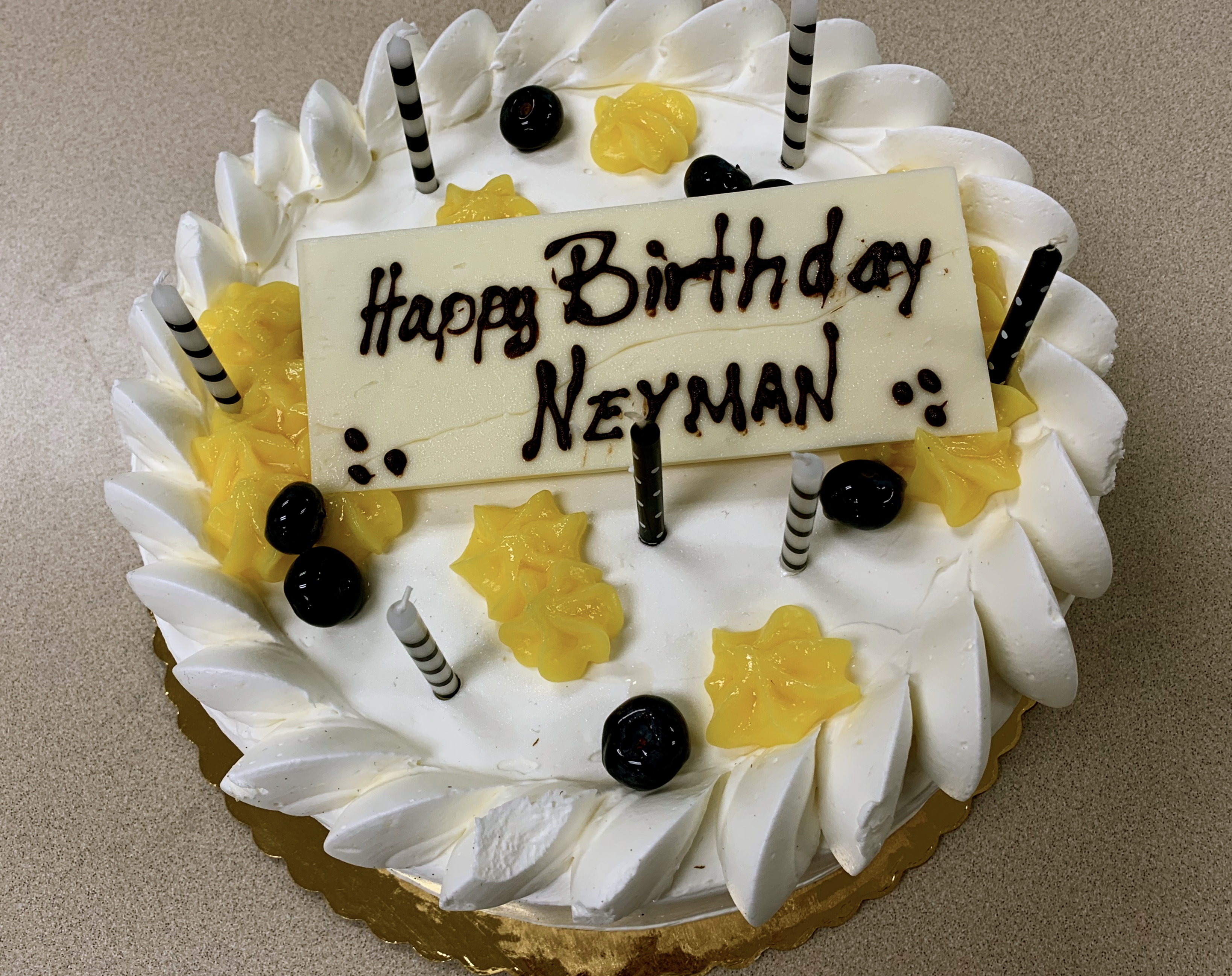
We celebrated Jerzy Neyman’s Birthday (April 16, 1894) last night in our seminar: here’s a pic of the cake.  My entry today is a brief excerpt and a link to a paper of his that we haven’t discussed much on this blog: Neyman, J. (1962), ‘Two Breakthroughs in the Theory of Statistical Decision Making‘ [i] It’s chock full of ideas and arguments, but the one that interests me at the moment is Neyman’s conception of “his breakthrough”, in relation to a certain concept of “inference”.  “In the present paper” he tells us, “the term ‘inferential theory’…will be used to describe the attempts to solve the Bayes’ problem with a reference to confidence, beliefs, etc., through some supplementation …either a substitute a priori distribution [exemplified by the so called principle of insufficient reason] or a new measure of uncertainty” such as Fisher’s fiducial probability. So if you hear Neyman rejecting “inferential accounts” you have to understand it in this very specific way: he’s rejecting “new measures of confidence or diffidence”. Here he alludes to them as “easy ways out”. Now Neyman always distinguishes his error statistical performance conception from Bayesian and Fiducial probabilisms [ii]. The surprising twist here is semantical and the culprit is none other than…Allan Birnbaum. Yet Birnbaum gets short shrift, and no mention is made of our favorite “breakthrough” (or did I miss it?).

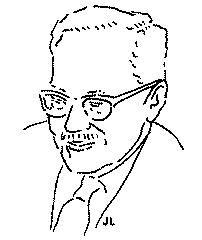
drawn by his wife,Olga

Note: In this article,”attacks” on various statistical “fronts” refers to ways of attacking problems in one or another statistical research program.
HAPPY BIRTHDAY WEEK FOR NEYMAN! Continue reading

Categories: Bayesian/frequentist, Error Statistics, Neyman | Leave a comment

Jerzy Neyman and “Les Miserables Citations” (statistical theater in honor of his birthday yesterday)

images-14

Neyman April 16, 1894 – August 5, 1981

My second Jerzy Neyman item, in honor of his birthday, is a little play that I wrote for Statistical Inference as Severe Testing: How to Get Beyond the Statistics Wars (2018):

A local acting group is putting on a short theater production based on a screenplay I wrote:  “Les Miserables Citations” (“Those Miserable Quotes”) [1]. The “miserable” citations are those everyone loves to cite, from their early joint 1933 paper:

We are inclined to think that as far as a particular hypothesis is concerned, no test based upon the theory of probability can by itself provide any valuable evidence of the truth or falsehood of that hypothesis.

But we may look at the purpose of tests from another viewpoint. Without hoping to know whether each separate hypothesis is true or false, we may search for rules to govern our behavior with regard to them, in following which we insure that, in the long run of experience, we shall not be too often wrong. (Neyman and Pearson 1933, pp. 290-1).

Continue reading

Categories: E.S. Pearson, Neyman, Statistics | Leave a comment

A. Spanos: Jerzy Neyman and his Enduring Legacy

Today is Jerzy Neyman’s birthday. I’ll post various Neyman items this week in recognition of it, starting with a guest post by Aris Spanos. Happy Birthday Neyman!

A. Spanos

A Statistical Model as a Chance Mechanism
Aris Spanos 

Jerzy Neyman (April 16, 1894 – August 5, 1981), was a Polish/American statistician[i] who spent most of his professional career at the University of California, Berkeley. Neyman is best known in statistics for his pioneering contributions in framing the Neyman-Pearson (N-P) optimal theory of hypothesis testing and his theory of Confidence Intervals. (This article was first posted here.)

Neyman: 16 April

Neyman: 16 April 1894 – 5 Aug 1981

One of Neyman’s most remarkable, but least recognized, achievements was his adapting of Fisher’s (1922) notion of a statistical model to render it pertinent for  non-random samples. Fisher’s original parametric statistical model Mθ(x) was based on the idea of ‘a hypothetical infinite population’, chosen so as to ensure that the observed data x0:=(x1,x2,…,xn) can be viewed as a ‘truly representative sample’ from that ‘population’: Continue reading

Categories: Neyman, Spanos | Leave a comment

Deconstructing the Fisher-Neyman conflict wearing fiducial glasses + Excerpt 5.8 from SIST

imgres-4

Fisher/ Neyman

This continues my previous post: “Can’t take the fiducial out of Fisher…” in recognition of Fisher’s birthday, February 17. These 2 posts reflect my working out of these ideas in writing Section 5.8 of Statistical Inference as Severe Testing: How to Get Beyond the Statistics Wars (SIST, CUP 2018). Here’s all of Section 5.8 (“Neyman’s Performance and Fisher’s Fiducial Probability”) for your Saturday night reading.* 

Move up 20 years to the famous 1955/56 exchange between Fisher and Neyman. Fisher clearly connects Neyman’s adoption of a behavioristic-performance formulation to his denying the soundness of fiducial inference. When “Neyman denies the existence of inductive reasoning, he is merely expressing a verbal preference. For him ‘reasoning’ means what ‘deductive reasoning’ means to others.” (Fisher 1955, p. 74). Continue reading

Categories: fiducial probability, Fisher, Neyman, Statistics | 3 Comments

R.A. Fisher: “Statistical methods and Scientific Induction”

In Recognition of Fisher’s birthday (Feb 17), I reblog his contribution to the “Triad”–an exchange between  Fisher, Neyman and Pearson 20 years after the Fisher-Neyman break-up. The other two are below. They are each very short and are worth your rereading.

17 February 1890 — 29 July 1962

Statistical Methods and Scientific Induction

by Sir Ronald Fisher (1955)

SUMMARY

The attempt to reinterpret the common tests of significance used in scientific research as though they constituted some kind of  acceptance procedure and led to “decisions” in Wald’s sense, originated in several misapprehensions and has led, apparently, to several more.

The three phrases examined here, with a view to elucidating they fallacies they embody, are:

  1. “Repeated sampling from the same population”,
  2. Errors of the “second kind”,
  3. “Inductive behavior”.

Mathematicians without personal contact with the Natural Sciences have often been misled by such phrases. The errors to which they lead are not only numerical.

To continue reading Fisher’s paper.


Note on an Article by Sir Ronald Fisher

by Jerzy Neyman (1956)

Neyman

Neyman

Summary

(1) FISHER’S allegation that, contrary to some passages in the introduction and on the cover of the book by Wald, this book does not really deal with experimental design is unfounded. In actual fact, the book is permeated with problems of experimentation.  (2) Without consideration of hypotheses alternative to the one under test and without the study of probabilities of the two kinds, no purely probabilistic theory of tests is possible. Continue reading

Categories: E.S. Pearson, Fisher, Neyman, phil/history of stat | 1 Comment

Neyman-Pearson Tests: An Episode in Anglo-Polish Collaboration: Excerpt from Excursion 3 (3.2)

Neyman & Pearson

3.2 N-P Tests: An Episode in Anglo-Polish Collaboration*

We proceed by setting up a specific hypothesis to test, Hin Neyman’s and my terminology, the null hypothesis in R. A. Fisher’s . . . in choosing the test, we take into account alternatives to Hwhich we believe possible or at any rate consider it most important to be on the look out for . . .Three steps in constructing the test may be defined:

Step 1. We must first specify the set of results . . .

Step 2. We then divide this set by a system of ordered boundaries . . .such that as we pass across one boundary and proceed to the next, we come to a class of results which makes us more and more inclined, on the information available, to reject the hypothesis tested in favour of alternatives which differ from it by increasing amounts.

Step 3. We then, if possible, associate with each contour level the chance that, if H0 is true, a result will occur in random sampling lying beyond that level . . .

In our first papers [in 1928] we suggested that the likelihood ratio criterion, λ, was a very useful one . . . Thus Step 2 proceeded Step 3. In later papers [1933–1938] we started with a fixed value for the chance, ε, of Step 3 . . . However, although the mathematical procedure may put Step 3 before 2, we cannot put this into operation before we have decided, under Step 2, on the guiding principle to be used in choosing the contour system. That is why I have numbered the steps in this order. (Egon Pearson 1947, p. 173)

In addition to Pearson’s 1947 paper, the museum follows his account in “The Neyman–Pearson Story: 1926–34” (Pearson 1970). The subtitle is “Historical Sidelights on an Episode in Anglo-Polish Collaboration”!

We meet Jerzy Neyman at the point he’s sent to have his work sized up by Karl Pearson at University College in 1925/26. Neyman wasn’t that impressed: Continue reading

Categories: E.S. Pearson, Neyman, Statistical Inference as Severe Testing, statistical tests, Statistics | 1 Comment

Neyman vs the ‘Inferential’ Probabilists continued (a)

.

Today is Jerzy Neyman’s Birthday (April 16, 1894 – August 5, 1981).  I am posting a brief excerpt and a link to a paper of his that I hadn’t posted before: Neyman, J. (1962), ‘Two Breakthroughs in the Theory of Statistical Decision Making‘ [i] It’s chock full of ideas and arguments, but the one that interests me at the moment is Neyman’s conception of “his breakthrough”, in relation to a certain concept of “inference”.  “In the present paper” he tells us, “the term ‘inferential theory’…will be used to describe the attempts to solve the Bayes’ problem with a reference to confidence, beliefs, etc., through some supplementation …either a substitute a priori distribution [exemplified by the so called principle of insufficient reason] or a new measure of uncertainty” such as Fisher’s fiducial probability. Now Neyman always distinguishes his error statistical performance conception from Bayesian and Fiducial probabilisms [ii]. The surprising twist here is semantical and the culprit is none other than…Allan Birnbaum. Yet Birnbaum gets short shrift, and no mention is made of our favorite “breakthrough” (or did I miss it?). [iii] I’ll explain in later stages of this post & in comments…(so please check back); I don’t want to miss the start of the birthday party in honor of Neyman, and it’s already 8:30 p.m in Berkeley!

Note: In this article,”attacks” on various statistical “fronts” refers to ways of attacking problems in one or another statistical research program. HAPPY BIRTHDAY NEYMAN! Continue reading

Categories: Bayesian/frequentist, Error Statistics, Neyman, Statistics | Leave a comment

Deconstructing the Fisher-Neyman conflict wearing fiducial glasses (continued)

imgres-4

Fisher/ Neyman

[An updated version with corrected links can be found here.]

This continues my previous post: “Can’t take the fiducial out of Fisher…” in recognition of Fisher’s birthday, February 17. I supply a few more intriguing articles you may find enlightening to read and/or reread on a Saturday night

Move up 20 years to the famous 1955/56 exchange between Fisher and Neyman. Fisher clearly connects Neyman’s adoption of a behavioristic-performance formulation to his denying the soundness of fiducial inference. When “Neyman denies the existence of inductive reasoning, he is merely expressing a verbal preference. For him ‘reasoning’ means what ‘deductive reasoning’ means to others.” (Fisher 1955, p. 74). Continue reading

Categories: fiducial probability, Fisher, Neyman, Statistics | 4 Comments

Blog at WordPress.com.