JSM 2020 Panel on P-values & “Statistical Significance”

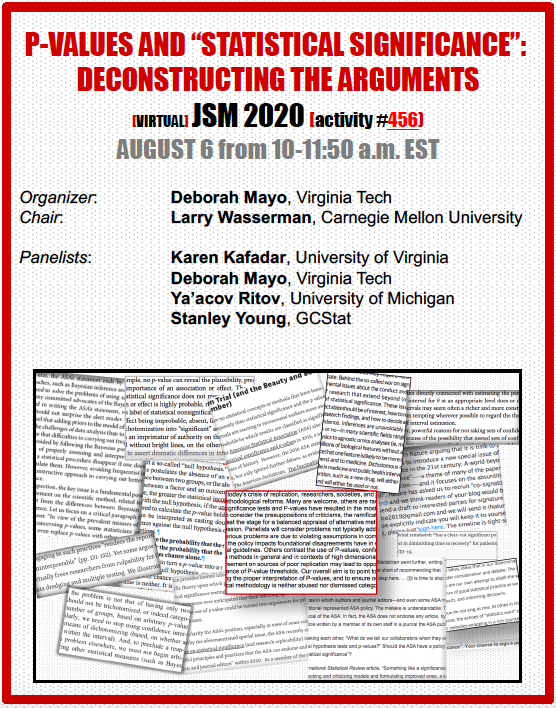
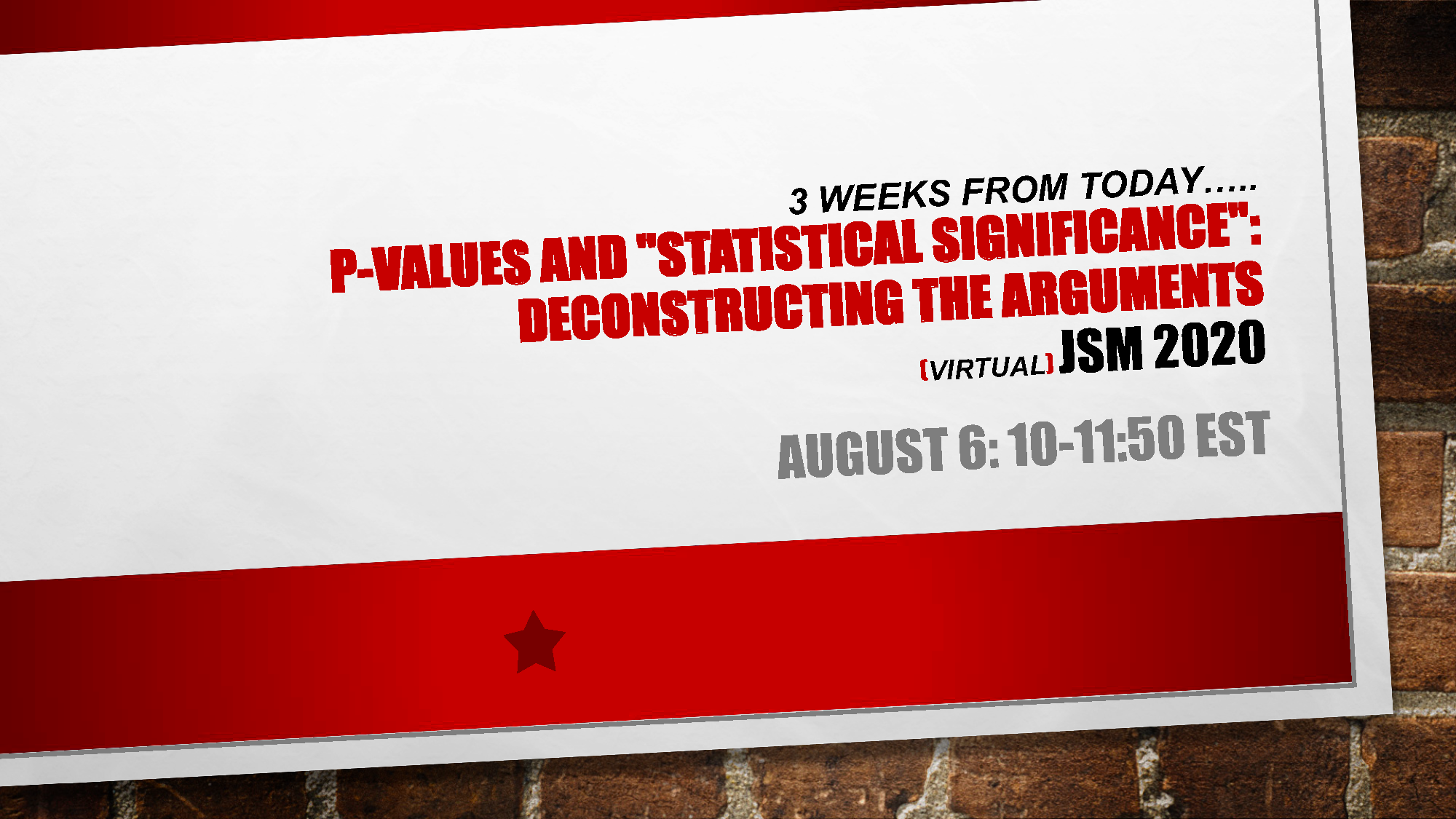
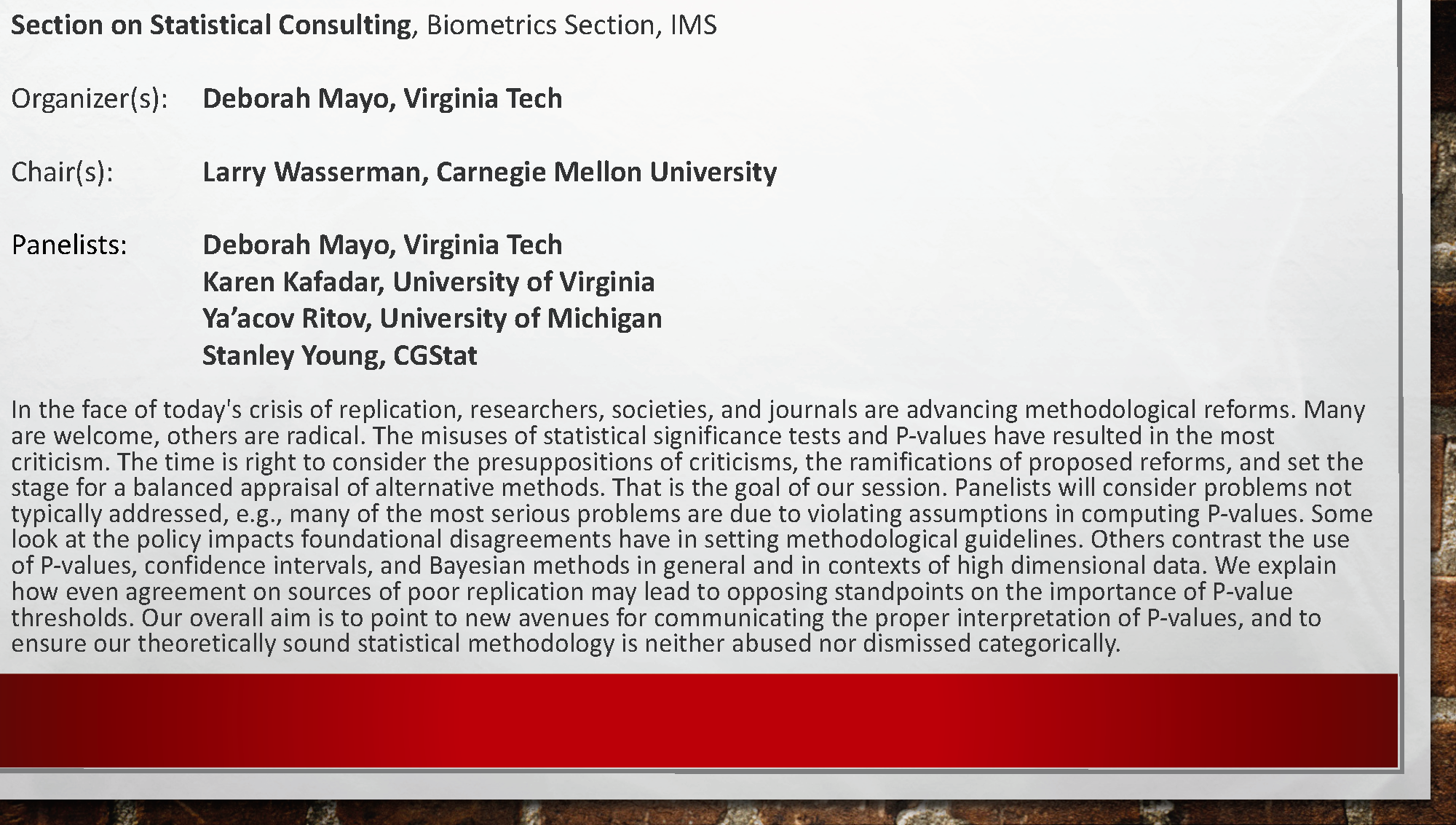
All: On July 30 (10am EST) I will give a virtual version of my JSM presentation, remotely like the one I will actually give on Aug 6 at the JSM. Co-panelist Stan Young may as well. One of our surprise guests tomorrow (not at the JSM) will be Yoav Benjamini!  If you’re interested in attending our July 30 practice session* please follow the directions here. Background items for this session are in the “readings” and “memos” of session 5.

*unless you’re already on our LSE Phil500 list

JSM 2020 Panel Flyer (PDF)
JSM online program w/panel abstract & information): Continue reading

Categories: Announcement, JSM 2020, significance tests, stat wars and their casualties | Leave a comment

Stephen Senn: Losing Control (guest post)

.

Stephen Senn
Consultant Statistician
Edinburgh

Losing Control

Match points

The idea of local control is fundamental to the design and analysis of experiments and contributes greatly to a design’s efficiency. In clinical trials such control is often accompanied by randomisation and the way that the randomisation is carried out has a close relationship to how the analysis should proceed. For example, if a parallel group trial is carried out in different centres, but randomisation is ‘blocked’ by centre then, logically, centre should be in the model (Senn, S. J. & Lewis, R. J., 2019). On the other hand if all the patients in a given centre are allocated the same treatment at random, as in a so-called cluster randomised trial, then the fundamental unit of inference becomes the centre and patients are regarded as repeated measures on it. In other words, the way in which the allocation has been carried out effects the degree of matching that has been achieved and this, in turn, is related to the analysis that should be employed. A previous blog of mine, To Infinity and Beyond,  discusses the point. Continue reading

Categories: covid-19, randomization, RCTs, S. Senn | 16 Comments

JSM 2020: P-values & “Statistical Significance”, August 6


Link: https://ww2.amstat.org/meetings/jsm/2020/onlineprogram/ActivityDetails.cfm?SessionID=219596

To register for JSM: https://ww2.amstat.org/meetings/jsm/2020/registration.cfm

Categories: JSM 2020, P-values | Leave a comment

Colleges & Covid-19: Time to Start Pool Testing

.

I. “Colleges Face Rising Revolt by Professors,” proclaims an article in today’s New York Times, in relation to returning to in-person teaching:

Thousands of instructors at American colleges and universities have told administrators in recent days that they are unwilling to resume in-person classes because of the pandemic. More than three-quarters of colleges and universities have decided students can return to campus this fall. But they face a growing faculty revolt.
Continue reading

Categories: covid-19 | Tags: | 8 Comments

David Hand: Trustworthiness of Statistical Analysis (LSE PH 500 presentation)

This was David Hand’s guest presentation (25 June) at our zoomed graduate research seminar (LSE PH500) on Current Controversies in Phil Stat (~30 min.)  I’ll make some remarks in the comments, and invite yours.

.

Trustworthiness of Statistical Analysis

David Hand

Abstract: Trust in statistical conclusions derives from the trustworthiness of the data and analysis methods. Trustworthiness of the analysis methods can be compromised by misunderstanding and incorrect application. However, that should stimulate a call for education and regulation, to ensure that methods are used correctly. The alternative of banning potentially useful methods, on the grounds that they are often misunderstood and misused is short-sighted, unscientific, and Procrustean. It damages the capability of science to advance, and feeds into public mistrust of the discipline.

Below are Prof.Hand’s slides w/o audio, followed by a video w/audio. You can also view them on the Meeting #6 post on the PhilStatWars blog (https://phil-stat-wars.com/2020/06/21/meeting-6-june-25/). Continue reading

Categories: LSE PH 500 | Tags: , , , , , , | 7 Comments

Bonus meeting: Graduate Research Seminar: Current Controversies in Phil Stat: LSE PH 500: 25 June 2020

Ship StatInfasSt

We’re holding a bonus, 6th, meeting of the graduate research seminar PH500 for the Philosophy, Logic & Scientific Method Department at the LSE:

(Remote 10am-12 EST, 15:00 – 17:00 London time; Thursday, June 25)

VI. (June 25) BONUS: Power, shpower, severity, positive predictive value (diagnostic model) & a Continuation of The Statistics Wars and Their Casualties

There will also be a guest speaker: Professor David Hand (Imperial College, London). Here is Professor Hand’s presentation (click on “present” to hear sound)

The main readings are on the blog page for the seminar.


Categories: Graduate Seminar PH500 LSE, power | Leave a comment

“On the Importance of testing a random sample (for Covid)”, an article from Significance magazine

.

Nearly 3 months ago I tweeted “Stat people: shouldn’t they be testing a largish random sample of people [w/o symptoms] to assess rates, alert those infected, rather than only high risk, symptomatic people, in the U.S.?” I was surprised that nearly all the stat and medical people I know expressed the view that it wouldn’t be feasible or even very informative. Really? Granted, testing was and is limited, but had it been made a priority, it could have been done. In the new issue of Significance (June 2020) that I just received, James J. Cochran writes “on the importance of testing a random sample.” [1] 

Continue reading

Categories: random sample | 13 Comments

Birthday of Allan Birnbaum: Foundations of Probability and Statistics (27 May 1923 – 1 July 1976)

27 May 1923-1 July 1976

27 May 1923-1 July 1976

Today is Allan Birnbaum’s birthday. In honor of his birthday, I’m posting the articles in the Synthese volume that was dedicated to his memory in 1977. The editors describe it as their way of  “paying homage to Professor Birnbaum’s penetrating and stimulating work on the foundations of statistics”. I had posted the volume before, but there are several articles that are very worth rereading. I paste a few snippets from the articles by Giere and Birnbaum. If you’re interested in statistical foundations, and are unfamiliar with Birnbaum, here’s a chance to catch up. (Even if you are, you may be unaware of some of these key papers.) Continue reading

Categories: Birnbaum, Likelihood Principle, Statistics, strong likelihood principle | Tags: | 3 Comments

Graduate Research Seminar: Current Controversies in Phil Stat: LSE PH 500: 21 May – 18 June 2020

.

Ship StatInfasST will embark on a new journey from 21 May – 18 June, a graduate research seminar for the Philosophy, Logic & Scientific Method Department at the LSE, but given the pandemic has shut down cruise ships, it will remain at dock in the U.S. and use zoom. If you care to follow any of the 5 sessions, nearly all of the materials will be linked here collected from excerpts already on this blog. If you are interested in observing on zoom beginning 28 May, please follow the directions here

For the updated schedule, see the seminar web page.

Topic: Current Controversies in Phil Stat
(LSE, Remote 10am-12 EST, 15:00 – 17:00 London time; Thursdays 21 May-18 June) Continue reading

Categories: Announcement, SIST | Leave a comment

Final part of B. Haig’s ‘What can psych stat reformers learn from the error-stat perspective?’ (Bayesian stats)

.

Here’s the final part of Brian Haig’s recent paper ‘What can psychology’s statistics reformers learn from the error-statistical perspective?’ in Methods in Psychology 2 (Nov. 2020). The full article, which is open access, is here. I will make some remarks in the comments.

5. The error-statistical perspective and the nature of science

Haig

As noted at the outset, the error-statistical perspective has made significant contributions to our philosophical understanding of the nature of science. These are achieved, in good part, by employing insights about the nature and place of statistical inference in experimental science. The achievements include deliberations on important philosophical topics, such as the demarcation of science from non-science, the underdetermination of theories by evidence, the nature of scientific progress, and the perplexities of inductive inference. In this article, I restrict my attention to two such topics: The process of falsification and the structure of modeling.

5.1. Falsificationism Continue reading

Categories: Brian Haig, SIST | 3 Comments

Part 2 of B. Haig’s ‘What can psych stat reformers learn from the error-stat perspective?’ (Bayesian stats)

.

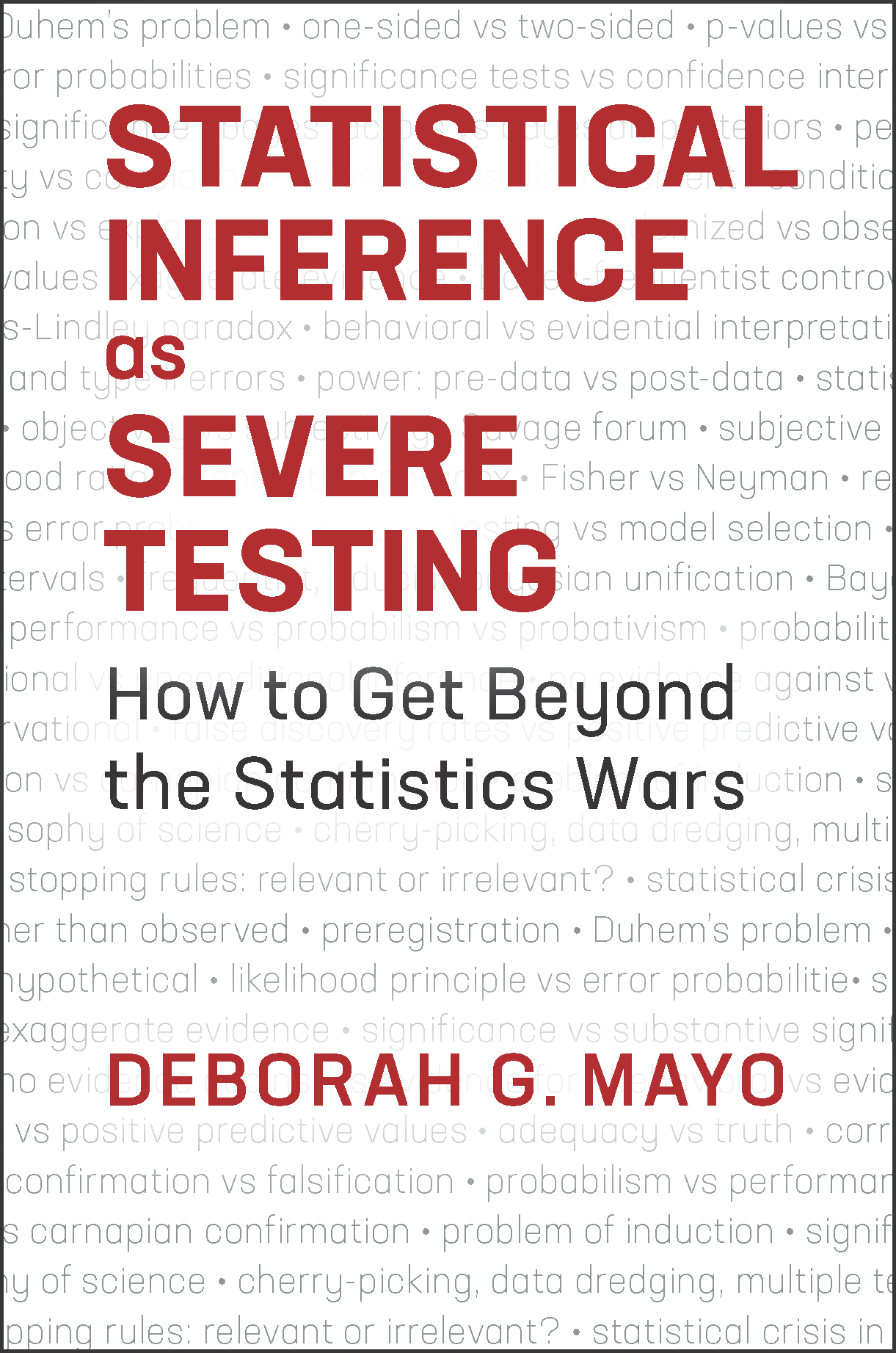
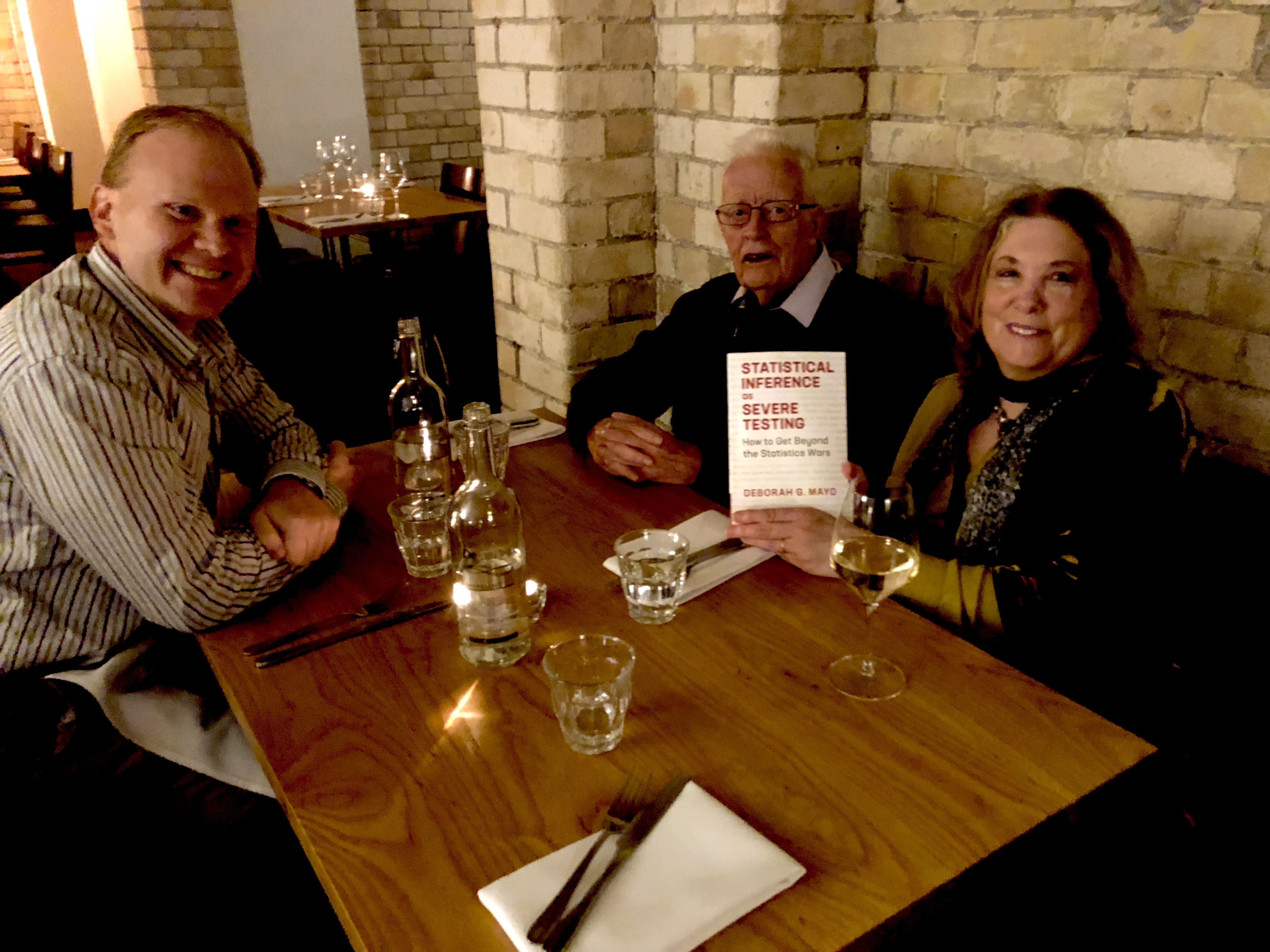
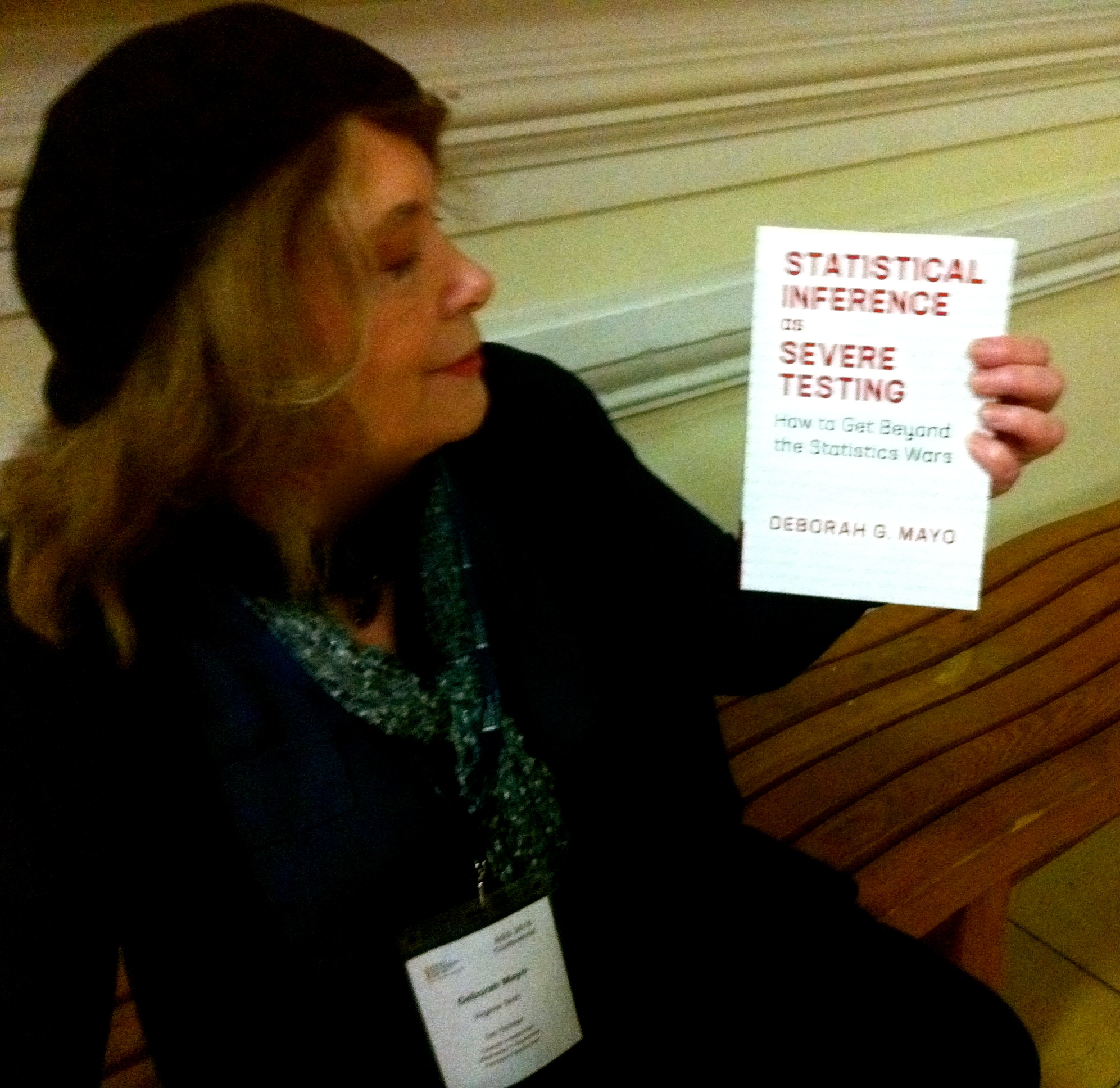
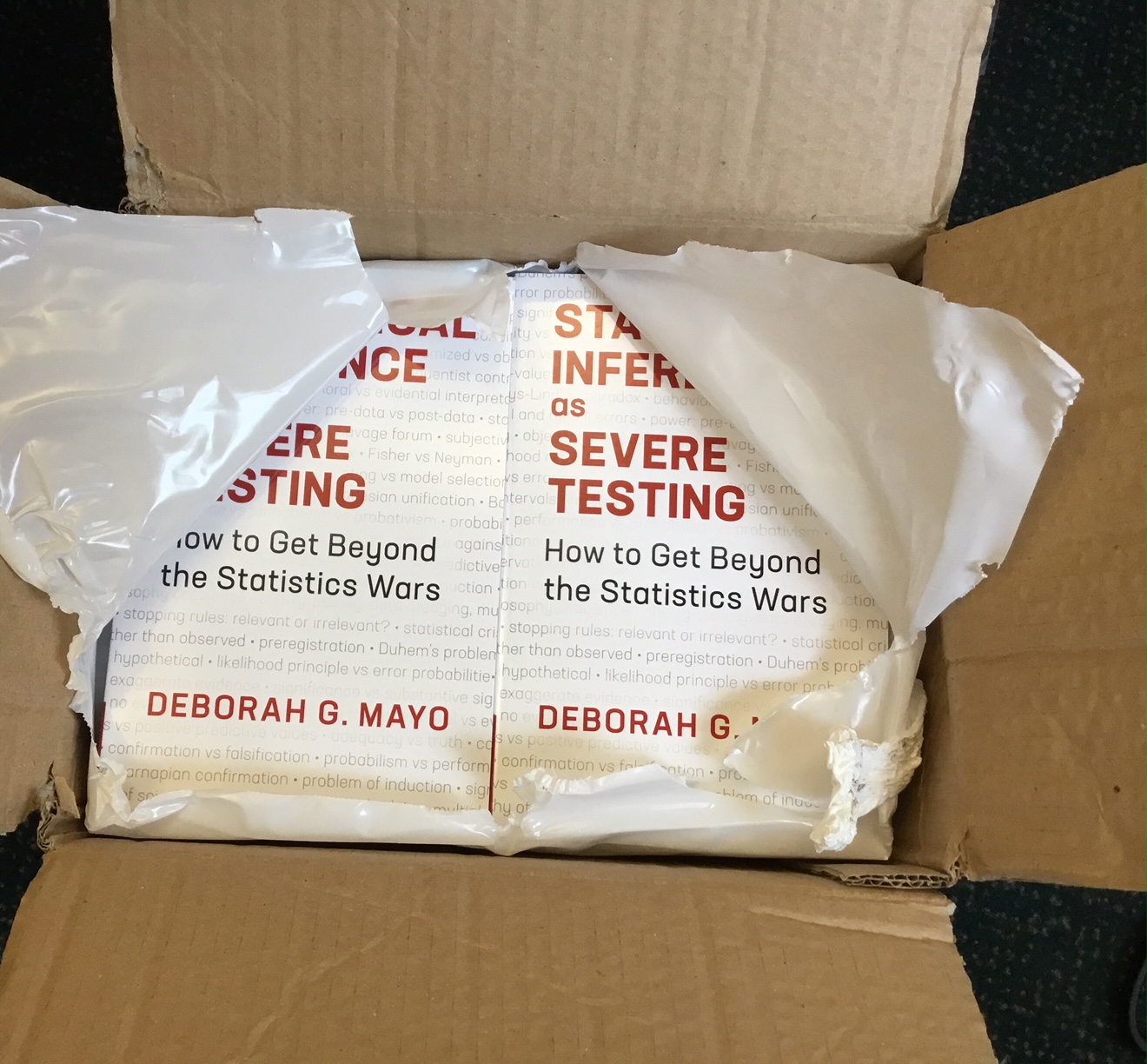
Here’s a picture of ripping open the first box of (rush) copies of Statistical Inference as Severe Testing: How to Get Beyond the Statistics Wars*, and here’s a continuation of Brian Haig’s recent paper ‘What can psychology’s statistics reformers learn from the error-statistical perspective?’ in Methods in Psychology 2 (Nov. 2020). Haig contrasts error statistics, the “new statistics”, and Bayesian statistics from the perspective of the statistics wars in psychology. The full article, which is open access, is here. I will make several points in the comments.

Haig

4. Bayesian statistics

Despite its early presence, and prominence, in the history of statistics, the Bayesian outlook has taken an age to assert itself in psychology. However, a cadre of methodologists has recently advocated the use of Bayesian statistical methods as a superior alternative to the messy frequentist practice that dominates psychology’s research landscape (e.g., Dienes, 2011; Kruschke and Liddell, 2018; Wagenmakers, 2007). These Bayesians criticize NHST, often advocate the use of Bayes factors for hypothesis testing, and rehearse a number of other well-known Bayesian objections to frequentist statistical practice. Continue reading

Categories: Brian Haig, SIST | 6 Comments

‘What can psychology’s statistics reformers learn from the error-statistical perspective?’

.

This is the title of Brian Haig’s recent paper in Methods in Psychology 2 (Nov. 2020). Haig is a professor emeritus of psychology at the University of Canterbury. Here he provides both a thorough and insightful review of my book Statistical Inference as Severe Testing: How to Get Beyond the Statistics Wars (CUP, 2018) as well as an excellent overview of the high points of today’s statistics wars and the replication crisis, especially from the perspective of psychology. I’ll excerpt from his article in a couple of posts. The full article, which is open access, is here

Abstract: In this article, I critically evaluate two major contemporary proposals for reforming statistical thinking in psychology: The recommendation that psychology should employ the “new statistics” in its research practice, and the alternative proposal that it should embrace Bayesian statistics. I do this from the vantage point of the modern error-statistical perspective, which emphasizes the importance of the severe testing of knowledge claims. I also show how this error-statistical perspective improves our understanding of the nature of science by adopting a workable process of falsification and by structuring inquiry in terms of a hierarchy of models. Before concluding, I briefly discuss the importance of the philosophy of statistics for improving our understanding of statistical thinking.

Brian Haig

Keywords: The error-statistical perspective, The new statistics, Bayesian statistics, Falsificationism, Hierarchy of models, Philosophy of statistics Continue reading

Categories: Brian Haig, Statistical Inference as Severe Testing–Review | 12 Comments

S. Senn: Randomisation is not about balance, nor about homogeneity but about randomness (Guest Post)

.

Stephen Senn
Consultant Statistician
Edinburgh

The intellectual illness of clinical drug evaluation that I have discussed here can be cured, and it will be cured when we restore intellectual primacy to the questions we ask, not the methods by which we answer them. Lewis Sheiner1

Cause for concern

In their recent essay Causal Evidence and Dispositions in Medicine and Public Health2, Elena Rocca and Rani Lill Anjum challenge, ‘the epistemic primacy of randomised controlled trials (RCTs) for establishing causality in medicine and public health’. That an otherwise stimulating essay by two philosophers, experts on causality, which makes many excellent points on the nature of evidence, repeats a common misunderstanding about randomised clinical trials, is grounds enough for me to address this topic again.  Before, however, explaining why I disagree with Rocca and Anjum on RCTs, I want to make clear that I agree with much of what they say. I loathe these pyramids of evidence, beloved by some members of the evidence-based movement, which have RCTs at the apex or possibly occupying a second place just underneath meta-analyses of RCTs. In fact, although I am a great fan of RCTs and (usually) of intention to treat analysis, I am convinced that RCTs alone are not enough. My thinking on this was profoundly affected by Lewis Sheiner’s essay of nearly thirty years ago (from which the quote at the beginning of this blog is taken). Lewis was interested in many aspects of investigating the effects of drugs and would, I am sure, have approved of Rocca and Anjum’s insistence that there are many layers of understanding how and why things work, and that means of investigating them may have to range from basic laboratory experiments to patient narratives via RCTs. Rocca and Anjum’s essay provides a good discussion of the various ‘causal tasks’ that need to be addressed and backs this up with some excellent examples. Continue reading

Categories: RCTs, S. Senn | 32 Comments

Paradigm Shift in Pandemic (Vent) Protocols?

Lung Scans[0]

As much as doctors and hospitals are raising alarms about a shortage of ventilators for Covid-19 patients, some doctors have begun to call for entirely reassessing the standard paradigm for their use–according to a cluster of articles to appear in the last week. “What’s driving this reassessment is a baffling observation about Covid-19: Many patients have blood oxygen levels so low they should be dead. But they’re not gasping for air, their hearts aren’t racing, and their brains show no signs of blinking off from lack of oxygen.”[1] Within that group of patients, some doctors wonder if the standard use of mechanical ventilators does more harm than good.[2] The issue is controversial; I’ll just report what I find in the articles over the past week. Please share ongoing updates in the comments. Continue reading

Categories: covid-19 | 62 Comments

A. Spanos:  Isaac Newton and his two years in quarantine:  how science could germinate in bewildering ways (Guest post)

.

Aris Spanos
Wilson Schmidt Professor of Economics
Department of Economics
Virginia Tech

Beyond the plenitude of misery and suffering that pandemics bring down on humanity, occasionally they contribute to the betterment of humankind by (inadvertently) boosting creative activity that leads to knowledge, and not just in epidemiology. A case in point is that of Isaac Newton and the pandemic of 1665-6.  Continue reading

Categories: quarantine, Spanos | 14 Comments

April 1, 2020: Memory Lane of April 1’s past

images-15

.

My “April 1” posts for the past 8 years have been so close to the truth or possible truth that they weren’t always spotted as April Fool’s pranks, which is what made them genuine April Fool’s pranks. (After a few days I either labeled them as such, e.g., “check date!”, or revealed it in a comment). Given the level of current chaos and stress, I decided against putting up a planned post for today, so I’m just doing a memory lane of past posts. (You can tell from reading the comments which had most people fooled.) Continue reading

Categories: Comedy, Statistics | Leave a comment

The Corona Princess: Learning from a petri dish cruise (i)

.

Q. Was it a mistake to quarantine the passengers aboard the Diamond Princess in Japan?

A. The original statement, which is not unreasonable, was that the best thing to do with these people was to keep them safely quarantined in an infection-control manner on the ship. As it turned out, that was very ineffective in preventing spread on the ship. So the quarantine process failed. I mean, I’d like to sugarcoat it and try to be diplomatic about it, but it failed. I mean, there were people getting infected on that ship. So something went awry in the process of quarantining on that ship. I don’t know what it was, but a lot of people got infected on that ship. (Dr. A Fauci, Feb 17, 2020)

This is part of an interview of Dr. Anthony Fauci, the coronavirus point person we’ve been seeing so much of lately. Fauci has been the director of the National Institute of Allergy and Infectious Diseases since all the way back to 1984! You might find his surprise surprising. Even before getting our recent cram course on coronavirus transmission, tales of cruises being hit with viral outbreaks are familiar enough. The horror stories from passengers on the floating petri dish were well known by this Feb 17 interview. Even if everything had gone as planned, the quarantine was really only for the (approximately 3700) passengers because the 1000 or so crew members still had to run the ship, as well as cook and deliver food to the passenger’s cabins. Moreover, the ventilation systems on cruise ships can’t filter out particles smaller than 5000 or 1000 nanometers.[1] Continue reading

Categories: covid-19 | 55 Comments

Stephen Senn: Being Just about Adjustment (Guest Post)

.


Stephen Senn
Consultant Statistician
Edinburgh

Correcting errors about corrected estimates

Randomised clinical trials are a powerful tool for investigating the effects of treatments. Given appropriate design, conduct and analysis they can deliver good estimates of effects. The key feature is concurrent control. Without concurrent control, randomisation is impossible. Randomisation is necessary, although not sufficient, for effective blinding. It also is an appropriate way to deal with unmeasured predictors, that is to say suspected but unobserved factors that might also affect outcome. It does this by ensuring that, in the absence of any treatment effect, the expected value of variation between and within groups is the same. Furthermore, probabilities regarding the relative variation can be delivered and this is what is necessary for valid inference. Continue reading

Categories: randomization, S. Senn | 6 Comments

My Phil Stat Events at LSE

.

.

I will run a graduate Research Seminar at the LSE on Thursdays from May 21-June 18:

.

(See my new blog for specifics (phil-stat-wars.com).
I am co-running a workshop
from 19-20 June, 2020 at LSE (Center for the Philosophy of Natural and Social Sciences CPNSS), with Roman Frigg. Participants include:
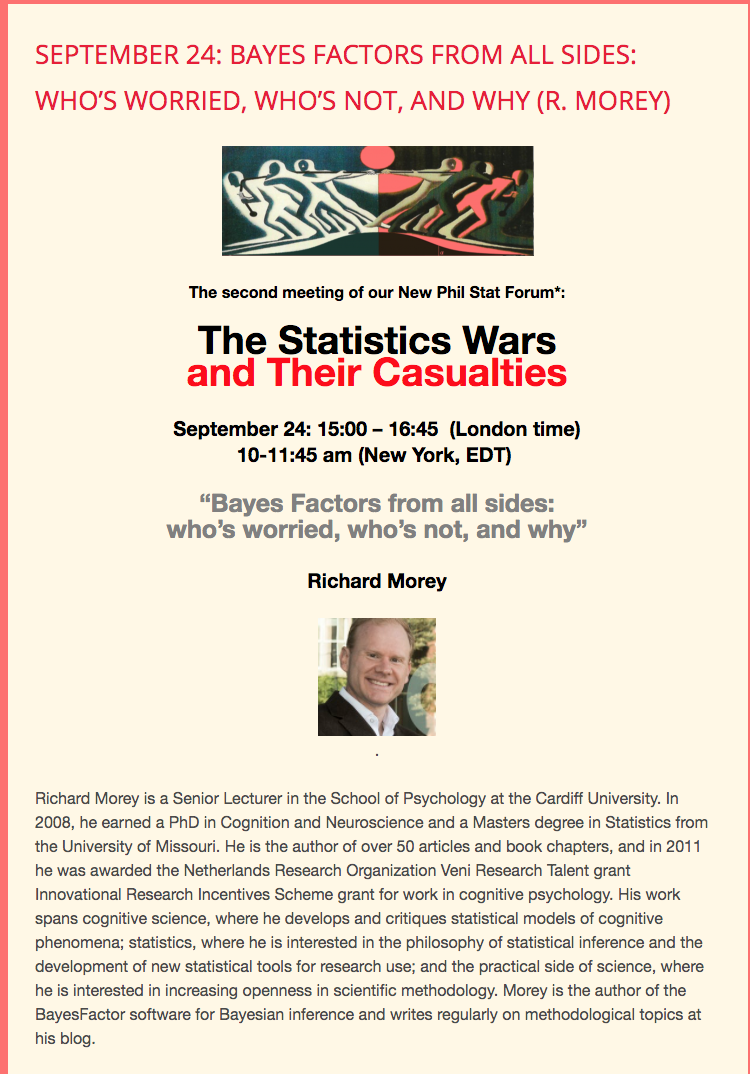
Alexander Bird (King’s College London), Mark Burgman (Imperial College London), Daniele Fanelli (LSE), David Hand (Imperial College London), Christian Hennig (University of Bologna), Katrin Hohl (City University London), Daniël Lakens (Eindhoven University of Technology), Deborah Mayo (Virginia Tech), Richard Morey (Cardiff University), Stephen Senn (Edinburgh, Scotland).
If you have a particular Phil Stat event you’d like me to advertise, please send it to me.
Categories: Announcement, Philosophy of Statistics | Leave a comment

Replying to a review of Statistical Inference as Severe Testing by P. Bandyopadhyay

.

Notre Dame Philosophical Reviews is a leading forum for publishing reviews of books in philosophy. The philosopher of statistics, Prasanta Bandyopadhyay, published a review of my book Statistical Inference as Severe Testing: How to Get Beyond the Statistics Wars (2018, CUP)(SIST) in this journal, and I very much appreciate his doing so. Here I excerpt from his review, and respond to a cluster of related criticisms in order to avoid some fundamental misunderstandings of my project. Here’s how he begins:

In this book, Deborah G. Mayo (who has the rare distinction of making an impact on some of the most influential statisticians of our time) delves into issues in philosophy of statistics, philosophy of science, and scientific methodology more thoroughly than in her previous writings. Her reconstruction of the history of statistics, seamless weaving of the issues in the foundations of statistics with the development of twentieth-century philosophy of science, and clear presentation that makes the content accessible to a non-specialist audience constitute a remarkable achievement. Mayo has a unique philosophical perspective which she uses in her study of philosophy of science and current statistical practice.[1]

Bandyopadhyay

I regard this as one of the most important philosophy of science books written in the last 25 years. However, as Mayo herself says, nobody should be immune to critical assessment. This review is written in that spirit; in it I will analyze some of the shortcomings of the book.
Continue reading

Categories: Statistical Inference as Severe Testing–Review | Tags: | 25 Comments

Blog at WordPress.com.