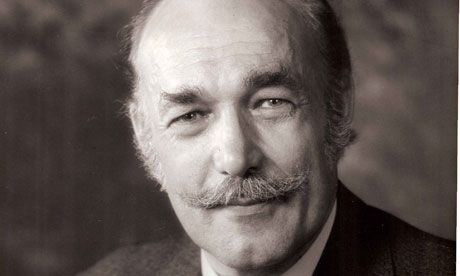
R.A.FISHER: Statistical Methods and Scientific Inference

In honor of R.A. Fisher’s birthday this week (Feb 17), in a year that will mark 50 years since his death, we will post the “Triad” exchange between  Fisher, Pearson and Neyman, and other guest contributions*

by Sir Ronald Fisher (1955)

SUMMARY

The attempt to reinterpret the common tests of significance used in scientific research as though they constituted some kind of  acceptance procedure and led to “decisions” in Wald’s sense, originated in several misapprehensions and has led, apparently, to several more.

The three phrases examined here, with a view to elucidating they fallacies they embody, are:

  1. “Repeated sampling from the same population”,
  2. Errors of the “second kind”,
  3. “Inductive behavior”.

Mathematicians without personal contact with the Natural Sciences have often been misled by such phrases. The errors to which they lead are not only numerical.

TO CONTINUE READING R. A. FISHER’S  PAPER, CLICK HERE.

*If you wish to contribute something in connection to Fisher, send to error@vt.edu

Categories: Statistics | Tags: , , , , , , | 6 Comments

Distortions in the Court? (PhilStock Feb 8)

Anyone who trades in biotech stocks knows that the slightest piece of news, rumors of successful /unsuccessful drug trials, upcoming FDA panels, anecdotal side effects, and much, much else, can radically alter a stock price in the space of a few hours.  Pre-market, for example, websites are busy disseminating bits of information garnered from anywhere and everywhere, helping to pump or dump biotechs.  I think just about every small biotech stock I’ve ever traded has been involved in some kind of lawsuit regarding what the company should have told shareholders during earnings.  (Most don’t go very far.)  If you ever visit the FDA page, you can find every drug/medical device coming up for considerations, recent letters to the company etc., etc.

Nevertheless, you might be surprised to learn that companies are not required to inform shareholders of news simply because it is likely to be relevant to an investor’s overall cost-benefit analysis in deciding how much the stock is worth, and where its price is likely to move. It’s more minimalist than that.  It is only required to provide information which, if not revealed, would render misleading something the company already said.

So for example suppose a drug company M publicly denied any reports claiming a link between its drug Z and effect E, declaring that drug Z had a clean bill of health as regards this risk concern.  Having made that statement, the company would then be in violation of the requirements if they did not also reveal information such as: numerous consumers were suing them alleging the untoward effect E from having taken drug Z; several letters had been written to the company from the FDA expressing concern about the number of cases where doctors had reported effect E among patients taking drug Z, still other letters warning company M that they should cease and desist from issuing statements that any alleged links between drug Z and effect E were entirely baseless and unfounded.

Now the information that company M was not revealing did not, and could not, have shown a statistically significant correlation between drug Z and effect E.  But failing to reveal this information rendered company M in violation of FDA and stock rules, because of the statements company M already made about drug Z’s clean bill of health regarding this very effect E (along with bullish price projections).  Not revealing this information, and the related information in their possession, rendered misleading things the company already said when it comes to information shareholders use in deciding on M’s value.

Pretty obvious, right?

Suppose then that company M is found in violation of this rule.  And suppose someone inferred from this that evidence of statistical significance is not required for showing a causal connection between a drug and hazardous side-effects.

Well, to infer that would be like doubly (or perhaps triply) missing the point: the ruling had nothing to do with what’s required to show cause and effect, but only what information a company is required to reveal to its shareholders in order not to mislead them (as regards information that could be of relevance to them in their cost-benefit assessments of the stock’s value and future price).

Secondly, the ruling made it very explicit that it was not making any claim about the actual existence of evidence linking drug Z and effect E: they were only proclaiming that drug company M would be in error, if they claimed they did not violate the rule of disclosure.[i]  (Determining whether there is any link between Z and E was an entirely separate matter.)

This is precisely  the situation as regards a drug company Matrixx, over the counter cold remedy Zicam, and side effect E: anosmia (loss or diminished sense of smell).  It was the focus of lawyer and guest blogger Nathan Schachtman yesterday.

“The potentially fraudulent aspect of Matrixx’s conduct was not that it had “hidden” adverse event reports, but rather that it had adverse event reports and a good deal of additional information, none of which it had disclosed to investors, when at the same time, the company chose to give the investment community particularly bullish projections of future sales.” (Schachtman)

Nevertheless, critics of statistical significance testing wasted no time in declaring that this ruling (which for some inexplicable reason made it to the Supreme Court) just goes to show that statistical significance is not and should not be required to show evidence of a causal link[ii]. (See also my Sept. 26 post).  Kadane’s article, which is quite interesting, concludes:

“The fact-based consideration that the Supreme Court endorses is very much in line with the Bayesian decision-theoretic approach that models how to make rational decisions under uncertainty. The presence or absence of statistical significance (in the formal, narrow sense) plays little role in such an analysis. “ (Jay Kadane)

I leave it to interested readers to explore the various  ins and outs of the case, which our guest poster has summarized in a much more legally correct fashion.


[i] Company M would certainly be in error, if the reason they claimed  not to have violated the rule of disclosure is that the information they did not reveal could not have constituted evidence of a statistically significant link between drug Z and effect E!

[ii] There was a session at the ASA last summer on this, including Kadane, Ziliac, and I don’t know who else (I had to leave prior to it).


Categories: Philosophy of Statistics | Tags: , , , | 2 Comments

Guest Blogger: Interstitial Doubts About the Matrixx

By: Nathan Schachtman, Esq., PC*

When the Supreme Court decided this case, I knew that some people would try to claim that it was a decision about the irrelevance or unimportance of statistical significance in assessing epidemiologic data. Indeed, the defense lawyers invited this interpretation by trying to connect materiality with causation. Having rejected that connection, the Supreme Court’s holding could address only materiality because causation was never at issue. It is a fundamental mistake to include undecided, immaterial facts as part of a court’s holding or the ratio decidendi of its opinion.

Interstitial Doubts About the Matrixx 

Statistics professors are excited that the United States Supreme Court issued an opinion that ostensibly addressed statistical significance. One such example of the excitement is an article, in press, by Joseph B. Kadane, Professor in the Department of Statistics, in Carnegie Mellon University, Pittsburgh, Pennsylvania. See Joseph B. Kadane, “Matrixx v. Siracusano: what do courts mean by ‘statistical significance’?” 11[x] Law, Probability and Risk 1 (2011).

Professor Kadane makes the sensible point that the allegations of adverse events did not admit of an analysis that would imply statistical significance or its absence. Id. at 5. See Schachtman, “The Matrixx – A Comedy of Errors” (April 6, 2011)”; David Kaye, ” Trapped in the Matrixx: The U.S. Supreme Court and the Need for Statistical Significance,” BNA Product Safety and Liability Reporter 1007 (Sept. 12, 2011). Unfortunately, the excitement has obscured Professor Kadane’s interpretation of the Court’s holding, and has led him astray in assessing the importance of the case. Continue reading

Categories: Statistics | Tags: , , , , , , | 8 Comments

When Can Risk-Factor Epidemiology Provide Reliable Tests?

A commentator  brings up risk factor epidemiology, and while I’m not sure the following very short commentary* by Aris Spanos and I directly deals with his query, Greenland happens to mention Popper, and it might be of interest: “When Can Risk-Factor Epidemiology Provide Reliable Tests?

Here’s the abstract:

Can we obtain interesting and valuable knowledge from observed associations of the sort described by Greenland and colleagues in their paper on risk factor epidemiology? Greenland argues “yes,” and we agree. However, the really important and difficult questions are when and why. Answering these questions demands a clear understanding of the problems involved when going from observed associations of risk factors to causal hypotheses that account for them. Two main problems are that 1) the observed associations could fail to be genuine; and 2) even if they are genuine, there are many competing causal inferences that can account for them. Although Greenland’s focus is on the latter, both are equally important, and progress here hinges on disentangling the two to a much greater extent than is typically recognized. 

* We were commenting on “The Value of Risk-Factor (“Black-Box”) Epidemiology” by Greenland, Sander; Gago-Dominguez, Manuela; Castelao, Jose Esteban full citation & abstract can be found at the link above.

Categories: Statistics | Tags: , , , | 2 Comments

No-Pain Philosophy (part 3): A more contemporary perspective

See (Part 2)

See (Part 1)


7.  How the story turns out (not well)

This conception of testing, which Lakatos called “sophisticated methodological falsificationism,” takes us quite a distance from the more familiar if hackneyed conception of Popper as a simple falsificationist.[i]  It called for warranting a host of different methodological rules for each of the steps along the way in order to either falsify or corroborate hypotheses.  But it doesn’t end well.  Continue reading

Categories: No-Pain Philosophy, philosophy of science | Tags: , , , , | 10 Comments

Senn Again (Gelman)

Senn will be glad to see that we haven’t forgotten him!  (see this blog Jan. 14, Jan. 15,  Jan. 23, and 24, 2012).  He’s back on Gelman’s blog today .

http://andrewgelman.com/2012/02/philosophy-of-bayesian-statistics-my-reactions-to-senn/

I hope to hear some reflections this time around on the issue often noted but not discussed: updating and down dating (see this blog, Jan. 26, 2012).

Categories: Philosophy of Statistics, Statistics | Tags: , | Leave a comment

No-Pain Philosophy: Skepticism, Rationality, Popper and All That (part 2): Duhem’s problem & methodological falsification

(See Part 1)

5. Duhemian Problems of Falsification

Any interesting case of hypothesis falsification, or even a severe attempt to falsify, rests on both empirical and inductive hypotheses or claims. Consider the most simplistic form of deductive falsification (an instance of the valid form of modus tollens): “If H entails O, and not-O, then not-H.”  (To infer “not-H” is to infer H is false, or, more often, it involves inferring there is some discrepancy in what H claims regarding the phenomenon in question). Continue reading

Categories: No-Pain Philosophy, philosophy of science | Tags: , , , , | 4 Comments

Reposting from Jan 29: No-Pain Philosophy: Skepticism, Rationality, Popper, and All That: The First of 3 Parts

I want to shift to the arena of testing the adequacy of statistical models and misspecification testing (leading up to articles by Aris Spanos, Andrew Gelman, and David Hendry). But first, a couple of informal, philosophical mini-posts, if only to clarify terms we will need (each has a mini test at the end).
 1. How do we obtain Knowledge, and how can we get more of it?
     Few people doubt that science is successful and that it makes progress. This remains true for the philosopher of science, despite her tendency to skepticism. By contrast, most of us think we know a lot of things, and that science is one of our best ways of acquiring knowledge. But how do we justify our lack of skepticism? Continue reading
Categories: philosophy of science | Tags: , , , | 3 Comments

No-Pain Philosophy: Skepticism, Rationality, Popper, and All That: First of 3 Parts

I want to shift to the arena of testing the adequacy of statistical models and misspecification testing (leading up to articles by Aris Spanos, Andrew Gelman, and David Hendry). But first, a couple of informal, philosophical mini-posts, if only to clarify terms we will need (each has a mini test at the end). Continue reading
Categories: No-Pain Philosophy, philosophy of science | Tags: , , , | 2 Comments

Updating & Downdating: One of the Pieces to Pick up on

pieces to pick up on (later)

Before moving on to a couple of rather different areas, there’s an issue that, while mentioned by both Senn and Gelman, did not come up for discussion; so let me just note it here as one of the pieces to pick up on later.


“It is hard to see what exactly a Bayesian statistician is doing when interacting with a client. There is an initial period in which the subjective beliefs of the client are established. These prior probabilities are taken to be valuable enough to be incorporated in subsequent calculation. However, in subsequent steps the client is not trusted to reason. The reasoning is carried out by the statistician. As an exercise in mathematics it is not superior to showing the client the data, eliciting a posterior distribution and then calculating the prior distribution; as an exercise in inference Bayesian updating does not appear to have greater claims than ‘downdating’ and indeed sometimes this point is made by Bayesians when discussing what their theory implies. (59)…..” Stephen Senn

“As I wrote in 2008, if you could really construct a subjective prior you believe in, why not just look at the data and write down your subjective posterior.” Andrew Gelman commenting on Senn

I’ve even heard subjective Bayesians concur on essentially this identical point, but I would think that many would take issue with it…no?  

Categories: Statistics | Tags: , , , | 1 Comment

U-PHIL (3): Stephen Senn on Stephen Senn!

I am grateful to Deborah Mayo for having highlighted my recent piece. I am not sure that it deserves the attention it is receiving.Deborah has spotted a flaw in my discussion of pragmatic Bayesianism. In praising the use of background knowledge I can neither be talking about automatic Bayesianism nor about subjective Bayesianism. It is clear that background knowledge ought not generally to lead to uninformative priors (whatever they might be) and so is not really what objective Bayesianism is about. On the other hand all subjective Bayesians care about is coherence and it is easy to produce examples where Bayesians quite logically will react differently to evidence, so what exactly is ‘background knowledge’?. Continue reading

Categories: Philosophy of Statistics, Statistics, U-Phil | Tags: , , | Leave a comment

U-PHIL: Stephen Senn (2): Andrew Gelman

 I agree with Senn’s comments on the impossibility of the de Finetti subjective Bayesian approach.  As I wrote in 2008, if you could really construct a subjective prior you believe in, why not just look at the data and write down your subjective posterior.  The immense practical difficulties with any serious system of inference render it absurd to think that it would be possible to just write down a probability distribution to represent uncertainty.  I wish, however, that Senn would recognize “my” Bayesian approach (which is also that of John Carlin, Hal Stern, Don Rubin, and, I believe, others).  De Finetti is no longer around, but we are!
Categories: Philosophy of Statistics, Statistics, U-Phil | Tags: , , , , | 4 Comments

U-PHIL: Stephen Senn (1): C. Robert, A. Jaffe, and Mayo (brief remarks)

I very much appreciate C. Robert and A. Jaffe sharing some reflections on Stephen Senn’s article for this blog, especially as I have only met these two statisticians recently, at different conferences. My only wish is that they had taken a bit more seriously my request to “hold (a portion of) the text at ‘arm’s length,’ as it were. Cycle around it, slowly. Give it a generous interpretation, then cycle around it again self-critically” (January 13, 2011).  (I conceded it would feel foreign, but I strongly recommend it!)
Since these authors have given bloglinks, I’ll just note them here and give a few brief responses:
Categories: Philosophy of Statistics, Statistics, U-Phil | Tags: , , , | 3 Comments

RMM-6: Special Volume on Stat Sci Meets Phil Sci

The article “The Renegade Subjectivist: José Bernardo’s Reference Bayesianism” by Jan Sprenger has now been published in our special volume of the on-line journal, Rationality, Markets, and Morals (Special Topic: Statistical Science and Philosophy of Science: Where Do/Should They Meet?)

Abstract: This article motivates and discusses José Bernardo’s attempt to reconcile the  subjective Bayesian framework with a need for objective scientific inference, leading to a special kind of objective Bayesianism, namely reference Bayesianism. We elucidate principal ideas and foundational implications of Bernardo’s approach, with particular attention to the classical problem of testing a precise null hypothesis against an unspecified alternative.

Categories: Philosophy of Statistics, Statistics | Tags: , , | Leave a comment

"Philosophy of Statistics": Nelder on Lindley

A friend from Elba surprised me by sending the interesting paper and discussion of Dennis Lindley (2000), “The Philosophy of Statistics,” which I hadn’t seen in years.  She suggested, as especially apt, J. Nelder’s remarks; I recommend the full article and discussion:
(from) Comments by J. Nelder:

Recently (Nelder,1999) I have argued that statistics should be called statistical science, and that probability theory should be called statistical mathematics (not mathematical statistics). I think that Professor Lindley’s paper should be called the philosophy of statistical mathematics, and within it there is little that I disagree with. However, my interest is in the philosophy of statistical science, which I regard as different.  Statistical science is not just about the study of uncertainty but rather deals with inferences about scientific theories from uncertain data. Continue reading

Categories: Statistics | Tags: , , | 11 Comments

Mayo Philosophizes on Stephen Senn: "How Can We Cultivate Senn’s-Ability?"

Where’s Mayo?

Although, in one sense, Senn’s remarks echo the passage of Jim Berger’s that we deconstructed a few weeks ago, Senn at the same time seems to reach an opposite conclusion. He points out how, in practice, people who claim to have carried out a (subjective) Bayesian analysis have actually done something very different—but that then they heap credit on the Bayesian ideal. (See also the blog post “Who Is Doing the Work?”) Continue reading

Categories: Philosophy of Statistics, Statistics, U-Phil | Tags: , , , , | 7 Comments

“You May Believe You Are a Bayesian But You Are Probably Wrong”

The following is an extract (58-63) from the contribution by

Stephen Senn  (Full article)

Head of the Methodology and Statistics Group,

Competence Center for Methodology and Statistics (CCMS), Luxembourg

…..

I am not arguing that the subjective Bayesian approach is not a good one to use.  I am claiming instead that the argument is false that because some ideal form of this approach to reasoning seems excellent in theory it therefore follows that in practice using this and only this approach to reasoning is the right thing to do.  A very standard form of argument I do object to is the one frequently encountered in many applied Bayesian papers where the first paragraphs lauds the Bayesian approach on various grounds, in particular its ability to synthesize all sources of information, and in the rest of the paper the authors assume that because they have used the Bayesian machinery of prior distributions and Bayes theorem they have therefore done a good analysis. It is this sort of author who believes that he or she is Bayesian but in practice is wrong. (58) Continue reading

Categories: Philosophy of Statistics, Statistics | Tags: , | Leave a comment

U-PHIL: "So you want to do a philosophical analysis?"

“Philosophy, as I have so far understood and lived it, means living voluntarily among ice and high mountains—seeking out everything strange and questionable in existence”. Nietzsche*
I am about to turn to philosophical analyses/deconstructions of short portions of articles from the special issue “Statistical Science and Philosophy of Science” (RMM 2011),  and I will invite contributed analyses from readers and, of course, the author(s).  The first text, to be posted tomorrow, will be from Professor Stephen Senn. (Full article)
Categories: philosophy of science, U-Phil | Tags: , | 3 Comments

PhilStatLaw: Bad-Faith Assertions of Conflicts of Interest?*

In response to an indication that the FDA might need to loosen conflict-of-interest (COI) rules to get sufficient experts to serve on their advisory panels, a list has been proferred of “industry-free” experts capable of serving with “clean hands”  (See Oct 10 post: Junk Science ) But why not also seek “litigation-free” experts, asks lawyer, Nathan Schachtman on his interesting blog (Dec. 28) The Continuing Saga of Bad-Faith Assertions of Conflicts of Interest:
Categories: Statistics | Tags: , , , | 5 Comments

Don’t Birnbaumize that Experiment my Friend*

(A)  “It is not uncommon to see statistics texts argue that in frequentist theory one is faced with the following dilemma: either to deny the appropriateness of conditioning on the precision of the tool chosen by the toss of a coin[i], or else to embrace the strong likelihood principle which entails that frequentist sampling distributions are irrelevant to inference once the data are obtained.  This is a false dilemma … The ‘dilemma’ argument is therefore an illusion”. (Cox and Mayo 2010, p. 298)
Continue reading

Categories: Statistics | Tags: , , , | 16 Comments

Blog at WordPress.com.