P-values

PhilStat/Law: Nathan Schachtman: Acknowledging Multiple Comparisons in Statistical Analysis: Courts Can and Must

NAS-3

.

The following is from Nathan Schachtman’s legal blog, with various comments and added emphases (by me, in this color). He will try to reply to comments/queries.

“Courts Can and Must Acknowledge Multiple Comparisons in Statistical Analyses”

Nathan Schachtman, Esq., PC * October 14th, 2014

In excluding the proffered testimony of Dr. Anick Bérard, a Canadian perinatal epidemiologist in the Université de Montréal, the Zoloft MDL trial court discussed several methodological shortcomings and failures, including Bérard’s reliance upon claims of statistical significance from studies that conducted dozens and hundreds of multiple comparisons.[i] The Zoloft MDL court was not the first court to recognize the problem of over-interpreting the putative statistical significance of results that were one among many statistical tests in a single study. The court was, however, among a fairly small group of judges who have shown the needed statistical acumen in looking beyond the reported p-value or confidence interval to the actual methods used in a study[1].

.

.

A complete and fair evaluation of the evidence in situations as occurred in the Zoloft birth defects epidemiology required more than the presentation of the size of the random error, or the width of the 95 percent confidence interval.  When the sample estimate arises from a study with multiple testing, presenting the sample estimate with the confidence interval, or p-value, can be highly misleading if the p-value is used for hypothesis testing.  The fact of multiple testing will inflate the false-positive error rate. Dr. Bérard ignored the context of the studies she relied upon. What was noteworthy is that Bérard encountered a federal judge who adhered to the assigned task of evaluating methodology and its relationship with conclusions.

*   *   *   *   *   *   *

There is no unique solution to the problem of multiple comparisons. Some researchers use Bonferroni or other quantitative adjustments to p-values or confidence intervals, whereas others reject adjustments in favor of qualitative assessments of the data in the full context of the study and its methods. See, e.g., Kenneth J. Rothman, “No Adjustments Are Needed For Multiple Comparisons,” 1 Epidemiology 43 (1990) (arguing that adjustments mechanize and trivialize the problem of interpreting multiple comparisons). Two things are clear from Professor Rothman’s analysis. First for someone intent upon strict statistical significance testing, the presence of multiple comparisons means that the rejection of the null hypothesis cannot be done without further consideration of the nature and extent of both the disclosed and undisclosed statistical testing. Rothman, of course, has inveighed against strict significance testing under any circumstance, but the multiple testing would only compound the problem.

Second, although failure to adjust p-values or intervals quantitatively may be acceptable, failure to acknowledge the multiple testing is poor statistical practice. The practice is, alas, too prevalent for anyone to say that ignoring multiple testing is fraudulent, and the Zoloft MDL court certainly did not condemn Dr. Bérard as a fraudfeasor[2]. [emphasis mine]

I’m perplexed by this mixture of stances. If you don’t mention the multiple testing for which it is acceptable not to adjust, then you’re guilty of poor statistical practice; but its “too prevalent for anyone to say that ignoring multiple testing is fraudulent”. This appears to claim it’s poor statistical practice if you fail to mention your results are due to multiple testing, but “ignoring multiple testing” (which could mean failing to adjust or, more likely, failing to mention it) is not fraudulent. Perhaps, it’s a questionable research practice QRP. It’s back to “50 shades of grey between QRPs and fraud.”

  […read his full blogpost here]

Previous cases have also acknowledged the multiple testing problem. In litigation claims for compensation for brain tumors for cell phone use, plaintiffs’ expert witness relied upon subgroup analysis, which added to the number of tests conducted within the epidemiologic study at issue. Newman v. Motorola, Inc., 218 F. Supp. 2d 769, 779 (D. Md. 2002), aff’d, 78 Fed. App’x 292 (4th Cir. 2003). The trial court explained:

“[Plaintiff’s expert] puts overdue emphasis on the positive findings for isolated subgroups of tumors. As Dr. Stampfer explained, it is not good scientific methodology to highlight certain elevated subgroups as significant findings without having earlier enunciated a hypothesis to look for or explain particular patterns, such as dose-response effect. In addition, when there is a high number of subgroup comparisons, at least some will show a statistical significance by chance alone.”

I’m going to require, as part of its meaning, that a statistically significant difference not be one due to “chance variability” alone. Then to avoid self contradiction, this last sentence might be put as follows: “when there is a high number of subgroup comparisons, at least some will show purported or nominal or unaudited statistical significance by chance alone. [Which term do readers prefer?] If one hunts down one’s hypothesized comparison in the data, then the actual p-value will not equal, and will generally be greater than, the nominal or unaudited p-value.”

So, I will insert “nominal” where needed below (in red).

Texas Sharpshooter fallacy

Id. And shortly after the Supreme Court decided Daubert, the Tenth Circuit faced the reality of data dredging in litigation, and its effect on the meaning of “significance”:

“Even if the elevated levels of lung cancer for men had been [nominally] statistically significant a court might well take account of the statistical “Texas Sharpshooter” fallacy in which a person shoots bullets at the side of a barn, then, after the fact, finds a cluster of holes and draws a circle around it to show how accurate his aim was. With eight kinds of cancer for each sex there would be sixteen potential categories here around which to “draw a circle” to show a [nominally] statistically significant level of cancer. With independent variables one would expect one statistically significant reading in every twenty categories at a 95% confidence level purely by random chance.”

The Texas sharpshooter fallacy is one of my all time favorites. One purports to be testing the accuracy of his aim, when in fact that is not the process that gave rise to the impressive-looking (nominal) cluster of hits. The results do not warrant inferences about his ability to accurately hit a target, since that hasn’t been well-probed. Continue reading

Categories: P-values, PhilStat Law, Statistics | 12 Comments

Are P Values Error Probabilities? or, “It’s the methods, stupid!” (2nd install)

f1ce127a4cfe95c4f645f0cc98f04fca

.

Despite the fact that Fisherians and Neyman-Pearsonians alike regard observed significance levels, or P values, as error probabilities, we occasionally hear allegations (typically from those who are neither Fisherian nor N-P theorists) that P values are actually not error probabilities. The denials tend to go hand in hand with allegations that P values exaggerate evidence against a null hypothesis—a problem whose cure invariably invokes measures that are at odds with both Fisherian and N-P tests. The Berger and Sellke (1987) article from a recent post is a good example of this. When leading figures put forward a statement that looks to be straightforwardly statistical, others tend to simply repeat it without inquiring whether the allegation actually mixes in issues of interpretation and statistical philosophy. So I wanted to go back and look at their arguments. I will post this in installments.

1. Some assertions from Fisher, N-P, and Bayesian camps

Here are some assertions from Fisherian, Neyman-Pearsonian and Bayesian camps: (I make no attempt at uniformity in writing the “P-value”, but retain the quotes as written.)

a) From the Fisherian camp (Cox and Hinkley):

For given observations y we calculate t = tobs = t(y), say, and the level of significance pobs by

pobs = Pr(T > tobs; H0).

….Hence pobs is the probability that we would mistakenly declare there to be evidence against H0, were we to regard the data under analysis as being just decisive against H0.” (Cox and Hinkley 1974, 66).

Thus pobs would be the Type I error probability associated with the test.

b) From the Neyman-Pearson N-P camp (Lehmann and Romano):

“[I]t is good practice to determine not only whether the hypothesis is accepted or rejected at the given significance level, but also to determine the smallest significance level…at which the hypothesis would be rejected for the given observation. This number, the so-called p-value gives an idea of how strongly the data contradict the hypothesis. It also enables others to reach a verdict based on the significance level of their choice.” (Lehmann and Romano 2005, 63-4) 

Very similar quotations are easily found, and are regarded as uncontroversial—even by Bayesians whose contributions stood at the foot of Berger and Sellke’s argument that P values exaggerate the evidence against the null. Continue reading

Categories: frequentist/Bayesian, J. Berger, P-values, Statistics | 32 Comments

Continued:”P-values overstate the evidence against the null”: legit or fallacious?

.

continued…

Categories: Bayesian/frequentist, CIs and tests, fallacy of rejection, highly probable vs highly probed, P-values, Statistics | 39 Comments

“P-values overstate the evidence against the null”: legit or fallacious? (revised)

0. July 20, 2014: Some of the comments to this post reveal that using the word “fallacy” in my original title might have encouraged running together the current issue with the fallacy of transposing the conditional. Please see a newly added Section 7.

Continue reading

Categories: Bayesian/frequentist, CIs and tests, fallacy of rejection, highly probable vs highly probed, P-values, Statistics | 71 Comments

Higgs discovery two years on (2: Higgs analysis and statistical flukes)

Higgs_cake-sI’m reblogging a few of the Higgs posts, with some updated remarks, on this two-year anniversary of the discovery. (The first was in my last post.) The following, was originally “Higgs Analysis and Statistical Flukes: part 2″ (from March, 2013).[1]

Some people say to me: “This kind of reasoning is fine for a ‘sexy science’ like high energy physics (HEP)”–as if their statistical inferences are radically different. But I maintain that this is the mode by which data are used in “uncertain” reasoning across the entire landscape of science and day-to-day learning (at least, when we’re trying to find things out)[2] Even with high level theories, the particular problems of learning from data are tackled piecemeal, in local inferences that afford error control. Granted, this statistical philosophy differs importantly from those that view the task as assigning comparative (or absolute) degrees-of-support/belief/plausibility to propositions, models, or theories.  Continue reading

Categories: Higgs, highly probable vs highly probed, P-values, Severity, Statistics | 14 Comments

A. Spanos: “Recurring controversies about P values and confidence intervals revisited”

A SPANOS

Aris Spanos
Wilson E. Schmidt Professor of Economics
Department of Economics, Virginia Tech

Recurring controversies about P values and confidence intervals revisited*
Ecological Society of America (ESA) ECOLOGY
Forum—P Values and Model Selection (pp. 609-654)
Volume 95, Issue 3 (March 2014): pp. 645-651

INTRODUCTION

The use, abuse, interpretations and reinterpretations of the notion of a P value has been a hot topic of controversy since the 1950s in statistics and several applied fields, including psychology, sociology, ecology, medicine, and economics.

The initial controversy between Fisher’s significance testing and the Neyman and Pearson (N-P; 1933) hypothesis testing concerned the extent to which the pre-data Type  I  error  probability  α can  address the arbitrariness and potential abuse of Fisher’s post-data  threshold for the value. Continue reading

Categories: CIs and tests, Error Statistics, Fisher, P-values, power, Statistics | 32 Comments

The Science Wars & the Statistics Wars: More from the Scientism workshop

images-11-1Here are the slides from my presentation (May 17) at the Scientism workshop in NYC. (They’re sketchy since we were trying for 25-30 minutes.) Below them are some mini notes on some of the talks.

Now for my informal notes. Here’s a link to the Speaker abstracts;the presentations may now be found at the conference site here. Comments, questions, and corrections are welcome. Continue reading

Categories: evidence-based policy, frequentist/Bayesian, Higgs, P-values, scientism, Statistics, StatSci meets PhilSci | 11 Comments

“Murder or Coincidence?” Statistical Error in Court: Richard Gill (TEDx video)

“There was a vain and ambitious hospital director. A bad statistician. ..There were good medics and bad medics, good nurses and bad nurses, good cops and bad cops … Apparently, even some people in the Public Prosecution service found the witch hunt deeply disturbing.”

This is how Richard Gill, statistician at Leiden University, describes a feature film (Lucia de B.) just released about the case of Lucia de Berk, a nurse found guilty of several murders based largely on statistics. Gill is widely-known (among other things) for showing the flawed statistical analysis used to convict her, which ultimately led (after Gill’s tireless efforts) to her conviction being revoked. (I hope they translate the film into English.) In a recent e-mail Gill writes:

“The Dutch are going into an orgy of feel-good tear-jerking sentimentality as a movie comes out (the premiere is tonight) about the case. It will be a good movie, actually, but it only tells one side of the story. …When a jumbo jet goes down we find out what went wrong and prevent it from happening again. The Lucia case was a similar disaster. But no one even *knows* what went wrong. It can happen again tomorrow.

I spoke about it a couple of days ago at a TEDx event (Flanders).

You can find some p-values in my slides [“Murder by Numbers”, pasted below the video]. They were important – first in convicting Lucia, later in getting her a fair re-trial.”

Since it’s Saturday night, let’s watch Gill’s TEDx talk, “Statistical Error in court”.

Slides from the Talk: “Murder by Numbers”:


Categories: junk science, P-values, PhilStatLaw, science communication, Statistics | Tags: | Leave a comment

Power taboos: Statue of Liberty, Senn, Neyman, Carnap, Severity

Unknown-3Is it taboo to use a test’s power to assess what may be learned from the data in front of us? (Is it limited to pre-data planning?) If not entirely taboo, some regard power as irrelevant post-data[i], and the reason I’ve heard is along the lines of an analogy Stephen Senn gave today (in a comment discussing his last post here)[ii].

Senn comment: So let me give you another analogy to your (very interesting) fire alarm analogy (My analogy is imperfect but so is the fire alarm.) If you want to cross the Atlantic from Glasgow you should do some serious calculations to decide what boat you need. However, if several days later you arrive at the Statue of Liberty the fact that you see it is more important than the size of the boat for deciding that you did, indeed, cross the Atlantic.

My fire alarm analogy is here. My analogy presumes you are assessing the situation (about the fire) long distance. Continue reading

Categories: exchange with commentators, Neyman's Nursery, P-values, Phil6334, power, Stephen Senn | 6 Comments

Phil6334 Day #7: Selection effects, the Higgs and 5 sigma, Power

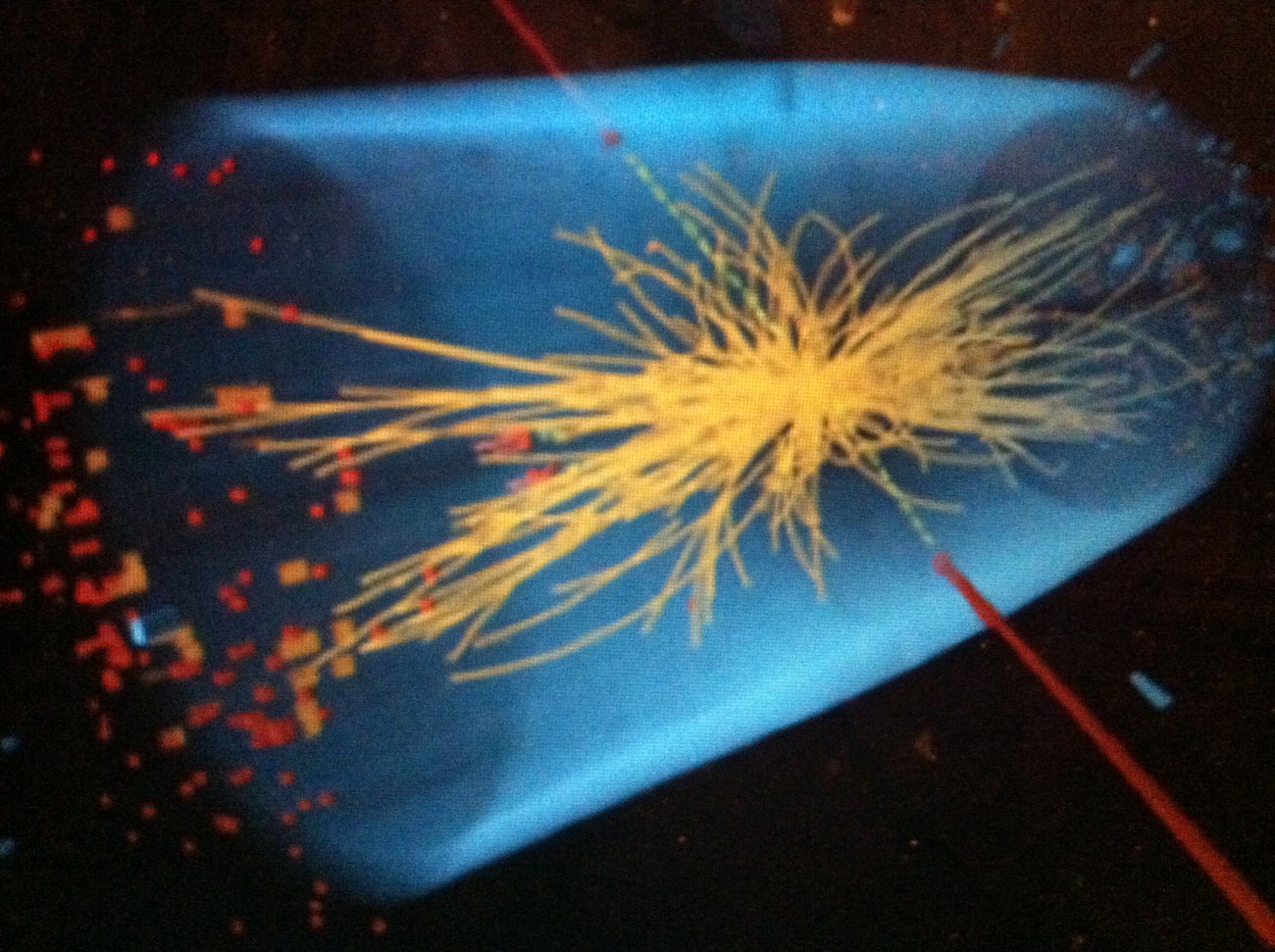
SEV CALCULATORBelow are slides from March 6, 2014: (a) the 2nd half of “Frequentist Statistics as a Theory of Inductive Inference” (Selection Effects),”* and (b) the discussion of the Higgs particle discovery and controversy over 5 sigma.physics pic yellow particle burst blue cone

We spent the rest of the seminar computing significance levels, rejection regions, and power (by hand and with the Excel program). Here is the updated syllabus  (3rd installment).

A relevant paper on selection effects on this blog is here.

Categories: Higgs, P-values, Phil6334, selection effects | Leave a comment

Significance tests and frequentist principles of evidence: Phil6334 Day #6

picture-216-1Slides (2 sets) from Phil 6334 2/27/14 class (Day#6).

spanos

D. Mayo:
“Frequentist Statistics as a Theory of Inductive Inference”

A. Spanos
“Probability/Statistics Lecture Notes 4: Hypothesis Testing”

Categories: P-values, Phil 6334 class material, Philosophy of Statistics, Statistics | Tags: | Leave a comment

Sir Harold Jeffreys’ (tail area) one-liner: Sat night comedy [draft ii]

Comedy hour icon

This headliner appeared last month, but to a sparse audience (likely because it was during winter break), so Management’s giving him another chance… 

You might not have thought there could be new material for 2014, but there is, and if you look a bit more closely, you’ll see that it’s actually not Jay Leno who is standing up there at the mike ….

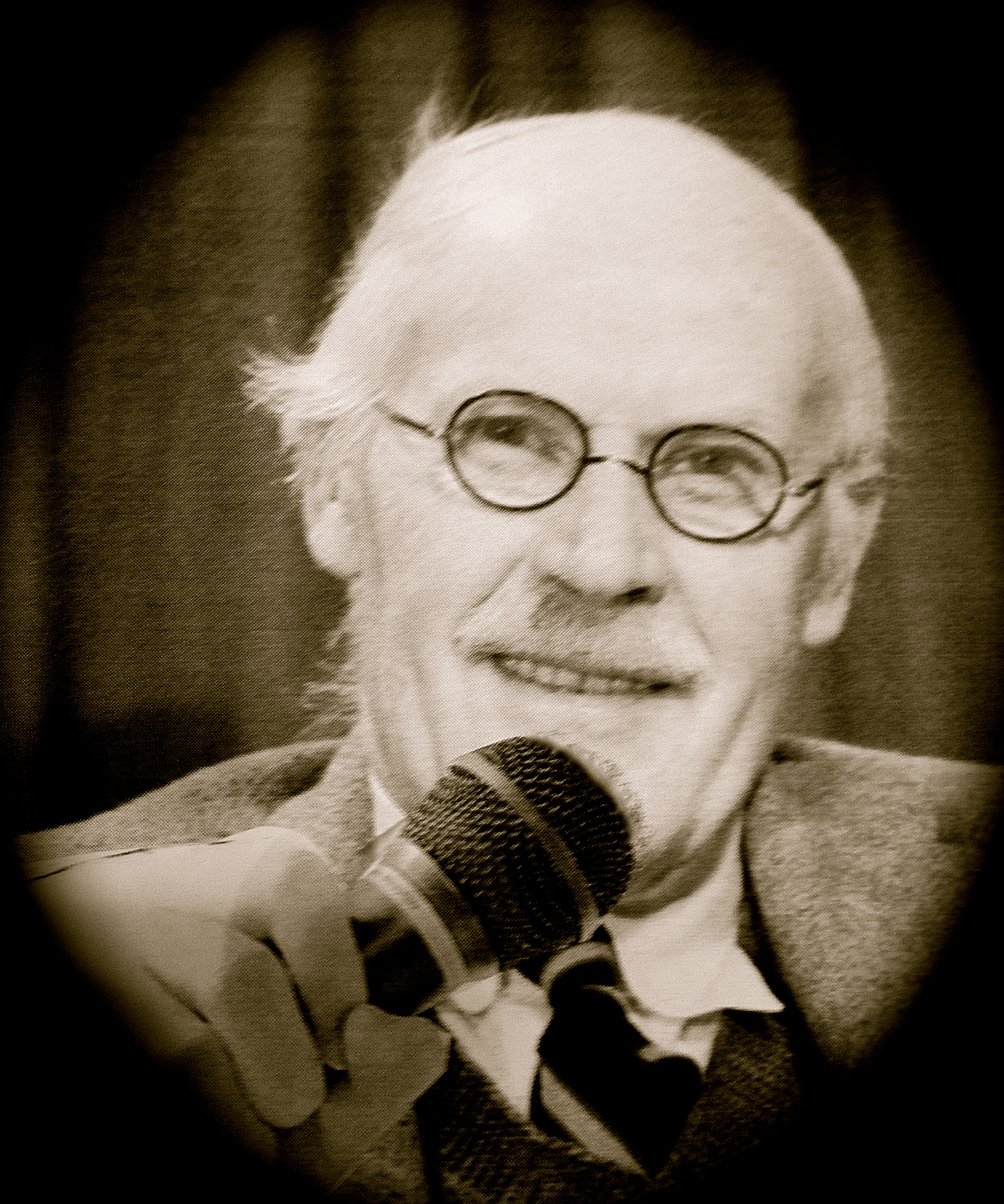
IMG_1547It’s Sir Harold Jeffreys himself! And his (very famous) joke, I admit, is funny. So, since it’s Saturday night, let’s listen in on Sir Harold’s howler* in criticizing the use of p-values.

“Did you hear the one about significance testers rejecting H0 because of outcomes H0 didn’t predict?

‘What’s unusual about that?’ you ask?

What’s unusual, is that they do it when these unpredicted outcomes haven’t even occurred!”

Much laughter.

[The actual quote from Jeffreys: Using p-values implies that “An hypothesis that may be true is rejected because it has failed to predict observable results that have not occurred. This seems a remarkable procedure.” (Jeffreys 1939, 316)]

I say it’s funny, so to see why I’ll strive to give it a generous interpretation. Continue reading

Categories: Comedy, Fisher, Jeffreys, P-values, Stephen Senn | Leave a comment

“Probabilism as an Obstacle to Statistical Fraud-Busting” (draft iii)

IMG_0244Update: Feb. 21, 2014 (slides at end)Ever find when you begin to “type” a paper to which you gave an off-the-cuff title months and months ago that you scarcely know just what you meant or feel up to writing a paper with that (provocative) title? But then, pecking away at the outline of a possible paper crafted to fit the title, you discover it’s just the paper you’re up to writing right now? That’s how I feel about “Is the Philosophy of Probabilism an Obstacle to Statistical Fraud Busting?” (the impromptu title I gave for my paper for the Boston Colloquium for the Philosophy of Science):

The conference is called: “Revisiting the Foundations of Statistics in the Era of Big Data: Scaling Up to Meet the Challenge.”  

 Here are some initial chicken-scratchings (draft (i)). Share comments, queries. (I still have 2 weeks to come up with something*.) Continue reading

Categories: P-values, significance tests, Statistical fraudbusting, Statistics | Leave a comment

Sir Harold Jeffreys’ (tail area) one-liner: Sat night comedy [draft ii]

Comedy hour iconYou might not have thought there could be new material for 2014, but there is, and if you look a bit more closely, you’ll see that it’s actually not Jay Leno who is standing up there at the mike ….

IMG_1547It’s Sir Harold Jeffreys himself! And his (very famous) joke, I admit, is funny. So, since it’s Saturday night, let’s listen in on Sir Harold’s howler* in criticizing the use of p-values.

“Did you hear the one about significance testers rejecting H0 because of outcomes H0 didn’t predict?

‘What’s unusual about that?’ you ask?

Well, what’s unusual, is that they do it when these unpredicted outcomes haven’t even occurred!”

Much laughter.

[The actual quote from Jeffreys: Using p-values implies that “An hypothesis that may be true is rejected because it has failed to predict observable results that have not occurred. This seems a remarkable procedure.” (Jeffreys 1939, 316)]

I say it’s funny, so to see why I’ll strive to give it a generous interpretation.

We can view p-values in terms of rejecting H0, as in the joke: There’s a test statistic D such that H0 is rejected if its observed value d0 reaches or exceeds a cut-off d* where Pr(D > d*; H0) is small, say .025.
           Reject H0 if Pr(D > d0H0) < .025.
The report might be “reject Hat level .025″.
Example:  H0: The mean light deflection effect is 0. So if we observe a 1.96 standard deviation difference (in one-sided Normal testing) we’d reject H0 .

Now it’s true that if the observation were further into the rejection region, say 2, 3 or 4 standard deviations, it too would result in rejecting the null, and with an even smaller p-value. It’s also true that H0 “has not predicted” a 2, 3, 4, 5 etc. standard deviation difference in the sense that differences so large are “far from” or improbable under the null. But wait a minute. What if we’ve only observed a 1 standard deviation difference (p-value = .16)? It is unfair to count it against the null that 1.96, 2, 3, 4 etc. standard deviation differences would have diverged seriously from the null, when we’ve only observed the 1 standard deviation difference. Yet the p-value tells you to compute Pr(D > 1; H0), which includes these more extreme outcomes! This is “a remarkable procedure” indeed! [i]

So much for making out the howler. The only problem is that significance tests do not do this, that is, they do not reject with, say, D = 1 because larger D values might have occurred (but did not). D = 1 does not reach the cut-off, and does not lead to rejecting H0. Moreover, looking at the tail area makes it harder, not easier, to reject the null (although this isn’t the only function of the tail area): since it requires not merely that Pr(D = d0 ; H0 ) be small, but that Pr(D > d0 ; H0 ) be small. And this is well justified because when this probability is not small, you should not regard it as evidence of discrepancy from the null. Before getting to this …. Continue reading

Categories: Comedy, Fisher, Jeffreys, P-values, Statistics, Stephen Senn | 12 Comments

“The probability that it be a statistical fluke” [iia]

imagesMy rationale for the last post is really just to highlight such passages as:

“Particle physicists have agreed, by convention, not to view an observed phenomenon as a discovery until the probability that it be a statistical fluke be below 1 in a million, a requirement that seems insanely draconian at first glance.” (Strassler)….

Even before the dust had settled regarding the discovery of a Standard Model-like Higgs particle, the nature and rationale of the 5-sigma discovery criterion began to be challenged. But my interest now is not in the fact that the 5-sigma discovery criterion is a convention, nor with the choice of 5. It is the understanding of “the probability that it be a statistical fluke” that interests me, because if we can get this right, I think we can understand a kind of equivocation that leads many to suppose that significance tests are being misinterpreted—even when they aren’t! So given that I’m stuck, unmoving, on this bus outside of London for 2+ hours (because of a car accident)—and the internet works—I’ll try to scratch out my point (expect errors, we’re moving now). Here’s another passage…

“Even when the probability of a particular statistical fluke, of a particular type, in a particular experiment seems to be very small indeed, we must remain cautious. …Is it really unlikely that someone, somewhere, will hit the jackpot, and see in their data an amazing statistical fluke that seems so impossible that it convincingly appears to be a new phenomenon?”

A very sketchy nutshell of the Higgs statistics: There is a general model of the detector, and within that model researchers define a “global signal strength” parameter “such that H0: μ = 0 corresponds to the background only hypothesis and μ = 1 corresponds to the Standard Model (SM) Higgs boson signal in addition to the background” (quote from an ATLAS report). The statistical test may be framed as a one-sided test; the test statistic records differences in the positive direction, in standard deviation or sigma units. The interest is not in the point against point hypotheses, but in finding discrepancies from H0 in the direction of the alternative, and then estimating their values.  The improbability of the 5-sigma excess alludes to the sampling Continue reading

Categories: Error Statistics, P-values, statistical tests, Statistics | 66 Comments

Beware of questionable front page articles warning you to beware of questionable front page articles (iii)

RRIn this time of government cut-backs and sequester, scientists are under increased pressure to dream up ever new strategies to publish attention-getting articles with eye-catching, but inadequately scrutinized, conjectures. Science writers are under similar pressures, and to this end they have found a way to deliver up at least one fire-breathing, front page article a month. How? By writing minor variations on an article about how in this time of government cut-backs and sequester, scientists are under increased pressure to dream up ever new strategies to publish attention-getting articles with eye-catching, but inadequately scrutinized, conjectures.

Thus every month or so we see retreads on why most scientific claims are unreliable,  biased, wrong, and not even wrong. Maybe that’s the reason the authors of a recent article in The Economist (“Trouble at the Lab“) remain anonymous.

I don’t disagree with everything in the article; on the contrary, part of their strategy is to include such well known problems as publication bias, problems with priming studies in psychology, and failed statistical assumptions. But the “big news”–the one that sells– is that “to an alarming degree” science (as a whole) is not reliable and not self-correcting. The main evidence is that there are the factory-like (thumbs up/thumbs down) applications of statistics in exploratory, hypotheses generating contexts wherein the goal is merely screening through reams of associations to identify a smaller batch for further analysis. But do even those screening efforts claim to have evidence of a genuine relationship when a given H is spewed out of their industrial complexes? Do they go straight to press after one statistically significant result?  I don’t know, maybe some do. What I do know is that the generalizations we are seeing in these “gotcha” articles are every bit as guilty of sensationalizing without substance as the bad statistics they purport to be impugning. As they see it, scientists, upon finding a single statistically significant result at the 5% level, declare an effect real or a hypothesis true, and then move on to the next hypothesis. No real follow-up scrutiny, no building on discrepancies found, no triangulation, self-scrutiny, etc.

But even so, the argument which purports to follow from “statistical logic”, but which actually is a jumble of “up-down” significance testing, Bayesian calculations, and computations that might at best hold for crude screening exercises (e.g., for associations between genes and disease) commits blunders about statistical power, and founders. Never mind that if the highest rate of true outputs was wanted, scientists would dabble in trivialities….Never mind that I guarantee if you asked Nobel prize winning scientists the rate of correct attempts vs blind alleys they went through before their Prize winning results, they’d say far more than 50% errors,  (Perrin and Brownian motion, Prusiner and Prions, experimental general relativity, just to name some I know.)

But what about the statistics? Continue reading

Categories: junk science, P-values, Statistics | 52 Comments

Highly probable vs highly probed: Bayesian/ error statistical differences

3077175-lgA reader asks: “Can you tell me about disagreements on numbers between a severity assessment within error statistics, and a Bayesian assessment of posterior probabilities?” Sure.

There are differences between Bayesian posterior probabilities and formal error statistical measures, as well as between the latter and a severity (SEV) assessment, which differs from the standard type 1 and 2 error probabilities, p-values, and confidence levels—despite the numerical relationships. Here are some random thoughts that will hopefully be relevant for both types of differences. (Please search this blog for specifics.)

1. The most noteworthy difference is that error statistical inference makes use of outcomes other than the one observed, even after the data are available: there’s no other way to ask things like, how often would you find 1 nominally statistically significant difference in a hunting expedition over k or more factors?  Or to distinguish optional stopping with sequential trials from fixed sample size experiments.  Here’s a quote I came across just yesterday:

“[S]topping ‘when the data looks good’ can be a serious error when combined with frequentist measures of evidence. For instance, if one used the stopping rule [above]…but analyzed the data as if a fixed sample had been taken, one could guarantee arbitrarily strong frequentist ‘significance’ against H0.” (Berger and Wolpert, 1988, 77).

The worry about being guaranteed to erroneously exclude the true parameter value here is an error statistical affliction that the Bayesian is spared (even though I don’t think they can be too happy about it, especially when HPD intervals are assured of excluding the true parameter value.) See this post for an amusing note; Mayo and Kruse (2001) below; and, if interested, search the (strong)  likelihood principle, and Birnbaum.

2. Highly probable vs. highly probed. SEV doesn’t obey the probability calculus: for any test T and outcome x, the severity for both H and ~H might be horribly low. Moreover, an error statistical analysis is not in the business of probabilifying hypotheses but evaluating and controlling the capabilities of methods to discern inferential flaws (problems with linking statistical and scientific claims, problems of interpreting statistical tests and estimates, and problems of underlying model assumptions). This is the basis for applying what may be called the Severity principle. Continue reading

Categories: Bayesian/frequentist, Error Statistics, P-values, Philosophy of Statistics, Statistics, Stephen Senn, strong likelihood principle | 41 Comments

PhilStatLaw: Reference Manual on Scientific Evidence (3d ed) on Statistical Significance (Schachtman)

Memory Lane: One Year Ago on error statistics.com

A quick perusal of the “Manual” on Nathan Schachtman’s legal blog shows it to be chock full of revealing points of contemporary legal statistical philosophy.  The following are some excerpts, read the full blog here.   I make two comments at the end.

July 8th, 2012

Nathan Schachtman

How does the new Reference Manual on Scientific Evidence (RMSE3d 2011) treat statistical significance?  Inconsistently and at times incoherently.

Professor Berger’s Introduction

In her introductory chapter, the late Professor Margaret A. Berger raises the question of the role statistical significance should play in evaluating a study’s support for causal conclusions:

“What role should statistical significance play in assessing the value of a study? Epidemiological studies that are not conclusive but show some increased risk do not prove a lack of causation. Some courts find that they therefore have some probative value, 62 at least in proving general causation. 63”

Margaret A. Berger, “The Admissibility of Expert Testimony,” in RMSE3d 11, 24 (2011).

This seems rather backwards.  Berger’s suggestion that inconclusive studies do not prove lack of causation seems nothing more than a tautology.  And how can that tautology support the claim that inconclusive studies “therefore ” have some probative value? This is a fairly obvious logical invalid argument, or perhaps a passage badly in need of an editor.

…………

Chapter on Statistics

The RMSE’s chapter on statistics is relatively free of value judgments about significance probability, and, therefore, a great improvement upon Berger’s introduction.  The authors carefully describe significance probability and p-values, and explain:

“Small p-values argue against the null hypothesis. Statistical significance is determined by reference to the p-value; significance testing (also called hypothesis testing) is the technique for computing p-values and determining statistical significance.”

David H. Kaye and David A. Freedman, “Reference Guide on Statistics,” in RMSE3d 211, 241 (3ed 2011).  Although the chapter confuses and conflates Fisher’s interpretation of p-values with Neyman’s conceptualization of hypothesis testing as a dichotomous decision procedure, this treatment is unfortunately fairly standard in introductory textbooks.

Kaye and Freedman, however, do offer some important qualifications to the untoward consequences of using significance testing as a dichotomous outcome:

“Artifacts from multiple testing are commonplace. Because research that fails to uncover significance often is not published, reviews of the literature may produce an unduly large number of studies finding statistical significance.111 Even a single researcher may examine so many different relationships that a few will achieve statistical significance by mere happenstance. Almost any large data set—even pages from a table of random digits—will contain some unusual pattern that can be uncovered by diligent search. Having detected the pattern, the analyst can perform a statistical test for it, blandly ignoring the search effort. Statistical significance is bound to follow.

There are statistical methods for dealing with multiple looks at the data, which permit the calculation of meaningful p-values in certain cases.112 However, no general solution is available, and the existing methods would be of little help in the typical case where analysts have tested and rejected a variety of models before arriving at the one considered the most satisfactory (see infra Section V on regression models). In these situations, courts should not be overly impressed with claims that estimates are significant. Instead, they should be asking how analysts developed their models.113 ”

Id. at 256 -57.  This qualification is omitted from the overlapping discussion in the chapter on epidemiology, where it is very much needed. Continue reading

Categories: P-values, PhilStatLaw, significance tests | Tags: , , , , | 6 Comments

Bad news bears: ‘Bayesian bear’ rejoinder-reblog mashup

Oh No! It’s those mutant bears again. To my dismay, I’ve been sent, for the third time, that silly, snarky, adolescent, clip of those naughty “what the p-value” bears (first posted on Aug 5, 2012), who cannot seem to get a proper understanding of significance tests into their little bear brains. So apparently some people haven’t seen my rejoinder which, as I said then, practically wrote itself. So since it’s Saturday night here at the Elbar Room, let’s listen in to a mashup of both the clip and my original rejoinder (in which p-value bears are replaced with hypothetical Bayesian bears). 

These stilted bear figures and their voices are sufficiently obnoxious in their own right, even without the tedious lampooning of p-values and the feigned horror at learning they should not be reported as posterior probabilities.

Mayo’s Rejoinder:

Bear #1: Do you have the results of the study?

Bear #2:Yes. The good news is there is a .996 probability of a positive difference in the main comparison.

Bear #1: Great. So I can be well assured that there is just a .004 probability that such positive results would occur if they were merely due to chance.

Bear #2: Not really, that would be an incorrect interpretation. Continue reading

Categories: Bayesian/frequentist, Comedy, P-values, Statistics | Tags: , , , | 13 Comments

Why I am not a “dualist” in the sense of Sander Greenland

Janus--2face

This post picks up, and continues, an exchange that began with comments on my June 14 blogpost (between Sander Greenland, Nicole Jinn, and I). My new response is at the end. The concern is how to expose and ideally avoid some of the well known flaws and foibles in statistical inference, thanks to gaps between data and statistical inference, and between statistical inference and substantive claims. I am not rejecting the use of multiple methods in the least (they are highly valuable when one method is capable of detecting or reducing flaws in one or more others). Nor am I speaking of classical dualism in metaphysics (which I also do not espouse). I begin with Greenland’s introduction of this idea in his comment… (For various earlier comments, see the post.)

Sander Greenland 

. I sense some confusion of criticism of the value of tests as popular tools vs. criticism of their logical foundation. I am a critic in the first, practical category, who regards the adoption of testing outside of narrow experimental programs as an unmitigated disaster, resulting in publication bias, prosecutor-type fallacies, and affirming the consequent fallacies throughout the health and social science literature. Even though testing can in theory be used soundly, it just hasn’t done well in practice in these fields. This could be ascribed to human failings rather than failings of received testing theories, but I would require any theory of applied statistics to deal with human limitations, just as safety engineering must do for physical products. I regard statistics as having been woefully negligent of cognitive psychology in this regard. In particular, widespread adoption and vigorous defense of a statistical method or philosophy is no more evidence of its scientific value than widespread adoption and vigorous defense of a religion is evidence of its scientific value. 
That should bring us to alternatives. I am aware of no compelling data showing that other approaches would have done better, but I do find compelling the arguments that at least some of the problems would have been mitigated by teaching a dualist approach to statistics, in which every procedure must be supplied with both an accurate frequentist and an accurate Bayesian interpretation, if only to reduce prevalent idiocies like interpreting a two-sided P-value as “the” posterior probability of a point null hypothesis.

 Nicole Jinn
 (to Sander Greenland)

 What exactly is this ‘dualist’ approach to teaching statistics and why does it mitigate the problems, as you claim? (I am increasingly interested in finding more effective ways to teach/instruct others in various age groups about statistics.)
I have a difficult time seeing how effective this ‘dualist’ way of teaching could be for the following reason: the Bayesian and frequentist approaches are vastly different in their aims and the way they see statistics being used in (natural or social) science, especially when one looks more carefully at the foundations of each methodology (e.g., disagreements about where exactly probability enters into inference, or about what counts as relevant information). Hence, it does not make sense (to me) to supply both types of interpretation to the same data and the same research question! Instead, it makes more sense (from a teaching perspective) to demonstrate a Bayesian interpretation for one experiment, and a frequentist interpretation for another experiment, in the hopes of getting at the (major) differences between the two methodologies.

Mayo

Sander. Thanks for your comment. 
Interestingly, I think the conglomeration of error statistical tools are the ones most apt at dealing with human limitations and foibles: they give piecemeal methods to ask one question at a time (e.g., would we be mistaken to suppose there is evidence of any effect at all? mistaken about how large? about iid assumptions? about possible causes? about implications for distinguishing any theories?). The standard Bayesian apparatus requires setting out a complete set of hypotheses that might arise, plus prior probabilities in each of them (or in “catchall” hypotheses), as well as priors in the model…and after this herculean task is complete, there is a purely deductive update: being deductive it never goes beyond the givens. Perhaps the data will require a change in your prior—this is what you must have believed before, since otherwise you find your posterior unacceptable—thereby encouraging the very self-sealing inferences we all claim to deplore. Continue reading

Categories: Bayesian/frequentist, Error Statistics, P-values, Statistics | 21 Comments

Blog at WordPress.com.