
.
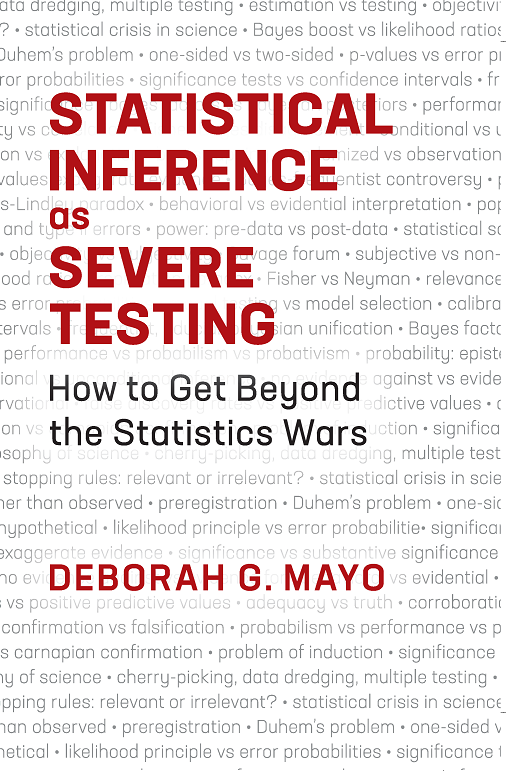
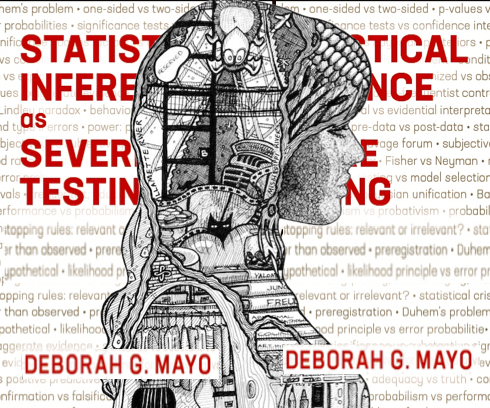
ASK ME. Some readers say they’re not sure where to ask a question of comprehension on Statistical Inference as Severe Testing: How to Get Beyond the Statistics Wars (2018, CUP)–SIST– so here’s a special post to park your questions of comprehension (to be placed in the comments) on a little over the first half of the book. That goes up to and includes Excursion 4 Tour I on “The Myth of ‘The Myth of Objectivity'”. However,I will soon post on Tour II: Rejection Fallacies: Who’s Exaggerating What? So feel free to ask questions of comprehension as far as p.259.
All of the SIST BlogPost (Excerpts and Mementos) so far are here.

.
WRITE A DISCUSSION NOTE: Beginning January 16, anyone who wishes to write a discussion note (on some aspect or issue up to p. 259 are invited to do so (<750 words, longer if you wish). Send them to my error email. I will post as many as possible on this blog.
We initially called such notes “U-Phils” as in “You do a Philosophical analysis”, which really only means it’s an analytic excercize that strives to first give the most generous interpretation to positions, and then examines them. See the general definition of a U-Phil.
Some Examples:
Mayo, Senn, and Wasserman on Gelman’s RMM** Contribution
U-Phil: A Further Comment on Gelman by Christian Hennig.
For a whole group of reader contributions, including Jim Berger on Jim Berger, see: Earlier U-Phils and Deconstructions
If you’re writing a note on objectivity, you might wish to compare and contrast Excursion 4 Tour I with a paper by Gelman and Hennig (2017): “Beyond subjective and objective in Statistics”.
These invites extend through January.


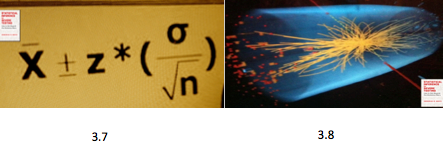



 Excursion 3 Statistical Tests and Scientific Inference