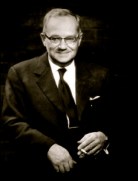
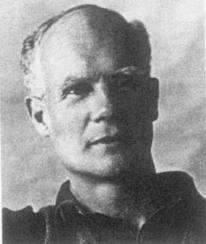
For Popper’s Birthday: Reading from Conjectures and Refutations (+ self-test)

images-10

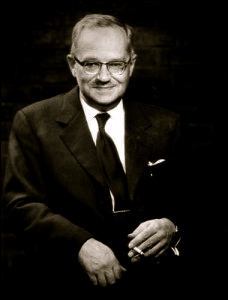
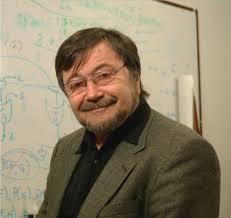
28 July 1902 – 17 September 1994

Today is Karl Popper’s birthday. I’m linking to a reading from his Conjectures and Refutations[i] along with: Popper Self-Test Questions. It includes multiple choice questions, quotes to ponder, an essay, and thumbnail definitions at the end[ii].

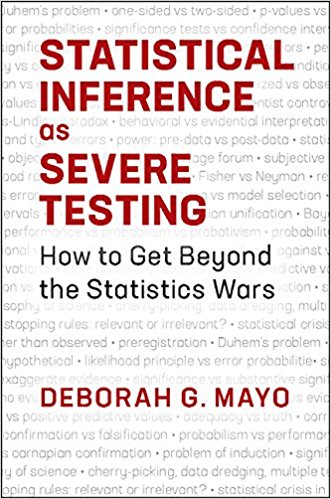
Blog Readers who wish to send me their answers will have their papers graded [use the comments or error@vt.edu.] An A- or better earns a signed copy of my forthcoming book: Statistical Inference as Severe Testing: How to Get Beyond the Statistics Wars. [iii]

[i] Popper reading from Conjectures and Refutations
[ii] I might note the “No-Pain philosophy” (3 part) Popper posts on this blog: parts 12, and 3.

[iii] I posted this once before, but now I have a better prize.

HAPPY BIRTHDAY POPPER!

REFERENCE:

Popper, K. (1962). Conjectures and Refutations: The Growth of Scientific Knowledge. New York: Basic Books.

Save

Save

Categories: Popper | 1 Comment

3 YEARS AGO (JULY 2015): MEMORY LANE

3 years ago...

3 years ago…

MONTHLY MEMORY LANE: 3 years ago: July 2015. I mark in red 3-4 posts from each month that seem most apt for general background on key issues in this blog, excluding those reblogged recently[1], and in green up to 3 others of general relevance to philosophy of statistics [2].  Posts that are part of a “unit” or a group count as one.

July 2015

  • 07/03 Larry Laudan: “When the ‘Not-Guilty’ Falsely Pass for Innocent”, the Frequency of False Acquittals (guest post)
  • 07/09  Winner of the June Palindrome contest: Lori Wike
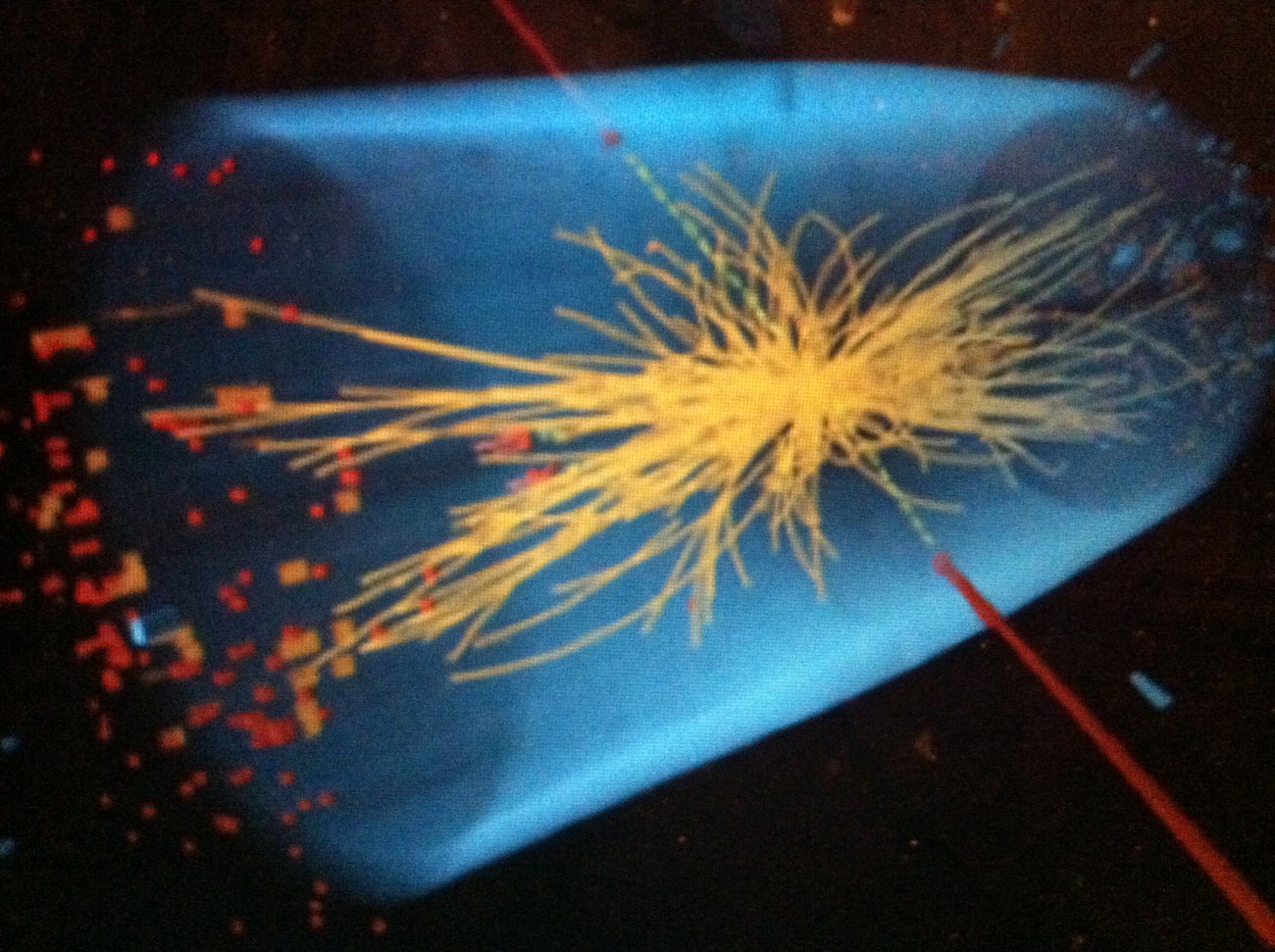
  • 07/11 Higgs discovery three years on (Higgs analysis and statistical flukes)-reblogged recently
  • 07/14  Spot the power howler: α = ß?
  • 07/17  “Statistical Significance” According to the U.S. Dept. of Health and Human Services (ii)
  • 07/22 3 YEARS AGO (JULY 2012): MEMORY LANE
  • 07/24 Stephen Senn: Randomization, ratios and rationality: rescuing the randomized clinical trial from its critics
  • 07/29  Telling What’s True About Power, if practicing within the error-statistical tribe


[1] Monthly memory lanes began at the blog’s 3-year anniversary in Sept, 2014.

[2] New Rule, July 30, 2016, March 30,2017 -a very convenient way to allow data-dependent choices (note why it’s legit in selecting blog posts, on severity grounds).


Save

Save

Save

Save

Save

Save

Save

Save

Save

Save

Categories: 3-year memory lane | Leave a comment

S. Senn: Personal perils: are numbers needed to treat misleading us as to the scope for personalised medicine? (Guest Post)

Personal perils: are numbers needed to treat misleading us as to the scope for personalised medicine?

A common misinterpretation of Numbers Needed to Treat is causing confusion about the scope for personalised medicine.

Stephen Senn
Consultant Statistician,
Edinburgh

Introduction

Thirty years ago, Laupacis et al1 proposed an intuitively appealing way that physicians could decide how to prioritise health care interventions: they could consider how many patients would need to be switched from an inferior treatment to a superior one in order for one to have an improved outcome. They called this the number needed to be treated. It is now more usually referred to as the number needed to treat (NNT).

Within fifteen years, NNTs were so well established that the then editor of the British Medical Journal, Richard Smith could write:  ‘Anybody familiar with the notion of “number needed to treat” (NNT) knows that it’s usually necessary to treat many patients in order for one to benefit’2. Fifteen years further on, bringing us up to date,  Wikipedia makes a similar point ‘The NNT is the average number of patients who need to be treated to prevent one additional bad outcome (e.g. the number of patients that need to be treated for one of them to benefit compared with a control in a clinical trial).’3

This common interpretation is false, as I have pointed out previously in two blogs on this site: Responder Despondency and  Painful Dichotomies. Nevertheless, it seems to me the point is worth making again and the thirty-year anniversary of NNTs provides a good excuse. Continue reading

Categories: personalized medicine, PhilStat/Med, S. Senn | 7 Comments

Statistics and the Higgs Discovery: 5-6 yr Memory Lane

.

I’m reblogging a few of the Higgs posts at the 6th anniversary of the 2012 discovery. (The first was in this post.) The following, was originally “Higgs Analysis and Statistical Flukes: part 2″ (from March, 2013).[1]

Some people say to me: “This kind of [severe testing] reasoning is fine for a ‘sexy science’ like high energy physics (HEP)”–as if their statistical inferences are radically different. But I maintain that this is the mode by which data are used in “uncertain” reasoning across the entire landscape of science and day-to-day learning (at least, when we’re trying to find things out)[2] Even with high level theories, the particular problems of learning from data are tackled piecemeal, in local inferences that afford error control. Granted, this statistical philosophy differs importantly from those that view the task as assigning comparative (or absolute) degrees-of-support/belief/plausibility to propositions, models, or theories.  Continue reading

Categories: Higgs, highly probable vs highly probed, P-values | 1 Comment

Replication Crises and the Statistics Wars: Hidden Controversies

.

Below are the slides from my June 14 presentation at the X-Phil conference on Reproducibility and Replicability in Psychology and Experimental Philosophy at University College London. What I think must be examined seriously are the “hidden” issues that are going unattended in replication research and related statistics wars. An overview of the “hidden controversies” are on slide #3. Although I was presenting them as “hidden”, I hoped they wouldn’t be quite as invisible as I found them through the conference. (Since my talk was at the start, I didn’t know what to expect–else I might have noted some examples that seemed to call for further scrutiny). Exceptions came largely (but not exclusively) from a small group of philosophers (me, Machery and Fletcher). Then again,there were parallel sessions, so I missed some.  However, I did learn something about X-phil, particularly from the very interesting poster session [1]. This new area should invite much, much more scrutiny of statistical methodology from philosophers of science.

[1] The women who organized and ran the conference did an excellent job: Lara Kirfel, a psychology PhD student at UCL, and Pascale Willemsen from Ruhr University.

Categories: Philosophy of Statistics, replication research, slides | Leave a comment

Your data-driven claims must still be probed severely

Vagelos Education Center

Below are the slides from my talk today at Columbia University at a session, Philosophy of Science and the New Paradigm of Data-Driven Science, at an American Statistical Association Conference on Statistical Learning and Data Science/Nonparametric Statistics. Todd was brave to sneak in philosophy of science in an otherwise highly mathematical conference.

Philosophy of Science and the New Paradigm of Data-Driven Science : (Room VEC 902/903)
Organizer and Chair: Todd Kuffner (Washington U)

  1. Deborah Mayo (Virginia Tech) “Your Data-Driven Claims Must Still be Probed Severely”
  2.  Ian McKeague (Columbia) “On the Replicability of Scientific Studies”
  3.  Xiao-Li Meng (Harvard) “Conducting Highly Principled Data Science: A Statistician’s Job and Joy


Categories: slides, Statistics and Data Science | 5 Comments

“Intentions (in your head)” is the code word for “error probabilities (of a procedure)”: Allan Birnbaum’s Birthday

27 May 1923-1 July 1976

27 May 1923-1 July 1976

Today is Allan Birnbaum’s Birthday. Birnbaum’s (1962) classic “On the Foundations of Statistical Inference,” in Breakthroughs in Statistics (volume I 1993), concerns a principle that remains at the heart of today’s controversies in statistics–even if it isn’t obvious at first: the Likelihood Principle (LP) (also called the strong likelihood Principle SLP, to distinguish it from the weak LP [1]). According to the LP/SLP, given the statistical model, the information from the data are fully contained in the likelihood ratio. Thus, properties of the sampling distribution of the test statistic vanish (as I put it in my slides from this post)! But error probabilities are all properties of the sampling distribution. Thus, embracing the LP (SLP) blocks our error statistician’s direct ways of taking into account “biasing selection effects” (slide #10). [Posted earlier here.] Interesting, as seen in a 2018 post on Neyman, Neyman did discuss this paper, but had an odd reaction that I’m not sure I understand. (Check it out.) Continue reading

Categories: Birnbaum, Birnbaum Brakes, frequentist/Bayesian, Likelihood Principle, phil/history of stat, Statistics | 7 Comments

The Meaning of My Title: Statistical Inference as Severe Testing: How to Get Beyond the Statistics Wars

.

Excerpts from the Preface:

The Statistics Wars: 

Today’s “statistics wars” are fascinating: They are at once ancient and up to the minute. They reflect disagreements on one of the deepest, oldest, philosophical questions: How do humans learn about the world despite threats of error due to incomplete and variable data? At the same time, they are the engine behind current controversies surrounding high-profile failures of replication in the social and biological sciences. How should the integrity of science be restored? Experts do not agree. This book pulls back the curtain on why. Continue reading

Categories: Announcement, SIST | 2 Comments

Getting Up to Speed on Principles of Statistics

.

“If a statistical analysis is clearly shown to be effective … it gains nothing from being … principled,” according to Terry Speed in an interesting IMS article (2016) that Harry Crane tweeted about a couple of days ago [i]. Crane objects that you need principles to determine if it is effective, else it “seems that a method is effective (a la Speed) if it gives the answer you want/expect.” I suspected that what Speed was objecting to was an appeal to “principles of inference” of the type to which Neyman objected in my recent post. This turns out to be correct. Here are some excerpts from Speed’s article (emphasis is mine): Continue reading

Categories: Likelihood Principle, Philosophy of Statistics | 5 Comments

3 YEARS AGO (May 2015): Monthly Memory Lane

3 years ago...               3 years ago…

MONTHLY MEMORY LANE: 3 years ago: May 2015. I mark in red 3-4 posts from each month that seem most apt for general background on key issues in this blog, excluding those reblogged recently[1]. Posts that are part of a “unit” or a group count as one, as in the case of 5/16, 5/19 and 5/24.

May 2015

  • 05/04 Spurious Correlations: Death by getting tangled in bedsheets and the consumption of cheese! (Aris Spanos)
  • 05/08 What really defies common sense (Msc kvetch on rejected posts)
  • 05/09 Stephen Senn: Double Jeopardy?: Judge Jeffreys Upholds the Law (sequel to the pathetic P-value)
  • 05/16 “Error statistical modeling and inference: Where methodology meets ontology” A. Spanos and D. Mayo
  • 05/19 Workshop on Replication in the Sciences: Society for Philosophy and Psychology: (2nd part of double header)
  • 05/24 From our “Philosophy of Statistics” session: APS 2015 convention
  • 05/27 “Intentions” is the new code word for “error probabilities”: Allan Birnbaum’s Birthday
  • 05/30 3 YEARS AGO (MAY 2012): Saturday Night Memory Lane

[1] Monthly memory lanes began at the blog’s 3-year anniversary in Sept, 2014.

I regret being away from blogging as of late (yes, the last bit of proofing on the book): I shall return soon! Send me stuff to post of yours or items of interest in the mean time.


Categories: 3-year memory lane | 1 Comment

Neyman vs the ‘Inferential’ Probabilists continued (a)

.

Today is Jerzy Neyman’s Birthday (April 16, 1894 – August 5, 1981).  I am posting a brief excerpt and a link to a paper of his that I hadn’t posted before: Neyman, J. (1962), ‘Two Breakthroughs in the Theory of Statistical Decision Making‘ [i] It’s chock full of ideas and arguments, but the one that interests me at the moment is Neyman’s conception of “his breakthrough”, in relation to a certain concept of “inference”.  “In the present paper” he tells us, “the term ‘inferential theory’…will be used to describe the attempts to solve the Bayes’ problem with a reference to confidence, beliefs, etc., through some supplementation …either a substitute a priori distribution [exemplified by the so called principle of insufficient reason] or a new measure of uncertainty” such as Fisher’s fiducial probability. Now Neyman always distinguishes his error statistical performance conception from Bayesian and Fiducial probabilisms [ii]. The surprising twist here is semantical and the culprit is none other than…Allan Birnbaum. Yet Birnbaum gets short shrift, and no mention is made of our favorite “breakthrough” (or did I miss it?). [iii] I’ll explain in later stages of this post & in comments…(so please check back); I don’t want to miss the start of the birthday party in honor of Neyman, and it’s already 8:30 p.m in Berkeley!

Note: In this article,”attacks” on various statistical “fronts” refers to ways of attacking problems in one or another statistical research program. HAPPY BIRTHDAY NEYMAN! Continue reading

Categories: Bayesian/frequentist, Error Statistics, Neyman, Statistics | Leave a comment

3 YEARS AGO (APRIL 2015): MEMORY LANE

3 years ago...

3 years ago…

MONTHLY MEMORY LANE: 3 years ago: April 2015. I mark in red 3-4 posts from each month that seem most apt for general background on key issues in this blog, excluding those reblogged recently[1], and in green up to 3 others of general relevance to philosophy of statistics (in months where I’ve blogged a lot)[2].  Posts that are part of a “unit” or a group count as one.

April 2015

  • 04/01 Are scientists really ready for ‘retraction offsets’ to advance ‘aggregate reproducibility’? (let alone ‘precautionary withdrawals’)
  • 04/04 Joan Clarke, Turing, I.J. Good, and “that after-dinner comedy hour…”
  • 04/08 Heads I win, tails you lose? Meehl and many Popperians get this wrong (about severe tests)!
  • 04/13 Philosophy of Statistics Comes to the Big Apple! APS 2015 Annual Convention — NYC
  • 04/16 A. Spanos: Jerzy Neyman and his Enduring Legacy
  • 04/18 Neyman: Distinguishing tests of statistical hypotheses and tests of significance might have been a lapse of someone’s pen
  • 04/22 NEYMAN: “Note on an Article by Sir Ronald Fisher” (3 uses for power, Fisher’s fiducial argument)
  • 04/24 “Statistical Concepts in Their Relation to Reality” by E.S. Pearson
  • 04/27 3 YEARS AGO (APRIL 2012): MEMORY LANE
  • 04/30 96% Error in “Expert” Testimony Based on Probability of Hair Matches: It’s all Junk!


[1] Monthly memory lanes began at the blog’s 3-year anniversary in Sept, 2014.

[2] New Rule, July 30,2016, March 30,2017 -a very convenient way to allow data-dependent choices (note why it’s legit in selecting blog posts, on severity grounds).


Save

Save

Save

Save

Save

Save

Save

Save

Save

Save

Categories: 3-year memory lane | Leave a comment

New Warning: Proceed With Caution Until the “Alt Stat Approaches” are Evaluated

I predicted that the degree of agreement behind the ASA’s “6 principles” on p-values , partial as it was,was unlikely to be replicated when it came to most of the “other approaches” with which some would supplement or replace significance tests– notably Bayesian updating, Bayes factors, or likelihood ratios (confidence intervals are dual to hypotheses tests). [My commentary is here.] So now they may be advising a “hold off” or “go slow” approach until some consilience is achieved. Is that it? There’s word that the ASA will  hold meeting where the other approaches are put through their paces. I don’t know when. I was tweeted an article about the background chatter taking place behind the scenes; I wasn’t one of people interviewed for this. Here are some excerpts, I may add more later after it has had time to sink in. 

“Restoring Credibility in Statistical Science: Proceed with Caution Until a Balanced Critique Is In”

J. Hossiason Continue reading

Categories: Announcement | 3 Comments

February Palindrome Winner: Lucas Friesen

Winner of the February 2018 Palindrome Contest: (a dozen book choice)

.

Lucas Friesen: a graduate student in Measurement, Evaluation, and Research Methodology at the University of British Columbia

Palindrome:

Ares, send a mere vest set? Bagel-bag madness.

Able! Elbas! Send AM: “Gable-Gab test severe. Madness era.”

The requirement: A palindrome using “madness*” (+ Elba, of course). Statistical, philosophical, scientific themes are awarded more points.) *Sorry, the editor got ahead of herself in an earlier post, listing March’s word.
Book choice: This is horribly difficult, but I think I have to go with the allure of the unknown: Statistical Inference as Severe Testing: How to get beyond the statistics wars.

Continue reading

Categories: Palindrome | Leave a comment

J. Pearl: Challenging the Hegemony of Randomized Controlled Trials: Comments on Deaton and Cartwright

.

Judea Pearl

Judea Pearl* wrote to me to invite readers of Error Statistics Philosophy to comment on a recent post of his (from his Causal Analysis blog here) pertaining to a guest post by Stephen Senn (“Being a Statistician Means never Having to Say You Are Certain”.) He has added a special addendum for us.[i]

Challenging the Hegemony of Randomized Controlled Trials: Comments on Deaton and Cartwright

Judea Pearl

I was asked to comment on a recent article by Angus Deaton and Nancy Cartwright (D&C), which touches on the foundations of causal inference. The article is titled: “Understanding and misunderstanding randomized controlled trials,” and can be viewed here: https://goo.gl/x6s4Uy

My comments are a mixture of a welcome and a puzzle; I welcome D&C’s stand on the status of randomized trials, and I am puzzled by how they choose to articulate the alternatives. Continue reading

Categories: RCTs | 26 Comments

3 YEARS AGO (MARCH 2015): MEMORY LANE

3 years ago...

3 years ago…

MONTHLY MEMORY LANE: 3 years ago: March 2015. I mark in red 3-4 posts from each month that seem most apt for general background on key issues in this blog, excluding those reblogged recently[1], and in green up to 3 others of general relevance to philosophy of statistics (in months where I’ve blogged a lot)[2].  Posts that are part of a “unit” or a group count as one.

March 2015

  • 03/01 “Probabilism as an Obstacle to Statistical Fraud-Busting”
  • 03/05 A puzzle about the latest test ban (or ‘don’t ask, don’t tell’)
  • 03/12 All She Wrote (so far): Error Statistics Philosophy: 3.5 years on
  • 03/16 Stephen Senn: The pathetic P-value (Guest Post)
  • 03/21 Objectivity in Statistics: “Arguments From Discretion and 3 Reactions”
  • 03/24 3 YEARS AGO (MARCH 2012): MEMORY LANE
  • 03/28 Your (very own) personalized genomic prediction varies depending on who else was around?

[1] Monthly memory lanes began at the blog’s 3-year anniversary in Sept, 2014.

[2] New Rule, July 30,2016, March 30,2017 -a very convenient way to allow data-dependent choices (note why it’s legit in selecting blog posts, on severity grounds).


Save

Save

Save

Save

Save

Save

Save

Save

Save

Save

Categories: 3-year memory lane | Leave a comment

Cover/Itinerary of Statistical Inference as Severe Testing: How to Get Beyond the Statistics Wars

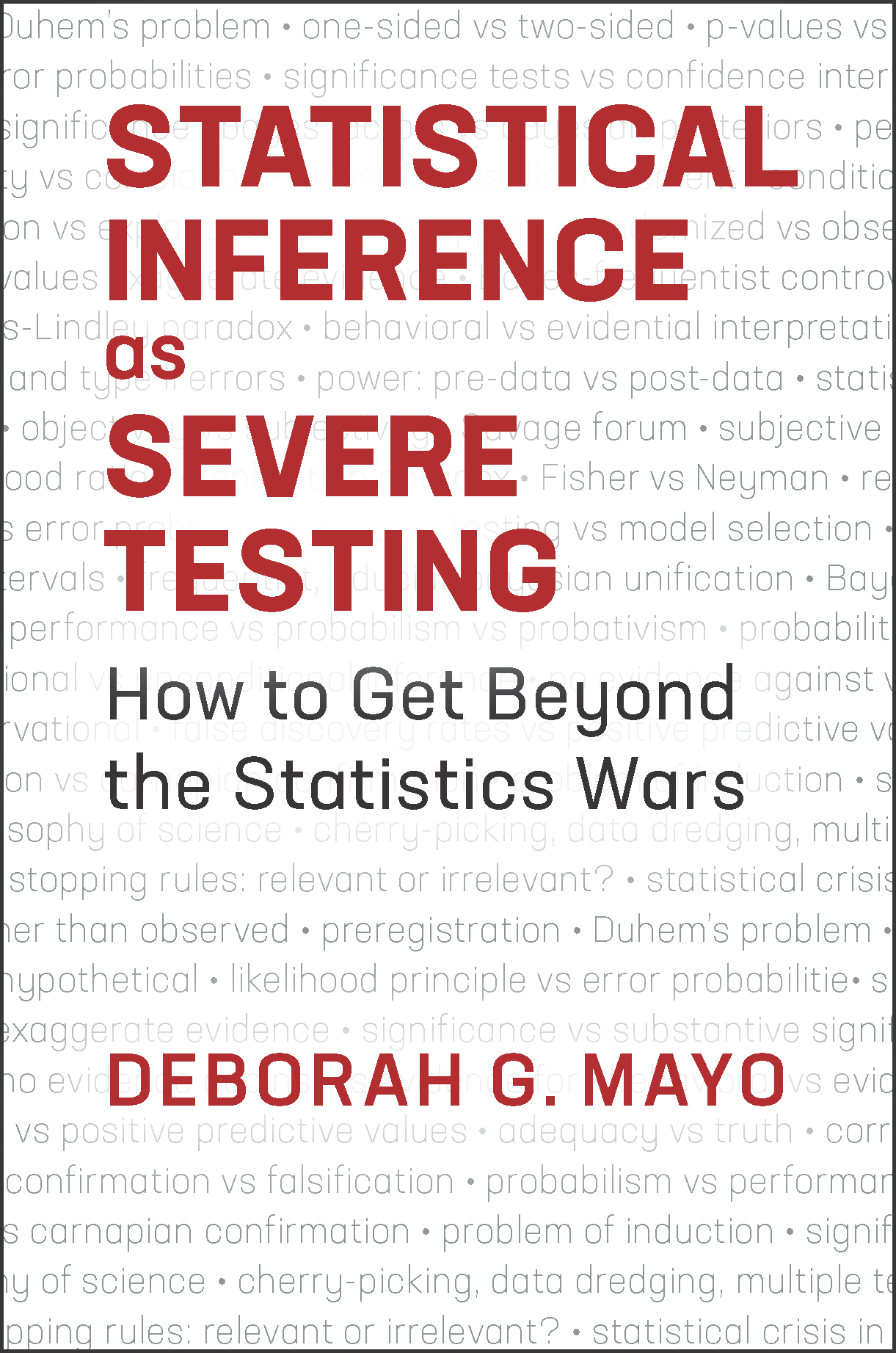
SNEAK PREVIEW: Here’s the cover of Statistical Inference as Severe Testing: How to Get Beyond the Statistics Wars:

It should be out in July 2018. The “Itinerary”, generally known as the Table of Contents, is below. I forgot to mention that this is not the actual pagination, I don’t have the page proofs yet. These are the pages of the draft I submitted. It should be around 50 pages shorter in the actual page proofs, maybe 380 pages.


Itinerary

Continue reading

Categories: Announcement | 10 Comments

Deconstructing the Fisher-Neyman conflict wearing fiducial glasses (continued)

imgres-4

Fisher/ Neyman

[An updated version with corrected links can be found here.]

This continues my previous post: “Can’t take the fiducial out of Fisher…” in recognition of Fisher’s birthday, February 17. I supply a few more intriguing articles you may find enlightening to read and/or reread on a Saturday night

Move up 20 years to the famous 1955/56 exchange between Fisher and Neyman. Fisher clearly connects Neyman’s adoption of a behavioristic-performance formulation to his denying the soundness of fiducial inference. When “Neyman denies the existence of inductive reasoning, he is merely expressing a verbal preference. For him ‘reasoning’ means what ‘deductive reasoning’ means to others.” (Fisher 1955, p. 74). Continue reading

Categories: fiducial probability, Fisher, Neyman, Statistics | 4 Comments

Can’t Take the Fiducial Out of Fisher (if you want to understand the N-P performance philosophy) [i]

imgres

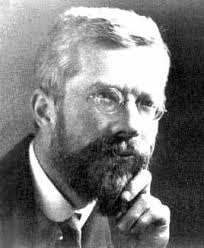
R.A. Fisher: February 17, 1890 – July 29, 1962

Continuing with posts in recognition of R.A. Fisher’s birthday, I post one from a couple of years ago on a topic that had previously not been discussed on this blog: Fisher’s fiducial probability

[Neyman and Pearson] “began an influential collaboration initially designed primarily, it would seem to clarify Fisher’s writing. This led to their theory of testing hypotheses and to Neyman’s development of confidence intervals, aiming to clarify Fisher’s idea of fiducial intervals (D.R.Cox, 2006, p. 195).

The entire episode of fiducial probability is fraught with minefields. Many say it was Fisher’s biggest blunder; others suggest it still hasn’t been understood. The majority of discussions omit the side trip to the Fiducial Forest altogether, finding the surrounding brambles too thorny to penetrate. Besides, a fascinating narrative about the Fisher-Neyman-Pearson divide has managed to bloom and grow while steering clear of fiducial probability–never mind that it remained a centerpiece of Fisher’s statistical philosophy. I now think that this is a mistake. It was thought, following Lehman (1993) and others, that we could take the fiducial out of Fisher and still understand the core of the Neyman-Pearson vs Fisher (or Neyman vs Fisher) disagreements. We can’t. Quite aside from the intrinsic interest in correcting the “he said/he said” of these statisticians, the issue is intimately bound up with the current (flawed) consensus view of frequentist error statistics.

So what’s fiducial inference? I follow Cox (2006), adapting for the case of the lower limit: Continue reading

Categories: fiducial probability, Fisher, Statistics | Leave a comment

R.A. Fisher: “Statistical methods and Scientific Induction”

I continue a week of Fisherian posts begun on his birthday (Feb 17). This is his contribution to the “Triad”–an exchange between  Fisher, Neyman and Pearson 20 years after the Fisher-Neyman break-up. The other two are below. They are each very short and are worth your rereading.

17 February 1890 — 29 July 1962

“Statistical Methods and Scientific Induction”

by Sir Ronald Fisher (1955)

SUMMARY

The attempt to reinterpret the common tests of significance used in scientific research as though they constituted some kind of  acceptance procedure and led to “decisions” in Wald’s sense, originated in several misapprehensions and has led, apparently, to several more.

The three phrases examined here, with a view to elucidating they fallacies they embody, are:

  1. “Repeated sampling from the same population”,
  2. Errors of the “second kind”,
  3. “Inductive behavior”.

Mathematicians without personal contact with the Natural Sciences have often been misled by such phrases. The errors to which they lead are not only numerical.

To continue reading Fisher’s paper.


Note on an Article by Sir Ronald Fisher

by Jerzy Neyman (1956)

Neyman

Neyman

Summary

(1) FISHER’S allegation that, contrary to some passages in the introduction and on the cover of the book by Wald, this book does not really deal with experimental design is unfounded. In actual fact, the book is permeated with problems of experimentation.  (2) Without consideration of hypotheses alternative to the one under test and without the study of probabilities of the two kinds, no purely probabilistic theory of tests is possible.  (3) The conceptual fallacy of the notion of fiducial distribution rests upon the lack of recognition that valid probability statements about random variables usually cease to be valid if the random variables are replaced by their particular values.  The notorious multitude of “paradoxes” of fiducial theory is a consequence of this oversight.  (4)  The idea of a “cost function for faulty judgments” appears to be due to Laplace, followed by Gauss.
 

E.S. Pearson

Statistical Concepts in Their Relation to Reality“.

by E.S. Pearson (1955)

Controversies in the field of mathematical statistics seem largely to have arisen because statisticians have been unable to agree upon how theory is to provide, in terms of probability statements, the numerical measures most helpful to those who have to draw conclusions from observational data.  We are concerned here with the ways in which mathematical theory may be put, as it were, into gear with the common processes of rational thought, and there seems no reason to suppose that there is one best way in which this can be done.  If, therefore, Sir Ronald Fisher recapitulates and enlarges on his views upon statistical methods and scientific induction we can all only be grateful, but when he takes this opportunity to criticize the work of others through misapprehension of their views as he has done in his recent contribution to this Journal (Fisher 1955 “Scientific Methods and Scientific Induction” ), it is impossible to leave him altogether unanswered.

In the first place it seems unfortunate that much of Fisher’s criticism of Neyman and Pearson’s approach to the testing of statistical hypotheses should be built upon a “penetrating observation” ascribed to Professor G.A. Barnard, the assumption involved in which happens to be historically incorrect.  There was no question of a difference in point of view having “originated” when Neyman “reinterpreted” Fisher’s early work on tests of significance “in terms of that technological and commercial apparatus which is known as an acceptance procedure”. There was no sudden descent upon British soil of Russian ideas regarding the function of science in relation to technology and to five-year plans.  It was really much simpler–or worse.  The original heresy, as we shall see, was a Pearson one!…

To continue reading, “Statistical Concepts in Their Relation to Reality” click HERE

Categories: E.S. Pearson, fiducial probability, Fisher, Neyman, phil/history of stat, Phil6334/ Econ 6614 | 3 Comments

Blog at WordPress.com.