Hocus pocus! Adopt a magician’s stance, if you want to reveal statistical sleights of hand

images-3

.

When they sought to subject Uri Geller to the scrutiny of scientists, magicians had to be brought in because only they were sufficiently trained to spot the subtle sleight of hand shifts by which the magician tricks by misdirection. We, too, have to be magicians to discern the subtle misdirections and shifts of meaning in the discussions of statistical significance tests (and other methods)—even by the same statistical guide. We needn’t suppose anything deliberately devious is going on at all! Often, the statistical guidebook reflects shifts of meaning that grow out of one or another critical argument. These days, they trickle down quickly to statistical guidebooks, thanks to popular articles on the “statistics crisis in science”. The danger is that their own guidebooks contain inconsistencies. To adopt the magician’s stance is to be on the lookout for standard sleights of hand. There aren’t that many.[0]

I don’t know Jim Frost, but he gives statistical guidance at the minitab blog. The purpose of my previous post is to point out that Frost uses the probability of a Type I error in two incompatible ways in his posts on significance tests. I assumed he’d want to clear this up, but so far he has not. His response to a comment I made on his blog is this: Continue reading

Categories: P-values, reforming the reformers, statistical tests | 2 Comments

High error rates in discussions of error rates (1/21/16 update)

27D0BB5300000578-3168627-image-a-27_1437433320306

waiting for the other shoe to drop…

Do you ever find yourself holding your breath when reading an exposition of significance tests that’s going swimmingly so far? If you’re a frequentist in exile, you know what I mean. I’m sure others feel this way too. When I came across Jim Frost’s posts on The Minitab Blog, I thought I might actually have located a success story. He does a good job explaining P-values (with charts), the duality between P-values and confidence levels, and even rebuts the latest “test ban” (the “Don’t Ask, Don’t Tell” policy). Mere descriptive reports of observed differences that the editors recommend, Frost shows, are uninterpretable without a corresponding P-value or the equivalent. So far, so good. I have only small quibbles, such as the use of “likelihood” when meaning probability, and various and sundry nitpicky things. But watch how in some places significance levels are defined as the usual error probabilities and error rates—indeed in the glossary for the site—while in others it is denied they provide error rates. In those other places, error probabilities and error rates shift their meaning to posterior probabilities, based on priors representing the “prevalence” of true null hypotheses. Continue reading

Categories: highly probable vs highly probed, J. Berger, reforming the reformers, Statistics | 11 Comments

“P-values overstate the evidence against the null”: legit or fallacious?

The allegation that P-values overstate the evidence against the null hypothesis continues to be taken as gospel in discussions of significance tests. All such discussions, however, assume a notion of “evidence” that’s at odds with significance tests–generally likelihood ratios, or Bayesian posterior probabilities (conventional or of the “I’m selecting hypotheses from an urn of nulls” variety). I’m reblogging the bulk of an earlier post as background for a new post to appear tomorrow.  It’s not that a single small P-value provides good evidence of a discrepancy (even assuming the model, and no biasing selection effects); Fisher and others warned against over-interpreting an “isolated” small P-value long ago.  The problem is that the current formulation of the “P-values overstate the evidence” meme is attached to a sleight of hand (on meanings) that is introducing brand new misinterpretations into an already confused literature! 


Categories: Bayesian/frequentist, fallacy of rejection, highly probable vs highly probed, P-values | 3 Comments

“On the Brittleness of Bayesian Inference,” Owhadi and Scovel (PUBLISHED)

a0a82d0b0dc678502499eaa33d4f4c79

.

The record number of hits on this blog goes to “When Bayesian Inference shatters,” where Houman Owhadi presents a “Plain Jane” explanation of results now published in “On the Brittleness of Bayesian Inference”. A follow-up was 1 year ago. Here’s how their paper begins:

owhadi

.

Houman Owhadi
Professor of Applied and Computational Mathematics and Control and Dynamical Systems, Computing + Mathematical Sciences,
California Institute of Technology, USA+

Clintpic

.

Clint Scovel
Senior Scientist,
Computing + Mathematical Sciences,

California Institute of Technology, USA


“On the Brittleness of Bayesian Inference”

ABSTRACT: With the advent of high-performance computing, Bayesian methods are becoming increasingly popular tools for the quantification of uncertainty throughout science and industry. Since these methods can impact the making of sometimes critical decisions in increasingly complicated contexts, the sensitivity of their posterior conclusions with respect to the underlying models and prior beliefs is a pressing question to which there currently exist positive and negative answers. We report new results suggesting that, although Bayesian methods are robust when the number of possible outcomes is finite or when only a finite number of marginals of the data-generating distribution are unknown, they could be generically brittle when applied to continuous systems (and their discretizations) with finite information on the data-generating distribution. If closeness is defined in terms of the total variation (TV) metric or the matching of a finite system of generalized moments, then (1) two practitioners who use arbitrarily close models and observe the same (possibly arbitrarily large amount of) data may reach opposite conclusions; and (2) any given prior and model can be slightly perturbed to achieve any desired posterior conclusion. The mechanism causing brittleness/robustness suggests that learning and robustness are antagonistic requirements, which raises the possibility of a missing stability condition when using Bayesian inference in a continuous world under finite information.

© 2015, Society for Industrial and Applied Mathematics
Permalink: http://dx.doi.org/10.1137/130938633 Continue reading

Categories: Bayesian/frequentist, Statistics | 16 Comments

Winner of December Palindrome: Mike Jacovides

Mike Jacovides

.

Winner of the December 2015 Palindrome contest

Mike Jacovides: Associate Professor of Philosophy at Purdue University

Palindrome: Emo, notable Stacy began a memory by Rome. Manage by cats, Elba to Nome.

The requirement: A palindrome using “memory” or “memories” (and Elba, of course).

Book choice (out of 12 or more)Error and the Growth of Experimental Knowledge (D. Mayo 1996, Chicago)

Bio: Mike Jacovides is an Associate Professor of Philosophy at Purdue University. He’s just finishing a book whose title is constantly changing, but which may end up being called Locke’s Image of the World and the Scientific Revolution.

Statement: My interest in palindromes was sparked by my desire to learn more about the philosophy of statistics. The fact that you can learn about the philosophy of statistics by writing a palindrome seems like evidence that anything can cause anything, but maybe once I read the book, I’ll learn that it isn’t. I am glad that ‘emo, notable Stacy’ worked out, I have to say.

Congratulations Mike! I hope you’ll continue to pursue philosophy of statistics! We need much more of that. Good choice of book prize too. D. Mayo Continue reading

Categories: Announcement, Palindrome | 1 Comment

Preregistration Challenge: My email exchange

images-2

.

David Mellor, from the Center for Open Science, emailed me asking if I’d announce his Preregistration Challenge on my blog, and I’m glad to do so. You win $1,000 if your properly preregistered paper is published. The recent replication effort in psychology showed, despite the common refrain – “it’s too easy to get low P-values” – that in preregistered replication attempts it’s actually very difficult to get small P-values. (I call this the “paradox of replication”[1].) Here’s our e-mail exchange from this morning:

          Dear Deborah Mayod,

I’m reaching out to individuals who I think may be interested in our recently launched competition, the Preregistration Challenge (https://cos.io/prereg). Based on your blogging, I thought it could be of interest to you and to your readers.

In case you are unfamiliar with it, preregistration specifies in advance the precise study protocols and analytical decisions before data collection, in order to separate the hypothesis-generating exploratory work from the hypothesis testing confirmatory work. 

Though required by law in clinical trials, it is virtually unknown within the basic sciences. We are trying to encourage this new behavior by offering 1,000 researchers $1000 prizes for publishing the results of their preregistered work. 

Please let me know if this is something you would consider blogging about or sharing in other ways. I am happy to discuss further. 

Best,

David
David Mellor, PhD

Project Manager, Preregistration Challenge, Center for Open Science


Deborah Mayo To David:                                                                          10:33 AM (1 hour ago)

David: Yes I’m familiar with it, and I hope that it encourages people to avoid data-dependent determinations that bias results. It shows the importance of statistical accounts that can pick up on such biasing selection effects. On the other hand, coupling prereg with some of the flexible inference accounts now in use won’t really help. Moreover, there may, in some fields, be a tendency to research a non-novel, fairly trivial result.

And if they’re going to preregister, why not go blind as well?  Will they?

Best,

Mayo Continue reading

Categories: Announcement, preregistration, Statistical fraudbusting, Statistics | 11 Comments

Sir Harold Jeffreys’ (tail area) one-liner: Sat night comedy [draft ii]

Comedy hour icon

This headliner appeared two years ago, but to a sparse audience (likely because it was during winter break), so Management’s giving him another chance… 

You might not have thought there could be new material for 2014, but there is, and if you look a bit more closely, you’ll see that it’s actually not Jay Leno [1] who is standing up there at the mike ….

IMG_1547It’s Sir Harold Jeffreys himself! And his (very famous) joke, I admit, is funny. So, since it’s Saturday night, let’s listen in on Sir Harold’s howler* in criticizing the use of p-values.

“Did you hear the one about significance testers rejecting H0 because of outcomes H0 didn’t predict?

‘What’s unusual about that?’ you ask?

What’s unusual, is that they do it when these unpredicted outcomes haven’t even occurred!”

Much laughter.

[The actual quote from Jeffreys: Using p-values implies that “An hypothesis that may be true is rejected because it has failed to predict observable results that have not occurred. This seems a remarkable procedure.” (Jeffreys 1939, 316)]

I say it’s funny, so to see why I’ll strive to give it a generous interpretation. Continue reading

Categories: Comedy, Fisher, Jeffreys, P-values | 9 Comments

Midnight With Birnbaum (Happy New Year)

 Just as in the past 4 years since I’ve been blogging, I revisit that spot in the road at 11p.m., just outside the Elbar Room, get into a strange-looking taxi, and head to “Midnight With Birnbaum”. (The pic on the left is the only blurry image I have of the club I’m taken to.) I wonder if the car will come for me this year, given that my Birnbaum article has been out since 2014… The (Strong) Likelihood Principle–whether or not it is named–remains at the heart of many of the criticisms of Neyman-Pearson (N-P) statistics (and cognate methods). Yet as Birnbaum insisted, the “confidence concept” is the “one rock in a shifting scene” of statistical foundations, insofar as there’s interest in controlling the frequency of erroneous interpretations of data. (See my rejoinder.) Birnbaum bemoaned the lack of an explicit evidential interpretation of N-P methods. Maybe in 2016? Anyway, it’s 6 hrs later here, so I’m about to leave for that spot in the road…

You know how in that (not-so) recent Woody Allen movie, “Midnight in Paris,” the main character (I forget who plays it, I saw it on a plane) is a writer finishing a novel, and he steps into a cab that mysteriously picks him up at midnight and transports him back in time where he gets to run his work by such famous authors as Hemingway and Virginia Wolf?  He is impressed when his work earns their approval and he comes back each night in the same mysterious cab…Well, imagine an error statistical philosopher is picked up in a mysterious taxi at midnight (New Year’s Eve 2011 2012, 2013, 2014, 2015) and is taken back fifty years and, lo and behold, finds herself in the company of Allan Birnbaum.[i] There are a couple of brief (12/31/14 & 15) updates at the end.  

.

.

ERROR STATISTICIAN: It’s wonderful to meet you Professor Birnbaum; I’ve always been extremely impressed with the important impact your work has had on philosophical foundations of statistics.  I happen to be writing on your famous argument about the likelihood principle (LP).  (whispers: I can’t believe this!)

BIRNBAUM: Ultimately you know I rejected the LP as failing to control the error probabilities needed for my Confidence concept.

ERROR STATISTICIAN: Yes, but I actually don’t think your argument shows that the LP follows from such frequentist concepts as sufficiency S and the weak conditionality principle WLP.[ii]  Sorry,…I know it’s famous…

BIRNBAUM:  Well, I shall happily invite you to take any case that violates the LP and allow me to demonstrate that the frequentist is led to inconsistency, provided she also wishes to adhere to the WLP and sufficiency (although less than S is needed).

ERROR STATISTICIAN: Well I happen to be a frequentist (error statistical) philosopher; I have recently (2006) found a hole in your proof,..er…well I hope we can discuss it.

BIRNBAUM: Well, well, well: I’ll bet you a bottle of Elba Grease champagne that I can demonstrate it! Continue reading

Categories: Birnbaum Brakes, Statistics, strong likelihood principle | Tags: , , , | 2 Comments

3 YEARS AGO (DECEMBER 2012): MEMORY LANE

3 years ago...

3 years ago…

MONTHLY MEMORY LANE: 3 years ago: December 2012. I am to mark in red three posts that seem most apt for general background on key issues in this blog [1]. However, posts that are part of a “unit” or group of posts count as one, so I’m not really cheating with the 5 in red. The items in the “green” group can’t be considered “general background” but are just the thing for readers interested in an ongoing episode in philosophy of statistics and law (PhilStat/Law/Stock). The two “purples” (12/8 and 12/31) are about the strong likelihood principle (SLP), one of my favorite topics. Whether I will go to meet Allan Birnbaum on New Year’s Eve (as I have for the past 4 years) is not yet decided.

December 2012

[1] I exclude those reblogged fairly recently. Monthly memory lanes began at the blog’s 3-year anniversary in Sept, 2014.

Categories: 3-year memory lane, Statistics | Leave a comment

Stephen Senn: Double Jeopardy?: Judge Jeffreys Upholds the Law (sequel to the pathetic P-value)[4]

S. Senn

S. Senn

Stephen Senn
Head of Competence Center for Methodology and Statistics (CCMS)
Luxembourg Institute of Health

Double Jeopardy?: Judge Jeffreys Upholds the Law*[4]

“But this could be dealt with in a rough empirical way by taking twice the standard error as a criterion for possible genuineness and three times the standard error for definite acceptance”. Harold Jeffreys(1) (p386)

This is the second of two posts on P-values. In the first, The Pathetic P-Value, I considered the relation of P-values to Laplace’s Bayesian formulation of induction, pointing out that that P-values, whilst they had a very different interpretation, were numerically very similar to a type of Bayesian posterior probability. In this one, I consider their relation or lack of it, to Harold Jeffreys’s radically different approach to significance testing. (An excellent account of the development of Jeffreys’s thought is given by Howie(2), which I recommend highly.)

The story starts with Cambridge philosopher CD Broad (1887-1971), who in 1918 pointed to a difficulty with Laplace’s Law of Succession. Broad considers the problem of drawing counters from an urn containing n counters and supposes that all m drawn had been observed to be white. He now considers two very different questions, which have two very different probabilities and writes: Continue reading

Categories: Jeffreys, P-values, reforming the reformers, Stephen Senn | Tags: | 11 Comments

Gelman on ‘Gathering of philosophers and physicists unaware of modern reconciliation of Bayes and Popper’

 I’m reblogging Gelman’s post today: “Gathering of philosophers and physicists unaware of modern reconciliation of Bayes and Popper”. I concur with Gelman’s arguments against all Bayesian “inductive support” philosophies, and welcome the Gelman and Shalizi (2013) ‘meeting of the minds’ between an error statistical philosophy and Bayesian falsification (which I regard as a kind of error statistical Bayesianism). Just how radical a challenge these developments pose to other stripes of Bayesianism has yet to be explored. My comment on them is here.

Screen Shot 2015-12-16 at 11.17.09 PM

“Gathering of philosophers and physicists unaware of modern reconciliation of Bayes and Popper” by Andrew Gelman

Hiro Minato points us to a news article by physicist Natalie Wolchover entitled “A Fight for the Soul of Science.”

I have no problem with most of the article, which is a report about controversies within physics regarding the purported untestability of physics models such as string theory (as for example discussed by my Columbia colleague Peter Woit). Wolchover writes:

Whether the fault lies with theorists for getting carried away, or with nature, for burying its best secrets, the conclusion is the same: Theory has detached itself from experiment. The objects of theoretical speculation are now too far away, too small, too energetic or too far in the past to reach or rule out with our earthly instruments. . . .

Over three mild winter days, scholars grappled with the meaning of theory, confirmation and truth; how science works; and whether, in this day and age, philosophy should guide research in physics or the other way around. . . .

To social and behavioral scientists, this is all an old old story. Concepts such as personality, political ideology, and social roles are undeniably important but only indirectly related to any measurements. In social science we’ve forever been in the unavoidable position of theorizing without sharp confirmation or falsification, and, indeed, unfalsifiable theories such as Freudian psychology and rational choice theory have been central to our understanding of much of the social world.

But then somewhere along the way the discussion goes astray: Continue reading

Categories: Bayesian/frequentist, Error Statistics, Gelman, Shalizi, Statistics | 20 Comments

Stephen Senn: The pathetic P-value (Guest Post) [3]

S. Senn

S. Senn

Stephen Senn
Head of Competence Center for Methodology and Statistics (CCMS)
Luxembourg Institute of Health

The pathetic P-value* [3]

This is the way the story is now often told. RA Fisher is the villain. Scientists were virtuously treading the Bayesian path, when along came Fisher and gave them P-values, which they gladly accepted, because they could get ‘significance’ so much more easily. Nearly a century of corrupt science followed but now there are signs that there is a willingness to return to the path of virtue and having abandoned this horrible Fisherian complication:

We shall not cease from exploration
And the end of all our exploring
Will be to arrive where we started …

A condition of complete simplicity..

And all shall be well and
All manner of thing shall be well

TS Eliot, Little Gidding

Consider, for example, distinguished scientist David Colquhoun citing the excellent scientific journalist Robert Matthews as follows

“There is an element of truth in the conclusion of a perspicacious journalist:

‘The plain fact is that 70 years ago Ronald Fisher gave scientists a mathematical machine for turning baloney into breakthroughs, and flukes into funding. It is time to pull the plug. ‘

Robert Matthews Sunday Telegraph, 13 September 1998.” [1]

However, this is not a plain fact but just plain wrong. Even if P-values were the guilty ‘mathematical machine’ they are portrayed to be, it is not RA Fisher’s fault. Putting the historical record right helps one to understand the issues better. As I shall argue, at the heart of this is not a disagreement between Bayesian and frequentist approaches but between two Bayesian approaches: it is a conflict to do with the choice of prior distributions[2].

Fisher did not persuade scientists to calculate P-values rather than Bayesian posterior probabilities; he persuaded them that the probabilities that they were already calculating and interpreting as posterior probabilities relied for this interpretation on a doubtful assumption. He proposed to replace this interpretation with one that did not rely on the assumption. Continue reading

Categories: P-values, S. Senn, statistical tests, Statistics | 27 Comments

Beware of questionable front page articles warning you to beware of questionable front page articles (2)

RR

.

Such articles have continued apace since this blogpost from 2013. During that time, meta-research, replication studies, statistical forensics and fraudbusting have become popular academic fields in their own right. Since I regard the ‘programme’ (to use a Lakatosian term) as essentially a part of the philosophy and methodology of science, I’m all in favor of it—I employed the term “metastatistics” eons ago–but, as a philosopher, I claim there’s a pressing need for meta-meta-research, i.e., a conceptual, logical, and methodological scrutiny of presuppositions and gaps in meta-level work itself.  There was an issue I raised in the section “But what about the statistics?” below that hasn’t been addressed. I question the way size and power (from statistical hypothesis testing) are employed in a “diagnostics and screening” computation that underlies most “most findings are false” articles. (This is (2) in my new “Let PBP” series, and follows upon my last post, comments in burgandy are added, 12/5/15.)

In this time of government cut-backs and sequester, scientists are under increased pressure to dream up ever new strategies to publish attention-getting articles with eye-catching, but inadequately scrutinized, conjectures. Science writers are under similar pressures, and to this end they have found a way to deliver up at least one fire-breathing, front page article a month. How? By writing minor variations on an article about how in this time of government cut-backs and sequester, scientists are under increased pressure to dream up ever new strategies to publish attention-getting articles with eye-catching, but inadequately scrutinized, conjectures. (I’m prepared to admit that meta-research consciousness raising, like “self help books,” warrant frequent revisiting. Lessons are forgotten, and there are always new users of statistics.)

Thus every month or so we see retreads on why most scientific claims are unreliable, biased, wrong, and not even wrong. Maybe that’s the reason the authors of a recent article in The Economist (“Trouble at the Lab“) remain anonymous. (I realize that is their general policy.)  Continue reading

Categories: junk science, Let PBP, P-values, science-wise screening, Statistics | 23 Comments

Return to the Comedy Hour: P-values vs posterior probabilities (1)

Comedy Hour

Comedy Hour

Did you hear the one about the frequentist significance tester when he was shown the nonfrequentist nature of p-values?

JB [Jim Berger]: I just simulated a long series of tests on a pool of null hypotheses, and I found that among tests with p-values of .05, at least 22%—and typically over 50%—of the null hypotheses are true!(1)

Frequentist Significance Tester: Scratches head: But rejecting the null with a p-value of .05 ensures erroneous rejection no more than 5% of the time!

Raucous laughter ensues!

(Hah, hah,…. I feel I’m back in high school: “So funny, I forgot to laugh!)

The frequentist tester should retort:

Frequentist Significance Tester: But you assumed 50% of the null hypotheses are true, and  computed P(H0|x) (imagining P(H0)= .5)—and then assumed my p-value should agree with the number you get, if it is not to be misleading!

Yet, our significance tester is not heard from as they move on to the next joke…. Continue reading

Categories: Bayesian/frequentist, Comedy, PBP, significance tests, Statistics | 27 Comments

3 YEARS AGO (NOVEMBER 2012): MEMORY LANE

3 years ago...

3 years ago…

MONTHLY MEMORY LANE: 3 years ago: November 2012. I mark in red three posts that seem most apt for general background on key issues in this blog.[1]. Please check out others that didn’t make the “bright red cut”. If you’re interested in the Likelihood Principle, check “Blogging Birnbaum” and “Likelihood Links”. If you think P-values are hard to explain, see how the “Bad News Bears” struggle to decipher Bayesian probability. (Some of the posts allude to seminars I was giving at the London School of Economics 3 years ago.)

November 2012

[1] I exclude those reblogged fairly recently. Posts that are part of a “unit” or a group of “U-Phils” count as one. Monthly memory lanes began at the blog’s 3-year anniversary in Sept, 2014.

Categories: 3-year memory lane, Statistics | 1 Comment

Erich Lehmann: Neyman-Pearson & Fisher on P-values

IMG_1896

lone book on table

Today is Erich Lehmann’s birthday (20 November 1917 – 12 September 2009). Lehmann was Neyman’s first student at Berkeley (Ph.D 1942), and his framing of Neyman-Pearson (NP) methods has had an enormous influence on the way we typically view them.

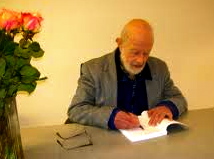
I got to know Erich in 1997, shortly after publication of EGEK (1996). One day, I received a bulging, six-page, handwritten letter from him in tiny, extremely neat scrawl (and many more after that).  He began by telling me that he was sitting in a very large room at an ASA (American Statistical Association) meeting where they were shutting down the conference book display (or maybe they were setting it up), and on a very long, wood table sat just one book, all alone, shiny red.  He said he wondered if it might be of interest to him!  So he walked up to it….  It turned out to be my Error and the Growth of Experimental Knowledge (1996, Chicago), which he reviewed soon after[0]. (What are the chances?) Some related posts on Lehmann’s letter are here and here.

One of Lehmann’s more philosophical papers is Lehmann (1993), “The Fisher, Neyman-Pearson Theories of Testing Hypotheses: One Theory or Two?” We haven’t discussed it before on this blog. Here are some excerpts (blue), and remarks (black)

Erich Lehmann 20 November 1917 – 12 September 2009

Erich Lehmann 20 November 1917 – 12 September 2009

…A distinction frequently made between the approaches of Fisher and Neyman-Pearson is that in the latter the test is carried out at a fixed level, whereas the principal outcome of the former is the statement of a p value that may or may not be followed by a pronouncement concerning significance of the result [p.1243].

The history of this distinction is curious. Throughout the 19th century, testing was carried out rather informally. It was roughly equivalent to calculating an (approximate) p value and rejecting the hypothesis if this value appeared to be sufficiently small. … Fisher, in his 1925 book and later, greatly reduced the needed tabulations by providing tables not of the distributions themselves but of selected quantiles. … These tables allow the calculation only of ranges for the p values; however, they are exactly suited for determining the critical values at which the statistic under consideration becomes significant at a given level. As Fisher wrote in explaining the use of his [chi square] table (1946, p. 80):

In preparing this table we have borne in mind that in practice we do not want to know the exact value of P for any observed [chi square], but, in the first place, whether or not the observed value is open to suspicion. If P is between .1 and .9, there is certainly no reason to suspect the hypothesis tested. If it is below .02, it is strongly indicated that the hypothesis fails to account for the whole of the facts. We shall not often be astray if we draw a conventional line at .05 and consider that higher values of [chi square] indicate a real discrepancy.

Similarly, he also wrote (1935, p. 13) that “it is usual and convenient for experimenters to take 5 percent as a standard level of significance, in the sense that they are prepared to ignore all results which fail to reach this standard .. .” …. Continue reading

Categories: Neyman, P-values, phil/history of stat, Statistics | Tags: , | 4 Comments

“What does it say about our national commitment to research integrity?”

images

.

There’s an important guest editorial by Keith Baggerly and C.K. Gunsalus in today’s issue of the Cancer Letter: Penalty Too Light” on the Duke U. (Potti/Nevins) cancer trial fraud*. Here are some excerpts.

publication date: Nov 13, 2015

Penalty Too Light

What does it say about our national commitment to research integrity that the Department of Health and Human Services’ Office of Research Integrity has concluded that a five-year ban on federal research funding for one individual researcher is a sufficient response to a case involving millions of taxpayer dollars, completely fabricated data, and hundreds to thousands of patients in invasive clinical trials?

This week, ORI released a notice of “final action” in the case of Anil Potti, M.D. The ORI found that Dr. Potti engaged in several instances of research misconduct and banned him from receiving federal funding for five years.

(See my previous post.)

The principles involved are important and the facts complicated. This was not just a matter of research integrity. This was also a case involving direct patient care and millions of dollars in federal and other funding. The duration and extent of deception were extreme. The case catalyzed an Institute of Medicine review of genomics in clinical trials and attracted national media attention.

If there are no further conclusions coming from ORI and if there are no other investigations under way—despite the importance of the issues involved and the five years that have elapsed since research misconduct investigation began, we do not know—a strong argument can be made that neither justice nor the research community have been served by this outcome. Continue reading

Categories: Anil Potti, fraud, science communication, Statistics | 3 Comments

Findings of the Office of Research Misconduct on the Duke U (Potti/Nevins) cancer trial fraud: No one is punished but the patients

imgres-2Findings of Research Misconduct
A Notice by the Health and Human Services Dept
on 11/09/2015
AGENCY: Office of the Secretary, HHS.
ACTION: Notice.

-----------------------------------------------------------------------

SUMMARY: Notice is hereby given that the Office of Research Integrity 
(ORI) has taken final action in the following case:
    Anil Potti, M.D., Duke University School of Medicine: Based on the 
reports of investigations conducted by Duke University School of 
Medicine (Duke) and additional analysis conducted by ORI in its 
oversight review, ORI found that Dr. Anil Potti, former Associate 
Professor of Medicine, Duke, engaged in research misconduct in research 
supported by National Heart, Lung, and Blood Institute (NHLBI), 
National Institutes of Health (NIH), grant R01 HL072208 and National 
Cancer Institute (NCI), NIH, grants R01 CA136530, R01 CA131049, K12 
CA100639, R01 CA106520, and U54 CA112952.
    ORI found that Respondent engaged in research misconduct by 
including false research data in the following published papers, 
submitted manuscript, grant application, and the research record as 
specified in 1-3 below. Specifically, ORI found that: Continue reading 
Categories: Anil Potti, reproducibility, Statistical fraudbusting, Statistics | 12 Comments

S. McKinney: On Efron’s “Frequentist Accuracy of Bayesian Estimates” (Guest Post)

SMWorkPhoto_IMG_2432

.

Steven McKinney, Ph.D.
Statistician
Molecular Oncology and Breast Cancer Program
British Columbia Cancer Research Centre


On Bradley Efron’s: “Frequentist Accuracy of Bayesian Estimates”

Bradley Efron has produced another fine set of results, yielding a valuable estimate of variability for a Bayesian estimate derived from a Markov Chain Monte Carlo algorithm, in his latest paper “Frequentist accuracy of Bayesian estimates” (J. R. Statist. Soc. B (2015) 77, Part 3, pp. 617–646). I give a general overview of Efron’s brilliance via his Introduction discussion (his words “in double quotes”).

“1. Introduction

The past two decades have witnessed a greatly increased use of Bayesian techniques in statistical applications. Objective Bayes methods, based on neutral or uniformative priors of the type pioneered by Jeffreys, dominate these applications, carried forward on a wave of popularity for Markov chain Monte Carlo (MCMC) algorithms. Good references include Ghosh (2011), Berger (2006) and Kass and Wasserman (1996).”

A nice concise summary, one that should bring joy to anyone interested in Bayesian methods after all the Bayesian-bashing of the middle 20th century. Efron himself has crafted many beautiful results in the Empirical Bayes arena. He has reviewed important differences between Bayesian and frequentist outcomes that point to some as-yet unsettled issues in statistical theory and philosophy such as his scales of evidence work. Continue reading

Categories: Bayesian/frequentist, objective Bayesians, Statistics | 44 Comments

WHIPPING BOYS AND WITCH HUNTERS (ii)

.

At least as apt today as 3 years ago…HAPPY HALLOWEEN! Memory Lane with new comments in blue

In an earlier post I alleged that frequentist hypotheses tests often serve as whipping boys, by which I meant “scapegoats”, for the well-known misuses, abuses, and flagrant misinterpretations of tests (both simple Fisherian significance tests and Neyman-Pearson tests, although in different ways)—as well as for what really boils down to a field’s weaknesses in modeling, theorizing, experimentation, and data collection.  Checking the history of this term however, there is a certain disanalogy with at least the original meaning of a “whipping boy,” namely, an innocent boy who was punished when a medieval prince misbehaved and was in need of discipline.  It was thought that seeing an innocent companion, often a friend, beaten for his own transgressions would supply an effective way to ensure the prince would not repeat the same mistake. But significance tests floggings, rather than a tool for a humbled self-improvement and commitment to avoiding flagrant rule violations, has tended instead to yield declarations that it is the rules that are invalid! The violators are excused as not being able to help it! The situation is more akin to that of witch hunting that in some places became an occupation in its own right.

Now some early literature, e.g., Morrison and Henkel’s Significance Test Controversy (1962), performed an important service over fifty years ago.  They alerted social scientists to the fallacies of significance tests: misidentifying a statistically significant difference with one of substantive importance, interpreting insignificant results as evidence for the null hypothesis—especially problematic with insensitive tests, and the like. Chastising social scientists for applying significance tests in slavish and unthinking ways, contributors call attention to a cluster of pitfalls and fallacies of testing. Continue reading

Categories: P-values, reforming the reformers, significance tests, Statistics | Tags: , , | Leave a comment

Blog at WordPress.com.