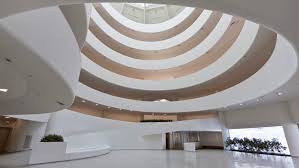
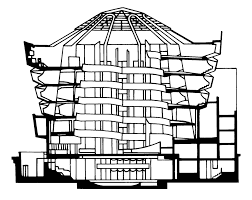
StatSci/PhilSci Museum
Where you are in the Journey* We’ll move from the philosophical ground floor to connecting themes from other levels, from Popperian falsification to significance tests, and from Popper’s demarcation to current-day problems of pseudoscience and irreplication. An excerpt from our Museum Guide gives a broad-brush sketch of the first few sections of Tour II:
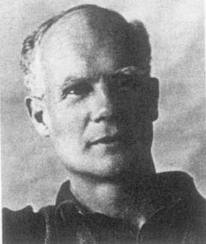
Karl Popper had a brilliant way to “solve” the problem of induction: Hume was right that enumerative induction is unjustified, but science is a matter of deductive falsification. Science was to be demarcated from pseudoscience according to whether its theories were testable and falsifiable. A hypothesis is deemed severely tested if it survives a stringent attempt to falsify it. Popper’s critics denied he could sustain this and still be a deductivist …
Popperian falsification is often seen as akin to Fisher’s view that “every experiment may be said to exist only in order to give the facts a chance of disproving the null hypothesis” (1935a, p. 16). Though scientists often appeal to Popper, some critics of significance tests argue that they are used in decidedly non-Popperian ways. Tour II explores this controversy.
While Popper didn’t make good on his most winning slogans, he gives us many seminal launching-off points for improved accounts of falsification, corroboration, science versus pseudoscience, and the role of novel evidence and predesignation. These will let you revisit some thorny issues in today’s statistical crisis in science. Continue reading













 Error Statistics Philosophy