Schachtman gives an interesting legal update today on his blog concerning the issue in my post Generic Drugs Resistant to Lawsuits” (Mar. 22, 2012). I post it here:
The New York Times Goes to War Against Generic Drug Manufacturers
By: Nathan Schachtman, Esq., PC*

Last week marked the launch of a New York Times a rhetorically fevered, legally sophomoric campaign against generic drug preemption. Saturday saw an editorial, “A Bizarre Outcome on Generic Drugs,” New York Times (March 24, 2012), which screamed, “Bizarre”! “Outrageous”!
The New York Times editorialists have their knickers in a knot over the inability of people, who are allegedly harmed by adverse drug reactions from generic medications, to sue the generic manufacturers. The editorial follows a front-page article, from earlier last week, which decried the inability to sue generic drug sellers. See Katie Thomas, “Generic Drugs Proving Resistant to Damage Suits,” New York Times (Mar. 21, 2012).
The Times‘ writers think that it is “bizarre” and “outrageous” that these people are out of court due to federal preemption of state court tort laws that might have provided a remedy.
In particular, the Times suggests that the law is irrational for allowing Ms. Diana Levine to recover against Wyeth for the loss of her arm to gangrene after receiving Phenergan by intravenous push, while another plaintiff, Ms. Schork, cannot recover for a similar injury, from a generic manufacturer of promethazine, the same medication. Wyeth v. Levine, 555 U.S. 555 (2009). See also Brief of Petitioner Wyeth, in Wyeth v. Levine (May 2008).
Of course, both Ms. Levine and Ms. Schork received compensation from their healthcare providers, who deviated from their standard of care when they carelessly injected the medication into arteries, contrary to clear instructions. At the time that Levine received her treatment, the Phenergan package insert contained four separate warnings about the risk of gangrene from improper injection of the medication into an artery. For instance, the “Adverse Reactions” section of the Phenergan label indicated: “INTRA-ARTERIAL INJECTION [CAN] RESULT IN GANGRENE OF THE AFFECTED EXTREMITY.” Continue reading

 to extricate such choices, replacing them with purely formal a priori computations or agreed-upon conventions (
 We constantly hear that procedures of inference are inescapably subjective because of the latitude of human judgment as it bears on the collection, modeling, and interpretation of data. But this is seriously equivocal: Being the product of a human subject is hardly the same as being subjective, at least not in the sense we are speaking of—that is, as a threat to objective knowledge. Are all these arguments about the allegedly inevitable subjectivity of statistical methodology rooted in equivocations? I argue that they are!
 ader: My commentary, “
 Gelman responds on his blog today: “Gelman on
 “
“

 Nathan Schactman has an interesting blog post on “
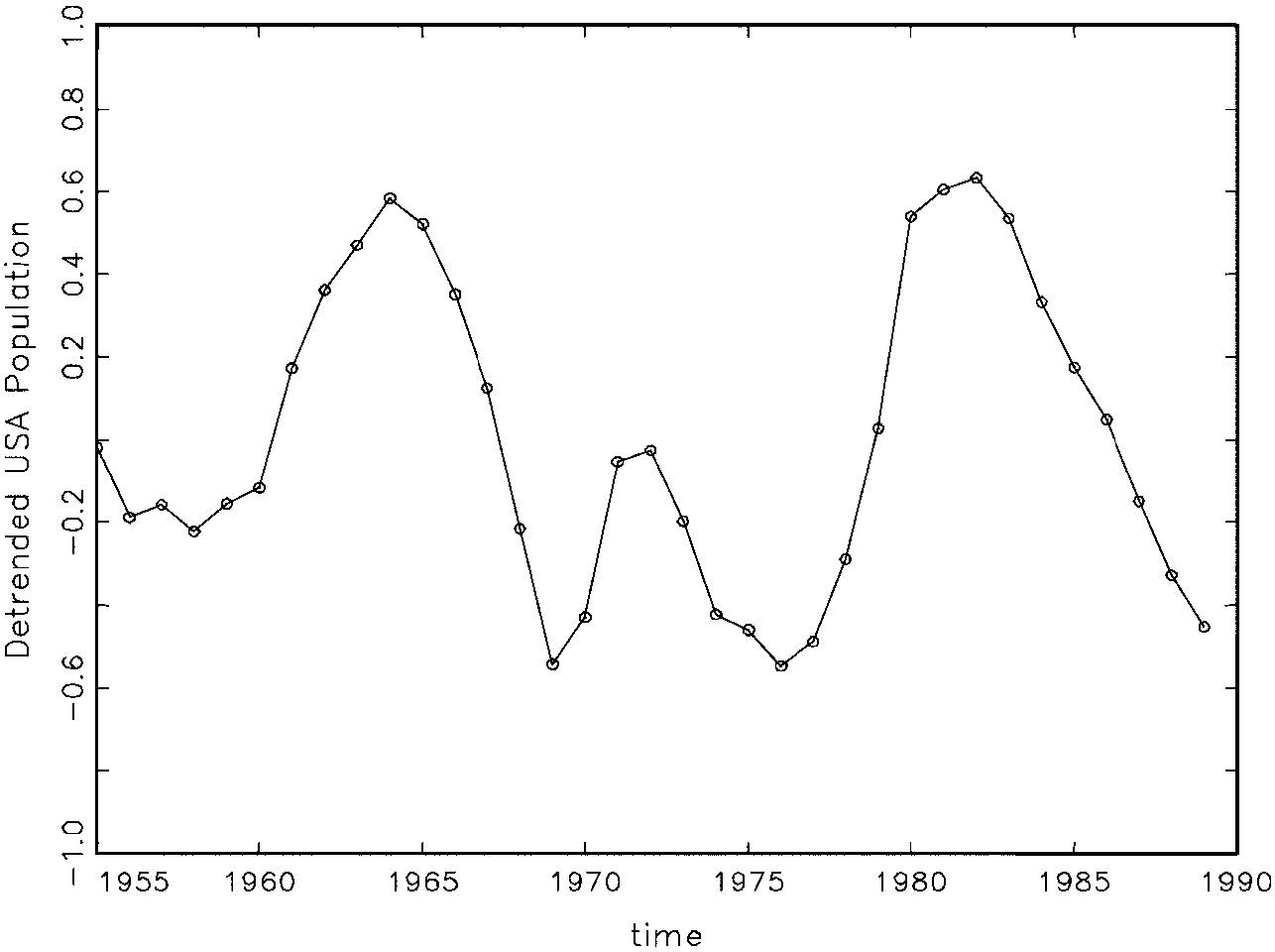
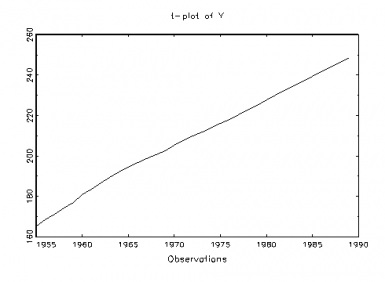
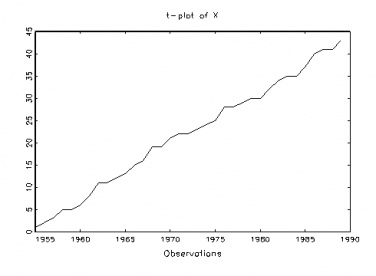
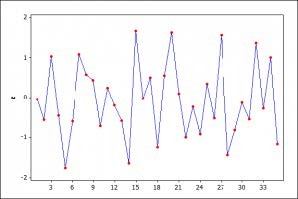
 The Nature of the Inferences From Graphical Techniques: What is the status of the learning from graphs? In this view, the graphs afford good ideas about the kinds of violations for which it would be useful to probe, much as looking at a forensic clue (e.g., footprint, tire track) helps to narrow down the search for a given suspect, a fault-tree, for a given cause. The same discernment can be achieved with a formal analysis (with parametric and nonparametric tests), perhaps more discriminating than can be accomplished by even the most trained eye, but the reasoning and the justification are much the same. (The capabilities of these techniques may be checked by simulating data deliberately generated to violate or obey the various assumptions.)