
.
It’s an apt time to reblog the “statistical dirty laundry” post from 2013 here. I hope we can take up the recommendations from Simmons, Nelson and Simonsohn at the end (Note [5]), which we didn’t last time around.
^^^^^^^^^^^^^^^^^^^^^^^^^^^^^^
I finally had a chance to fully read the 2012 Tilberg Report* on “Flawed Science” last night. Here are some stray thoughts…
1. Slipping into pseudoscience.
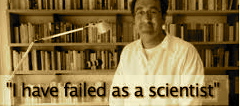
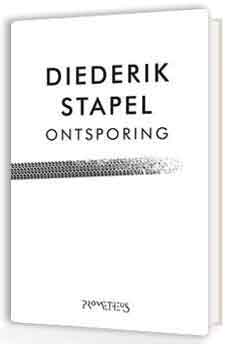
The authors of the Report say they never anticipated giving a laundry list of “undesirable conduct” by which researchers can flout pretty obvious requirements for the responsible practice of science. It was an accidental byproduct of the investigation of one case (Diederik Stapel, social psychology) that they walked into a culture of “verification bias”[1]. Maybe that’s why I find it so telling. It’s as if they could scarcely believe their ears when people they interviewed “defended the serious and less serious violations of proper scientific method with the words: that is what I have learned in practice; everyone in my research environment does the same, and so does everyone we talk to at international conferences” (Report 48). So they trot out some obvious rules, and it seems to me that they do a rather good job:
One of the most fundamental rules of scientific research is that an investigation must be designed in such a way that facts that might refute the research hypotheses are given at least an equal chance of emerging as do facts that confirm the research hypotheses. Violations of this fundamental rule, such as continuing an experiment until it works as desired, or excluding unwelcome experimental subjects or results, inevitably tends to confirm the researcher’s research hypotheses, and essentially render the hypotheses immune to the facts…. [T]he use of research procedures in such a way as to ‘repress’ negative results by some means” may be called verification bias. [my emphasis] (Report, 48).
I would place techniques for ‘verification bias’ under the general umbrella of techniques for squelching stringent criticism and repressing severe tests. These gambits make it so easy to find apparent support for one’s pet theory or hypotheses, as to count as no evidence at all (see some from their list ). Any field that regularly proceeds this way I would call a pseudoscience, or non-science, following Popper. “Observations or experiments can be accepted as supporting a theory (or a hypothesis, or a scientific assertion) only if these observations or experiments are severe tests of the theory” (Popper 1994, p. 89). [2] It is unclear at what point a field slips into the pseudoscience realm.
2. A role for philosophy of science?
I am intrigued that one of the final recommendations in the Report is this: Continue reading