Erich Lehmann’s 100 Birthday: Neyman Pearson vs Fisher on P-values

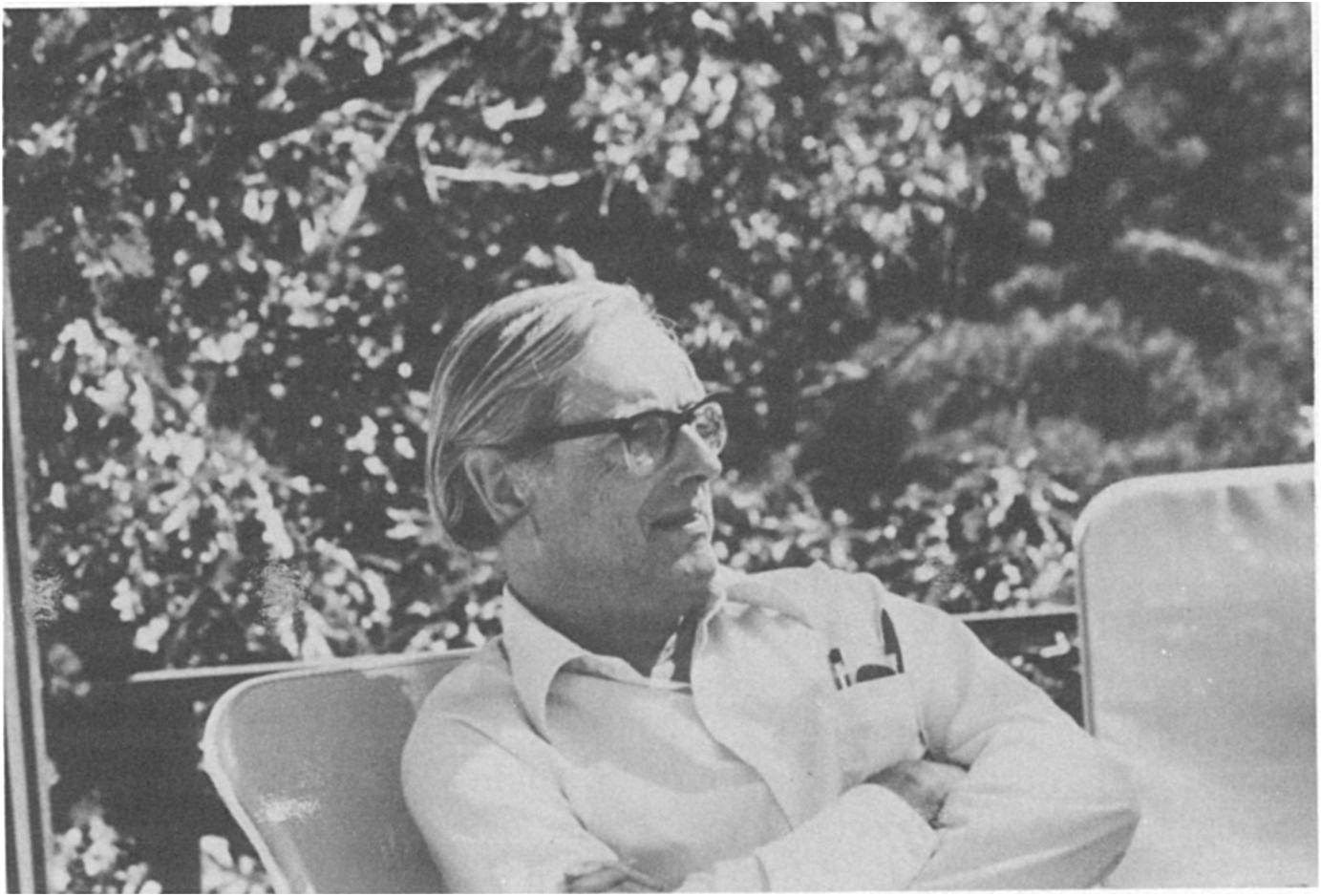
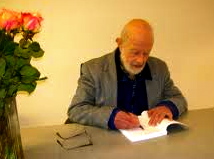
Erich Lehmann 20 November 1917 – 12 September 2009

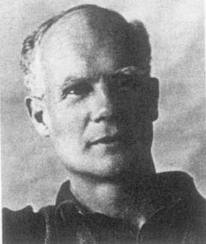
Erich Lehmann was born 100 years ago today! (20 November 1917 – 12 September 2009). Lehmann was Neyman’s first student at Berkeley (Ph.D 1942), and his framing of Neyman-Pearson (NP) methods has had an enormous influence on the way we typically view them.*

.

I got to know Erich in 1997, shortly after publication of EGEK (1996). One day, I received a bulging, six-page, handwritten letter from him in tiny, extremely neat scrawl (and many more after that).  He began by telling me that he was sitting in a very large room at an ASA (American Statistical Association) meeting where they were shutting down the conference book display (or maybe they were setting it up), and on a very long, wood table sat just one book, all alone, shiny red.

He said ” I wonder if it might be of interest to me!”  So he walked up to it….  It turned out to be my Error and the Growth of Experimental Knowledge (1996, Chicago), which he reviewed soon after[0]. (What are the chances?) Some related posts on Lehmann’s letter are here and here.

Continue reading

Categories: Fisher, P-values, phil/history of stat | 3 Comments

3 YEARS AGO (NOVEMBER 2014): MEMORY LANE

3 years ago...

3 years ago…

MONTHLY MEMORY LANE: 3 years ago: November 2014. I mark in red 3-4 posts from each month that seem most apt for general background on key issues in this blog, excluding those reblogged recently[1], and in green 3- 4 others of general relevance to philosophy of statistics (in months where I’ve blogged a lot)[2].  Posts that are part of a “unit” or a group count as one (11/1/14 & 11/09/14 and 11/15/14 & 11/25/14 are grouped). The comments are worth checking out.


November 2014

  • 11/01 Philosophy of Science Assoc. (PSA) symposium on Philosophy of Statistics in the Higgs Experiments “How Many Sigmas to Discovery?”
  • 11/09 “Statistical Flukes, the Higgs Discovery, and 5 Sigma” at the PSA
  • 11/11 The Amazing Randi’s Million Dollar Challenge
  • 11/12 A biased report of the probability of a statistical fluke: Is it cheating?
  • 11/15 Why the Law of Likelihood is bankrupt–as an account of evidence


  • 11/18 Lucien Le Cam: “The Bayesians Hold the Magic”
  • 11/20 Erich Lehmann: Statistician and Poet
  • 11/22 Msc Kvetch: “You are a Medical Statistic”, or “How Medical Care Is Being Corrupted”
  • 11/25 How likelihoodists exaggerate evidence from statistical tests
  • 11/30 3 YEARS AGO: MONTHLY (Nov.) MEMORY LANE

[1] Monthly memory lanes began at the blog’s 3-year anniversary in Sept, 2014.

[2] New Rule, July 30,2016, March 30,2017 -a very convenient way to allow data-dependent choices (note why it’s legit in selecting blog posts, on severity grounds).


Save

Save

Save

Save

Save

Save

Save

Save

Save

Save

Categories: 3-year memory lane | 1 Comment

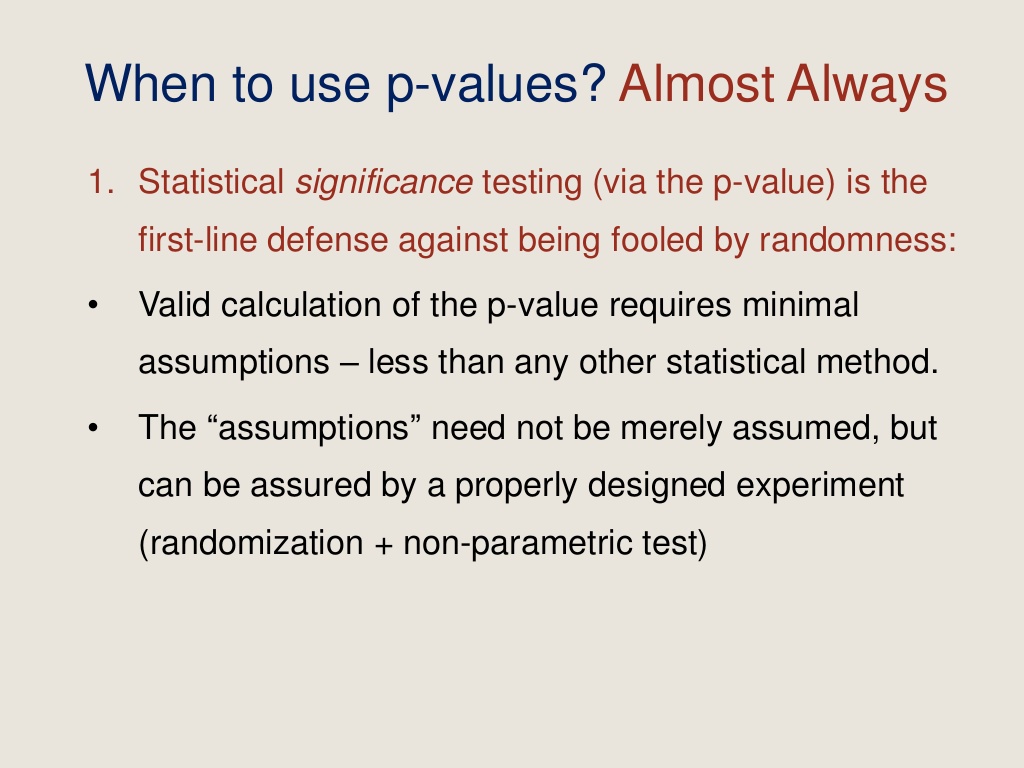
Yoav Benjamini, “In the world beyond p < .05: When & How to use P < .0499…"

.

These were Yoav Benjamini’s slides,”In the world beyond p<.05: When & How to use P<.0499…” from our session at the ASA 2017 Symposium on Statistical Inference (SSI): A World Beyond p < 0.05. (Mine are in an earlier post.) He begins by asking:

However, it’s mandatory to adjust for selection effects, and Benjamini is one of the leaders in developing ways to carry out the adjustments. Even calling out the avenues for cherry-picking and multiple testing, long known to invalidate p-values, would make replication research more effective (and less open to criticism). Continue reading

Categories: Error Statistics, P-values, replication research, selection effects | 22 Comments

Going round and round again: a roundtable on reproducibility & lowering p-values

.

There will be a roundtable on reproducibility Friday, October 27th (noon Eastern time), hosted by the International Methods Colloquium, on the reproducibility crisis in social sciences motivated by the paper, “Redefine statistical significance.” Recall, that was the paper written by a megateam of researchers as part of the movement to require p ≤ .005, based on appraising significance tests by a Bayes Factor analysis, with prior probabilities on a point null and a given alternative. It seems to me that if you’re prepared to scrutinize your frequentist (error statistical) method on grounds of Bayes Factors, then you must endorse using Bayes Factors (BFs) for inference to begin with. If you don’t endorse BFs–and, in particular, the BF required to get the disagreement with p-values–*, then it doesn’t make sense to appraise your non-Bayesian method on grounds of agreeing or disagreeing with BFs. For suppose you assess the recommended BFs from the perspective of an error statistical account–that is, one that checks how frequently the method would uncover or avoid the relevant mistaken inference.[i] Then, if you reach the stipulated BF level against a null hypothesis, you will find the situation is reversed, and the recommended BF exaggerates the evidence!  (In particular, with high probability, it gives an alternative H’ fairly high posterior probability, or comparatively higher probability, even though H’ is false.) Failing to reach the BF cut-off, by contrast, can find no evidence against, and even finds evidence for, a null hypothesis with high probability, even when non-trivial discrepancies exist. They’re measuring very different things, and it’s illicit to expect an agreement on numbers.[ii] We’ve discussed this quite a lot on this blog (2 are linked below [iii]).

If the given list of panelists is correct, it looks to be 4 against 1, but I’ve no doubt that Lakens can handle it.

Continue reading

Categories: Announcement, P-values, reforming the reformers, selection effects | 5 Comments

Deconstructing “A World Beyond P-values”

.A world beyond p-values?

I was asked to write something explaining the background of my slides (posted here) in relation to the recent ASA “A World Beyond P-values” conference. I took advantage of some long flight delays on my return to jot down some thoughts:

The contrast between the closing session of the conference “A World Beyond P-values,” and the gist of the conference itself, shines a light on a pervasive tension within the “Beyond P-Values” movement. Two very different debates are taking place. First there’s the debate about how to promote better science. This includes welcome reminders of the timeless demands of rigor and integrity required to avoid deceiving ourselves and others–especially crucial in today’s world of high-powered searches and Big Data. That’s what the closing session was about. [1] Continue reading

Categories: P-values, Philosophy of Statistics, reforming the reformers | 9 Comments

Statistical skepticism: How to use significance tests effectively: 7 challenges & how to respond to them

Here are my slides from the ASA Symposium on Statistical Inference : “A World Beyond p < .05”  in the session, “What are the best uses for P-values?”. (Aside from me,our session included Yoav Benjamini and David Robinson, with chair: Nalini Ravishanker.)

7 QUESTIONS

  • Why use a tool that infers from a single (arbitrary) P-value that pertains to a statistical hypothesis H0 to a research claim H*?
  • Why use an incompatible hybrid (of Fisher and N-P)?
  • Why apply a method that uses error probabilities, the sampling distribution, researcher “intentions” and violates the likelihood principle (LP)? You should condition on the data.
  • Why use methods that overstate evidence against a null hypothesis?
  • Why do you use a method that presupposes the underlying statistical model?
  • Why use a measure that doesn’t report effect sizes?
  • Why do you use a method that doesn’t provide posterior probabilities (in hypotheses)?


Categories: P-values, spurious p values, statistical tests, Statistics | Leave a comment

New venues for the statistics wars

I was part of something called “a brains blog roundtable” on the business of p-values earlier this week–I’m glad to see philosophers getting involved.

Next week I’ll be in a session that I think is intended to explain what’s right about P-values at an ASA Symposium on Statistical Inference : “A World Beyond p < .05”. Continue reading

Categories: Announcement, Bayesian/frequentist, P-values | 3 Comments

G.A. Barnard: The “catch-all” factor: probability vs likelihood


Barnard 23 Sept.1915 – 9 Aug.20

With continued acknowledgement of Barnard’s birthday on Friday, Sept.23, I reblog an exchange on catchall probabilities from the “The Savage Forum” (pp 79-84 Savage, 1962) with some new remarks.[i] 

 BARNARD:…Professor Savage, as I understand him, said earlier that a difference between likelihoods and probabilities was that probabilities would normalize because they integrate to one, whereas likelihoods will not. Now probabilities integrate to one only if all possibilities are taken into account. This requires in its application to the probability of hypotheses that we should be in a position to enumerate all possible hypotheses which might explain a given set of data. Now I think it is just not true that we ever can enumerate all possible hypotheses. … If this is so we ought to allow that in addition to the hypotheses that we really consider we should allow something that we had not thought of yet, and of course as soon as we do this we lose the normalizing factor of the probability, and from that point of view probability has no advantage over likelihood. This is my general point, that I think while I agree with a lot of the technical points, I would prefer that this is talked about in terms of likelihood rather than probability. I should like to ask what Professor Savage thinks about that, whether he thinks that the necessity to enumerate hypotheses exhaustively, is important. Continue reading

Categories: Barnard, highly probable vs highly probed, phil/history of stat | 6 Comments

George Barnard’s birthday: stopping rules, intentions

G.A. Barnard: 23 Sept.1915 – 9 Aug.2002

Today is George Barnard’s birthday. I met him in the 1980s and we corresponded off and on until 1999. Here’s a snippet of his discussion with Savage (1962) (link below [i]) that connects to issues often taken up on this blog: stopping rules and the likelihood principle. (It’s a slightly revised reblog of an earlier post.) I’ll post some other items related to Barnard this week, in honor of his birthday.

Happy Birthday George!

Barnard: I have been made to think further about this issue of the stopping rule since I first suggested that the stopping rule was irrelevant (Barnard 1947a,b). This conclusion does not follow only from the subjective theory of probability; it seems to me that the stopping rule is irrelevant in certain circumstances.  Since 1947 I have had the great benefit of a long correspondence—not many letters because they were not very frequent, but it went on over a long time—with Professor Bartlett, as a result of which I am considerably clearer than I was before. My feeling is that, as I indicated [on p. 42], we meet with two sorts of situation in applying statistics to data One is where we want to have a single hypothesis with which to confront the data. Do they agree with this hypothesis or do they not? Now in that situation you cannot apply Bayes’s theorem because you have not got any alternatives to think about and specify—not yet. I do not say they are not specifiable—they are not specified yet. And in that situation it seems to me the stopping rule is relevant. Continue reading

Categories: Likelihood Principle, Philosophy of Statistics | Tags: | 2 Comments

Revisiting Popper’s Demarcation of Science 2017

28 July 1902- 17 Sept. 1994

Karl Popper died on September 17 1994. One thing that gets revived in my new book (Statistical Inference as Severe Testing, 2018, CUP) is a Popperian demarcation of science vs pseudoscience Here’s a snippet from what I call a “live exhibit” (where the reader experiments with a subject) toward the end of a chapter on Popper:

Live Exhibit. Revisiting Popper’s Demarcation of Science: Here’s an experiment: Try shifting what Popper says about theories to a related claim about inquiries to find something out. To see what I have in mind, join me in watching a skit over the lunch break:

Physicist: “If mere logical falsifiability suffices for a theory to be scientific, then, we can’t properly oust astrology from the scientific pantheon. Plenty of nutty theories have been falsified, so by definition they’re scientific. Moreover, scientists aren’t always looking to subject well corroborated theories to “grave risk” of falsification.”

Fellow traveler: “I’ve been thinking about this. On your first point, Popper confuses things by making it sound as if he’s asking: When is a theory unscientific? What he is actually asking or should be asking is: When is an inquiry into a theory, or an appraisal of claim H unscientific? We want to distinguish meritorious modes of inquiry from those that are BENT. If the test methods enable ad hoc maneuvering, sneaky face-saving devices, then the inquiry–the handling and use of data–is unscientific. Despite being logically falsifiable, theories can be rendered immune from falsification by means of cavalier methods for their testing. Adhering to a falsified theory no matter what is poor science. On the other hand, some areas have so much noise that you can’t pinpoint what’s to blame for failed predictions. This is another way that inquiries become bad science.”

She continues: Continue reading

Categories: Error Statistics, Popper, pseudoscience, science vs pseudoscience | Tags: | 10 Comments

Peircean Induction and the Error-Correcting Thesis

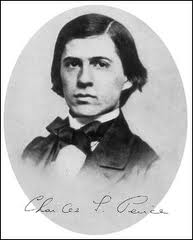
C. S. Peirce: 10 Sept, 1839-19 April, 1914

C. S. Peirce: 10 Sept, 1839-19 April, 1914

Sunday, September 10, was C.S. Peirce’s birthday. He’s one of my heroes. He’s a treasure chest on essentially any topic, and anticipated quite a lot in statistics and logic. (As Stephen Stigler (2016) notes, he’s to be credited with articulating and appling randomization [1].) I always find something that feels astoundingly new, even rereading him. He’s been a great resource as I complete my book, Statistical Inference as Severe Testing: How to Get Beyond the Statistics Wars (CUP, 2018) [2]. I’m reblogging the main sections of a (2005) paper of mine. It’s written for a very general philosophical audience; the statistical parts are very informal. I first posted it in 2013Happy (belated) Birthday Peirce.

Peircean Induction and the Error-Correcting Thesis
Deborah G. Mayo
Transactions of the Charles S. Peirce Society: A Quarterly Journal in American Philosophy, Volume 41, Number 2, 2005, pp. 299-319

Peirce’s philosophy of inductive inference in science is based on the idea that what permits us to make progress in science, what allows our knowledge to grow, is the fact that science uses methods that are self-correcting or error-correcting:

Induction is the experimental testing of a theory. The justification of it is that, although the conclusion at any stage of the investigation may be more or less erroneous, yet the further application of the same method must correct the error. (5.145)

Inductive methods—understood as methods of experimental testing—are justified to the extent that they are error-correcting methods. We may call this Peirce’s error-correcting or self-correcting thesis (SCT): Continue reading

Categories: Bayesian/frequentist, C.S. Peirce | 2 Comments

Professor Roberta Millstein, Distinguished Marjorie Grene speaker September 15


CANCELED

Virginia Tech Philosophy Department

2017 Distinguished Marjorie Grene Speaker


Professor Roberta L. Millstein


University of California, Davis

“Types of Experiments and Causal Process Tracing: What Happened on the Kaibab Plateau in the 1920s?”

September 15, 2017

320 Lavery Hall: 5:10-6:45pm


.

Continue reading

Categories: Announcement | 4 Comments

All She Wrote (so far): Error Statistics Philosophy: 6 years on

metablog old fashion typewriter

D.G. Mayo with her  blogging typewriter

Error Statistics Philosophy: Blog Contents (6 years) [i]
By: D. G. Mayo

Dear Reader: It’s hard to believe I’ve been blogging for six years (since Sept. 3, 2011)! A big celebration is taking place at the Elbar Room this evening. If you’re in the neighborhood, stop by for some Elba Grease.

Amazingly, this old typewriter not only still works; one of the whiz kids on Elba managed to bluetooth it to go directly from my typewriter onto the blog (I never got used to computer keyboards.) I still must travel to London to get replacement ribbons for this klunker.

Please peruse the offerings below, and take advantage of some of the super contributions and discussions by guest posters and readers! I don’t know how much longer I’ll continue blogging–I’ve had to cut back this past year (sorry)–but at least until the publication of my book “Statistical Inference as Severe Testing: How to Get Beyond the Statistics Wars” (CUP, 2018). After that I plan to run conferences, workshops, and ashrams on PhilStat and PhilSci, and I will invite readers to take part! Keep reading and commenting. Sincerely, D. Mayo

.


September 2011

October 2011 Continue reading

Categories: blog contents, Metablog | Leave a comment

Egon Pearson’s Heresy

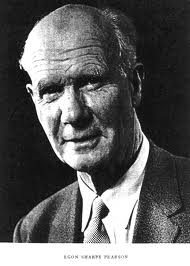
E.S. Pearson: 11 Aug 1895-12 June 1980.

Here’s one last entry in honor of Egon Pearson’s birthday: “Statistical Concepts in Their Relation to Reality” (Pearson 1955). I’ve posted it several times over the years (6!), but always find a new gem or two, despite its being so short. E. Pearson rejected some of the familiar tenets that have come to be associated with Neyman and Pearson (N-P) statistical tests, notably the idea that the essential justification for tests resides in a long-run control of rates of erroneous interpretations–what he termed the “behavioral” rationale of tests. In an unpublished letter E. Pearson wrote to Birnbaum (1974), he talks about N-P theory admitting of two interpretations: behavioral and evidential:

“I think you will pick up here and there in my own papers signs of evidentiality, and you can say now that we or I should have stated clearly the difference between the behavioral and evidential interpretations. Certainly we have suffered since in the way the people have concentrated (to an absurd extent often) on behavioral interpretations”.

(Nowadays, some people concentrate to an absurd extent on “science-wise error rates in dichotomous screening”.) Continue reading

Categories: phil/history of stat, Philosophy of Statistics, Statistics | Tags: , , | Leave a comment

A. Spanos: Egon Pearson’s Neglected Contributions to Statistics

11 August 1895 – 12 June 1980

Continuing with my Egon Pearson posts in honor of his birthday, I reblog a post by Aris Spanos:  Egon Pearson’s Neglected Contributions to Statistics“. 

    Egon Pearson (11 August 1895 – 12 June 1980), is widely known today for his contribution in recasting of Fisher’s significance testing into the Neyman-Pearson (1933) theory of hypothesis testing. Occasionally, he is also credited with contributions in promoting statistical methods in industry and in the history of modern statistics; see Bartlett (1981). What is rarely mentioned is Egon’s early pioneering work on:

(i) specification: the need to state explicitly the inductive premises of one’s inferences,

(ii) robustness: evaluating the ‘sensitivity’ of inferential procedures to departures from the Normality assumption, as well as

(iii) Mis-Specification (M-S) testing: probing for potential departures from the Normality  assumption.

Arguably, modern frequentist inference began with the development of various finite sample inference procedures, initially by William Gosset (1908) [of the Student’s t fame] and then Fisher (1915, 1921, 1922a-b). These inference procedures revolved around a particular statistical model, known today as the simple Normal model: Continue reading

Categories: E.S. Pearson, phil/history of stat, Spanos, Testing Assumptions | 2 Comments

Performance or Probativeness? E.S. Pearson’s Statistical Philosophy

egon pearson

E.S. Pearson (11 Aug, 1895-12 June, 1980)

This is a belated birthday post for E.S. Pearson (11 August 1895-12 June, 1980). It’s basically a post from 2012 which concerns an issue of interpretation (long-run performance vs probativeness) that’s badly confused these days. I’ll blog some E. Pearson items this week, including, my latest reflection on a historical anecdote regarding Egon and the woman he wanted marry, and surely would have, were it not for his father Karl!

HAPPY BELATED BIRTHDAY EGON!

Are methods based on error probabilities of use mainly to supply procedures which will not err too frequently in some long run? (performance). Or is it the other way round: that the control of long run error properties are of crucial importance for probing the causes of the data at hand? (probativeness). I say no to the former and yes to the latter. This, I think, was also the view of Egon Sharpe (E.S.) Pearson.  Continue reading

Categories: highly probable vs highly probed, phil/history of stat, Statistics | Tags: | Leave a comment

Thieme on the theme of lowering p-value thresholds (for Slate)

.

Here’s an article by Nick Thieme on the same theme as my last blogpost. Thieme, who is Slate’s 2017 AAAS Mass Media Fellow, is the first person to interview me on p-values who (a) was prepared to think through the issue for himself (or herself), and (b) included more than a tiny fragment of my side of the exchange.[i]. Please share your comments.

Will Lowering P-Value Thresholds Help Fix Science? P-values are already all over the map, and they’re also not exactly the problem.


Illustration by Slate

                 Illustration by Slate

Last week a team of 72 scientists released the preprint of an article attempting to address one aspect of the reproducibility crisis, the crisis of conscience in which scientists are increasingly skeptical about the rigor of our current methods of conducting scientific research.

Their suggestion? Change the threshold for what is considered statistically significant. The team, led by Daniel Benjamin, a behavioral economist from the University of Southern California, is advocating that the “probability value” (p-value) threshold for statistical significance be lowered from the current standard of 0.05 to a much stricter threshold of 0.005. Continue reading

Categories: P-values, reforming the reformers, spurious p values | 14 Comments

“A megateam of reproducibility-minded scientists” look to lowering the p-value

.

Having discussed the “p-values overstate the evidence against the null fallacy” many times over the past few years, I leave it to readers to disinter the issues (pro and con), and appraise the assumptions, in the most recent rehearsal of the well-known Bayesian argument. There’s nothing intrinsically wrong with demanding everyone work with a lowered p-value–if you’re so inclined to embrace a single, dichotomous standard without context-dependent interpretations, especially if larger sample sizes are required to compensate the loss of power. But lowering the p-value won’t solve the problems that vex people (biasing selection effects), and is very likely to introduce new ones (see my comment). Kelly Servick, a reporter from Science, gives the ingredients of the main argument given by “a megateam of reproducibility-minded scientists” in an article out today: Continue reading

Categories: Error Statistics, highly probable vs highly probed, P-values, reforming the reformers | 57 Comments

3 YEARS AGO (JULY 2014): MEMORY LANE

3 years ago...

3 years ago…

MONTHLY MEMORY LANE: 3 years ago: July 2014. I mark in red 3-4 posts from each month that seem most apt for general background on key issues in this blog, excluding those reblogged recently[1]. Posts that are part of a “unit” or a group count as one. This month there are three such groups: 7/8 and 7/10; 7/14 and 7/23; 7/26 and 7/31.

July 2014

  • (7/7) Winner of June Palindrome Contest: Lori Wike
  • (7/8) Higgs Discovery 2 years on (1: “Is particle physics bad science?”)
  • (7/10) Higgs Discovery 2 years on (2: Higgs analysis and statistical flukes)
  • (7/14) “P-values overstate the evidence against the null”: legit or fallacious? (revised)
  • (7/23) Continued:”P-values overstate the evidence against the null”: legit or fallacious?
  • (7/26) S. Senn: “Responder despondency: myths of personalized medicine” (Guest Post)
  • (7/31) Roger Berger on Stephen Senn’s “Blood Simple” with a response by Senn (Guest Posts)

[1] Monthly memory lanes began at the blog’s 3-year anniversary in Sept, 2014.


Save

Save

Save

Save

Save

Categories: 3-year memory lane, Higgs, P-values | Leave a comment

On the current state of play in the crisis of replication in psychology: some heresies

.

The replication crisis has created a “cold war between those who built up modern psychology and those” tearing it down with failed replications–or so I read today [i]. As an outsider (to psychology), the severe tester is free to throw some fuel on the fire on both sides. This is a short update on my post “Some ironies in the replication crisis in social psychology” from 2014.

Following the model from clinical trials, an idea gaining steam is to prespecify a “detailed protocol that includes the study rationale, procedure and a detailed analysis plan” (Nosek et.al. 2017). In this new paper, they’re called registered reports (RRs). An excellent start. I say it makes no sense to favor preregistration and deny the relevance to evidence of optional stopping and outcomes other than the one observed. That your appraisal of the evidence is altered when you actually see the history supplied by the RR is equivalent to worrying about biasing selection effects when they’re not written down; your statistical method should pick up on them (as do p-values, confidence levels and many other error probabilities). There’s a tension between the RR requirements and accounts following the Likelihood Principle (no need to name names [ii]). Continue reading

Categories: Error Statistics, preregistration, reforming the reformers, replication research | 9 Comments

Blog at WordPress.com.