Statistics

S. Senn: “Responder despondency: myths of personalized medicine” (Guest Post)

Stephen Senn

.

Stephen Senn
Head, Methodology and Statistics Group
Competence Center for Methodology and Statistics (CCMS)
Luxembourg

Responder despondency: myths of personalized medicine

The road to drug development destruction is paved with good intentions. The 2013 FDA report, Paving the Way for Personalized Medicine  has an encouraging and enthusiastic foreword from Commissioner Hamburg and plenty of extremely interesting examples stretching back decades. Given what the report shows can be achieved on occasion, given the enthusiasm of the FDA and its commissioner, given the amazing progress in genetics emerging from the labs, a golden future of personalized medicine surely awaits us. It would be churlish to spoil the party by sounding a note of caution but I have never shirked being churlish and that is exactly what I am going to do. Continue reading

Categories: evidence-based policy, Statistics, Stephen Senn | 50 Comments

Continued:”P-values overstate the evidence against the null”: legit or fallacious?

.

continued…

Categories: Bayesian/frequentist, CIs and tests, fallacy of rejection, highly probable vs highly probed, P-values, Statistics | 39 Comments

“P-values overstate the evidence against the null”: legit or fallacious? (revised)

0. July 20, 2014: Some of the comments to this post reveal that using the word “fallacy” in my original title might have encouraged running together the current issue with the fallacy of transposing the conditional. Please see a newly added Section 7.

Continue reading

Categories: Bayesian/frequentist, CIs and tests, fallacy of rejection, highly probable vs highly probed, P-values, Statistics | 71 Comments

Higgs discovery two years on (2: Higgs analysis and statistical flukes)

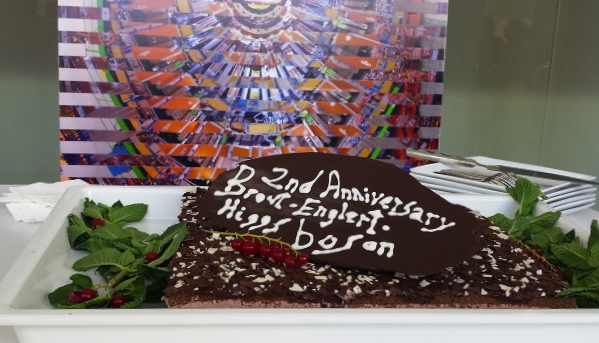
Higgs_cake-sI’m reblogging a few of the Higgs posts, with some updated remarks, on this two-year anniversary of the discovery. (The first was in my last post.) The following, was originally “Higgs Analysis and Statistical Flukes: part 2″ (from March, 2013).[1]

Some people say to me: “This kind of reasoning is fine for a ‘sexy science’ like high energy physics (HEP)”–as if their statistical inferences are radically different. But I maintain that this is the mode by which data are used in “uncertain” reasoning across the entire landscape of science and day-to-day learning (at least, when we’re trying to find things out)[2] Even with high level theories, the particular problems of learning from data are tackled piecemeal, in local inferences that afford error control. Granted, this statistical philosophy differs importantly from those that view the task as assigning comparative (or absolute) degrees-of-support/belief/plausibility to propositions, models, or theories.  Continue reading

Categories: Higgs, highly probable vs highly probed, P-values, Severity, Statistics | 14 Comments

Higgs Discovery two years on (1: “Is particle physics bad science?”)

Higgs_cake-s

July 4, 2014 was the two year anniversary of the Higgs boson discovery. As the world was celebrating the “5 sigma!” announcement, and we were reading about the statistical aspects of this major accomplishment, I was aghast to be emailed a letter, purportedly instigated by Bayesian Dennis Lindley, through Tony O’Hagan (to the ISBA). Lindley, according to this letter, wanted to know:

“Are the particle physics community completely wedded to frequentist analysis?  If so, has anyone tried to explain what bad science that is?”

Fairly sure it was a joke, I posted it on my “Rejected Posts” blog for a bit until it checked out [1]. (See O’Hagan’s “Digest and Discussion”) Continue reading

Categories: Bayesian/frequentist, fallacy of non-significance, Higgs, Lindley, Statistics | Tags: , , , , , | 4 Comments

Some ironies in the ‘replication crisis’ in social psychology (4th and final installment)

freud mirror espThere are some ironic twists in the way social psychology is dealing with its “replication crisis”, and they may well threaten even the most sincere efforts to put the field on firmer scientific footing–precisely in those areas that evoked the call for a “daisy chain” of replications. Two articles, one from the Guardian (June 14), and a second from The Chronicle of Higher Education (June 23) lay out the sources of what some are calling “Repligate”. The Guardian article is “Physics Envy: Do ‘hard’ sciences hold the solution to the replication crisis in psychology?”

The article in the Chronicle of Higher Education also gets credit for its title: “Replication Crisis in Psychology Research Turns Ugly and Odd”. I’ll likely write this in installments…(2nd, 3rd , 4th)

^^^^^^^^^^^^^^^

The Guardian article answers yes to the question “Do ‘hard’ sciences hold the solution“:

Psychology is evolving faster than ever. For decades now, many areas in psychology have relied on what academics call “questionable research practices” – a comfortable euphemism for types of malpractice that distort science but which fall short of the blackest of frauds, fabricating data.
Continue reading

Categories: junk science, science communication, Statistical fraudbusting, Statistics | 60 Comments

Blog Contents: May 2014

metablog old fashion typewriter

.

May 2014

(5/1) Putting the brakes on the breakthrough: An informal look at the argument for the Likelihood Principle

(5/3) You can only become coherent by ‘converting’ non-Bayesianly

(5/6) Winner of April Palindrome contest: Lori Wike

(5/7) A. Spanos: Talking back to the critics using error statistics (Phil6334)

(5/10) Who ya gonna call for statistical Fraudbusting? R.A. Fisher, P-values, and error statistics (again)

(5/15) Scientism and Statisticism: a conference* (i) Continue reading

Categories: blog contents, Metablog, Statistics | Leave a comment

Big Bayes Stories? (draft ii)

images-15“Wonderful examples, but let’s not close our eyes,”  is David J. Hand’s apt title for his discussion of the recent special issue (Feb 2014) of Statistical Science called Big Bayes Stories” (edited by Sharon McGrayne, Kerrie Mengersen and Christian Robert.) For your Saturday night/ weekend reading, here are excerpts from Hand, another discussant (Welsh), scattered remarks of mine, along with links to papers and background. I begin with David Hand:

 [The papers in this collection] give examples of problems which are well-suited to being tackled using such methods, but one must not lose sight of the merits of having multiple different strategies and tools in one’s inferential armory.(Hand [1])_

…. But I have to ask, is the emphasis on ‘Bayesian’ necessary? That is, do we need further demonstrations aimed at promoting the merits of Bayesian methods? … The examples in this special issue were selected, firstly by the authors, who decided what to write about, and then, secondly, by the editors, in deciding the extent to which the articles conformed to their desiderata of being Bayesian success stories: that they ‘present actual data processing stories where a non-Bayesian solution would have failed or produced sub-optimal results.’ In a way I think this is unfortunate. I am certainly convinced of the power of Bayesian inference for tackling many problems, but the generality and power of the method is not really demonstrated by a collection specifically selected on the grounds that this approach works and others fail. To take just one example, choosing problems which would be difficult to attack using the Neyman-Pearson hypothesis testing strategy would not be a convincing demonstration of a weakness of that approach if those problems lay outside the class that that approach was designed to attack.

Hand goes on to make a philosophical assumption that might well be questioned by Bayesians: Continue reading

Categories: Bayesian/frequentist, Honorary Mention, Statistics | 62 Comments

“Statistical Science and Philosophy of Science: where should they meet?”

img_1142

Four score years ago (!) we held the conference “Statistical Science and Philosophy of Science: Where Do (Should) They meet?” at the London School of Economics, Center for the Philosophy of Natural and Social Science, CPNSS, where I’m visiting professor [1] Many of the discussions on this blog grew out of contributions from the conference, and conversations initiated soon after. The conference site is here; my paper on the general question is here.[2]

My main contribution was “Statistical Science Meets Philosophy of Science Part 2: Shallow versus Deep Explorations” SS & POS 2. It begins like this: 

1. Comedy Hour at the Bayesian Retreat[3]

 Overheard at the comedy hour at the Bayesian retreat: Did you hear the one about the frequentist… Continue reading

Categories: Error Statistics, Philosophy of Statistics, Severity, Statistics, StatSci meets PhilSci | 23 Comments

A. Spanos: “Recurring controversies about P values and confidence intervals revisited”

A SPANOS

Aris Spanos
Wilson E. Schmidt Professor of Economics
Department of Economics, Virginia Tech

Recurring controversies about P values and confidence intervals revisited*
Ecological Society of America (ESA) ECOLOGY
Forum—P Values and Model Selection (pp. 609-654)
Volume 95, Issue 3 (March 2014): pp. 645-651

INTRODUCTION

The use, abuse, interpretations and reinterpretations of the notion of a P value has been a hot topic of controversy since the 1950s in statistics and several applied fields, including psychology, sociology, ecology, medicine, and economics.

The initial controversy between Fisher’s significance testing and the Neyman and Pearson (N-P; 1933) hypothesis testing concerned the extent to which the pre-data Type  I  error  probability  α can  address the arbitrariness and potential abuse of Fisher’s post-data  threshold for the value. Continue reading

Categories: CIs and tests, Error Statistics, Fisher, P-values, power, Statistics | 32 Comments

“The medical press must become irrelevant to publication of clinical trials.”

pmed0020138g001“The medical press must become irrelevant to publication of clinical trials.” So said Stephen Senn at a recent meeting of the Medical Journalists’ Association with the title: “Is the current system of publishing clinical trials fit for purpose?” Senn has thrown a few stones in the direction of medical journals in guest posts on this blog, and in this paper, but it’s the first I heard him go this far. He wasn’t the only one answering the conference question “No!” much to the surprise of medical journalist Jane Feinmann, whose article I am excerpting:

 So what happened? Medical journals, the main vehicles for publishing clinical trials today, are after all the ‘gatekeepers of medical evidence’—as they are described in Bad Pharma, Ben Goldacre’s 2012 bestseller. …

… The Alltrials campaign, launched two years ago on the back of Goldacre’s book, has attracted an extraordinary level of support. … Continue reading

Categories: PhilPharma, science communication, Statistics | 5 Comments

Stephen Senn: Blood Simple? The complicated and controversial world of bioequivalence (guest post)

Stephen SennBlood Simple?
The complicated and controversial world of bioequivalence

by Stephen Senn*

images-10

Those not familiar with drug development might suppose that showing that a new pharmaceutical formulation (say a generic drug) is equivalent to a formulation that has a licence (say a brand name drug) ought to be simple. However, it can often turn out to be bafflingly difficult[1]. Continue reading

Categories: bioequivalence, confidence intervals and tests, PhilPharma, Statistics, Stephen Senn | 22 Comments

Allan Birnbaum, Philosophical Error Statistician: 27 May 1923 – 1 July 1976

27 May 1923-   1 July 1976

Today is Allan Birnbaum’s Birthday. Birnbaum’s (1962) classic “On the Foundations of Statistical Inference” is in Breakthroughs in Statistics (volume I 1993).  I’ve a hunch that Birnbaum would have liked my rejoinder to discussants of my forthcoming paper (Statistical Science): Bjornstad, Dawid, Evans, Fraser, Hannig, and Martin and Liu. I hadn’t realized until recently that all of this is up under “future papers” here [1]. You can find the rejoinder: STS1404-004RA0-2. That takes away some of the surprise of having it all come out at once (and in final form). For those unfamiliar with the argument, at the end of this entry are slides from a recent, entirely informal, talk that I never posted, as well as some links from this blog. Happy Birthday Birnbaum! Continue reading

Categories: Birnbaum, Birnbaum Brakes, Likelihood Principle, Statistics | Leave a comment

The Science Wars & the Statistics Wars: More from the Scientism workshop

images-11-1Here are the slides from my presentation (May 17) at the Scientism workshop in NYC. (They’re sketchy since we were trying for 25-30 minutes.) Below them are some mini notes on some of the talks.

Now for my informal notes. Here’s a link to the Speaker abstracts;the presentations may now be found at the conference site here. Comments, questions, and corrections are welcome. Continue reading

Categories: evidence-based policy, frequentist/Bayesian, Higgs, P-values, scientism, Statistics, StatSci meets PhilSci | 11 Comments

Deconstructing Andrew Gelman: “A Bayesian wants everybody else to be a non-Bayesian.”

At the start of our seminar, I said that “on weekends this spring (in connection with Phil 6334, but not limited to seminar participants) I will post some of my ‘deconstructions of articles”. I began with Andrew Gelman‘s note  “Ethics and the statistical use of prior information”[i], but never posted my deconstruction of it. So since it’s Saturday night, and the seminar is just ending, here it is, along with related links to Stat and ESP research (including me, Jack Good, Persi Diaconis and Pat Suppes). Please share comments especially in relation to current day ESP research. Continue reading

Categories: Background knowledge, Gelman, Phil6334, Statistics | 35 Comments

Who ya gonna call for statistical Fraudbusting? R.A. Fisher, P-values, and error statistics (again)

images-9If there’s somethin’ strange in your neighborhood. Who ya gonna call?(Fisherian Fraudbusters!)*

*[adapted from R. Parker’s “Ghostbusters”]

When you need to warrant serious accusations of bad statistics, if not fraud, where do scientists turn? Answer: To the frequentist error statistical reasoning and to p-value scrutiny, first articulated by R.A. Fisher[i].The latest accusations of big time fraud in social psychology concern the case of Jens Förster. As Richard Gill notes:

The methodology here is not new. It goes back to Fisher (founder of modern statistics) in the 30’s. Many statistics textbooks give as an illustration Fisher’s re-analysis (one could even say: meta-analysis) of Mendel’s data on peas. The tests of goodness of fit were, again and again, too good. There are two ingredients here: (1) the use of the left-tail probability as p-value instead of the right-tail probability. (2) combination of results from a number of independent experiments using a trick invented by Fisher for the purpose, and well known to all statisticians. (Richard D. Gill)

Continue reading

Categories: Error Statistics, Fisher, significance tests, Statistical fraudbusting, Statistics | 42 Comments

A. Spanos: Talking back to the critics using error statistics (Phil6334)

spanos 2014

Aris Spanos’ overview of error statistical responses to familiar criticisms of statistical tests. Related reading is Mayo and Spanos (2011)

Categories: Error Statistics, frequentist/Bayesian, Phil6334, reforming the reformers, statistical tests, Statistics | Leave a comment

You can only become coherent by ‘converting’ non-Bayesianly

Mayo looks at Bayesian foundations

“What ever happened to Bayesian foundations?” was one of the final topics of our seminar (Mayo/SpanosPhil6334). In the past 15 years or so, not only have (some? most?) Bayesians come to accept violations of the Likelihood Principle, they have also tended to disown Dutch Book arguments, and the very idea of inductive inference as updating beliefs by Bayesian conditionalization has evanescencd. In one of Thursday’s readings, by Baccus, Kyburg, and Thalos (1990)[1], it is argued that under certain conditions, it is never a rational course of action to change belief by Bayesian conditionalization. Here’s a short snippet for your Saturday night reading (the full paper is https://errorstatistics.com/wp-content/uploads/2014/05/bacchus_kyburg_thalos-against-conditionalization.pdf): Continue reading

Categories: Bayes' Theorem, Phil 6334 class material, Statistics | Tags: , | 29 Comments

Putting the brakes on the breakthrough: An informal look at the argument for the Likelihood Principle

ccr20011001bb_s04-1

.

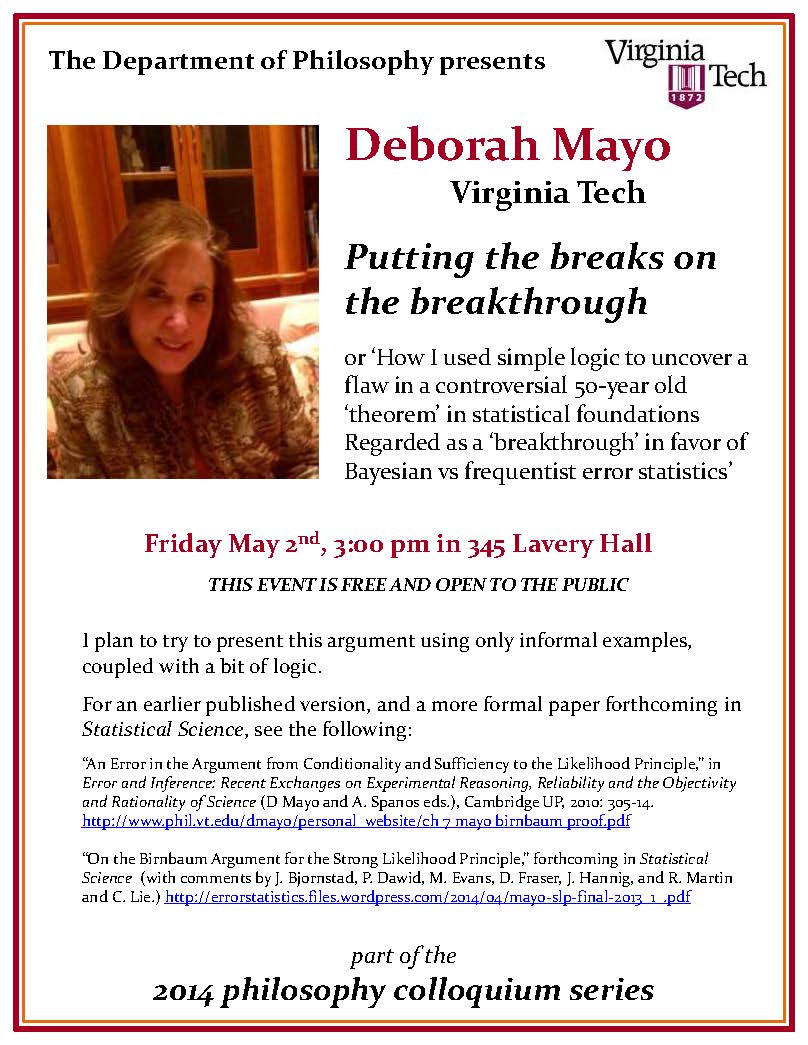
Friday, May 2, 2014, I will attempt to present my critical analysis of the Birnbaum argument for the (strong) Likelihood Principle, so as to be accessible to a general philosophy audience (flyer below). Can it be done? I don’t know yet, this is a first. It will consist of:

  • Example 1: Trying and Trying Again: Optional stopping
  • Example 2: Two instruments with different precisions
    [you shouldn’t get credit (or blame) for something you didn’t do]
  • The Breakthough: Birnbaumization
  • Imaginary dialogue with Allan Birnbaum

The full paper is here. My discussion takes several pieces a reader can explore further by searching this blog (e.g., under SLP, brakes e.g., here, Birnbaum, optional stopping). I will post slides afterwards.

Mayo poster

Categories: Announcement, Birnbaum Brakes, Statistics, strong likelihood principle | 23 Comments

Reliability and Reproducibility: Fraudulent p-values through multiple testing (and other biases): S. Stanley Young (Phil 6334: Day#13)

YoungPhoto2008

images-6S. Stanley Young, PhD
Assistant Director for Bioinformatics
National Institute of Statistical Sciences
Research Triangle Park, NC

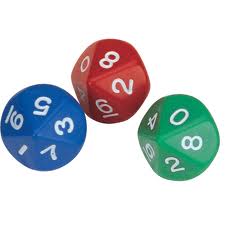
Here are Dr. Stanley Young’s slides from our April 25 seminar. They contain several tips for unearthing deception by fraudulent p-value reports. Since it’s Saturday night, you might wish to perform an experiment with three 10-sided dice*,recording the results of 100 rolls (3 at a time) on the form on slide 13. An entry, e.g., (0,1,3) becomes an imaginary p-value of .013 associated with the type of tumor, male-female, old-young. You report only hypotheses whose null is rejected at a “p-value” less than .05. Forward your results to me for publication in a peer-reviewed journal.

*Sets of 10-sided dice will be offered as a palindrome prize beginning in May.

Categories: Phil6334, science communication, spurious p values, Statistical fraudbusting, Statistics | Tags: | 12 Comments

Blog at WordPress.com.