Statistics

Stephen Senn: The pathetic P-value (Guest Post) [3]

S. Senn

S. Senn

Stephen Senn
Head of Competence Center for Methodology and Statistics (CCMS)
Luxembourg Institute of Health

The pathetic P-value* [3]

This is the way the story is now often told. RA Fisher is the villain. Scientists were virtuously treading the Bayesian path, when along came Fisher and gave them P-values, which they gladly accepted, because they could get ‘significance’ so much more easily. Nearly a century of corrupt science followed but now there are signs that there is a willingness to return to the path of virtue and having abandoned this horrible Fisherian complication:

We shall not cease from exploration
And the end of all our exploring
Will be to arrive where we started …

A condition of complete simplicity..

And all shall be well and
All manner of thing shall be well

TS Eliot, Little Gidding

Consider, for example, distinguished scientist David Colquhoun citing the excellent scientific journalist Robert Matthews as follows

“There is an element of truth in the conclusion of a perspicacious journalist:

‘The plain fact is that 70 years ago Ronald Fisher gave scientists a mathematical machine for turning baloney into breakthroughs, and flukes into funding. It is time to pull the plug. ‘

Robert Matthews Sunday Telegraph, 13 September 1998.” [1]

However, this is not a plain fact but just plain wrong. Even if P-values were the guilty ‘mathematical machine’ they are portrayed to be, it is not RA Fisher’s fault. Putting the historical record right helps one to understand the issues better. As I shall argue, at the heart of this is not a disagreement between Bayesian and frequentist approaches but between two Bayesian approaches: it is a conflict to do with the choice of prior distributions[2].

Fisher did not persuade scientists to calculate P-values rather than Bayesian posterior probabilities; he persuaded them that the probabilities that they were already calculating and interpreting as posterior probabilities relied for this interpretation on a doubtful assumption. He proposed to replace this interpretation with one that did not rely on the assumption. Continue reading

Categories: P-values, S. Senn, statistical tests, Statistics | 27 Comments

Beware of questionable front page articles warning you to beware of questionable front page articles (2)

RR

.

Such articles have continued apace since this blogpost from 2013. During that time, meta-research, replication studies, statistical forensics and fraudbusting have become popular academic fields in their own right. Since I regard the ‘programme’ (to use a Lakatosian term) as essentially a part of the philosophy and methodology of science, I’m all in favor of it—I employed the term “metastatistics” eons ago–but, as a philosopher, I claim there’s a pressing need for meta-meta-research, i.e., a conceptual, logical, and methodological scrutiny of presuppositions and gaps in meta-level work itself.  There was an issue I raised in the section “But what about the statistics?” below that hasn’t been addressed. I question the way size and power (from statistical hypothesis testing) are employed in a “diagnostics and screening” computation that underlies most “most findings are false” articles. (This is (2) in my new “Let PBP” series, and follows upon my last post, comments in burgandy are added, 12/5/15.)

In this time of government cut-backs and sequester, scientists are under increased pressure to dream up ever new strategies to publish attention-getting articles with eye-catching, but inadequately scrutinized, conjectures. Science writers are under similar pressures, and to this end they have found a way to deliver up at least one fire-breathing, front page article a month. How? By writing minor variations on an article about how in this time of government cut-backs and sequester, scientists are under increased pressure to dream up ever new strategies to publish attention-getting articles with eye-catching, but inadequately scrutinized, conjectures. (I’m prepared to admit that meta-research consciousness raising, like “self help books,” warrant frequent revisiting. Lessons are forgotten, and there are always new users of statistics.)

Thus every month or so we see retreads on why most scientific claims are unreliable, biased, wrong, and not even wrong. Maybe that’s the reason the authors of a recent article in The Economist (“Trouble at the Lab“) remain anonymous. (I realize that is their general policy.)  Continue reading

Categories: junk science, Let PBP, P-values, science-wise screening, Statistics | 23 Comments

Return to the Comedy Hour: P-values vs posterior probabilities (1)

Comedy Hour

Comedy Hour

Did you hear the one about the frequentist significance tester when he was shown the nonfrequentist nature of p-values?

JB [Jim Berger]: I just simulated a long series of tests on a pool of null hypotheses, and I found that among tests with p-values of .05, at least 22%—and typically over 50%—of the null hypotheses are true!(1)

Frequentist Significance Tester: Scratches head: But rejecting the null with a p-value of .05 ensures erroneous rejection no more than 5% of the time!

Raucous laughter ensues!

(Hah, hah,…. I feel I’m back in high school: “So funny, I forgot to laugh!)

The frequentist tester should retort:

Frequentist Significance Tester: But you assumed 50% of the null hypotheses are true, and  computed P(H0|x) (imagining P(H0)= .5)—and then assumed my p-value should agree with the number you get, if it is not to be misleading!

Yet, our significance tester is not heard from as they move on to the next joke…. Continue reading

Categories: Bayesian/frequentist, Comedy, PBP, significance tests, Statistics | 27 Comments

3 YEARS AGO (NOVEMBER 2012): MEMORY LANE

3 years ago...

3 years ago…

MONTHLY MEMORY LANE: 3 years ago: November 2012. I mark in red three posts that seem most apt for general background on key issues in this blog.[1]. Please check out others that didn’t make the “bright red cut”. If you’re interested in the Likelihood Principle, check “Blogging Birnbaum” and “Likelihood Links”. If you think P-values are hard to explain, see how the “Bad News Bears” struggle to decipher Bayesian probability. (Some of the posts allude to seminars I was giving at the London School of Economics 3 years ago.)

November 2012

[1] I exclude those reblogged fairly recently. Posts that are part of a “unit” or a group of “U-Phils” count as one. Monthly memory lanes began at the blog’s 3-year anniversary in Sept, 2014.

Categories: 3-year memory lane, Statistics | 1 Comment

Erich Lehmann: Neyman-Pearson & Fisher on P-values

IMG_1896

lone book on table

Today is Erich Lehmann’s birthday (20 November 1917 – 12 September 2009). Lehmann was Neyman’s first student at Berkeley (Ph.D 1942), and his framing of Neyman-Pearson (NP) methods has had an enormous influence on the way we typically view them.

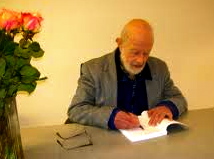
I got to know Erich in 1997, shortly after publication of EGEK (1996). One day, I received a bulging, six-page, handwritten letter from him in tiny, extremely neat scrawl (and many more after that).  He began by telling me that he was sitting in a very large room at an ASA (American Statistical Association) meeting where they were shutting down the conference book display (or maybe they were setting it up), and on a very long, wood table sat just one book, all alone, shiny red.  He said he wondered if it might be of interest to him!  So he walked up to it….  It turned out to be my Error and the Growth of Experimental Knowledge (1996, Chicago), which he reviewed soon after[0]. (What are the chances?) Some related posts on Lehmann’s letter are here and here.

One of Lehmann’s more philosophical papers is Lehmann (1993), “The Fisher, Neyman-Pearson Theories of Testing Hypotheses: One Theory or Two?” We haven’t discussed it before on this blog. Here are some excerpts (blue), and remarks (black)

Erich Lehmann 20 November 1917 – 12 September 2009

Erich Lehmann 20 November 1917 – 12 September 2009

…A distinction frequently made between the approaches of Fisher and Neyman-Pearson is that in the latter the test is carried out at a fixed level, whereas the principal outcome of the former is the statement of a p value that may or may not be followed by a pronouncement concerning significance of the result [p.1243].

The history of this distinction is curious. Throughout the 19th century, testing was carried out rather informally. It was roughly equivalent to calculating an (approximate) p value and rejecting the hypothesis if this value appeared to be sufficiently small. … Fisher, in his 1925 book and later, greatly reduced the needed tabulations by providing tables not of the distributions themselves but of selected quantiles. … These tables allow the calculation only of ranges for the p values; however, they are exactly suited for determining the critical values at which the statistic under consideration becomes significant at a given level. As Fisher wrote in explaining the use of his [chi square] table (1946, p. 80):

In preparing this table we have borne in mind that in practice we do not want to know the exact value of P for any observed [chi square], but, in the first place, whether or not the observed value is open to suspicion. If P is between .1 and .9, there is certainly no reason to suspect the hypothesis tested. If it is below .02, it is strongly indicated that the hypothesis fails to account for the whole of the facts. We shall not often be astray if we draw a conventional line at .05 and consider that higher values of [chi square] indicate a real discrepancy.

Similarly, he also wrote (1935, p. 13) that “it is usual and convenient for experimenters to take 5 percent as a standard level of significance, in the sense that they are prepared to ignore all results which fail to reach this standard .. .” …. Continue reading

Categories: Neyman, P-values, phil/history of stat, Statistics | Tags: , | 4 Comments

“What does it say about our national commitment to research integrity?”

images

.

There’s an important guest editorial by Keith Baggerly and C.K. Gunsalus in today’s issue of the Cancer Letter: Penalty Too Light” on the Duke U. (Potti/Nevins) cancer trial fraud*. Here are some excerpts.

publication date: Nov 13, 2015

Penalty Too Light

What does it say about our national commitment to research integrity that the Department of Health and Human Services’ Office of Research Integrity has concluded that a five-year ban on federal research funding for one individual researcher is a sufficient response to a case involving millions of taxpayer dollars, completely fabricated data, and hundreds to thousands of patients in invasive clinical trials?

This week, ORI released a notice of “final action” in the case of Anil Potti, M.D. The ORI found that Dr. Potti engaged in several instances of research misconduct and banned him from receiving federal funding for five years.

(See my previous post.)

The principles involved are important and the facts complicated. This was not just a matter of research integrity. This was also a case involving direct patient care and millions of dollars in federal and other funding. The duration and extent of deception were extreme. The case catalyzed an Institute of Medicine review of genomics in clinical trials and attracted national media attention.

If there are no further conclusions coming from ORI and if there are no other investigations under way—despite the importance of the issues involved and the five years that have elapsed since research misconduct investigation began, we do not know—a strong argument can be made that neither justice nor the research community have been served by this outcome. Continue reading

Categories: Anil Potti, fraud, science communication, Statistics | 3 Comments

Findings of the Office of Research Misconduct on the Duke U (Potti/Nevins) cancer trial fraud: No one is punished but the patients

imgres-2Findings of Research Misconduct
A Notice by the Health and Human Services Dept
on 11/09/2015
AGENCY: Office of the Secretary, HHS.
ACTION: Notice.

-----------------------------------------------------------------------

SUMMARY: Notice is hereby given that the Office of Research Integrity 
(ORI) has taken final action in the following case:
    Anil Potti, M.D., Duke University School of Medicine: Based on the 
reports of investigations conducted by Duke University School of 
Medicine (Duke) and additional analysis conducted by ORI in its 
oversight review, ORI found that Dr. Anil Potti, former Associate 
Professor of Medicine, Duke, engaged in research misconduct in research 
supported by National Heart, Lung, and Blood Institute (NHLBI), 
National Institutes of Health (NIH), grant R01 HL072208 and National 
Cancer Institute (NCI), NIH, grants R01 CA136530, R01 CA131049, K12 
CA100639, R01 CA106520, and U54 CA112952.
    ORI found that Respondent engaged in research misconduct by 
including false research data in the following published papers, 
submitted manuscript, grant application, and the research record as 
specified in 1-3 below. Specifically, ORI found that: Continue reading 
Categories: Anil Potti, reproducibility, Statistical fraudbusting, Statistics | 12 Comments

S. McKinney: On Efron’s “Frequentist Accuracy of Bayesian Estimates” (Guest Post)

SMWorkPhoto_IMG_2432

.

Steven McKinney, Ph.D.
Statistician
Molecular Oncology and Breast Cancer Program
British Columbia Cancer Research Centre


On Bradley Efron’s: “Frequentist Accuracy of Bayesian Estimates”

Bradley Efron has produced another fine set of results, yielding a valuable estimate of variability for a Bayesian estimate derived from a Markov Chain Monte Carlo algorithm, in his latest paper “Frequentist accuracy of Bayesian estimates” (J. R. Statist. Soc. B (2015) 77, Part 3, pp. 617–646). I give a general overview of Efron’s brilliance via his Introduction discussion (his words “in double quotes”).

“1. Introduction

The past two decades have witnessed a greatly increased use of Bayesian techniques in statistical applications. Objective Bayes methods, based on neutral or uniformative priors of the type pioneered by Jeffreys, dominate these applications, carried forward on a wave of popularity for Markov chain Monte Carlo (MCMC) algorithms. Good references include Ghosh (2011), Berger (2006) and Kass and Wasserman (1996).”

A nice concise summary, one that should bring joy to anyone interested in Bayesian methods after all the Bayesian-bashing of the middle 20th century. Efron himself has crafted many beautiful results in the Empirical Bayes arena. He has reviewed important differences between Bayesian and frequentist outcomes that point to some as-yet unsettled issues in statistical theory and philosophy such as his scales of evidence work. Continue reading

Categories: Bayesian/frequentist, objective Bayesians, Statistics | 44 Comments

WHIPPING BOYS AND WITCH HUNTERS (ii)

.

At least as apt today as 3 years ago…HAPPY HALLOWEEN! Memory Lane with new comments in blue

In an earlier post I alleged that frequentist hypotheses tests often serve as whipping boys, by which I meant “scapegoats”, for the well-known misuses, abuses, and flagrant misinterpretations of tests (both simple Fisherian significance tests and Neyman-Pearson tests, although in different ways)—as well as for what really boils down to a field’s weaknesses in modeling, theorizing, experimentation, and data collection.  Checking the history of this term however, there is a certain disanalogy with at least the original meaning of a “whipping boy,” namely, an innocent boy who was punished when a medieval prince misbehaved and was in need of discipline.  It was thought that seeing an innocent companion, often a friend, beaten for his own transgressions would supply an effective way to ensure the prince would not repeat the same mistake. But significance tests floggings, rather than a tool for a humbled self-improvement and commitment to avoiding flagrant rule violations, has tended instead to yield declarations that it is the rules that are invalid! The violators are excused as not being able to help it! The situation is more akin to that of witch hunting that in some places became an occupation in its own right.

Now some early literature, e.g., Morrison and Henkel’s Significance Test Controversy (1962), performed an important service over fifty years ago.  They alerted social scientists to the fallacies of significance tests: misidentifying a statistically significant difference with one of substantive importance, interpreting insignificant results as evidence for the null hypothesis—especially problematic with insensitive tests, and the like. Chastising social scientists for applying significance tests in slavish and unthinking ways, contributors call attention to a cluster of pitfalls and fallacies of testing. Continue reading

Categories: P-values, reforming the reformers, significance tests, Statistics | Tags: , , | Leave a comment

3 YEARS AGO (OCTOBER 2012): MEMORY LANE

3 years ago...
3 years ago…

MONTHLY MEMORY LANE: 3 years ago: October 2012. I mark in red three posts that seem most apt for general background on key issues in this blog.[1] Posts that are part of a “unit” or a group of “U-Phils” count as one, and there are two such groupings this month. The 10/18 “Query” gave rise to a large and useful discussion on de Finetti-style probability.

October 2012

  • (10/02)PhilStatLaw: Infections in the court
  • (10/05) Metablog: Rejected posts (blog within a blog)
  • (10/05) Deconstructing Gelman, Part 1: “A Bayesian wants everybody else to be a non-Bayesian.”
  • (10/07) Deconstructing Gelman, Part 2: Using prior information
  • (10/09) Last part (3) of the deconstruction: beauty and background knowledge
  • (10/12) U-Phils: Hennig and Aktunc on Gelman 2012
  • (10/13) Mayo Responds to U-Phils on Background Information
  • (10/15) New Kvetch: race-based academics in Fla
  • (10/17) RMM-8: New Mayo paper: “StatSci and PhilSci: part 2 (Shallow vs Deep Explorations)”
  • (10/18) Query (Understanding de Finetti style probability)–large and useful discussion

[1] excluding those reblogged fairly recently. Monthly memory lanes began at the blog’s 3-year anniversary in Sept, 2014.

Categories: 3-year memory lane, Statistics | 1 Comment

Statistical “reforms” without philosophy are blind (v update)

following-leader-off-cliff

.

Is it possible, today, to have a fair-minded engagement with debates over statistical foundations? I’m not sure, but I know it is becoming of pressing importance to try. Increasingly, people are getting serious about methodological reforms—some are quite welcome, others are quite radical. Too rarely do the reformers bring out the philosophical presuppositions of the criticisms and proposed improvements. Today’s (radical?) reform movements are typically launched from criticisms of statistical significance tests and P-values, so I focus on them. Regular readers know how often the P-value (that most unpopular girl in the class) has made her appearance on this blog. Here, I tried to quickly jot down some queries. (Look for later installments and links.) What are some key questions we need to ask to tell what’s true about today’s criticisms of P-values? 

I. To get at philosophical underpinnings, the single most import question is this:

(1) Do the debaters distinguish different views of the nature of statistical inference and the roles of probability in learning from data? Continue reading

Categories: Bayesian/frequentist, Error Statistics, P-values, significance tests, Statistics, strong likelihood principle | 193 Comments

“Frequentist Accuracy of Bayesian Estimates” (Efron Webinar announcement)

imgres

Brad Efron

The Royal Statistical Society sent me a letter announcing their latest Journal webinar next Wednesday 21 October:

…RSS Journal webinar on 21st October featuring Bradley Efron, Andrew Gelman and Peter Diggle. They will be in discussion about Bradley Efron’s recently published paper titled ‘Frequentist accuracy of Bayesian estimates’. The paper was published in June in the Journal of the Royal Statistical Society: Series B (Statistical Methodology), Vol 77 (3), 617-646.  It is free to access from October 7th to November 4th.

Webinar start time: 8 am in California (PDT); 11 am in New York (EDT); 4pm (UK time).

During the webinar, Bradley Efron will present his paper for about 30 minutes followed by a Q&A session with the audience. Andrew Gelman is joining us as discussant and the event will be chaired by our President, Peter Diggle. Participation in the Q&A session by anyone who dials in is warmly welcomed and actively encouraged.Participants can ask the author a question over the phone or simply issue a message using the web based teleconference system.  Questions can be emailed in advance and further information can be requested from journalwebinar@rss.org.uk.

More details about this journal webinar and how to join can be found in StatsLife and on the RSS website.  RSS Journal webinars are sponsored by Quintiles.

We’d be delighted if you were able to join us on the 21st and very grateful if you could let your colleagues and students know about the event.

I will definitely be tuning in!

Categories: Announcement, Statistics | 6 Comments

P-value madness: A puzzle about the latest test ban (or ‘don’t ask, don’t tell’)

images-1

.

Given the excited whispers about the upcoming meeting of the American Statistical Association Committee on P-Values and Statistical Significance, it’s an apt time to reblog my post on the “Don’t Ask Don’t Tell” policy that began the latest brouhaha!

A large number of people have sent me articles on the “test ban” of statistical hypotheses tests and confidence intervals at a journal called Basic and Applied Social Psychology (BASP)[i]. Enough. One person suggested that since it came so close to my recent satirical Task force post, that I either had advance knowledge or some kind of ESP. Oh please, no ESP required.None of this is the slightest bit surprising, and I’ve seen it before; I simply didn’t find it worth blogging about (but Saturday night is a perfect time to read/reread the (satirical) Task force post [ia]). Statistical tests are being banned, say the editors, because they purport to give probabilities of null hypotheses (really?) and do not, hence they are “invalid”.[ii] (Confidence intervals are thrown in the waste bin as well—also claimed “invalid”).“The state of the art remains uncertain” regarding inferential statistical procedures, say the editors.  I don’t know, maybe some good will come of all this.

Yet there’s a part of their proposal that brings up some interesting logical puzzles, and logical puzzles are my thing. In fact, I think there is a mistake the editors should remedy, lest authors be led into disingenuous stances, and strange tangles ensue. I refer to their rule that authors be allowed to submit papers whose conclusions are based on allegedly invalid methods so long as, once accepted, they remove any vestiges of them! Continue reading

Categories: P-values, pseudoscience, reforming the reformers, Statistics | 7 Comments

In defense of statistical recipes, but with enriched ingredients (scientist sees squirrel)

cropped-imgp587612

Scientist sees squirrel

Evolutionary ecologist, Stephen Heard (Scientist Sees Squirrel) linked to my blog yesterday. Heard’s post asks: “Why do we make statistics so hard for our students?” I recently blogged Barnard who declared “We need more complexity” in statistical education. I agree with both: after all, Barnard also called for stressing the overarching reasoning for given methods, and that’s in sync with Heard. Here are some excerpts from Heard’s (Oct 6, 2015) post. I follow with some remarks.

This bothers me, because we can’t do inference in science without statistics*. Why are students so unreceptive to something so important? In unguarded moments, I’ve blamed it on the students themselves for having decided, a priori and in a self-fulfilling prophecy, that statistics is math, and they can’t do math. I’ve blamed it on high-school math teachers for making math dull. I’ve blamed it on high-school guidance counselors for telling students that if they don’t like math, they should become biology majors. I’ve blamed it on parents for allowing their kids to dislike math. I’ve even blamed it on the boogie**. Continue reading

Categories: fallacy of rejection, frequentist/Bayesian, P-values, Statistics | 20 Comments

Will the Real Junk Science Please Stand Up?

Junk Science (as first coined).* Have you ever noticed in wranglings over evidence-based policy that it’s always one side that’s politicizing the evidence—the side whose policy one doesn’t like? The evidence on the near side, or your side, however, is solid science. Let’s call those who first coined the term “junk science” Group 1. For Group 1, junk science is bad science that is used to defend pro-regulatory stances, whereas sound science would identify errors in reports of potential risk. (Yes, this was the first popular use of “junk science”, to my knowledge.) For the challengers—let’s call them Group 2—junk science is bad science that is used to defend the anti-regulatory stance, whereas sound science would identify potential risks, advocate precautionary stances, and recognize errors where risk is denied.

Both groups agree that politicizing science is very, very bad—but it’s only the other group that does it!

A given print exposé exploring the distortions of fact on one side or the other routinely showers wild praise on their side’s—their science’s and their policy’s—objectivity, their adherence to the facts, just the facts. How impressed might we be with the text or the group that admitted to its own biases? Continue reading

Categories: 4 years ago!, junk science, Objectivity, Statistics | Tags: , , , , | 29 Comments

Oy Faye! What are the odds of not conflating simple conditional probability and likelihood with Bayesian success stories?

Unknown

Faye Flam

ONE YEAR AGO, the NYT “Science Times” (9/29/14) published Fay Flam’s article, first blogged here.

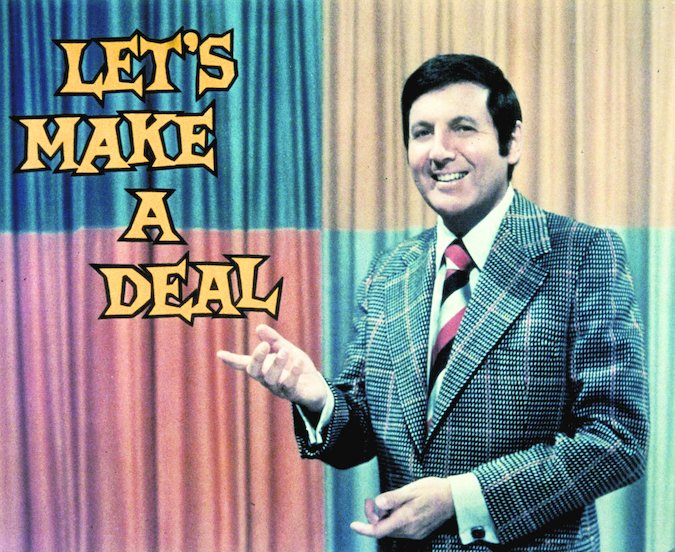
Congratulations to Faye Flam for finally getting her article published at the Science Times at the New York Times, “The odds, continually updated” after months of reworking and editing, interviewing and reinterviewing. I’m grateful that one remark from me remained. Seriously I am. A few comments: The Monty Hall example is simple probability not statistics, and finding that fisherman who floated on his boots at best used likelihoods. I might note, too, that critiquing that ultra-silly example about ovulation and voting–a study so bad they actually had to pull it at CNN due to reader complaints[i]–scarcely required more than noticing the researchers didn’t even know the women were ovulating[ii]. Experimental design is an old area of statistics developed by frequentists; on the other hand, these ovulation researchers really believe their theory (and can point to a huge literature)….. Anyway, I should stop kvetching and thank Faye and the NYT for doing the article at all[iii]. Here are some excerpts:

30BAYES-master675

silly pic that accompanied the NYT article

…….When people think of statistics, they may imagine lists of numbers — batting averages or life-insurance tables. But the current debate is about how scientists turn data into knowledge, evidence and predictions. Concern has been growing in recent years that some fields are not doing a very good job at this sort of inference. In 2012, for example, a team at the biotech company Amgen announced that they’d analyzed 53 cancer studies and found it could not replicate 47 of them.

Similar follow-up analyses have cast doubt on so many findings in fields such as neuroscience and social science that researchers talk about a “replication crisis”

Continue reading

Categories: Bayesian/frequentist, Statistics | Leave a comment

3 YEARS AGO (SEPTEMBER 2012): MEMORY LANE

3 years ago...
3 years ago…

MONTHLY MEMORY LANE: 3 years ago: September 2012. I mark in red three posts that seem most apt for general background on key issues in this blog.[1] (Once again it was tough to pick just 3; many of the ones I selected are continued in the following posts, so please check out subsequent dates of posts that interest you…)

September 2012

[1] excluding those reblogged fairly recently. Posts that are part of a “unit” or a group of “U-Phils” count as one. Monthly memory lanes began at the blog’s 3-year anniversary in Sept, 2014.

Categories: 3-year memory lane, Statistics | Leave a comment

G.A. Barnard: The “catch-all” factor: probability vs likelihood

Barnard

G.A.Barnard 23 sept. 1915- 30 July 2002

 From the “The Savage Forum” (pp 79-84 Savage, 1962)[i] 

 BARNARD:…Professor Savage, as I understand him, said earlier that a difference between likelihoods and probabilities was that probabilities would normalize because they integrate to one, whereas likelihoods will not. Now probabilities integrate to one only if all possibilities are taken into account. This requires in its application to the probability of hypotheses that we should be in a position to enumerate all possible hypotheses which might explain a given set of data. Now I think it is just not true that we ever can enumerate all possible hypotheses. … If this is so we ought to allow that in addition to the hypotheses that we really consider we should allow something that we had not thought of yet, and of course as soon as we do this we lose the normalizing factor of the probability, and from that point of view probability has no advantage over likelihood. This is my general point, that I think while I agree with a lot of the technical points, I would prefer that this is talked about in terms of likelihood rather than probability. I should like to ask what Professor Savage thinks about that, whether he thinks that the necessity to enumerate hypotheses exhaustively, is important.

SAVAGE: Surely, as you say, we cannot always enumerate hypotheses so completely as we like to think. The list can, however, always be completed by tacking on a catch-all ‘something else’. In principle, a person will have probabilities given ‘something else’ just as he has probabilities given other hypotheses. In practice, the probability of a specified datum given ‘something else’ is likely to be particularly vague­–an unpleasant reality. The probability of ‘something else’ is also meaningful of course, and usually, though perhaps poorly defined, it is definitely very small. Looking at things this way, I do not find probabilities unnormalizable, certainly not altogether unnormalizable. Continue reading

Categories: Barnard, highly probable vs highly probed, phil/history of stat, Statistics | 20 Comments

George Barnard: 100th birthday: “We need more complexity” (and coherence) in statistical education

barnard-1979-picture

G.A. Barnard: 23 September, 1915 – 30 July, 2002

The answer to the question of my last post is George Barnard, and today is his 100th birthday*. The paragraphs stem from a 1981 conference in honor of his 65th birthday, published in his 1985 monograph: “A Coherent View of Statistical Inference” (Statistics, Technical Report Series, University of Waterloo). Happy Birthday George!

[I]t seems to be useful for statisticians generally to engage in retrospection at this time, because there seems now to exist an opportunity for a convergence of view on the central core of our subject. Unless such an opportunity is taken there is a danger that the powerful central stream of development of our subject may break up into smaller and smaller rivulets which may run away and disappear into the sand.

I shall be concerned with the foundations of the subject. But in case it should be thought that this means I am not here strongly concerned with practical applications, let me say right away that confusion about the foundations of the subject is responsible, in my opinion, for much of the misuse of the statistics that one meets in fields of application such as medicine, psychology, sociology, economics, and so forth. It is also responsible for the lack of use of sound statistics in the more developed areas of science and engineering. While the foundations have an interest of their own, and can, in a limited way, serve as a basis for extending statistical methods to new problems, their study is primarily justified by the need to present a coherent view of the subject when teaching it to others. One of the points I shall try to make is, that we have created difficulties for ourselves by trying to oversimplify the subject for presentation to others. It would surely have been astonishing if all the complexities of such a subtle concept as probability in its application to scientific inference could be represented in terms of only three concepts––estimates, confidence intervals, and tests of hypotheses. Yet one would get the impression that this was possible from many textbooks purporting to expound the subject. We need more complexity; and this should win us greater recognition from scientists in developed areas, who already appreciate that inference is a complex business while at the same time it should deter those working in less developed areas from thinking that all they need is a suite of computer programs.

Continue reading

Categories: Barnard, phil/history of stat, Statistics | 9 Comments

Statistical rivulets: Who wrote this?

questionmark pink

.

[I]t seems to be useful for statisticians generally to engage in retrospection at this time, because there seems now to exist an opportunity for a convergence of view on the central core of our subject. Unless such an opportunity is taken there is a danger that the powerful central stream of development of our subject may break up into smaller and smaller rivulets which may run away and disappear into the sand.

I shall be concerned with the foundations of the subject. But in case it should be thought that this means I am not here strongly concerned with practical applications, let me say right away that confusion about the foundations of the subject is responsible, in my opinion, for much of the misuse of the statistics that one meets in fields of application such as medicine, psychology, sociology, economics, and so forth. It is also responsible for the lack of use of sound statistics in the more developed areas of science and engineering. While the foundations have an interest of their own, and can, in a limited way, serve as a basis for extending statistical methods to new problems, their study is primarily justified by the need to present a coherent view of the subject when teaching it to others. One of the points I shall try to make is, that we have created difficulties for ourselves by trying to oversimplify the subject for presentation to others. It would surely have been astonishing if all the complexities of such a subtle concept as probability in its application to scientific inference could be represented in terms of only three concepts––estimates, confidence intervals, and tests of hypotheses. Yet one would get the impression that this was possible from many textbooks purporting to expound the subject. We need more complexity; and this should win us greater recognition from scientists in developed areas, who already appreciate that inference is a complex business while at the same time it should deter those working in less developed areas from thinking that all they need is a suite of computer programs.

Who wrote this and when?

Categories: Error Statistics, Statistics | Leave a comment

Blog at WordPress.com.