Statistics

Popper on pseudoscience: a comment on Pigliucci (i), (ii) 9/18, (iii) 9/20

imgres

.

Jump to Part (ii) 9/18/15 and (iii) 9/20/15 updates

I heard a podcast the other day in which the philosopher of science, Massimo Pigliucci, claimed that Popper’s demarcation of science fails because it permits pseudosciences like astrology to count as scientific! Now Popper requires supplementing in many ways, but we can get far more mileage out of Popper’s demarcation than Pigliucci supposes.

Pigliucci has it that, according to Popper, mere logical falsifiability suffices for a theory to be scientific, and this prevents Popper from properly ousting astrology from the scientific pantheon. Not so. In fact, Popper’s central goal is to call our attention to theories that, despite being logically falsifiable, are rendered immune from falsification by means of ad hoc maneuvering, sneaky face-saving devices, “monster-barring” or “conventionalist stratagems”. Lacking space on Twitter (where the “Philosophy Bites” podcast was linked), I’m placing some quick comments here. (For other posts on Popper, please search this blog.) Excerpts from the classic two pages in Conjectures and Refutations (1962, pp. 36-7) will serve our purpose:

It is easy to obtain confirmations, or verifications, for nearly every theory–if we look for confirmations.

Popper

Popper

Confirmations should count only if they are the result of risky predictions; that is [if the theory or claim H is false] we should have expected an event which was incompatible with the theory [or claim]….

Every genuine test of a theory is an attempt to falsify it, or to refute it. Testability is falsifiability, but there are degrees of testability, some theories are more testable..

Confirming evidence should not count except when it is the result of a genuine test of the theory, and this means that it can be presented as a serious but unsuccessful attempt to falsify the theory. (I now speak of such cases as ‘corroborating evidence’).

Continue reading

Categories: Error Statistics, Popper, pseudoscience, Statistics | Tags: , | 7 Comments

(Part 2) Peircean Induction and the Error-Correcting Thesis

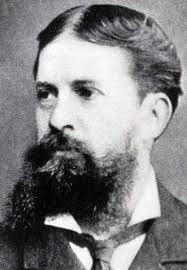
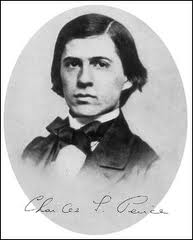
C. S. Peirce 9/10/1839 – 4/19/1914

C. S. Peirce
9/10/1839 – 4/19/1914

Continuation of “Peircean Induction and the Error-Correcting Thesis”

Deborah G. Mayo
Transactions of the Charles S. Peirce Society: A Quarterly Journal in American Philosophy, Volume 41, Number 2, 2005, pp. 299-319

Part 1 is here.

There are two other points of confusion in critical discussions of the SCT, that we may note here:

I. The SCT and the Requirements of Randomization and Predesignation

The concern with “the trustworthiness of the proceeding” for Peirce like the concern with error probabilities (e.g., significance levels) for error statisticians generally, is directly tied to their view that inductive method should closely link inferences to the methods of data collection as well as to how the hypothesis came to be formulated or chosen for testing.

This account of the rationale of induction is distinguished from others in that it has as its consequences two rules of inductive inference which are very frequently violated (1.95) namely, that the sample be (approximately) random and that the property being tested not be determined by the particular sample x— i.e., predesignation.

The picture of Peircean induction that one finds in critics of the SCT disregards these crucial requirements for induction: Neither enumerative induction nor H-D testing, as ordinarily conceived, requires such rules. Statistical significance testing, however, clearly does. Continue reading

Categories: Bayesian/frequentist, C.S. Peirce, Error Statistics, Statistics | Leave a comment

Peircean Induction and the Error-Correcting Thesis (Part I)

C. S. Peirce: 10 Sept, 1839-19 April, 1914

C. S. Peirce: 10 Sept, 1839-19 April, 1914

Yesterday was C.S. Peirce’s birthday. He’s one of my all time heroes. You should read him: he’s a treasure chest on essentially any topic. I only recently discovered a passage where Popper calls Peirce one of the greatest philosophical thinkers ever (I don’t have it handy). If Popper had taken a few more pages from Peirce, he would have seen how to solve many of the problems in his work on scientific inference, probability, and severe testing. I’ll blog the main sections of a (2005) paper of mine over the next few days. It’s written for a very general philosophical audience; the statistical parts are pretty informal. I first posted it in 2013Happy (slightly belated) Birthday Peirce.

Peircean Induction and the Error-Correcting Thesis
Deborah G. Mayo
Transactions of the Charles S. Peirce Society: A Quarterly Journal in American Philosophy, Volume 41, Number 2, 2005, pp. 299-319

Peirce’s philosophy of inductive inference in science is based on the idea that what permits us to make progress in science, what allows our knowledge to grow, is the fact that science uses methods that are self-correcting or error-correcting:

Induction is the experimental testing of a theory. The justification of it is that, although the conclusion at any stage of the investigation may be more or less erroneous, yet the further application of the same method must correct the error. (5.145)

Inductive methods—understood as methods of experimental testing—are justified to the extent that they are error-correcting methods. We may call this Peirce’s error-correcting or self-correcting thesis (SCT):

Self-Correcting Thesis SCT: methods for inductive inference in science are error correcting; the justification for inductive methods of experimental testing in science is that they are self-correcting. Continue reading

Categories: Bayesian/frequentist, C.S. Peirce, Error Statistics, Statistics | Leave a comment

All She Wrote (so far): Error Statistics Philosophy: 4 years on

metablog old fashion typewriter

D.G. Mayo with her  blogging typewriter

Error Statistics Philosophy: Blog Contents (4 years)
By: D. G. Mayo [i]

Dear Reader: It’s hard to believe I’ve been blogging for 4 whole years (as of Sept. 3, 2015)! A big celebration is taking place at the Elbar Room as I type this. (Remember the 1 year anniversary here? Remember that hideous blogspot? Oy!) Please peruse the offerings below, and take advantage of some of the super contributions and discussions by readers! I don’t know how much longer I’ll continue blogging; in the past 6 months I’ve mostly been focusing on completing my book, “How to Tell What’s True About Statistical Inference.” I plan to experiment with some new ideas and novel pursuits in the coming months. Stay tuned, and thanks for reading! Best Wishes, D. Mayo

September 2011

October 2011

November 2011

December 2011

Continue reading

Categories: blog contents, Metablog, Statistics | Leave a comment

The Paradox of Replication, and the vindication of the P-value (but she can go deeper) 9/2/15 update (ii)

images

The unpopular P-value is invited to dance.

  1. The Paradox of Replication

Critic 1: It’s much too easy to get small P-values.

Critic 2: We find it very difficult to get small P-values; only 36 of 100 psychology experiments were found to yield small P-values in the recent Open Science collaboration on replication (in psychology).

Is it easy or is it hard?

You might say, there’s no paradox, the problem is that the significance levels in the original studies are often due to cherry-picking, multiple testing, optional stopping and other biasing selection effects. The mechanism by which biasing selection effects blow up P-values is very well understood, and we can demonstrate exactly how it occurs. In short, many of the initially significant results merely report “nominal” P-values not “actual” ones, and there’s nothing inconsistent between the complaints of critic 1 and critic 2.

The resolution of the paradox attests to what many have long been saying: the problem is not with the statistical methods but with their abuse. Even the P-value, the most unpopular girl in the class, gets to show a little bit of what she’s capable of. She will give you a hard time when it comes to replicating nominally significant results, if they were largely due to biasing selection effects. That is just what is wanted; it is an asset that she feels the strain, and lets you know. It is statistical accounts that can’t pick up on biasing selection effects that should worry us (especially those that deny they are relevant). That is one of the most positive things to emerge from the recent, impressive, replication project in psychology. From an article in the Smithsonian magazine “Scientists Replicated 100 Psychology Studies, and Fewer Than Half Got the Same Results”:

The findings also offered some support for the oft-criticized statistical tool known as the P value, which measures whether a result is significant or due to chance. …

The project analysis showed that a low P value was fairly predictive of which psychology studies could be replicated. Twenty of the 32 original studies with a P value of less than 0.001 could be replicated, for example, while just 2 of the 11 papers with a value greater than 0.04 were successfully replicated. (Link is here.)

Continue reading

Categories: replication research, reproducibility, spurious p values, Statistics | 23 Comments

3 YEARS AGO (AUGUST 2012): MEMORY LANE

3 years ago...
3 years ago…

MONTHLY MEMORY LANE: 3 years ago: August 2012. I mark in red three posts that seem most apt for general background on key issues in this blog.[1] Posts that are part of a “unit” or a group of “U-Phils” count as one (there are 4 U-Phils on Wasserman this time). Monthly memory lanes began at the blog’s 3-year anniversary in Sept, 2014. We’re about to turn four.

August 2012

[1] excluding those reblogged fairly recently.

[2] Larry Wasserman’s paper was “Low Assumptions, High dimensions” in our special RIMM volume.

Categories: 3-year memory lane, Statistics | 1 Comment

How to avoid making mountains out of molehills, using power/severity

images

.

A classic fallacy of rejection is taking a statistically significant result as evidence of a discrepancy from a test (or null) hypothesis larger than is warranted. Standard tests do have resources to combat this fallacy, but you won’t see them in textbook formulations. It’s not new statistical method, but new (and correct) interpretations of existing methods, that are needed. One can begin with a companion to the rule in this recent post:

(1) If POW(T+,µ’) is low, then the statistically significant x is a good indication that µ > µ’.

To have the companion rule also in terms of power, let’s suppose that our result is just statistically significant at a level α. (As soon as the observed difference exceeds the cut-off the rule has to be modified). 

Rule (1) was stated in relation to a statistically significant result x (at level α) from a one-sided test T+ of the mean of a Normal distribution with n iid samples, and (for simplicity) known σ:   H0: µ ≤  0 against H1: µ >  0. Here’s the companion:

(2) If POW(T+,µ’) is high, then an α statistically significant x is a good indication that µ < µ’.
(The higher the POW(T+,µ’) is, the better the indication  that µ < µ’.)

That is, if the test’s power to detect alternative µ’ is high, then the statistically significant x is a good indication (or good evidence) that the discrepancy from null is not as large as µ’ (i.e., there’s good evidence that  µ < µ’).

An account of severe testing based on error statistics is always keen to indicate inferences that are not warranted by the data, as well as those that are. Not only might we wish to indicate which discrepancies are poorly warranted, we can give upper bounds to warranted discrepancies by using (2).

POWER: POW(T+,µ’) = POW(Test T+ rejects H0;µ’) = Pr(M > M*; µ’), where M is the sample mean and M* is the cut-off for rejection. (Since it’s continuous, it doesn’t matter if we write > or ≥.)[i]

EXAMPLE. Let σ = 10, n = 100, so (σ/√n) = 1.  Test T+ rejects Hat the .025 level if  M  > 1.96(1).

Find the power against µ = 2.3. To find Pr(M > 1.96; 2.3), get the standard Normal z = (1.96 – 2.3)/1 = -.84. Find the area to the right of -.84 on the standard Normal curve. It is .8. So POW(T+,2.8) = .8.

For simplicity in what follows, let the cut-off, M*, be 2. Let the observed mean M0 just reach the cut-off  2.

The power against alternatives between the null and the cut-off M* will range from α to .5. Power exceeds .5 only once we consider alternatives greater than M*, for these yield negative z values.  Power fact, POW(M* + 1(σ/√n)) = .84.

That is, adding one (σ/ √n) unit to the cut-off M* takes us to an alternative against which the test has power = .84. So, POW(T+, µ = 3) = .84. See this post.

 By (2), the (just) significant result x is decent evidence that µ< 3, because if µ ≥ 3, we’d have observed a more statistically significant result, with probability .84.  The upper .84 confidence limit is 3. The significant result is much better evidence that µ< 4,  the upper .975 confidence limit is 4 (approx.), etc. 

Reporting (2) is typically of importance in cases of highly sensitive tests, but I think it should always accompany a rejection to avoid making mountains out of molehills. (However, in my view, (2) should be custom-tailored to the outcome not the cut-off.) In the case of statistical insignificance, (2) is essentially ordinary power analysis. (In that case, the interest may be to avoid making molehills out of mountains.) Power analysis, applied to insignificant results, is especially of interest with low-powered tests. For example, failing to find a statistically significant increase in some risk may at most rule out (substantively) large risk increases. It might not allow ruling out risks of concern. Naturally, what counts as a risk of concern is a context-dependent consideration, often stipulated in regulatory statutes.

NOTES ON HOWLERS: When researchers set a high power to detect µ’, it is not an indication they regard µ’ as plausible, likely, expected, probable or the like. Yet we often hear people say “if statistical testers set .8 power to detect µ = 2.3 (in test T+), they must regard µ = 2.3 as probable in some sense”. No, in no sense. Another thing you might hear is, “when H0: µ ≤  0 is rejected (at the .025 level), it’s reasonable to infer µ > 2.3″, or “testers are comfortable inferring µ ≥ 2.3”.  No, they are not comfortable, nor should you be. Such an inference would be wrong with probability ~.8. Given M = 2 (or 1.96), you need to subtract to get a lower confidence bound, if the confidence level is not to exceed .5 . For example, µ > .5 is a lower confidence bound at confidence level .93.

Rule (2) also provides a way to distinguish values within a 1-α confidence interval (instead of choosing a given confidence level and then reporting CIs in the dichotomous manner that is now typical).

At present, power analysis is only used to interpret negative results–and there it is often called “retrospective power”, which is a fine term, but it’s often defined as what I call shpower). Again, confidence bounds could be, but they are not now, used to this end [iii].

Severity replaces M* in (2) with the actual result, be it significant or insignificant. 

Looking at power means looking at the best case (just reaching a significance level) or the worst case (just missing it). This is way too coarse; we need to custom tailor results using the observed data. That’s what severity does, but for this post, I wanted to just illuminate the logic.[ii]

One more thing:  

Applying (1) and (2) requires the error probabilities to be actual (approximately correct): Strictly speaking, rules (1) and (2) have a conjunct in their antecedents [iv]: “given the test assumptions are sufficiently well met”. If background knowledge leads you to deny (1) or (2), it indicates you’re denying the reported error probabilities are the actual ones. There’s evidence the test fails an “audit”. That, at any rate, is what I would argue.

————

[i] To state power in terms of P-values: POW(µ’) = Pr(P < p*; µ’) where P < p* corresponds to rejecting the null hypothesis at the given level.

[ii] It must be kept in mind that statistical testing inferences are going to be in the form of µ > µ’ =µ+ δ,  or µ ≤ µ’ =µ+ δ  or the like. They are not to point values! (Not even to the point µ =M0.) Take a look at the alternative H1: µ >  0. It is not a point value. Although we are going beyond inferring the existence of some discrepancy, we still retain inferences in the form of inequalities. 

[iii] That is, upper confidence bounds are too readily viewed as “plausible” bounds, and as values for which the data provide positive evidence. In fact, as soon as you get to an upper bound at confidence levels of around .6, .7, .8, etc. you actually have evidence µ’ < CI-upper. See this post.

[iv] The “antecedent” of a conditional refers to the statement between the “if” and the “then”.

OTHER RELEVANT POSTS ON POWER

Categories: fallacy of rejection, power, Statistics | 20 Comments

Statistics, the Spooky Science

.

I was reading this interview Of Erich Lehmann yesterday: “A Conversation with Erich L. Lehmann”

Lehmann: …I read over and over again that hypothesis testing is dead as a door nail, that nobody does hypothesis testing. I talk to Julie and she says that in the behaviorial sciences, hypothesis testing is what they do the most. All my statistical life, I have been interested in three different types of things: testing, point estimation, and confidence-interval estimation. There is not a year that somebody doesn’t tell me that two of them are total nonsense and only the third one makes sense. But which one they pick changes from year to year. [Laughs] (p.151)…..

DeGroot: …It has always amazed me about statistics that we argue among ourselves about which of our basic techniques are of practical value. It seems to me that in other areas one can argue about whether a methodology is going to prove to be useful, but people would agree whether a technique is useful in practice. But in statistics, as you say, some people believe that confidence intervals are the only procedures that make any sense on practical grounds, and others think they have no practical value whatsoever. I find it kind of spooky to be in such a field.

Lehmann: After a while you get used to it. If somebody attacks one of these, I just know that next year I’m going to get one who will be on the other side. (pp.151-2)

Emphasis is mine.

I’m reminded of this post.

Morris H. DeGroot, Statistical Science, 1986, Vol. 1, No.2, 243-258


Categories: phil/history of stat, Statistics | 1 Comment

A. Spanos: Egon Pearson’s Neglected Contributions to Statistics

egon pearson swim

11 August 1895 – 12 June 1980

Today is Egon Pearson’s birthday. I reblog a post by my colleague Aris Spanos from (8/18/12): “Egon Pearson’s Neglected Contributions to Statistics.”  Happy Birthday Egon Pearson!

    Egon Pearson (11 August 1895 – 12 June 1980), is widely known today for his contribution in recasting of Fisher’s significance testing into the Neyman-Pearson (1933) theory of hypothesis testing. Occasionally, he is also credited with contributions in promoting statistical methods in industry and in the history of modern statistics; see Bartlett (1981). What is rarely mentioned is Egon’s early pioneering work on:

(i) specification: the need to state explicitly the inductive premises of one’s inferences,

(ii) robustness: evaluating the ‘sensitivity’ of inferential procedures to departures from the Normality assumption, as well as

(iii) Mis-Specification (M-S) testing: probing for potential departures from the Normality  assumption.

Arguably, modern frequentist inference began with the development of various finite sample inference procedures, initially by William Gosset (1908) [of the Student’s t fame] and then Fisher (1915, 1921, 1922a-b). These inference procedures revolved around a particular statistical model, known today as the simple Normal model: Continue reading

Categories: phil/history of stat, Statistics, Testing Assumptions | Tags: , , , | 1 Comment

Statistical Theater of the Absurd: “Stat on a Hot Tin Roof”

metablog old fashion typewriter

.

Memory lane: Did you ever consider how some of the colorful exchanges among better-known names in statistical foundations could be the basis for high literary drama in the form of one-act plays (even if appreciated by only 3-7 people in the world)? (Think of the expressionist exchange between Bohr and Heisenberg in Michael Frayn’s play Copenhagen, except here there would be no attempt at all to popularize—only published quotes and closely remembered conversations would be included, with no attempt to create a “story line”.)  Somehow I didn’t think so. But rereading some of Savage’s high-flown praise of Birnbaum’s “breakthrough” argument (for the Likelihood Principle) today, I was swept into a “(statistical) theater of the absurd” mindset.(Update Aug, 2015 [ii])

The first one came to me in autumn 2008 while I was giving a series of seminars on philosophy of statistics at the LSE. Modeled on a disappointing (to me) performance of The Woman in Black, “A Funny Thing Happened at the [1959] Savage Forum” relates Savage’s horror at George Barnard’s announcement of having rejected the Likelihood Principle!

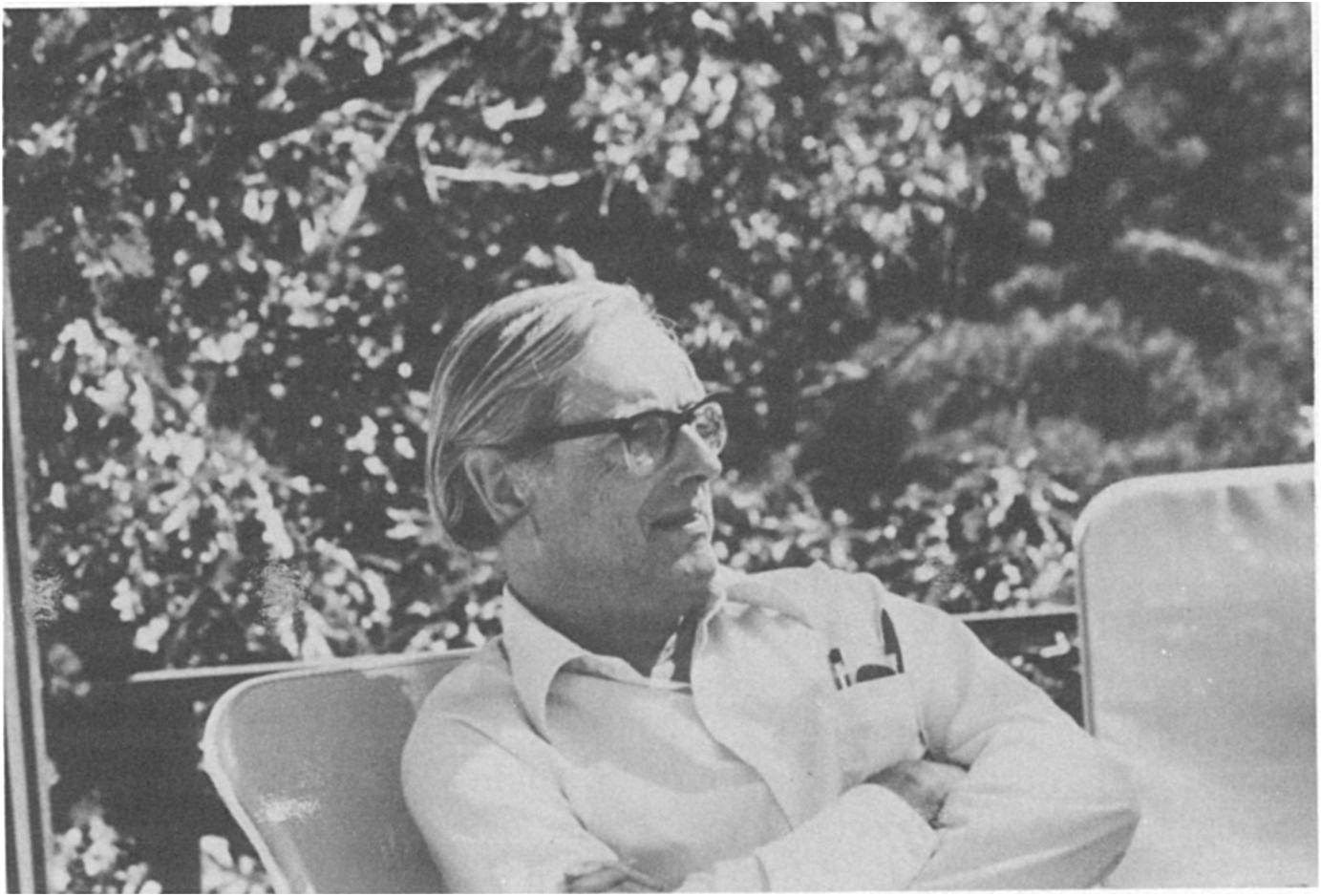
Barnard-1979-picture

.

The current piece also features George Barnard. It recalls our first meeting in London in 1986. I’d sent him a draft of my paper on E.S. Pearson’s statistical philosophy, “Why Pearson Rejected the Neyman-Pearson Theory of Statistics” (later adapted as chapter 11 of EGEK) to see whether I’d gotten Pearson right. Since Tuesday (Aug 11) is Pearson’s birthday, I’m reblogging this. Barnard had traveled quite a ways, from Colchester, I think. It was June and hot, and we were up on some kind of a semi-enclosed rooftop. Barnard was sitting across from me looking rather bemused.

The curtain opens with Barnard and Mayo on the roof, lit by a spot mid-stage. He’s drinking (hot) tea; she, a Diet Coke. The dialogue (is what I recall from the time[i]):

 Barnard: I read your paper. I think it is quite good.  Did you know that it was I who told Fisher that Neyman-Pearson statistics had turned his significance tests into little more than acceptance procedures? Continue reading

Categories: Barnard, phil/history of stat, Statistics | Tags: , , , , | Leave a comment

Neyman: Distinguishing tests of statistical hypotheses and tests of significance might have been a lapse of someone’s pen

Neyman April 16, 1894 – August 5, 1981

April 16, 1894 – August 5, 1981

Tests of Statistical Hypotheses and Their Use in Studies of Natural Phenomena” by Jerzy Neyman

ABSTRACT. Contrary to ideas suggested by the title of the conference at which the present paper was presented, the author is not aware of a conceptual difference between a “test of a statistical hypothesis” and a “test of significance” and uses these terms interchangeably. A study of any serious substantive problem involves a sequence of incidents at which one is forced to pause and consider what to do next. In an effort to reduce the frequency of misdirected activities one uses statistical tests. The procedure is illustrated on two examples: (i) Le Cam’s (and associates’) study of immunotherapy of cancer and (ii) a socio-economic experiment relating to low-income homeownership problems.

Neyman died on August 5, 1981. Here’s an unusual paper of his, “Tests of Statistical Hypotheses and Their Use in Studies of Natural Phenomena.” I have been reading a fair amount by Neyman this summer in writing about the origins of his philosophy, and have found further corroboration of the position that the behavioristic view attributed to him, while not entirely without substance*, is largely a fable that has been steadily built up and accepted as gospel. This has justified ignoring Neyman-Pearson statistics (as resting solely on long-run performance and irrelevant to scientific inference) and turning to crude variations of significance tests, that Fisher wouldn’t have countenanced for a moment (so-called NHSTs), lacking alternatives, incapable of learning from negative results, and permitting all sorts of P-value abuses–notably going from a small p-value to claiming evidence for a substantive research hypothesis. The upshot is to reject all of frequentist statistics, even though P-values are a teeny tiny part. *This represents a change in my perception of Neyman’s philosophy since EGEK (Mayo 1996).  I still say that that for our uses of method, it doesn’t matter what anybody thought, that “it’s the methods, stupid!” Anyway, I recommend, in this very short paper, the general comments and the example on home ownership. Here are two snippets: Continue reading

Categories: Error Statistics, Neyman, Statistics | Tags: | 19 Comments

Telling What’s True About Power, if practicing within the error-statistical tribe

two_pink_clouds

.

Suppose you are reading about a statistically significant result x (just at level α) from a one-sided test T+ of the mean of a Normal distribution with n iid samples, and (for simplicity) known σ:   H0: µ ≤  0 against H1: µ >  0. 

I have heard some people say [0]:

A. If the test’s power to detect alternative µ’ is very low, then the statistically significant x is poor evidence of a discrepancy (from the null) corresponding to µ’.  (i.e., there’s poor evidence that  µ > µ’ ).◊See point on language in notes.

They will generally also hold that if POW(µ’) is reasonably high (at least .5), then the inference to µ > µ’ is warranted, or at least not problematic.

I have heard other people say:

B. If the test’s power to detect alternative µ’ is very low, then the statistically significant x is good evidence of a discrepancy (from the null) corresponding to µ’ (i.e., there’s good evidence that  µ > µ’).

They will generally also hold that if POW(µ’) is reasonably high (at least .5), then the inference to µ > µ’ is unwarranted.

Which is correct, from the perspective of the (error statistical) philosophy, within which power and associated tests are defined?

Allow the test assumptions are adequately met. I have often said on this blog, and I repeat, the most misunderstood and abused (or unused) concept from frequentist statistics is that of a test’s power to reject the null hypothesis under the assumption alternative µ’ is true: POW(µ’). I deliberately write it in this correct manner because it is faulty to speak of the power of a test without specifying against what alternative it’s to be computed. It will also get you into trouble if you define power as in the first premise in a recent post: Continue reading

Categories: confidence intervals and tests, power, Statistics | 36 Comments

Stephen Senn: Randomization, ratios and rationality: rescuing the randomized clinical trial from its critics

.

Stephen Senn
Head of Competence Center for Methodology and Statistics (CCMS)
Luxembourg Institute of Health

This post first appeared here. An issue sometimes raised about randomized clinical trials is the problem of indefinitely many confounders. This, for example is what John Worrall has to say:

Even if there is only a small probability that an individual factor is unbalanced, given that there are indefinitely many possible confounding factors, then it would seem to follow that the probability that there is some factor on which the two groups are unbalanced (when remember randomly constructed) might for all anyone knows be high. (Worrall J. What evidence is evidence-based medicine? Philosophy of Science 2002; 69: S316-S330: see p. S324 )

It seems to me, however, that this overlooks four matters. The first is that it is not indefinitely many variables we are interested in but only one, albeit one we can’t measure perfectly. This variable can be called ‘outcome’. We wish to see to what extent the difference observed in outcome between groups is compatible with the idea that chance alone explains it. The indefinitely many covariates can help us predict outcome but they are only of interest to the extent that they do so. However, although we can’t measure the difference we would have seen in outcome between groups in the absence of treatment, we can measure how much it varies within groups (where the variation cannot be due to differences between treatments). Thus we can say a great deal about random variation to the extent that group membership is indeed random. Continue reading

Categories: RCTs, S. Senn, Statistics | Tags: , | 6 Comments

3 YEARS AGO (JULY 2012): MEMORY LANE

3 years ago...
3 years ago…

MONTHLY MEMORY LANE: 3 years ago: July 2012. I mark in red three posts that seem most apt for general background on key issues in this blog.[1]  This new feature, appearing the last week of each month, began at the blog’s 3-year anniversary in Sept, 2014. (Once again it was tough to pick just 3; please check out others which might interest you, e.g., Schachtman on StatLaw, the machine learning conference on simplicity, the story of Lindley and particle physics, Glymour and so on.)

July 2012

[1] excluding those recently reblogged. Posts that are part of a “unit” or a group of “U-Phils” count as one.

Categories: 3-year memory lane, Statistics | Leave a comment

“Statistical Significance” According to the U.S. Dept. of Health and Human Services (ii)

Mayo elbow

Mayo, frustrated

Someone linked this to me on Twitter. I thought it was a home blog at first. Surely the U.S. Dept of Health and Human Services can give a better definition than this.

U.S. Department of Health and Human Services
Effective Health Care Program
Glossary of Terms

We know that many of the concepts used on this site can be difficult to understand. For that reason, we have provided you with a glossary to help you make sense of the terms used in Comparative Effectiveness Research. Every word that is defined in this glossary should appear highlighted throughout the Web site…..

Statistical Significance

Definition: A mathematical technique to measure whether the results of a study are likely to be true. Statistical significance is calculated as the probability that an effect observed in a research study is occurring because of chance. Statistical significance is usually expressed as a P-value. The smaller the P-value, the less likely it is that the results are due to chance (and more likely that the results are true). Researchers generally believe the results are probably true if the statistical significance is a P-value less than 0.05 (p<.05).

Example: For example, results from a research study indicated that people who had dementia with agitation had a slightly lower rate of blood pressure problems when they took Drug A compared to when they took Drug B. In the study analysis, these results were not considered to be statistically significant because p=0.2. The probability that the results were due to chance was high enough to conclude that the two drugs probably did not differ in causing blood pressure problems.

You can find it here.  First of all, one should never use “likelihood” and “probability” in what is to be a clarification of formal terms, as these mean very different things in statistics.Some of the claims given actually aren’t so bad if “likely” takes its statistical meaning, but are all wet if construed as mathematical probability. Continue reading

Categories: P-values, Statistics | 69 Comments

Spot the power howler: α = ß?

Spot the fallacy!

  1. METABLOG QUERYThe power of a test is the probability of correctly rejecting the null hypothesis. Write it as 1 – β.
  2. So, the probability of incorrectly rejecting the null hypothesis is β.
  3. But the probability of incorrectly rejecting the null is α (the type 1 error probability).

So α = β.

I’ve actually seen this, and variants on it [i].

[1] Although they didn’t go so far as to reach the final, shocking, deduction.


Categories: Error Statistics, power, Statistics | 12 Comments

Larry Laudan: “When the ‘Not-Guilty’ Falsely Pass for Innocent”, the Frequency of False Acquittals (guest post)

Larry Laudan

Larry Laudan

Professor Larry Laudan
Lecturer in Law and Philosophy
University of Texas at Austin

“When the ‘Not-Guilty’ Falsely Pass for Innocent” by Larry Laudan

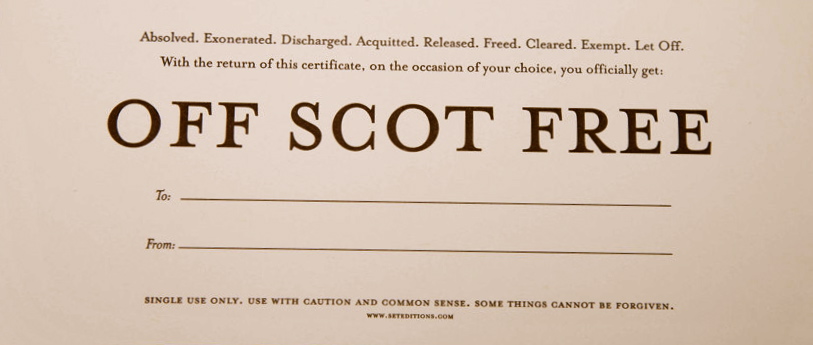
While it is a belief deeply ingrained in the legal community (and among the public) that false negatives are much more common than false positives (a 10:1 ratio being the preferred guess), empirical studies of that question are very few and far between. While false convictions have been carefully investigated in more than two dozen studies, there are virtually no well-designed studies of the frequency of false acquittals. The disinterest in the latter question is dramatically borne out by looking at discussions among intellectuals of the two sorts of errors. (A search of Google Books identifies some 6.3k discussions of the former and only 144 treatments of the latter in the period from 1800 to now.) I’m persuaded that it is time we brought false negatives out of the shadows, not least because each such mistake carries significant potential harms, typically inflicted by falsely-acquitted recidivists who are on the streets instead of in prison.scot-free-1_1024x1024


In criminal law, false negatives occur under two circumstances: when a guilty defendant is acquitted at trial and when an arrested, guilty defendant has the charges against him dropped or dismissed by the judge or prosecutor. Almost no one tries to measure how often either type of false negative occurs. That is partly understandable, given the fact that the legal system prohibits a judicial investigation into the correctness of an acquittal at trial; the double jeopardy principle guarantees that such acquittals are fixed in stone. Thanks in no small part to the general societal indifference to false negatives, there have been virtually no efforts to design empirical studies that would yield reliable figures on false acquittals. That means that my efforts here to estimate how often they occur must depend on a plethora of indirect indicators. With a bit of ingenuity, it is possible to find data that provide strong clues as to approximately how often a truly guilty defendant is acquitted at trial and in the pre-trial process. The resulting inferences are not precise and I will try to explain why as we go along. As we look at various data sources not initially designed to measure false negatives, we will see that they nonetheless provide salient information about when and why false acquittals occur, thereby enabling us to make an approximate estimate of their frequency.

My discussion of how to estimate the frequency of false negatives will fall into two parts, reflecting the stark differences between the sources of errors in pleas and the sources of error in trials. (All the data to be cited here deal entirely with cases of crimes of violence.) Continue reading

Categories: evidence-based policy, false negatives, PhilStatLaw, Statistics | Tags: | 9 Comments

Stapel’s Fix for Science? Admit the story you want to tell and how you “fixed” the statistics to support it!

images-16

.

Stapel’s “fix” for science is to admit it’s all “fixed!”

That recent case of the guy suspected of using faked data for a study on how to promote support for gay marriage in a (retracted) paper, Michael LaCour, is directing a bit of limelight on our star fraudster Diederik Stapel (50+ retractions).

The Chronicle of Higher Education just published an article by Tom Bartlett:Can a Longtime Fraud Help Fix Science? You can read his full interview of Stapel here. A snippet:

You write that “every psychologist has a toolbox of statistical and methodological procedures for those days when the numbers don’t turn out quite right.” Do you think every psychologist uses that toolbox? In other words, is everyone at least a little bit dirty?

Stapel: In essence, yes. The universe doesn’t give answers. There are no data matrices out there. We have to select from reality, and we have to interpret. There’s always dirt, and there’s always selection, and there’s always interpretation. That doesn’t mean it’s all untruthful. We’re dirty because we can only live with models of reality rather than reality itself. It doesn’t mean it’s all a bag of tricks and lies. But that’s where the inconvenience starts. Continue reading

Categories: junk science, Statistics | 11 Comments

Can You change Your Bayesian prior? (ii)

images-1

.

This is one of the questions high on the “To Do” list I’ve been keeping for this blog.  The question grew out of discussions of “updating and downdating” in relation to papers by Stephen Senn (2011) and Andrew Gelman (2011) in Rationality, Markets, and Morals.[i]

“As an exercise in mathematics [computing a posterior based on the client’s prior probabilities] is not superior to showing the client the data, eliciting a posterior distribution and then calculating the prior distribution; as an exercise in inference Bayesian updating does not appear to have greater claims than ‘downdating’.” (Senn, 2011, p. 59)

“If you could really express your uncertainty as a prior distribution, then you could just as well observe data and directly write your subjective posterior distribution, and there would be no need for statistical analysis at all.” (Gelman, 2011, p. 77)

But if uncertainty is not expressible as a prior, then a major lynchpin for Bayesian updating seems questionable. If you can go from the posterior to the prior, on the other hand, perhaps it can also lead you to come back and change it.

Is it legitimate to change one’s prior based on the data?

I don’t mean update it, but reject the one you had and replace it with another. My question may yield different answers depending on the particular Bayesian view. I am prepared to restrict the entire question of changing priors to Bayesian “probabilisms”, meaning the inference takes the form of updating priors to yield posteriors, or to report a comparative Bayes factor. Interpretations can vary. In many Bayesian accounts the prior probability distribution is a way of introducing prior beliefs into the analysis (as with subjective Bayesians) or, conversely, to avoid introducing prior beliefs (as with reference or conventional priors). Empirical Bayesians employ frequentist priors based on similar studies or well established theory. There are many other variants.

images

.

S. SENN: According to Senn, one test of whether an approach is Bayesian is that while Continue reading

Categories: Bayesian/frequentist, Gelman, S. Senn, Statistics | 111 Comments

What Would Replication Research Under an Error Statistical Philosophy Be?

f1ce127a4cfe95c4f645f0cc98f04fcaAround a year ago on this blog I wrote:

“There are some ironic twists in the way psychology is dealing with its replication crisis that may well threaten even the most sincere efforts to put the field on firmer scientific footing”

That’s philosopher’s talk for “I see a rich source of problems that cry out for ministrations of philosophers of science and of statistics”. Yesterday, I began my talk at the Society for Philosophy and Psychology workshop on “Replication in the Sciences”with examples of two main philosophical tasks: to clarify concepts, and reveal inconsistencies, tensions and ironies surrounding methodological “discomforts” in scientific practice.

Example of a conceptual clarification 

Editors of a journal, Basic and Applied Social Psychology, announced they are banning statistical hypothesis testing because it is “invalid” (A puzzle about the latest “test ban”)

It’s invalid because it does not supply “the probability of the null hypothesis, given the finding” (the posterior probability of H0) (2015 Trafimow and Marks)

  • Since the methodology of testing explicitly rejects the mode of inference they don’t supply, it would be incorrect to claim the methods were invalid.
  • Simple conceptual job that philosophers are good at

(I don’t know if the group of eminent statisticians assigned to react to the “test ban” will bring up this point. I don’t think it includes any philosophers.)

____________________________________________________________________________________


Example of revealing inconsistencies and tensions 

Critic: It’s too easy to satisfy standard significance thresholds

You: Why do replicationists find it so hard to achieve significance thresholds?

Critic: Obviously the initial studies were guilty of p-hacking, cherry-picking, significance seeking, QRPs

You: So, the replication researchers want methods that pick up on and block these biasing selection effects.

Critic: Actually the “reforms” recommend methods where selection effects and data dredging make no difference.

________________________________________________________________

Whether this can be resolved or not is separate.

  • We are constantly hearing of how the “reward structure” leads to taking advantage of researcher flexibility
  • As philosophers, we can at least show how to hold their feet to the fire, and warn of the perils of accounts that bury the finagling

The philosopher is the curmudgeon (takes chutzpah!)

I also think it’s crucial for philosophers of science and statistics to show how to improve on and solve problems of methodology in scientific practice.

My slides are below; share comments.

Categories: Error Statistics, reproducibility, Statistics | 18 Comments

Blog at WordPress.com.