
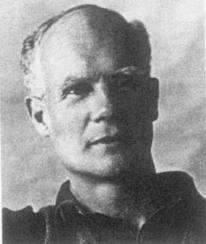
11 August 1895 – 12 June 1980
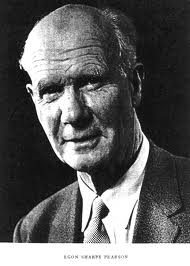
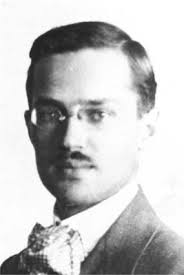
Continuing with my Egon Pearson posts in honor of his birthday, I reblog a post by Aris Spanos: “Egon Pearson’s Neglected Contributions to Statistics“.
Egon Pearson (11 August 1895 – 12 June 1980), is widely known today for his contribution in recasting of Fisher’s significance testing into the Neyman-Pearson (1933) theory of hypothesis testing. Occasionally, he is also credited with contributions in promoting statistical methods in industry and in the history of modern statistics; see Bartlett (1981). What is rarely mentioned is Egon’s early pioneering work on:
(i) specification: the need to state explicitly the inductive premises of one’s inferences,
(ii) robustness: evaluating the ‘sensitivity’ of inferential procedures to departures from the Normality assumption, as well as
(iii) Mis-Specification (M-S) testing: probing for potential departures from the Normality assumption.
Arguably, modern frequentist inference began with the development of various finite sample inference procedures, initially by William Gosset (1908) [of the Student’s t fame] and then Fisher (1915, 1921, 1922a-b). These inference procedures revolved around a particular statistical model, known today as the simple Normal model: Continue reading












 Error Statistics Philosophy