Statistics

More on deconstructing Larry Wasserman (Aris Spanos)

This follows up on yesterday’s deconstruction:


 Aris Spanos (2012)[i] – Comments on: L. Wasserman “Low Assumptions, High Dimensions (2011)*

I’m happy to play devil’s advocate in commenting on Larry’s very interesting and provocative (in a good way) paper on ‘how recent developments in statistical modeling and inference have [a] changed the intended scope of data analysis, and [b] raised new foundational issues that rendered the ‘older’ foundational problems more or less irrelevant’.

The new intended scope, ‘low assumptions, high dimensions’, is delimited by three characteristics:

“1. The number of parameters is larger than the number of data points.

2. Data can be numbers, images, text, video, manifolds, geometric objects, etc.

3. The model is always wrong. We use models, and they lead to useful insights but the parameters in the model are not meaningful.” (p. 1)

In the discussion that follows I focus almost exclusively on the ‘low assumptions’ component of the new paradigm. The discussion by David F. Hendry (2011), “Empirical Economic Model Discovery and Theory Evaluation,” RMM, 2: 115-145,  is particularly relevant to some of the issues raised by the ‘high dimensions’ component in a way that complements the discussion that follows.

My immediate reaction to the demarcation based on 1-3 is that the new intended scope, although interesting in itself, excludes the overwhelming majority of scientific fields where restriction 3 seems unduly limiting. In my own field of economics the substantive information comes primarily in the form of substantively specified mechanisms (structural models), accompanied with theory-restricted and substantively meaningful parameters.

In addition, I consider the assertion “the model is always wrong” an unhelpful truism when ‘wrong’ is used in the sense that “the model is not an exact picture of the ‘reality’ it aims to capture”. Worse, if ‘wrong’ refers to ‘the data in question could not have been generated by the assumed model’, then any inference based on such a model will be dubious at best! Continue reading

Categories: Philosophy of Statistics, Spanos, Statistics, U-Phil, Wasserman | Tags: , , , , | 5 Comments

Deconstructing Larry Wasserman

 Greek dancing lady gold SavoyLarry Wasserman (“Normal Deviate”) has announced he will stop blogging (for now at least). That means we’re losing one of the wisest blog-voices on issues relevant to statistical foundations (among many other areas in statistics). Whether this lures him back or reaffirms his decision to stay away, I thought I’d reblog my (2012) “deconstruction” of him (in relation to a paper linked below)[i]

Deconstructing Larry Wasserman [i] by D. Mayo

The temptation is strong, but I shall refrain from using the whole post to deconstruct Al Franken’s 2003 quip about media bias (from Lies and Lying Liars Who Tell Them: A Fair and Balanced Look at the Right), with which Larry Wasserman begins his paper “Low Assumptions, High Dimensions” (2011) in his contribution to Rationality, Markets and Morals (RMM) Special Topic: Statistical Science and Philosophy of Science:

Wasserman: There is a joke about media bias from the comedian Al Franken:
‘To make the argument that the media has a left- or right-wing, or a liberal or a conservative bias, is like asking if the problem with Al-Qaeda is: do they use too much oil in their hummus?’

According to Wasserman, “a similar comment could be applied to the usual debates in the foundations of statistical inference.”

Although it’s not altogether clear what Wasserman means by his analogy with comedian (now senator) Franken, it’s clear enough what Franken meant if we follow up the quip with the next sentence in his text (which Wasserman omits): “The problem with al Qaeda is that they’re trying to kill us!” (p. 1). The rest of Franken’s opening chapter is not about al Qaeda but about bias in media. Conservatives, he says, decry what they claim is a liberal bias in mainstream media. Franken rejects their claim.

The mainstream media does not have a liberal bias. And for all their other biases . . . , the mainstream media . . . at least try to be fair. …There is, however, a right-wing media. . . . They are biased. And they have an agenda…The members of the right-wing media are not interested in conveying the truth… . They are an indispensable component of the right-wing machine that has taken over our country… .   We have to be vigilant.  And we have to be more than vigilant.  We have to fight back… . Let’s call them what they are: liars. Lying, lying, liars. (Franken, pp. 3-4)

When I read this in 2004 (when Bush was in office), I couldn’t have agreed more. How things change*. Now, of course, any argument that swerves from the politically correct is by definition unsound, irrelevant, and/ or biased. [ii](December 2016 update: This just shows how things get topsy-turvy every 5-8 years. Now we have extremes on both sides.)

But what does this have to do with Bayesian-frequentist foundations? What is Wasserman, deep down, really trying to tell us by way of this analogy (if only subliminally)? Such are my ponderings—and thus this deconstruction.  (I will invite your “U-Phils” at the end[a].) I will allude to passages from my contribution to  RMM (2011) (in red).

A.What Is the Foundational Issue?

Wasserman: To me, the most pressing foundational question is: how do we reconcile the two most powerful needs in modern statistics: the need to make methods assumption free and the need to make methods work in high dimensions… . The Bayes-Frequentist debate is not irrelevant but it is not as central as it once was. (p. 201)

One may wonder why he calls this a foundational issue, as opposed to, say, a technical one. I will assume he means what he says and attempt to extract his meaning by looking through a foundational lens. Continue reading

Categories: Philosophy of Statistics, Statistics, U-Phil | Tags: , , , | 10 Comments

“Bad Arguments” (a book by Ali Almossawi)

I received a new book today as a present[i]: “(An illustrated book of) Bad Arguments” (Ali Almossawi 2013) [ii]. I wish I’d had it for the critical thinking class I just completed! Here’s the illustration it gives for “hasty generalization”.

hasty 001

The author allows it to be accessed here, I just discovered.

But it’s not just a clever book of cartoons: it does a better job than most texts in its conception of bad inductive arguments. Recall my post, “A critical Look at Critical Thinking”–prior to the start of my class–in which I explained why critical thinking is actually a sophisticated affair that philosophers have never fully sorted out. (We may teach it before “baby (symbolic) logic”, but it’s really very grown-up.) I gave my recommendation there as to where probability ought to enter in understanding bad (inductive) arguments, and Almossawi’s conception is in sync with mine[iii]. The inductive qualification is on the mode of inferring, rather than on the conclusion (or inferential claim H) itself*. The difference might seem subtle, but I swear it’s at the heart of many contemporary controversies about statistical inference, and the most serious among them.

[i] From Aris Spanos—thanks Aris.

[ii] Ali Almossawi, whom I never heard of before, has masters degrees in engineering/CS from MIT and CMU, and is a data visualization designer. The illustrator is: Alejandro Giraldo
[iii] I haven’t read all of it, but I doubt I’ll find any howlers.

*About the mode of inferring: What’s its capability to have avoided (alerted us to) the ways it would be wrong to infer H (from the data).


Categories: critical thinking, Statistics | 1 Comment

U-Phil: Deconstructions [of J. Berger]: Irony & Bad Faith 3

Memory Lane: 2 years ago:
My efficient Errorstat Blogpeople1 have put forward the following 3 reader-contributed interpretive efforts2 as a result of the “deconstruction” exercise from December 11, (mine, from the earlier blog, is at the end) of what I consider:

“….an especially intriguing remark by Jim Berger that I think bears upon the current mindset (Jim is aware of my efforts):

Too often I see people pretending to be subjectivists, and then using “weakly informative” priors that the objective Bayesian community knows are terrible and will give ridiculous answers; subjectivism is then being used as a shield to hide ignorance. . . . In my own more provocative moments, I claim that the only true subjectivists are the objective Bayesians, because they refuse to use subjectivism as a shield against criticism of sloppy pseudo-Bayesian practice. (Berger 2006, 463)” (From blogpost, Dec. 11, 2011)
_________________________________________________
Andrew Gelman:

The statistics literature is big enough that I assume there really is some bad stuff out there that Berger is reacting to, but I think that when he’s talking about weakly informative priors, Berger is not referring to the work in this area that I like, as I think of weakly informative priors as specifically being designed to give answers that are _not_ “ridiculous.”

Keeping things unridiculous is what regularization’s all about, and one challenge of regularization (as compared to pure subjective priors) is that the answer to the question, What is a good regularizing prior?, will depend on the likelihood.  There’s a lot of interesting theory and practice relating to weakly informative priors for regularization, a lot out there that goes beyond the idea of noninformativity.

To put it another way:  We all know that there’s no such thing as a purely noninformative prior:  any model conveys some information.  But, more and more, I’m coming across applied problems where I wouldn’t want to be noninformative even if I could, problems where some weak prior information regularizes my inferences and keeps them sane and under control. Continue reading

Categories: Gelman, Irony and Bad Faith, J. Berger, Statistics, U-Phil | Tags: , , , | 3 Comments

A. Spanos lecture on “Frequentist Hypothesis Testing”

may-4-8-aris-spanos-e2809contology-methodology-in-statistical-modelinge2809d

Aris Spanos

I attended a lecture by Aris Spanos to his graduate econometrics class here at Va Tech last week[i]. This course, which Spanos teaches every fall, gives a superb illumination of the disparate pieces involved in statistical inference and modeling, and affords clear foundations for how they are linked together. His slides follow the intro section. Some examples with severity assessments are also included.

Frequentist Hypothesis Testing: A Coherent Approach

Aris Spanos

1    Inherent difficulties in learning statistical testing

Statistical testing is arguably  the  most  important, but  also the  most difficult  and  confusing chapter of statistical inference  for several  reasons, including  the following.

(i) The need to introduce numerous new notions, concepts and procedures before one can paint —  even in broad brushes —  a coherent picture  of hypothesis  testing.

(ii) The current textbook discussion of statistical testing is both highly confusing and confused.  There  are several sources of confusion.

  • (a) Testing is conceptually one of the most sophisticated sub-fields of any scientific discipline.
  • (b) Inadequate knowledge by textbook writers who often do not have  the  technical  skills to read  and  understand the  original  sources, and  have to rely on second hand  accounts  of previous  textbook writers that are  often  misleading  or just  outright erroneous.   In most  of these  textbooks hypothesis  testing  is poorly  explained  as  an  idiot’s guide to combining off-the-shelf formulae with statistical tables like the Normal, the Student’s t, the chi-square,  etc., where the underlying  statistical  model that gives rise to the testing procedure  is hidden  in the background.
  • (c)  The  misleading  portrayal of Neyman-Pearson testing  as essentially  decision-theoretic in nature, when in fact the latter has much greater  affinity with the Bayesian rather than the frequentist inference.
  • (d)  A deliberate attempt to distort and  cannibalize  frequentist testing by certain  Bayesian drumbeaters who revel in (unfairly)  maligning frequentist inference in their  attempts to motivate their  preferred view on statistical inference.

(iii) The  discussion of frequentist testing  is rather incomplete  in so far as it has been beleaguered by serious foundational problems since the 1930s. As a result, different applied fields have generated their own secondary  literatures attempting to address  these  problems,  but  often making  things  much  worse!  Indeed,  in some fields like psychology  it has reached the stage where one has to correct the ‘corrections’ of those chastising  the initial  correctors!

In an attempt to alleviate  problem  (i),  the discussion  that follows uses a sketchy historical  development of frequentist testing.  To ameliorate problem (ii), the discussion includes ‘red flag’ pointers (¥) designed to highlight important points that shed light on certain  erroneous  in- terpretations or misleading arguments.  The discussion will pay special attention to (iii), addressing  some of the key foundational problems.

[i] It is based on Ch. 14 of Spanos (1999) Probability Theory and Statistical Inference. Cambridge[ii].

[ii] You can win a free copy of this 700+ page text by creating a simple palindrome! https://errorstatistics.com/palindrome/march-contest/

Categories: Bayesian/frequentist, Error Statistics, Severity, significance tests, Statistics | Tags: | 36 Comments

Surprising Facts about Surprising Facts

Mayo mirror

double-counting

A paper of mine on “double-counting” and novel evidence just came out: “Some surprising facts about (the problem of) surprising facts” in Studies in History and Philosophy of Science (2013), http://dx.doi.org/10.1016/j.shpsa.2013.10.005

ABSTRACT: A common intuition about evidence is that if data x have been used to construct a hypothesis H, then x should not be used again in support of H. It is no surprise that x fits H, if H was deliberately constructed to accord with x. The question of when and why we should avoid such ‘‘double-counting’’ continues to be debated in philosophy and statistics. It arises as a prohibition against data mining, hunting for significance, tuning on the signal, and ad hoc hypotheses, and as a preference for predesignated hypotheses and ‘‘surprising’’ predictions. I have argued that it is the severity or probativeness of the test—or lack of it—that should determine whether a double-use of data is admissible. I examine a number of surprising ambiguities and unexpected facts that continue to bedevil this debate.

Categories: double-counting, Error Statistics, philosophy of science, Statistics | 36 Comments

Blog Contents for Oct and Nov 2013*

2208388671_0d8bc38714

2 tough months in exile

October 2013

  • (10/3) Will the Real Junk Science Please Stand Up? (critical thinking)
  • (10/5) Was Janina Hosiasson pulling Harold Jeffreys’ leg?
  • (10/9) Bad statistics: crime or free speech (II)? Harkonen update: Phil Stat / Law /Stock
  • (10/12) Sir David Cox: a comment on the post, “Was Hosiasson pulling Jeffreys’ leg?”
  • (10/19) Blog Contents: September 2013
  • (10/19) Bayesian Confirmation Philosophy and the Tacking Paradox (iv)*
  • (10/25) Bayesian confirmation theory: example from last post…
  • (10/26) Comedy hour at the Bayesian (epistemology) retreat: highly probable vs highly probed (vs what ?)
  • (10/31) WHIPPING BOYS AND WITCH HUNTERS

November 2013

  • (11/02) Oxford Gaol: Statistical Bogeymen
  • (11/04) Forthcoming paper on the strong likelihood principle
  • (11/09) Null Effects and Replication
  • (11/09) Beware of questionable front page articles warning you to beware of questionable front page articles (iii)
  • (11/13) T. Kepler: “Trouble with ‘Trouble at the Lab’?” (guest post)
  • (11/16) PhilStock: No-pain bull
  • (11/16) S. Stanley Young: More Trouble with ‘Trouble in the Lab’ (Guest post)
  • (11/18) Lucien Le Cam: “The Bayesians hold the Magic”
  • (11/20) Erich Lehmann: Statistician and Poet
  • (11/23) Probability that it is a statistical fluke [i]
  • (11/27) “The probability that it be a statistical fluke” [iia]
  • (11/30) Saturday night comedy from a Bayesian diary (rejected post, see link)

*compiled by N. Jinn & J. Miller

Categories: blog contents, Statistics | Leave a comment

Stephen Senn: Dawid’s Selection Paradox (guest post)

Stephen SennStephen Senn
Head, Methodology and Statistics Group,
Competence Center for Methodology and Statistics (CCMS),
Luxembourg

“Dawid’s Selection Paradox”

You can protest, of course, that Dawid’s Selection Paradox is no such thing but then those who believe in the inexorable triumph of logic will deny that anything is a paradox. In a challenging paper published nearly 20 years ago (Dawid 1994), Philip Dawid drew attention to a ‘paradox’ of Bayesian inference. To describe it, I can do no better than to cite the abstract of the paper, which is available from Project Euclid, here: http://projecteuclid.org/DPubS/Repository/1.0/Disseminate?

 When the inference to be made is selected after looking at the data, the classical statistical approach demands — as seems intuitively sensible — that allowance be made for the bias thus introduced. From a Bayesian viewpoint, however, no such adjustment is required, even when the Bayesian inference closely mimics the unadjusted classical one. In this paper we examine more closely this seeming inadequacy of the Bayesian approach. In particular, it is argued that conjugate priors for multivariate problems typically embody an unreasonable determinism property, at variance with the above intuition.

I consider this to be an important paper not only for Bayesians but also for frequentists, yet it has only been cited 14 times as of 15 November 2013 according to Google Scholar. In fact I wrote a paper about it in the American Statistician a few years back (Senn 2008) and have also referred to it in a previous blogpost (12 May 2012). That I think it is important and neglected is excuse enough to write about it again.

Philip Dawid is not responsible for my interpretation of his paradox but the way that I understand it can be explained by considering what it means to have a prior distribution. First, as a reminder, if you are going to be 100% Bayesian, which is to say that all of what you will do by way of inference will be to turn a prior into a posterior distribution using the likelihood and the operation of Bayes theorem, then your prior distribution has to satisfy two conditions. First, it must be what you would use to bet now (that is to say at the moment it is established) and second no amount of subsequent data will change your prior qua prior. It will, of course, be updated by Bayes theorem to form a posterior distribution once further data are obtained but that is another matter. The relevant time here is your observation time not the time when the data were collected, so that data that were available in principle but only came to your attention after you established your prior distribution count as further data.

Now suppose that you are going to make an inference about a population mean, θ, using a random sample from the population and choose the standard conjugate prior distribution. Then in that case you will use a Normal distribution with known (to you) parameters μ and σ2. If σ2 is large compared to the random variation you might expect for the means in your sample, then the prior distribution is fairly uninformative and if it is small then fairly informative but being uninformative is not in itself a virtue. Being not informative enough runs the risk that your prior distribution is not one you might wish to use to bet now and being too informative that your prior distribution is one you might be tempted to change given further information. In either of these two cases your prior distribution will be wrong. Thus the task is to be neither too informative nor not informative enough. Continue reading

Categories: Bayesian/frequentist, selection effects, Statistics, Stephen Senn | 69 Comments

“The probability that it be a statistical fluke” [iia]

imagesMy rationale for the last post is really just to highlight such passages as:

“Particle physicists have agreed, by convention, not to view an observed phenomenon as a discovery until the probability that it be a statistical fluke be below 1 in a million, a requirement that seems insanely draconian at first glance.” (Strassler)….

Even before the dust had settled regarding the discovery of a Standard Model-like Higgs particle, the nature and rationale of the 5-sigma discovery criterion began to be challenged. But my interest now is not in the fact that the 5-sigma discovery criterion is a convention, nor with the choice of 5. It is the understanding of “the probability that it be a statistical fluke” that interests me, because if we can get this right, I think we can understand a kind of equivocation that leads many to suppose that significance tests are being misinterpreted—even when they aren’t! So given that I’m stuck, unmoving, on this bus outside of London for 2+ hours (because of a car accident)—and the internet works—I’ll try to scratch out my point (expect errors, we’re moving now). Here’s another passage…

“Even when the probability of a particular statistical fluke, of a particular type, in a particular experiment seems to be very small indeed, we must remain cautious. …Is it really unlikely that someone, somewhere, will hit the jackpot, and see in their data an amazing statistical fluke that seems so impossible that it convincingly appears to be a new phenomenon?”

A very sketchy nutshell of the Higgs statistics: There is a general model of the detector, and within that model researchers define a “global signal strength” parameter “such that H0: μ = 0 corresponds to the background only hypothesis and μ = 1 corresponds to the Standard Model (SM) Higgs boson signal in addition to the background” (quote from an ATLAS report). The statistical test may be framed as a one-sided test; the test statistic records differences in the positive direction, in standard deviation or sigma units. The interest is not in the point against point hypotheses, but in finding discrepancies from H0 in the direction of the alternative, and then estimating their values.  The improbability of the 5-sigma excess alludes to the sampling Continue reading

Categories: Error Statistics, P-values, statistical tests, Statistics | 66 Comments

Erich Lehmann: Statistician and Poet

Erich Lehmann 20 November 1917 – 12 September 2009

Erich Lehmann                       20 November 1917 –              12 September 2009

Today is Erich Lehmann’s birthday. The last time I saw him was at the Second Lehmann conference in 2004, at which I organized a session on philosophical foundations of statistics (including David Freedman and D.R. Cox).

I got to know Lehmann, Neyman’s first student, in 1997.  One day, I received a bulging, six-page, handwritten letter from him in tiny, extremely neat scrawl (and many more after that).  He told me he was sitting in a very large room at an ASA meeting where they were shutting down the conference book display (or maybe they were setting it up), and on a very long, dark table sat just one book, all alone, shiny red.  He said he wondered if it might be of interest to him!  So he walked up to it….  It turned out to be my Error and the Growth of Experimental Knowledge (1996, Chicago), which he reviewed soon after. Some related posts on Lehmann’s letter are here and here.

That same year I remember having a last-minute phone call with Erich to ask how best to respond to a “funny Bayesian example” raised by Colin Howson. It is essentially the case of Mary’s positive result for a disease, where Mary is selected randomly from a population where the disease is very rare. See for example here. (It’s just like the case of our high school student Isaac). His recommendations were extremely illuminating, and with them he sent me a poem he’d written (which you can read in my published response here*). Aside from being a leading statistician, Erich had a (serious) literary bent.

Juliet Shafer, Erich Lehmann, D. Mayo

Juliet Shafer, Erich Lehmann, D. Mayo

The picture on the right was taken in 2003 (by A. Spanos).

Mayo, D. G (1997a), “Response to Howson and Laudan,” Philosophy of Science 64: 323-333.

(Selected) Books

  • Testing Statistical Hypotheses, 1959
  • Basic Concepts of Probability and Statistics, 1964, co-author J. L. Hodges
  • Elements of Finite Probability, 1965, co-author J. L. Hodges
  • Lehmann, Erich L.; With the special assistance of H. J. M. D’Abrera (2006). Nonparametrics: Statistical methods based on ranks (Reprinting of 1988 revision of 1975 Holden-Day ed.). New York: Springer. pp. xvi+463. ISBN 978-0-387-35212-1. MR 2279708.
  • Theory of Point Estimation, 1983
  • Elements of Large-Sample Theory (1988). New York: Springer Verlag.
  • Reminiscences of a Statistician, 2007, ISBN 978-0-387-71596-4
  • Fisher, Neyman, and the Creation of Classical Statistics, 2011, ISBN 978-1-4419-9499-8 [published posthumously]

Articles (3 of very many)

Categories: philosophy of science, Statistics | Tags: , | Leave a comment

S. Stanley Young: More Trouble with ‘Trouble in the Lab’ (Guest post)

 Stanley Young’s guest post arose in connection with Kepler’s Nov. 13, and my November 9 post,and associated comments.

YoungPhoto2008S. Stanley Young, PhD Assistant Director for Bioinformatics National Institute of Statistical Sciences Research Triangle Park, NC

Much is made by some of the experimental biologists that their art is oh so sophisticated that mere mortals do not have a chance [to successfully replicate]. Bunk. Agriculture replicates all the time. That is why food is so cheap. The world is growing much more on fewer acres now than it did 10 years ago. Materials science is doing remarkable things using mixtures of materials. Take a look at just about any sports equipment. These two areas and many more use statistical methods: design of experiments, randomization, blind reading of results, etc. and these methods replicate, quite well, thank you. Read about Edwards Deming. Experimental biology experiments are typically run by small teams in what is in effect a cottage industry. Herr professor is usually not in the lab. He/she is busy writing grants. A “hands” guy is in the lab. A computer guy does the numbers. No one is checking other workers’ work. It is a cottage industry to produce papers.

There is a famous failure to replicate that appeared in Science.  A pair of non-estrogens was reported to have a strong estrogenic effect. Six labs wrote into Science saying the could not replicate the effect. I think the back story is as follows. The hands guy tested a very large number of pairs of chemicals. The most extreme pair looked unusual. Lab boss said, write it up. Every assay has some variability, so they reported extreme variability as real. Failure to replicate in six labs. Science editors says, what gives. Lab boss goes to hands guy and says run the pair again. No effect. Lab boss accuses hands guy of data fabrication. They did not replicate their own finding before rushing to publish. I asked the lab for the full data set, but they refused to provide the data.  The EPA is still chasing this will of the wisp, environmental estrogens. False positive results with compelling stories can live a very long time. See [i].

Begley and Ellis visited labs. They saw how the work was done. There are instances where something was tried over and over and when it worked “as expected”, it was a rap. Write the paper and move on. I listened to a young researcher say that she tried for 6 months to replicate results of a paper. Informal conversations with scientists support very poor replication.

One can say that the jury is out as there have been few serious attempts to systematically replicate. There is now starting systematic replication. I say less than 50% of experimental biology claims will replicate.

[i]Hormone Hysterics. Tulane University researchers published a 1996 study claiming that combinations of manmade chemicals (pesticides and PCBs) disrupted normal hormonal processes, causing everything from cancer to infertility to attention deficit disorder.

Media, regulators and environmentalists hailed the study as “astonishing.” Indeed it was as it turned out to be fraud, according to an October 2001 report by federal investigators. Though the study was retracted from publication, the law it spawned wasn’t and continues to be enforced by the EPA. Read more…

Categories: evidence-based policy, junk science, Statistical fraudbusting, Statistics | 20 Comments

T. Kepler: “Trouble with ‘Trouble at the Lab’?” (guest post)

Tom Kepler’s guest post arose in connection with my November 9 post & comments.

Kepler--Thomas-1x1.4

Professor Thomas B. Kepler
Department of Microbiology
Department of Mathematics & Statistics
Boston University School of Medicine

There is much to say about the article in the Economist, but the first is to note that it is far more balanced than its sensational headline promises. Promising to throw open the curtain on “Unreliable research” is mere click-bait for the science-averse readers who have recently found validation against their intellectual insecurities in the populist uprising against the shadowy world of the scientist. What with the East Anglia conspiracy, and so on, there’s no such thing as “too skeptical” when it comes to science.

There is some remarkably casual reporting in an article that purports to be concerned with mechanisms to assure that inaccuracies not be perpetuated.

For example, the authors cite the comment in Nature by Begley and Ellis and summarize it thus: …scientists at Amgen, an American drug company, tried to replicate 53 studies that they considered landmarks in the basic science of cancer, often co-operating closely with the original researchers to ensure that their experimental technique matched the one used first time round. Stan Young, in his comments to Mayo’s blog adds, “These claims can not be replicated – even by the original investigators! Stop and think of that.” But in fact the role of the original investigators is described as follows in Begley and Ellis: “…when findings could not be reproduced, an attempt was made to contact the original authors, discuss the discrepant findings, exchange reagents and repeat experiments under the authors’ direction, occasionally even in the laboratory of the original investigator.” (Emphasis added.) Now, please stop and think about what agenda is served by eliding the tempered language of the original.

Both the Begley and Ellis comment and the brief correspondence by Prinz et al. also cited in this discussion are about laboratories in commercial pharmaceutical companies failing to reproduce experimental results. While deciding how to interpret their findings, it would be prudent to bear in mind the insight from Harry Collins, the sociologist of science paraphrased in the Economist piece as indicating that “performing an experiment always entails what sociologists call “tacit knowledge”—craft skills and extemporisations that their possessors take for granted but can pass on only through example. Thus if a replication fails, it could be because the repeaters didn’t quite get these je-ne-sais-quoi bits of the protocol right.” Indeed, I would go further and conjecture that few experimental biologists would hold out hope that any one laboratory could claim the expertise necessary to reproduce the results of 53 ground-breaking papers in diverse specialties, even within cancer drug discovery. And to those who are unhappy that authors often do not comply with the journals’ clear policy of data-sharing, how do you suppose you would fare getting such data from the pharmaceutical companies that wrote these damning papers? Or the authors of the papers themselves? Nature had to clarify, writing two months after the publication of Begley and Ellis, “Nature, like most journals, requires authors of research papers to make their data available on request. In this less formal Comment, we chose not to enforce this requirement so that Begley and Ellis could abide by the legal agreements [they made with the original authors].” Continue reading

Categories: junk science, reforming the reformers, science communication, Statistics | 20 Comments

Beware of questionable front page articles warning you to beware of questionable front page articles (iii)

RRIn this time of government cut-backs and sequester, scientists are under increased pressure to dream up ever new strategies to publish attention-getting articles with eye-catching, but inadequately scrutinized, conjectures. Science writers are under similar pressures, and to this end they have found a way to deliver up at least one fire-breathing, front page article a month. How? By writing minor variations on an article about how in this time of government cut-backs and sequester, scientists are under increased pressure to dream up ever new strategies to publish attention-getting articles with eye-catching, but inadequately scrutinized, conjectures.

Thus every month or so we see retreads on why most scientific claims are unreliable,  biased, wrong, and not even wrong. Maybe that’s the reason the authors of a recent article in The Economist (“Trouble at the Lab“) remain anonymous.

I don’t disagree with everything in the article; on the contrary, part of their strategy is to include such well known problems as publication bias, problems with priming studies in psychology, and failed statistical assumptions. But the “big news”–the one that sells– is that “to an alarming degree” science (as a whole) is not reliable and not self-correcting. The main evidence is that there are the factory-like (thumbs up/thumbs down) applications of statistics in exploratory, hypotheses generating contexts wherein the goal is merely screening through reams of associations to identify a smaller batch for further analysis. But do even those screening efforts claim to have evidence of a genuine relationship when a given H is spewed out of their industrial complexes? Do they go straight to press after one statistically significant result?  I don’t know, maybe some do. What I do know is that the generalizations we are seeing in these “gotcha” articles are every bit as guilty of sensationalizing without substance as the bad statistics they purport to be impugning. As they see it, scientists, upon finding a single statistically significant result at the 5% level, declare an effect real or a hypothesis true, and then move on to the next hypothesis. No real follow-up scrutiny, no building on discrepancies found, no triangulation, self-scrutiny, etc.

But even so, the argument which purports to follow from “statistical logic”, but which actually is a jumble of “up-down” significance testing, Bayesian calculations, and computations that might at best hold for crude screening exercises (e.g., for associations between genes and disease) commits blunders about statistical power, and founders. Never mind that if the highest rate of true outputs was wanted, scientists would dabble in trivialities….Never mind that I guarantee if you asked Nobel prize winning scientists the rate of correct attempts vs blind alleys they went through before their Prize winning results, they’d say far more than 50% errors,  (Perrin and Brownian motion, Prusiner and Prions, experimental general relativity, just to name some I know.)

But what about the statistics? Continue reading

Categories: junk science, P-values, Statistics | 52 Comments

Null Effects and Replication

RR

Categories: Comedy, Error Statistics, Statistics | 3 Comments

Forthcoming paper on the strong likelihood principle

Picture 216 1mayo My paper, “On the Birnbaum Argument for the Strong Likelihood Principle” has been accepted by Statistical Science. The latest version is here. (It differs from all versions posted anywhere). If you spot any typos, please let me know (error@vt.edu). If you can’t open this link, please write to me and I’ll send it directly. As always, comments and queries are welcome.

I appreciate considerable feedback on SLP on this blog. Interested readers may search this blog for quite a lot of discussion of the SLP (e.g., here and here) including links to the central papers, “U-Phils” (commentaries) by others (e.g., herehere, and here), and amusing notes (e.g., Don’t Birnbaumize that experiment my friend, and Midnight with Birnbaum), and more…..

Abstract: An essential component of inference based on familiar frequentist notions, such as p-values, significance and confidence levels, is the relevant sampling distribution. This feature results in violations of a principle known as the strong likelihood principle (SLP), the focus of this paper. In particular, if outcomes x and y from experiments E1 and E2 (both with unknown parameter θ), have different probability models f1( . ), f2( . ), then even though f1(xθ) = cf2(yθ) for all θ, outcomes x and y may have different implications for an inference about θ. Although such violations stem from considering outcomes other than the one observed, we argue, this does not require us to consider experiments other than the one performed to produce the data. David Cox (1958) proposes the Weak Conditionality Principle (WCP) to justify restricting the space of relevant repetitions. The WCP says that once it is known which Ei produced the measurement, the assessment should be in terms of the properties of Ei. The surprising upshot of Allan Birnbaum’s (1962) argument is that the SLP appears to follow from applying the WCP in the case of mixtures, and so uncontroversial a principle as sufficiency (SP). But this would preclude the use of sampling distributions. The goal of this article is to provide a new clarification and critique of Birnbaum’s argument. Although his argument purports that [(WCP and SP), entails SLP], we show how data may violate the SLP while holding both the WCP and SP. Such cases also refute [WCP entails SLP].

Key words: Birnbaumization, likelihood principle (weak and strong), sampling theory, sufficiency, weak conditionality


Categories: Birnbaum Brakes, Error Statistics, Statistics, strong likelihood principle | 24 Comments

WHIPPING BOYS AND WITCH HUNTERS

This, from 2 years ago, “fits” at least as well today…HAPPY HALLOWEEN! Memory Lane

In an earlier post I alleged that frequentist hypotheses tests often serve as whipping boys, by which I meant “scapegoats”, for the well-known misuses, abuses, and flagrant misinterpretations of tests (both simple Fisherian significance tests and Neyman-Pearson tests, although in different ways).  Checking the history of this term however, there is a certain disanalogy with at least the original meaning of a of “whipping boy,” namely, an innocent boy who was punished when a medieval prince misbehaved and was in need of discipline.   It was thought that seeing an innocent companion, often a friend, beaten for his own transgressions would supply an effective way to ensure the prince would not repeat the same mistake. But significance tests floggings, rather than a tool for a humbled self-improvement and commitment to avoiding flagrant rule violations, has tended instead to yield declarations that it is the rules that are invalid! The violators are excused as not being able to help it! The situation is more akin to that of witch hunting, that in some places became an occupation in its own right.

Now some early literature, e.g., Morrison and Henkel’s Significance Test Controversy (1962), performed an important service over fifty years ago.  They alerted social scientists to the fallacies of significance tests: misidentifying a statistically significant difference with one of substantive importance, interpreting insignificant results as evidence for the null hypothesis–especially problematic with insensitive tests, and the like. Chastising social scientists for applying significance tests in slavish and unthinking ways, contributors call attention to a cluster of pitfalls and fallacies of testing.

The volume describes research studies conducted for the sole purpose of revealing these flaws. Rosenthal and Gaito (1963) document how it is not rare for scientists to mistakenly regard a statistically significant difference, say at level .05, as indicating a greater discrepancy from the null when arising from a large sample size rather than a smaller sample size—even though a correct interpretation of tests indicates the reverse. By and large, these critics are not espousing a Bayesian line but rather see themselves as offering “reforms” e.g., supplementing simple significance tests with power (e.g., Jacob Cohen’s “power analytic movement), and most especially,  replacing tests with confidence interval estimates of the size of discrepancy (from the null) indicated by the data.  Of course, the use of power is central for (frequentist) Neyman-Pearson tests, and (frequentist) confidence interval estimation even has a duality with hypothesis tests!)

But rather than take a temporary job of pointing up some understandable fallacies in the use of newly adopted statistical tools by social scientific practitioners, or lead by example of right-headed statistical analyses, the New Reformers have seemed to settle into a permanent career of showing the same fallacies.  Yes, they advocate “alternative” methods, e.g., “effect size” analysis, power analysis, confidence intervals, meta-analysis.  But never having adequately unearthed the essential reasoning and rationale of significance tests—admittedly something that goes beyond many typical expositions—their supplements and reforms often betray the same confusions and pitfalls that underlie the methods they seek to supplement or replace! (I will give readers a chance to demonstrate this in later posts.)

We all reject the highly lampooned, recipe-like uses of significance tests; I and others insist on interpreting tests to reflect the extent of discrepancy indicated or not (back when I was writing my doctoral dissertation and EGEK 1996).  I never imagined that hypotheses tests (of all stripes) would continue to be flogged again and again, in the same ways!

Frustrated with the limited progress in psychology, apparently inconsistent results, and lack of replication, an imagined malign conspiracy of significance tests is blamed: traditional reliance on statistical significance testing, we hear,

“has a debilitating effect on the general research effort to develop cumulative theoretical knowledge and understanding. However, it is also important to note that it destroys the usefulness of psychological research as a means for solving practical problems in society” (Schmidt 1996, 122)[i].

Meta-analysis was to be the cure that would provide cumulative knowledge to psychology: Lest enthusiasm for revisiting the same cluster of elementary fallacies of tests begin to lose steam, the threats of dangers posed  become ever shriller: just as the witch is responsible for whatever ails a community, the significance tester is portrayed as so powerful as to be responsible for blocking scientific progress. In order to keep the gig alive, a certain level of breathless hysteria is common: “statistical significance is hurting people, indeed killing them” (Ziliak and McCloskey 2008, 186)[ii]; significance testers are members of a “cult” led by R.A. Fisher” whom they call “The Wasp”.  To the question, “What if there were no Significance Tests,” as the title of one book inquires[iii], surely the implication is that once tests are extirpated, their research projects would bloom and thrive; so let us have Task Forces[iv] to keep reformers busy at journalistic reforms to banish the test once and for all!

Harlow, L., Mulaik, S., Steiger, J. (Eds.) What if there were no significance tests? (pp. 37-64). Mahwah, NJ: Lawrence Erlbaum Associates.

Hunter, J.E. (1997), “Needed: A Ban on the Significance Test,”, American Psychological Society 8:3-7.

Morrison, D. and Henkel, R. (eds.) (1970), The Significance Test Controversy, Aldine, Chicago.

MSERA (1998), Research in the Schools, 5(2) “Special Issue: Statistical Significance Testing,” Birmingham, Alabama.

Rosenthal, R. and Gaito, J. (1963), “The Interpretation of Levels of Significance by Psychologicl Researchers,”  Journal of Psychology 55:33-38.

Ziliak, T. and McCloskey, D. (2008), The Cult of Statistical Significance, University of Michigan Press.


[i]Schmidt was the one Erich Lehmann wrote to me about, expressing great concern.

[ii] While setting themselves up as High Priest and Priestess of “reformers” their own nostroms reveal they fall into the same fallacy pointed up by Rosenthal and Gaito (among many others) nearly a half a century ago.  That’s what should scare us!

[iii] In Lisa A. Harlow, Stanley A. Mulaik, and James H. Steiger (Eds.) What if there were no significance tests? (pp. 37-64). Mahwah, NJ: Lawrence Erlbaum Associates.

[iv] MSERA (1998): ‘Special Issue: Statistical Significance Testing,’ Research in the Schools, 5.   See also Hunter (1997). The last I heard, they have not succeeded in their attempt at an all-out “test ban”.  Interested readers might check the status of the effort, and report back.

Related posts:

Saturday night brainstorming and taskforces” 

“What do these share in common: MMs, limbo stick, ovulation, Dale Carnegie?: Sat. night potpourri”

Categories: significance tests, Statistics | Tags: , , | 3 Comments

Comedy hour at the Bayesian (epistemology) retreat: highly probable vs highly probed (vs what ?)

Our favorite high school student, Isaac, gets a better shot at showing his college readiness using one of the comparative measures of support or confirmation discussed last week. Their assessment thus seems more in sync with the severe tester, but they are not purporting that z is evidence for inferring (or even believing) an H to which z affords a high B-boost*. Their measures identify a third category that reflects the degree to which H would predict z (where the comparison might be predicting without z, or under ~H or the like).  At least if we give it an empirical, rather than a purely logical, reading. Since it’s Saturday night let’s listen in to one of the comedy hours at the Bayesian retreat as reblogged from May 5, 2012.

Did you hear the one about the frequentist error statistical tester who inferred a hypothesis H passed a stringent test (with data x)?

The problem was, the epistemic probability in H was so low that H couldn’t be believed!  Instead we believe its denial H’!  So, she will infer hypotheses that are simply unbelievable!

So it appears the error statistical testing account fails to serve as an account of knowledge or evidence (i.e., an epistemic account). However severely I might wish to say that a hypothesis H has passed a test, this Bayesian critic assigns a sufficiently low prior probability to H so as to yield a low posterior probability in H[i].  But this is no argument about why this counts in favor of, rather than against, their particular Bayesian computation as an appropriate assessment of the warrant to be accorded to hypothesis H.

To begin with, in order to use techniques for assigning frequentist probabilities to events, their examples invariably involve “hypotheses” that consist of asserting that a sample possesses a characteristic, such as “having a disease” or “being college ready” or, for that matter, “being true.”  This would not necessarily be problematic if it were not for the fact that their criticism requires shifting the probability to the particular sample selected—for example, a student Isaac is college-ready, or this null hypothesis (selected from a pool of nulls) is true.  This was, recall, the fallacious probability assignment that we saw in Berger’s attempt, later (perhaps) disavowed. Also there are just two outcomes, say s and ~s, and no degrees of discrepancy from H. Continue reading

Categories: Comedy, confirmation theory, Statistics | Tags: , , , , | 20 Comments

Bayesian Confirmation Philosophy and the Tacking Paradox (iv)*

images-2*addition of note [2].

A long-running research program in philosophy is to seek a quantitative measure

C(h,x)

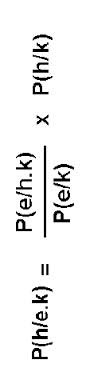
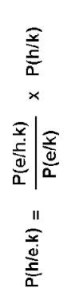
to capture intuitive ideas about “confirmation” and about “confirmational relevance”. The components of C(h,x) are allowed to be any statements, no reference to a probability model or to joint distributions are required. Then h is “confirmed” or supported by x if P(h|x) > P(h), disconfirmed (or undermined) if P(h|x) < P(h), (else x is confirmationally irrelevant to h). This is the generally accepted view of philosophers of confirmation (or Bayesian formal epistemologists) up to the present. There is generally a background “k” included, but to avoid a blinding mass of symbols I omit it. (We are rarely told how to get the probabilities anyway; but I’m going to leave that to one side, as it will not really matter here.)

A test of any purported philosophical confirmation theory is whether it elucidates or is even in sync with intuitive methodological principles about evidence or testing. One of the first problems that arises stems from asking…

Is Probability a good measure of confirmation?

A natural move then would be to identify the degree of confirmation of h by x with probability P(h|x), (which philosophers sometimes write as P(h,x)). Statement x affords hypothesis h higher confirmation than it does h’ iff P(h|x) > P(h’|x).

Some puzzles immediately arise. Hypothesis h can be confirmed by x, while h’ disconfirmed by x, and yet P(h|x) < P(h’|x).  In other words, we can have P(h|x) > P(h) and P(h’|x) < P(h’) and yet P(h|x) < P(h’|x).

Popper (The Logic of Scientific Discovery, 1959, 390) gives this example, (I quote from him, only changing symbols slightly):

Consider the next toss with a homogeneous die.

h: 6 will turn up

h’: 6 will not turn up

x: an even number will turn up.

P(h) = 1/6, p(h’) = 5/6 P(x) = ½

The probability of h is raised by information x, while h’ is undermined by x. (It’s probability goes from 5/6 to 4/6.) If we identify probability with degree of confirmation, x confirms h and disconfirms h’ (i.e., P(h|x) >P(h) and P(h’|x) < P(h’)). Yet because P(h|x) < P(h’|x), h is less well confirmed given x than is h’.  (This happens because P(h) is sufficiently low.) So P(h|x) cannot just be identified with the degree of confirmation that x affords h.

Note, these are not real statistical hypotheses but statements of events.

Obviously there needs to be a way to distinguish between some absolute confirmation for h, and a relative measure of how much it has increased due to x. From the start, Rudolf Carnap noted that “the verb ‘to confirm’ is ambiguous” but thought it had “the connotation of ‘making firmer’ even more often than that of ‘making firm’.” (Carnap, Logical Foundations of Probability (2nd), xviii ). x can increase the firmness of h, but C(h,x) < C(~h,x) (h is more firm, given x, than is ~h). Like Carnap, it’s the ‘making firmer’ that is generally assumed in Bayesian confirmation theory.

But there are many different measures of making firmer (Popper, Carnap, Fitelson).  Referring to Popper’s example, we can report the ratio R: P(h|x)/P(h) = 2.

(In this case h’ = ~h).

Or we use the likelihood ratio LR: P(x|h)/P(x|~h) = (1/.4) = 2.5.

Many other ways of measuring the increase in confirmation x affords h could do as well. But what shall we say about the numbers like 2, 2.5? Do they mean the same thing in different contexts? What happens if we get beyond toy examples to scientific hypotheses where ~h would allude to all possible theories not yet thought of. What’s P(x|~h) where ~h is “the catchall” hypothesis asserting “something else”? (see, for example, Mayo 1997)

Perhaps this point won’t prevent confirmation logics from accomplishing the role of capturing and justifying intuitions about confirmation. So let’s consider the value of confirmation theories to that role.  One of the early leaders of philosophical Bayesian confirmation, Peter Achinstein (2001), began to have doubts about the value of the philosopher’s a priori project.  He even claims, rather provocatively, that “scientists do not and should not take … philosophical accounts of evidence seriously” (p. 9) because they give us formal syntactical (context –free) measures; whereas, scientists look to empirical grounds for confirmation. Philosophical accounts, moreover, make it too easy to confirm. He rejects confirmation as increased firmness, denying it is either necessary or sufficient for evidence. As far as making it too easy to get confirmation, there is the classic problem: it appears we can get everything to confirm everything, so long as one thing is confirmed. This is a famous argument due to Glymour (1980).

Paradox of irrelevant conjunctions

We now switch to emphasizing that the hypotheses may be statistical hypotheses or substantive theories. Both for this reason and because I think they look better, I move away from Popper and Carnap’s lower case letters for hypotheses.

The problem of irrelevant conjunctions (the “tacking paradox”) is this: If x confirms H, then x also confirms (H & J), even if hypothesis J is just “tacked on” to H. As with most of these chestnuts, there is a long history (e.g., Earman 1992, Rosenkrantz 1977), but consider just a leading contemporary representative, Branden Fitelson. Fitelson has importantly emphasized how many different C functions there are for capturing “makes firm”.  Fitelson defines:

J is an irrelevant conjunct to H, with respect to x just in case P(x|H) = P(x|J & H).

For instance, x might be radioastronomic data in support of:

H: the deflection of light effect (due to gravity) is as stipulated in the General Theory of Relativity (GTR), 1.75” at the limb of the sun.

and the irrelevant conjunct:

J: the radioactivity of the Fukushima water being dumped in the Pacific ocean is within acceptable levels.

(1)   Bayesian (Confirmation) Conjunction: If x Bayesian confirms H, then x Bayesian-confirms (H & J), where P(x| H & J ) = P(x|H) for any J consistent with H.

The reasoning is as follows:

P(x|H) /P(x) > 1     (x Bayesian confirms H)

P(x|H & J) = P(x|H)  (given)

So [P(x|H & J) /P(x)]> 1

Therefore x Bayesian confirms (H & J)

However, it is also plausible to hold :

(2) Entailment condition: If x confirms T, and T entails J, then x confirms J.

 In particular, if x confirms (H & J), then x confirms J.

(3)   From (1) and (2) , if x confirms H, then x confirms J  for any irrelevant J consistent with H.

(Assume neither H nor J have probabilities 0 or 1).

It follows that if x confirms any H, then x confirms any J.

Branden Fitelson’s solution

Fitelson (2002), and Fitelson and Hawthorne (2004) offer this “solution”: He will allow that x confirms (H & J), but deny the entailment condition. So, in particular, x confirms the conjunction although x does not confirm the irrelevant conjunct. Moreover, Fitelson shows, even though (J) is confirmed by x, (H & J) gets less of a confirmation (firmness) boost than does H—so long as one doesn’t measure the confirmation boost using R: P(h|x)/P(x). If one does use R, then (H & J) is just as well confirmed as is H, which is disturbing.

But even if we use the LR as our firmness boost, I would agree with Glymour that the solution scarcely solves the real problem. Paraphrasing him, we would not be assured by an account that tells us deflection of light data (x) confirms both GTR (H) and the radioactivity of the Fukushima water is within acceptable levels (J), while assuring us that x does not confirm the Fukishima water having acceptable levels of radiation (31).

The tacking paradox is to be expected if confirmation is taken as a variation on probabilistic affirming the consequent. Hypothetico-deductivists had the same problem, which is why Popper said we need to supplement each of the measures of confirmation boost with the condition of “severity”. However, he was unable to characterize severity adequately, and ultimately denied it could be formalized. He left it as an intuitive requirement that before applying any C-function, the confirming evidence must be the result of “a sincere (and ingenious) attempt to falsify the hypothesis” in question. I try to supply a more adequate account of severity (e.g., Mayo 1996, 2/3/12 post (no-pain philosophy III)).

How would the tacking method fare on the severity account? We’re not given the details we’d want for an error statistical appraisal, but let’s do the best with their stipulations. From our necessary condition, we have that (H and J) cannot warrant taking x as evidence for (H and J) if x counts as a highly insevere test of (H and J). The “test process” with tacking is something like this: having confirmed H, tack on any consistent but irrelevant J to obtain (H & J).(Sentence was amended on 10/21/13)

A scrutiny of well-testedness may proceed by denying either condition for severity. To follow the confirmation theorists, let’s grant the fit requirement (since H fits or entails x). This does not constitute having done anything to detect the falsity of H& J. The conjunction has been subjected to a radically non-risky test. (See also 1/2/13 post, esp. 5.3.4 Tacking Paradox Scotched.)

What they call confirmation we call mere “fit”

In fact, all their measures of confirmation C, be it the ratio measure R: P(H|x)/P(H) or the (so-called[1]) likelihood ratio LR: P(H|x)/P(~H|x), or one of the others, count merely as “fit” or “accordance” measures to the error statistician. There is no problem allowing each to be relevant for different problems and different dimensions of evidence. What we need to add in each case are the associated error probabilities:

P([H & J] is Bayesian confirmed; ~(J&H)) = maximal, so x is “bad evidence, no test” (BENT) for the conjunction.

We read “;” as “under the assumption that”.

In fact, all their measures of confirmation C are mere “fit” measures, be it the ratio measure R: P(H|x)/P(H) or the LR or other.

The following was added on 10-21-13: The above probability stems from taking the “fit measure” as a statistic, and assessing error probabilities by taking account the test process, as in error statistics. The result is

SEV[(H & J), tacking test, x] is minimal 

I have still further problems with these inductive logic paradigms: an adequate philosophical account should answer questions and explicate principles about the methodology of scientific inference. Yet the Bayesian inductivist starts out assuming the intuition or principle, the task then being the homework problem of assigning priors and likelihoods that mesh with the principles. This often demands beating a Bayesian analysis into line, while still not getting at its genuine rationale. “The idea of putting probabilities over hypotheses delivered to philosophy a godsend, and an entire package of superficiality.” (Glymour 2010, 334). Perhaps philosophers are moving away from analytic reconstructions. Enough tears have been shed. But does an analogous problem crop up in Bayesian logic more generally?

I may update this post, and if I do I will alter the number following the title.

Oct. 20, 2013: I am updating this to reflect corrections pointed out by James Hawthorne, for which I’m very grateful. I will call this draft (ii).

Oct. 21, 2013 (updated in blue). I think another sentence might have accidentally got moved around.

Oct. 23, 2013. Given some issues that cropped up in the discussion (and the fact that certain symbols didn’t always come out right in the comments, I’m placing the point below in Note [2]):


[1] I say “so-called” because there’s no requirement of a proper statistical model here.

[2] Can P = C?

Spoze there’s a case where z confirms hh’ more than z confirms h’:  C(hh’,z) > C(h’,z)

Now h’ = (~hh’ or hh’)
So,
(i) C(hh’,z) > C(~hh’ or hh’,z)

Since ~hh’ and hh’ are mutually exclusive, we have from special addition rule
(ii) P(hh’,z) < P(~hh’ or hh’,z)

So if P = C, (i) and (ii) yield a contradiction.

REFERENCES

Achinstein, P. (2001). The Book of EvidenceOxford: Oxford University Press.

Carnap, R. (1962). Logical Foundations of Probability. Chicago: University of Chicago Press.

Earman, J.  (1992). Bayes or Bust? A Critical Examination of Bayesian Confirmation Theory Cambridge MA: MIT Press.

Fitelson, B.  (2002). Putting the Irrelevance Back Into the Problem of Irrelevant Conjunction. Philosophy of Science 69(4), 611–622.

Fitelson, B. & Hawthorne, J.  (2004). Re-Solving Irrelevant Conjunction with Probabilistic Independence,  Philosophy of Science, 71: 505–514.

Glymour, C. (1980) . Theory and Evidence. Princeton: Princeton University Press

_____. (2010). Explanation and Truth. In D. G. Mayo & A. Spanos (Eds.), Error and Inference: Recent Exchanges on Experimental Reasoning, Reliability, and the Objectivity and Rationality of Science, 305–314. Cambridge: Cambridge University Press.

Mayo, D. (1996). Error and the Growth of Experimental Knowledge. Chicago: University of Chicago Press.

_____. (1997). “Duhem’s Problem, The Bayesian Way, and Error Statistics, or ‘What’s Belief got To Do With It?‘” and “Response to Howson and Laudan,” Philosophy of Science 64(1): 222-244 and 323-333.

_____. (2010). Explanation and Testing Exchanges with Clark Glymour. In D. G. Mayo & A. Spanos (Eds.), Error and Inference: Recent Exchanges on Experimental Reasoning, Reliability, and the Objectivity and Rationality of Science, 305–314. Cambridge: Cambridge University Press.

Popper, K. (1959). The Logic of Scientific Discovery. New York: Basic Books.

Rosenkranz, R. (1977). Inference, Method and Decision: Towards a Bayesian Philosophy of Science. Dordrecht, The Netherlands: D. Reidel.

Categories: confirmation theory, Philosophy of Statistics, Statistics | Tags: | 76 Comments

Sir David Cox: a comment on the post, “Was Hosiasson pulling Jeffreys’ leg?”

Unknown-1

Sir David Cox

David Cox sent me a letter relating to my post of Oct.5, 2013. He has his own theory as to who might have been doing the teasing! I’m posting it  here, with his permission: 

Dear Deborah

I was interested to see the correspondence about Jeffreys and the possible teasing by Neyman’s associate. It brought a number of things to mind.

  1. While I am not at all convinced that any teasing was involved, if there was it seems to me much more likely that Jeffreys was doing the teasing. He, correctly surely, disapproved of that definition and was putting up a highly contrived illustration of its misuse.
  2. In his work he was not writing about a subjective view of probability but about objective degree of belief. He did not disapprove of more physical definitions, such as needed to describe radioactive decay; he preferred to call them chances.
  3.  In assessing his work it is important that the part on probability was perhaps 10% of what he did. He was most famous for The earth (1924) which is said to have started the field of geophysics. (The first edition of his 1939 book on probability was in a series of monographs in physics.) The later book with his wife, Bertha,  Methods of mathematical physics is a masterpiece.
  4. I heard him speak from time to time and met him personally on a couple of occasions. He was superficially very mild and said very little. He was involved in various controversies but, and I am not sure about this, I don’t think they ever degenerated into personal bitterness. He lived to be 98 and, a mark of his determination is that in his early 90’s he cycled in Cambridge having a series of minor accidents. He was stopped only when Bertha removed the tires from his bike. Bertha was a highly respected teacher of mathematics.
  5.  He and R.A.Fisher were not only towering figures in statistics in the first part of the 20th century but surely among the major applied mathematicians of that era in the world.
  6. Neyman was not at all Germanic, in the sense that one of your correspondents described. He could certainly be autocratic but not in personal manner. While all the others at Berkeley were Professor this or Dr that, he insisted on being called Mr Neyman.
  7. The remarks [i] about how people addressed one another 50 plus years ago in the UK are  broadly accurate, although they were not specific to Cambridge and certainly could be varied. From about age 11 boys in school, students and men in the workplace addressed one another by surname only. Given names were for family and very close friends. Women did use given names or  were Miss or Mrs, certainly never Madam unless they were French aristocrats. Thus in 1950 or so I worked with, published with and was very friendly with two physical scientists, R.C. Palmer and S.L. Anderson. I have no idea what their given names were; it was irrelevant. To address someone you did not know by name you used Sir or Madam. It would be very foolish to think that meant unfriendliness or that the current practice of calling absolutely everyone by their given name means universal benevolence.

Best wishes

David

D.R.Cox
Nuffield College
Oxford
UK

[i]In comments to this post.

Categories: phil/history of stat, Statistics | Tags: | 13 Comments

Bad statistics: crime or free speech (II)? Harkonen update: Phil Stat / Law /Stock

photo-on-12-17-12-at-3-43-pm-e1355777379998There’s an update (with overview) on the infamous Harkonen case in Nature with the dubious title “Uncertainty on Trial“, first discussed in my (11/13/12) post “Bad statistics: Crime or Free speech”, and continued here. The new Nature article quotes from Steven Goodman:

“You don’t want to have on the books a conviction for a practice that many scientists do, and in fact think is critical to medical research,” says Steven Goodman, an epidemiologist at Stanford University in California who has filed a brief in support of Harkonen……

Goodman, who was paid by Harkonen to consult on the case, contends that the government’s case is based on faulty reasoning, incorrectly equating an arbitrary threshold of statistical significance with truth. “How high does probability have to be before you’re thrown in jail?” he asks. “This would be a lot like throwing weathermen in jail if they predicted a 40% chance of rain, and it rained.”

I don’t think the case at hand is akin to the exploratory research that Goodman likely has in mind, and the rain analogy seems very far-fetched. (There’s much more to the context, but the links should suffice.) Lawyer Nathan Schachtmen also has an update on his blog today. He and I usually concur, but we largely disagree on this one[i]. I see no new information that would lead me to shift my earlier arguments on the evidential issues. From a Dec. 17, 2012 post on Schachtman (“multiplicity and duplicity”):

So what’s the allegation that the prosecutors are being duplicitous about statistical evidence in the case discussed in my two previous (‘Bad Statistics’) posts? As a non-lawyer, I will ponder only the evidential (and not the criminal) issues involved.

“After the conviction, Dr. Harkonen’s counsel moved for a new trial on grounds of newly discovered evidence. Dr. Harkonen’s counsel hoisted the prosecutors with their own petards, by quoting the government’s amicus brief to the United States Supreme Court in Matrixx Initiatives Inc. v. Siracusano, 131 S. Ct. 1309 (2011).  In Matrixx, the securities fraud plaintiffs contended that they need not plead ‘statistically significant’ evidence for adverse drug effects.” (Schachtman’s part 2, ‘The Duplicity Problem – The Matrixx Motion’) 

The Matrixx case is another philstat/law/stock example taken up in this blog here, here, and here.  Why are the Harkonen prosecutors “hoisted with their own petards” (a great expression, by the way)? Continue reading

Categories: PhilStatLaw, PhilStock, statistical tests, Statistics | Tags: | 23 Comments

Blog at WordPress.com.