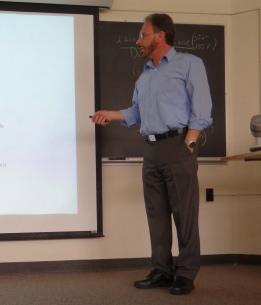
Severe osteometric probing of skeletal remains: John Byrd

images-3John E. Byrd, Ph.D. D-ABFA

Central Identification Laboratory
JPAC

Guest, March 27, PHil 6334

“Statistical Considerations of the Histomorphometric Test Protocol for Determination of Human Origin of Skeletal Remains”

 By:
Byrd 1John E. Byrd, Ph.D. D-ABFA

Maria-Teresa Tersigni-Tarrant, Ph.D.
Central Identification Laboratory
JPAC

Categories: Phil6334, Philosophy of Statistics, Statistics | 1 Comment

Phil 6334: Misspecification Testing: Ordering From A Full Diagnostic Menu (part 1)

.

 We’re going to be discussing the philosophy of m-s testing today in our seminar, so I’m reblogging this from Feb. 2012. I’ve linked the 3 follow-ups below. Check the original posts for some good discussion. (Note visitor*)

“This is the kind of cure that kills the patient!”

is the line of Aris Spanos that I most remember from when I first heard him talk about testing assumptions of, and respecifying, statistical models in 1999.  (The patient, of course, is the statistical model.) On finishing my book, EGEK 1996, I had been keen to fill its central gaps one of which was fleshing out a crucial piece of the error-statistical framework of learning from error: How to validate the assumptions of statistical models. But the whole problem turned out to be far more philosophically—not to mention technically—challenging than I imagined. I will try (in 3 short posts) to sketch a procedure that I think puts the entire process of model validation on a sound logical footing. Continue reading

Categories: Intro MS Testing, Statistics | Tags: , , , , | 16 Comments

The Unexpected Way Philosophy Majors Are Changing The World Of Business


Philosopher

Philosopher

“Philosophy majors rule” according to this recent article. We philosophers should be getting the word out. Admittedly, the type of people inclined to do well in philosophy are already likely to succeed in analytic areas. Coupled with the chuzpah of taking up an “outmoded and impractical” major like philosophy in the first place, innovative tendencies are not surprising.  But can the study of philosophy also promote these capacities? I think it can and does; yet it could be far more effective than it is, if it was less hermetic and more engaged with problem-solving across the landscape of science,statistics,law,medicine,and evidence-based policy. Here’s the article: Continue reading

Categories: philosophy of science, Philosophy of Statistics, Statistics | 1 Comment

Fallacies of statistics & statistics journalism, and how to avoid them: Summary & Slides Day #8 (Phil 6334)

picture-216-1

.

We spent the first half of Thursday’s seminar discussing the FisherNeyman, and E. Pearson “triad”[i]. So, since it’s Saturday night, join me in rereading for the nth time these three very short articles. The key issues were: error of the second kind, behavioristic vs evidential interpretations, and Fisher’s mysterious fiducial intervals. Although we often hear exaggerated accounts of the differences in the Fisherian vs Neyman-Pearson (NP) methodology, in fact, N-P were simply providing Fisher’s tests with a logical ground (even though other foundations for tests are still possible), and Fisher welcomed this gladly. Notably, with the single null hypothesis, N-P showed that it was possible to have tests where the probability of rejecting the null when true exceeded the probability of rejecting it when false. Hacking called such tests “worse than useless”, and N-P develop a theory of testing that avoids such problems. Statistical journalists who report on the alleged “inconsistent hybrid” (a term popularized by Gigerenzer) should recognize the extent to which the apparent disagreements on method reflect professional squabbling between Fisher and Neyman after 1935 [A recent example is a Nature article by R. Nuzzo in ii below]. The two types of tests are best seen as asking different questions in different contexts. They both follow error-statistical reasoning. Continue reading

Categories: phil/history of stat, Phil6334, science communication, Severity, significance tests, Statistics | Tags: | 35 Comments

Power taboos: Statue of Liberty, Senn, Neyman, Carnap, Severity

Unknown-3Is it taboo to use a test’s power to assess what may be learned from the data in front of us? (Is it limited to pre-data planning?) If not entirely taboo, some regard power as irrelevant post-data[i], and the reason I’ve heard is along the lines of an analogy Stephen Senn gave today (in a comment discussing his last post here)[ii].

Senn comment: So let me give you another analogy to your (very interesting) fire alarm analogy (My analogy is imperfect but so is the fire alarm.) If you want to cross the Atlantic from Glasgow you should do some serious calculations to decide what boat you need. However, if several days later you arrive at the Statue of Liberty the fact that you see it is more important than the size of the boat for deciding that you did, indeed, cross the Atlantic.

My fire alarm analogy is here. My analogy presumes you are assessing the situation (about the fire) long distance. Continue reading

Categories: exchange with commentators, Neyman's Nursery, P-values, Phil6334, power, Stephen Senn | 6 Comments

Stephen Senn: “Delta Force: To what extent is clinical relevance relevant?” (Guest Post)

Stephen Senn

Senn

Stephen Senn
Head, Methodology and Statistics Group,
Competence Center for Methodology and Statistics (CCMS),
Luxembourg

Delta Force
To what extent is clinical relevance relevant?

Inspiration
This note has been inspired by a Twitter exchange with respected scientist and famous blogger  David Colquhoun. He queried whether a treatment that had 2/3 of an effect that would be described as clinically relevant could be useful. I was surprised at the question, since I would regard it as being pretty obvious that it could but, on reflection, I realise that things that may seem obvious to some who have worked in drug development may not be obvious to others, and if they are not obvious to others are either in need of a defence or wrong. I don’t think I am wrong and this note is to explain my thinking on the subject. Continue reading

Categories: power, Statistics, Stephen Senn | 39 Comments

New SEV calculator (guest app: Durvasula)

Unknown-1Karthik Durvasula, a blog follower[i], sent me a highly apt severity app that he created: https://karthikdurvasula.shinyapps.io/Severity_Calculator/
updated June,
I have his permission to post it or use it for pedagogical purposes, so since it’s Saturday night, go ahead and have some fun with it. Durvasula had the great idea of using it to illustrate howlers. Also, I would add, to discover them.
It follows many of the elements of the Excel Sev Program discussed recently, but it’s easier to use.* (I’ll add some notes about the particular claim (i.e, discrepancy) for which SEV is being computed later on).
*If others want to tweak or improve it, he might pass on the source code (write to me on this).
[i] I might note that Durvasula was the winner of the January palindrome contest.
Categories: Severity, Statistics | 12 Comments

Get empowered to detect power howlers

questionmark pinkIf a test’s power to detect µ’ is low then a statistically significant result is good/lousy evidence of discrepancy µ’? Which is it?

If your smoke alarm has little capability of triggering unless your house is fully ablaze, then if it has triggered, is that a strong or weak indication of a fire? Compare this insensitive smoke alarm to one that is so sensitive that burning toast sets it off. The answer is: that the alarm from the insensitive detector is triggered is a good indication of the presence of (some) fire, while hearing the ultra sensitive alarm go off is not.[i]

Yet I often hear people say things to the effect that: Continue reading

Categories: confidence intervals and tests, power, Statistics | 34 Comments

Phil6334 Day #7: Selection effects, the Higgs and 5 sigma, Power

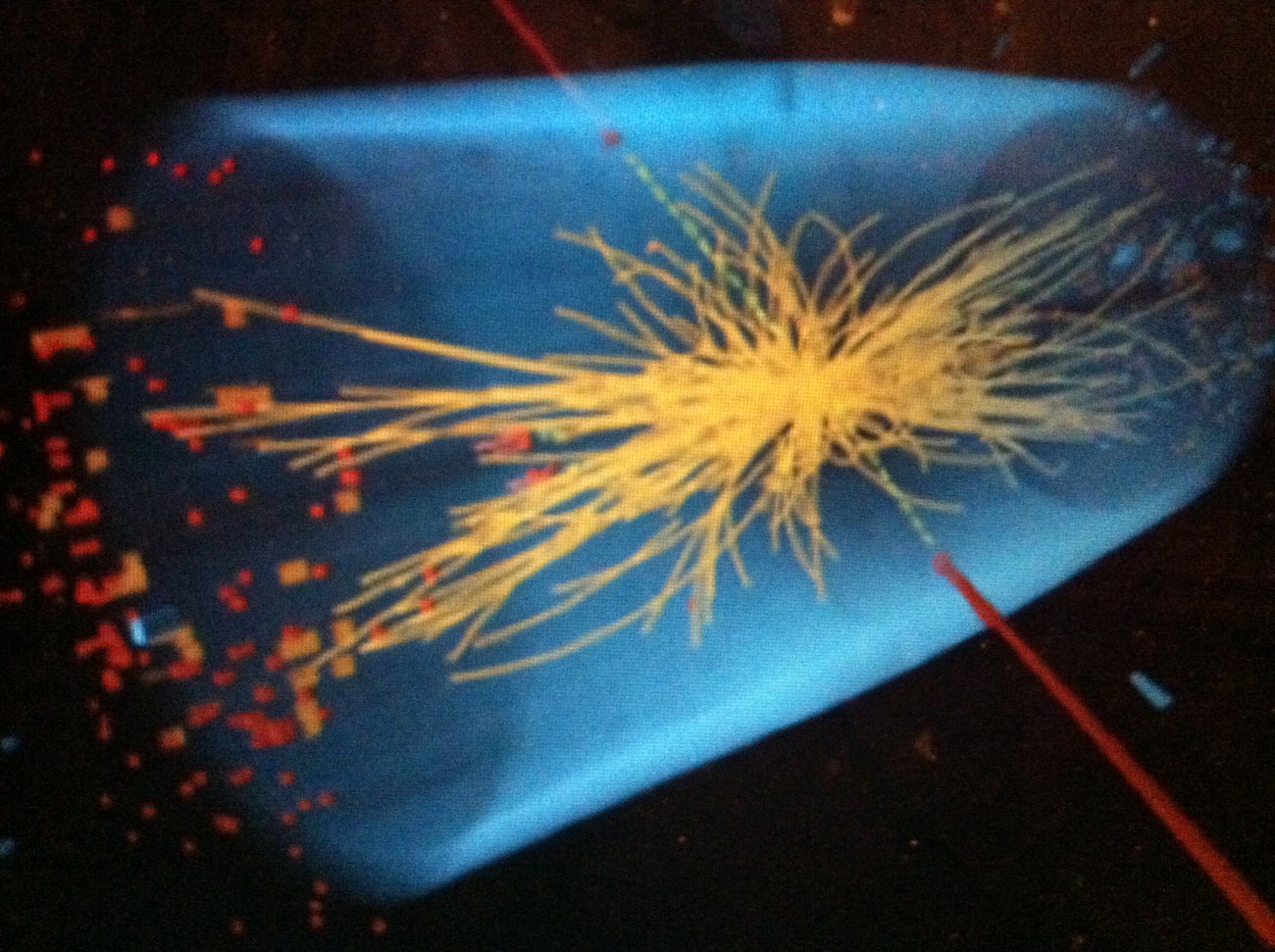
SEV CALCULATORBelow are slides from March 6, 2014: (a) the 2nd half of “Frequentist Statistics as a Theory of Inductive Inference” (Selection Effects),”* and (b) the discussion of the Higgs particle discovery and controversy over 5 sigma.physics pic yellow particle burst blue cone

We spent the rest of the seminar computing significance levels, rejection regions, and power (by hand and with the Excel program). Here is the updated syllabus  (3rd installment).

A relevant paper on selection effects on this blog is here.

Categories: Higgs, P-values, Phil6334, selection effects | Leave a comment

Fallacy of Rejection and the Fallacy of Nouvelle Cuisine

Any Jackie Mason fans out there? In connection with our discussion of power,and associated fallacies of rejection*–and since it’s Saturday night–I’m reblogging the following post.

In February [2012], in London, criminologist Katrin H. and I went to see Jackie Mason do his shtick, a one-man show billed as his swan song to England.  It was like a repertoire of his “Greatest Hits” without a new or updated joke in the mix.  Still, hearing his rants for the nth time was often quite hilarious.

A sample: If you want to eat nothing, eat nouvelle cuisine. Do you know what it means? No food. The smaller the portion the more impressed people are, so long as the food’s got a fancy French name, haute cuisine. An empty plate with sauce!

As one critic wrote, Mason’s jokes “offer a window to a different era,” one whose caricatures and biases one can only hope we’ve moved beyond: But it’s one thing for Jackie Mason to scowl at a seat in the front row and yell to the shocked audience member in his imagination, “These are jokes! They are just jokes!” and another to reprise statistical howlers, which are not jokes, to me. This blog found its reason for being partly as a place to expose, understand, and avoid them. Recall the September 26, 2011 post “Whipping Boys and Witch Hunters”: [i]

Fortunately, philosophers of statistics would surely not reprise decades-old howlers and fallacies. After all, it is the philosopher’s job to clarify and expose the conceptual and logical foibles of others; and even if we do not agree, we would never merely disregard and fail to address the criticisms in published work by other philosophers.  Oh wait, ….one of the leading texts repeats the fallacy in their third edition: Continue reading

Categories: Comedy, fallacy of rejection, Statistical power | Tags: , , , , | 9 Comments

Msc kvetch: You are fully dressed (even under your clothes)?

UnknownRejected posts

Categories: rejected post | Leave a comment

Power, power everywhere–(it) may not be what you think! [illustration]

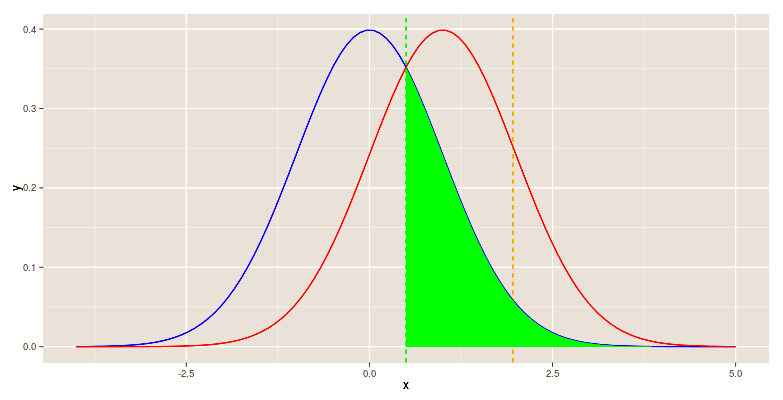
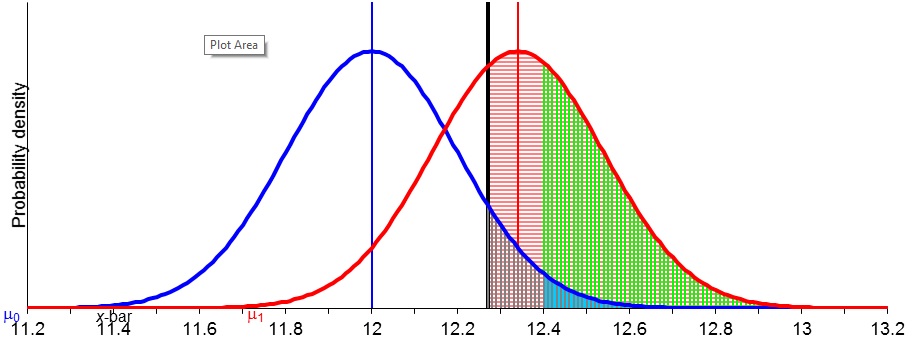
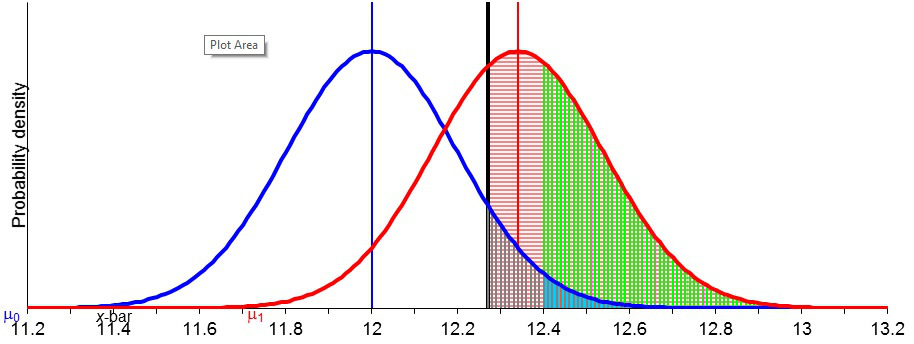
sev-calculatorStatistical power is one of the neatest [i], yet most misunderstood statistical notions [ii].So here’s a visual illustration (written initially for our 6334 seminar), but worth a look by anyone who wants an easy way to attain the will to understand power.(Please see notes below slides.)

[i]I was tempted to say power is one of the “most powerful” notions.It is.True, severity leads us to look, not at the cut-off for rejection (as with power) but the actual observed value, or observed p-value. But the reasoning is the same. Likewise for less artificial cases where the standard deviation has to be estimated. See Mayo and Spanos 2006.

[ii]

  • Some say that to compute power requires either knowing the alternative hypothesis (whatever that means), or worse, the alternative’s prior probability! Then there’s the tendency (by reformers no less!) to transpose power in such a way as to get the appraisal of tests exactly backwards. An example is Ziliac and McCloskey (2008). See,for example, the will to understand power: https://errorstatistics.com/2011/10/03/part-2-prionvac-the-will-to-understand-power/
  • Many allege that a null hypothesis may be rejected (in favor of alternative H’) with greater warrant, the greater the power of the test against H’, e.g., Howson and Urbach (2006, 154). But this is mistaken. The frequentist appraisal of tests is the reverse, whether Fisherian significance tests or those of the Neyman-Pearson variety. One may find the fallacy exposed back in Morrison and Henkel (1970)! See EGEK 1996, pp. 402-3.
  •  For a humorous post on this fallacy, see: “The fallacy of rejection and the fallacy of nouvelle cuisine”: https://errorstatistics.com/2012/04/04/jackie-mason/

You can find a link to the Severity Excel Program (from which the pictures came)  on the left hand column of this blog, and a link to basic instructions.This corresponds to EXAMPLE SET 1 pdf for Phil 6334.

Howson, C. and P. Urbach (2006). Scientific Reasoning: The Bayesian Approach. La Salle, Il: Open Court.

Mayo, D. G. and A. Spanos (2006) “Severe Testing as a Basic Concept in a Neyman-Pearson Philosophy of Induction“ British Journal of Philosophy of Science, 57: 323-357.

Morrison and Henkel (1970), The significance Test controversy.

Ziliak, Z. and McCloskey, D. (2008), The Cult of Statistical Significance: How the Standard Error Costs Us Jobs, Justice and Lives, University of Michigan Press.

Categories: Phil6334, Statistical power, Statistics | 26 Comments

capitalizing on chance (ii)

Mayo playing the slots

DGM playing the slots

I may have been exaggerating one year ago when I started this post with “Hardly a day goes by”, but now it is literally the case*. (This  also pertains to reading for Phil6334 for Thurs. March 6):

Hardly a day goes by where I do not come across an article on the problems for statistical inference based on fallaciously capitalizing on chance: high-powered computer searches and “big” data trolling offer rich hunting grounds out of which apparently impressive results may be “cherry-picked”:

When the hypotheses are tested on the same data that suggested them and when tests of significance are based on such data, then a spurious impression of validity may result. The computed level of significance may have almost no relation to the true level. . . . Suppose that twenty sets of differences have been examined, that one difference seems large enough to test and that this difference turns out to be “significant at the 5 percent level.” Does this mean that differences as large as the one tested would occur by chance only 5 percent of the time when the true difference is zero? The answer is no, because the difference tested has been selected from the twenty differences that were examined. The actual level of significance is not 5 percent, but 64 percent! (Selvin 1970, 104)[1]

…Oh wait -this is from a contributor to Morrison and Henkel way back in 1970! But there is one big contrast, I find, that makes current day reports so much more worrisome: critics of the Morrison and Henkel ilk clearly report that to ignore a variety of “selection effects” results in a fallacious computation of the actual significance level associated with a given inference; clear terminology is used to distinguish the “computed” or “nominal” significance level on the one hand, and the actual or warranted significance level on the other. Continue reading

Categories: junk science, selection effects, spurious p values, Statistical fraudbusting, Statistics | 4 Comments

Significance tests and frequentist principles of evidence: Phil6334 Day #6

picture-216-1Slides (2 sets) from Phil 6334 2/27/14 class (Day#6).

spanos

D. Mayo:
“Frequentist Statistics as a Theory of Inductive Inference”

A. Spanos
“Probability/Statistics Lecture Notes 4: Hypothesis Testing”

Categories: P-values, Phil 6334 class material, Philosophy of Statistics, Statistics | Tags: | Leave a comment

Cosma Shalizi gets tenure (at last!) (metastat announcement)

ShaliziNews Flash! Congratulations to Cosma Shalizi who announced yesterday that he’d been granted tenure (Statistics, Carnegie Mellon). Cosma is a leading error statistician, a creative polymath and long-time blogger (at Three-Toad sloth). Shalizi wrote an early book review of EGEK (Mayo 1996)* that people still send me from time to time, in case I hadn’t seen it! You can find it on this blog from 2 years ago (posted by Jean Miller). A discussion of a meeting of the minds between Shalizi and Andrew Gelman is here.

*Error and the Growth of Experimental Knowledge.

Categories: Announcement, Error Statistics, Statistics | Tags: | Leave a comment

Phil6334: Feb 24, 2014: Induction, Popper and pseudoscience (Day #4)

Phil 6334* Day #4: Mayo slides follow the comments below. (Make-up for Feb 13 snow day.) Popper reading is from Conjectures and Refutations.

.

.

As is typical in rereading any deep philosopher, I discover (or rediscover) different morsals of clues to understanding—whether fully intended by the philosopher or a byproduct of their other insights, and a more contemporary reading. So it is with Popper. A couple of key ideas to emerge from Monday’s (make-up) class and the seminar discussion (my slides are below):

  1. Unlike the “naïve” empiricists of the day, Popper recognized that observations are not just given unproblematically, but also require an interpretation, an interest, a point of view, a problem. What came first, a hypothesis or an observation? Another hypothesis, if only at a lower level, says Popper.  He draws the contrast with Wittgenstein’s “verificationism”. In typical positivist style, the verificationist sees observations as the given “atoms,” and other knowledge is built up out of truth functional operations on those atoms.[1] However, scientific generalizations beyond the given observations cannot be so deduced, hence the traditional philosophical problem of induction isn’t solvable. One is left trying to build a formal “inductive logic” (generally deductive affairs, ironically) that is thought to capture intuitions about scientific inference (a largely degenerating program). The formal probabilists, as well as philosophical Bayesianism, may be seen as descendants of the logical positivists–instrumentalists, verificationists, operationalists (and the corresponding “isms”). So understanding Popper throws a lot of light on current day philosophy of probability and statistics.
  2. The fact that observations must be interpreted opens the door to interpretations that prejudge the construal of data. With enough interpretive latitude, anything (or practically anything) that is observed can be interpreted as in sync with a general claim H. (Once you opened your eyes, you see confirmations everywhere, as with a gestalt conversion, as Popper put it.) For Popper, positive instances of a general claim H, i.e., observations that agree with or “fit” H, do not even count as evidence for H if virtually any result could be interpreted as according with H.
    Note a modification of Popper here: Instead of putting the “riskiness” on H itself, it is the method of assessment or testing that bears the burden of showing that something (ideally quite a lot) has been done in order to scrutinize the way the data were interpreted (to avoid “verification bias”). The scrutiny needs to ensure that it would be difficult (rather than easy) to get an accordance between data x and H (as strong as the one obtained) if H were false (or specifiably flawed). Continue reading
Categories: Phil 6334 class material, Popper, Statistics | 7 Comments

Winner of the Febrary 2014 palindrome contest (rejected post)

SamHeadWinner of February 2014 Palindrome Contest
Samuel Dickson

Palindrome:
Rot, Cadet A, I’ve droned! Elba, revile deviant, naïve, deliverable den or deviated actor.

The requirement was: A palindrome with Elba plus deviate with an optional second word: deviant. A palindrome that uses both deviate and deviant tops an acceptable palindrome that only uses deviate.

Bio:
Sam Dickson is a regulatory statistician at U.S. Army Medical Research Institute of Infectious Diseases (USAMRIID) with experience in statistical consulting, specializing in design and analysis of biological and genetics/genomics studies.

Statement:
“It’s great to get a  chance to exercise the mind with something other than statistics, though putting words together to make a palindrome is a puzzle very similar to designing an experiment that answers the right question.  Thank you for hosting this contest!”

Choice of book:
Principles of Applied Statistics (D. R. Cox and C. A. Donnelly 2011, Cambridge: Cambridge University Press)

Congratulations, Sam! I hope that your opting to do two words (plus Elba) means we can go back to the tougher standard for palindromes, but I’d just as soon raise the level of competence for several months more (sticking to one word). 

Categories: Announcement, Palindrome, Rejected Posts, Statistics | Leave a comment

Phil 6334: February 20, 2014 (Spanos): Day #5

may-4-8-aris-spanos-e2809contology-methodology-in-statistical-modelinge2809dPHIL 6334 – “Probability/Statistics Lecture Notes 3 for 2/20/14: Estimation (Point and Interval)”:(Prof. Spanos)*

*This is Day #5 on the Syllabus, as Day #4 had to be made up (Feb 24, 2014) due to snow. Slides for Day #4 will go up Feb. 26, 2014. (See the revised Syllabus Second Installment.)

Categories: Phil6334, Philosophy of Statistics, Spanos | 5 Comments

Sir Harold Jeffreys’ (tail area) one-liner: Sat night comedy [draft ii]

Comedy hour icon

This headliner appeared last month, but to a sparse audience (likely because it was during winter break), so Management’s giving him another chance… 

You might not have thought there could be new material for 2014, but there is, and if you look a bit more closely, you’ll see that it’s actually not Jay Leno who is standing up there at the mike ….

IMG_1547It’s Sir Harold Jeffreys himself! And his (very famous) joke, I admit, is funny. So, since it’s Saturday night, let’s listen in on Sir Harold’s howler* in criticizing the use of p-values.

“Did you hear the one about significance testers rejecting H0 because of outcomes H0 didn’t predict?

‘What’s unusual about that?’ you ask?

What’s unusual, is that they do it when these unpredicted outcomes haven’t even occurred!”

Much laughter.

[The actual quote from Jeffreys: Using p-values implies that “An hypothesis that may be true is rejected because it has failed to predict observable results that have not occurred. This seems a remarkable procedure.” (Jeffreys 1939, 316)]

I say it’s funny, so to see why I’ll strive to give it a generous interpretation. Continue reading

Categories: Comedy, Fisher, Jeffreys, P-values, Stephen Senn | Leave a comment

STEPHEN SENN: Fisher’s alternative to the alternative

Reblogging 2 years ago:

By: Stephen Senn

This year [2012] marks the 50th anniversary of RA Fisher’s death. It is a good excuse, I think, to draw attention to an aspect of his philosophy of significance testing. In his extremely interesting essay on Fisher, Jimmie Savage drew attention to a problem in Fisher’s approach to testing. In describing Fisher’s aversion to power functions Savage writes, ‘Fisher says that some tests are more sensitive than others, and I cannot help suspecting that that comes to very much the same thing as thinking about the power function.’ (Savage 1976) (P473).

The modern statistician, however, has an advantage here denied to Savage. Savage’s essay was published posthumously in 1976 and the lecture on which it was based was given in Detroit on 29 December 1971 (P441). At that time Fisher’s scientific correspondence did not form part of his available oeuvre but in1990 Henry Bennett’s magnificent edition of Fisher’s statistical correspondence (Bennett 1990) was published and this throws light on many aspects of Fisher’s thought including on significance tests.

The key letter here is Fisher’s reply of 6 October 1938 to Chester Bliss’s letter of 13 September. Bliss himself had reported an issue that had been raised with him by Snedecor on 6 September. Snedecor had pointed out that an analysis using inverse sine transformations of some data that Bliss had worked on gave a different result to an analysis of the original values. Bliss had defended his (transformed) analysis on the grounds that a) if a transformation always gave the same result as an analysis of the original data there would be no point and b) an analysis on inverse sines was a sort of weighted analysis of percentages with the transformation more appropriately reflecting the weight of information in each sample. Bliss wanted to know what Fisher thought of his reply.

Fisher replies with a ‘shorter catechism’ on transformations which ends as follows: Continue reading

Categories: Fisher, Statistics, Stephen Senn | Tags: , , , | 31 Comments

Blog at WordPress.com.