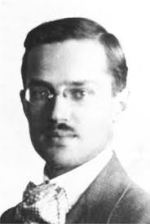
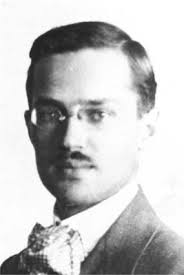
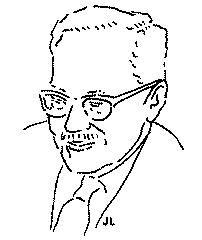
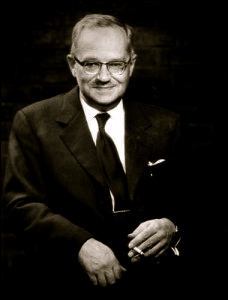
Neyman April 16, 1894 – August 5, 1981
For my final Jerzy Neyman item, here’s the post I wrote for his birthday last year:
A local acting group is putting on a short theater production based on a screenplay I wrote: “Les Miserables Citations” (“Those Miserable Quotes”) [1]. The “miserable” citations are those everyone loves to cite, from their early joint 1933 paper:
We are inclined to think that as far as a particular hypothesis is concerned, no test based upon the theory of probability can by itself provide any valuable evidence of the truth or falsehood of that hypothesis.
But we may look at the purpose of tests from another viewpoint. Without hoping to know whether each separate hypothesis is true or false, we may search for rules to govern our behavior with regard to them, in following which we insure that, in the long run of experience, we shall not be too often wrong. (Neyman and Pearson 1933, pp. 290-1).
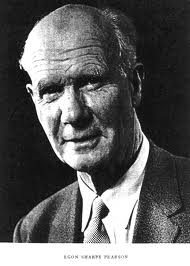
In this early paper, Neyman and Pearson were still groping toward the basic concepts of tests–for example, “power” had yet to be coined. Taken out of context, these quotes have led to knee-jerk (behavioristic) interpretations which neither Neyman nor Pearson would have accepted. What was the real context of those passages? Well, the paper opens, just five paragraphs earlier, with a discussion of a debate between two French probabilists—Joseph Bertrand, author of “Calculus of Probabilities” (1907), and Emile Borel, author of “Le Hasard” (1914)! According to Neyman, what served “as an inspiration to Egon S. Pearson and myself in our effort to build a frequentist theory of testing hypotheses”(1977, p. 103) initially grew out of remarks of Borel, whose lectures Neyman had attended in Paris. He returns to the Bertrand-Borel debate in four different papers, and circles back to it often in his talks with his biographer, Constance Reid. His student Erich Lehmann (1993), regarded as the authority on Neyman, wrote an entire paper on the topic: “The Bertrand-Borel Debate and the Origins of the Neyman Pearson Theory”. Continue reading →











 Error Statistics Philosophy